

P0601 on 2007-2009 Cadillac XLR: Internal Module Failure Causes and Fixes
P0601 on a 2007-2009 Cadillac XLR indicates a fatal internal memory error in a control module. This is most often the Engine Control Module (ECM) but can also be the Transmission Control Module (TCM), as noted in GM TSB #PIP4653E. The only reliable fix is to replace the faulty module, which requires professional programming and typically costs between $900 and $2,000. Misdiagnosing the ECM when the TCM is the culprit is a common and expensive error on this platform.
- P0601 is a critical code indicating an internal failure of a control module, most commonly the ECM.
- On the 2007-2009 XLR, the Transmission Control Module (TCM) is also a known cause, per GM TSB #PIP4653E.
- Do not drive the vehicle. A failing module can cause a stall at any time, which is a major safety hazard.
- Diagnosis is key. You MUST use a scanner that can identify WHICH module set the code before ordering parts.
- The fix is NOT DIY-friendly. It requires replacing the faulty module and having it professionally programmed to your car's VIN.
What's Unique About the 2007-2009 Cadillac XLR
The Cadillac XLR, a luxury roadster based on the Corvette C6 platform, has specific vulnerabilities regarding this code. General Motors issued a Technical Service Bulletin (TSB #PIP4653E) that explicitly identifies the Transmission Control Module (TCM) as a potential source for the P0601 code, alongside other modules. This is a critical distinction because the TCM (an ACDelco T43 type) is located inside the transmission oil pan, where it is subjected to significant heat and vibration, making it a known failure point. Misdiagnosing the easily accessible ECM when the internally-mounted TCM is the actual culprit is a common and expensive mistake on this platform.
Diagnostic Flowchart
Tap your situation to follow the diagnostic path that matches what you're seeing on this vehicle.
Symptoms You May Notice
- Check Engine Light is on
- Service Active Handling or Service Traction Control message in the DIC
- Vehicle may not start or may crank but not fire
- Engine may stall intermittently, especially after warming up
- Transmission may shift harshly, erratically, or go into 'limp mode' (stuck in one gear)
- Reduced engine power and poor acceleration
- Replacing the Engine Control Module (ECM) when the code is actually being set by the Transmission Control Module (TCM). This is a costly error specific to this platform due to the known TSB and the TCM's location.
- Replacing a control module without first verifying the battery and charging system are in perfect health and that all main ground connections are clean and tight.
Most Likely Causes
- Failed Engine Control Module (ECM/PCM) 🔴 High Probability → Shop Engine Control Module (ECM) Like any complex electronic component, the ECM (an ACDelco E38) can fail due to age, heat cycles, or internal component degradation. This is a common cause for a P0601 code across most vehicles when the code is stored in the ECM.
How to confirm: After verifying all power and ground circuits to the ECM are stable, a professional scan tool will confirm the P0601 code originates from the ECM itself. If attempts to reflash the module fail, it confirms a non-repairable hardware failure.
Typical fix: Replace the Engine Control Module. 🎬 Watch: Understanding the P0601 checksum error and how to fix it. The new or remanufactured unit must be programmed to the vehicle's VIN and security system.
Est. part cost: $400-$950 - Failed Transmission Control Module (TCM) 🟡 Medium Probability → Shop Transmission Assembly GM TSB #PIP4653E specifically calls out the T43 TCM as a potential source for P0601 on this platform. The TCM is located inside the 6L80 transmission pan, where it is exposed to constant heat and vibration, contributing to a higher failure rate.
How to confirm: A professional, bi-directional scan tool is required to check for codes stored specifically within the TCM. If P0601 is present in the TCM, it is the source of the fault. The presence of code P0700 ('Transmission Control System MIL Request') alongside P0601 is a strong indicator that the TCM is the failing module.
Typical fix: Per TSB #PIP4653E, the first step is to attempt a reprogram of the TCM. If the code returns, the TCM must be replaced. This involves dropping the transmission pan. 🎬 See this walkthrough on how to safely remove the internal TCM. The replacement TCM must be programmed to the vehicle.
Est. part cost: $250-$800 - Low Battery Voltage or Charging System Fault ⚪ Low Probability → Shop Vehicle Battery Complex luxury vehicles like the XLR have a high electrical demand. A weak battery or failing alternator can cause voltage spikes or drops during startup, which can corrupt module memory and trigger a false P0601 code. On the related C6 Corvette platform, owners have noted that battery voltage dropping below 11.8V can cause various electrical issues.
How to confirm: Test the battery's state of health and load capacity. With the engine running, check the alternator output with a multimeter; it should typically be between 13.5 and 14.5 volts. Clean and tighten all battery terminals and primary ground connections to the chassis and engine block.
Typical fix: Replace the weak battery and/or faulty alternator. Clean all main power and ground connections. Clear codes and see if P0601 returns. This should always be checked first before condemning an expensive module.
Est. part cost: $150-$500
Rare But Worth Checking
- Wiring Harness or Connector Issue: While rare for this specific code, corrosion or damage to the wiring or connectors for the ECM or TCM can cause voltage drops or communication errors that could trigger this code. A Corvette owner with similar codes found a backed-out terminal in the 16-way transmission connector was the root cause. A visual inspection of the harness, especially where it may chafe, is a prudent step.
- Aftermarket Engine/Transmission Tune: → Shop Transmission Assembly An improperly applied or corrupted aftermarket software flash (a 'tune') can cause a checksum error and trigger a P0601 code. If the vehicle has been tuned, flashing it back to the stock OEM program is a necessary diagnostic step before condemning the hardware.
Diagnosis Steps
- Connect a professional-grade OBD-II scanner (e.g., GM Tech 2 or GDS2) and determine which module is storing the P0601 code (ECM or TCM). This is the most critical step. Note if P0700 is also present, which strongly points to the TCM.
- Check for any other accompanying codes and address them first if they relate to power supply or communication.
- Thoroughly test the battery and charging system. Ensure battery voltage is above 12.6V with the engine off, and that alternator output is stable between 13.5-14.5 volts when running. On the related C6 Corvette, voltage dropping below 11.8V is a known threshold for problems.
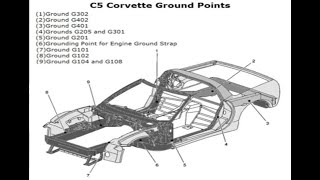
- Inspect and clean all power and ground connections. Key locations on the similar C6 Corvette platform include G101 (front driver's side frame), G106 (engine block), and the starter positive terminal, which is known to loosen. 🎬 Watch: How to locate and clean critical ground wires on this platform. Disconnect the battery before servicing the starter terminal or G106.
- Visually inspect the wiring harness to the suspect module for any signs of damage, chafing, or corrosion, paying special attention to the main connector.
- If the TCM is the suspect module, per TSB #PIP4653E, a software reflash should be attempted first using a Tech 2 or GDS2. If the code returns, the module is faulty.
- If all external factors are ruled out, the module itself is faulty. Replace the confirmed faulty module (ECM or TCM).
- Program the new module to the vehicle using specialized equipment. This step is mandatory and typically requires a dealership or specialized repair shop with access to GM's Service Programming System (SPS). A Crankshaft Position System Variation Learn procedure may also be required after ECM replacement.
Parts You'll Likely Need
- Engine Control Module (ECM)
(OEM #12603530)— This is the most common cause of a P0601 code if the fault is traced to the ECM. The module's internal memory has failed its self-test, indicating a non-repairable hardware fault.
Trusted brands: ACDelco (OEM), Dorman (Remanufactured), ARES Technologies (Remanufactured)
OEM price range: $600-$950
Aftermarket price range: $400-$700 - Transmission Control Module (TCM)
(OEM #24256861 (common service part for T43))— A known issue on this platform, as cited by GM TSB #PIP4653E. If diagnosis points to the TCM, it must be replaced and programmed. It is located inside the transmission.
Trusted brands: ACDelco (OEM)
OEM price range: $400-$800
Aftermarket price range: $250-$500
Related Codes That Often Appear With This One
- P0700 — Transmission Control System (MIL Request). This code is a critical clue. It is set when the TCM detects a fault and requests the ECM to turn on the Check Engine Light. If you see P0700 with P0601, the TCM is almost certainly the source of the problem.
- P0603 — Internal Control Module Keep Alive Memory (KAM) Error. This code is often seen with P0601 as it also relates to memory integrity issues within the control module, often triggered by power interruptions.
- P0604 — Internal Control Module Random Access Memory (RAM) Error. Like P0601 and P0603, this points to an internal failure of the module's memory processing.
- P1621 — Control Module Long Term Memory Performance. This is another GM-specific code that points to a memory or programming issue within a control module, often the PCM or TCM, and is listed in TSB #PIP4653E alongside P0601.
Technical Service Bulletins (TSBs) & Recalls
- PIP4653E: Diagnostic information for Malfunction Indicator Lamp with various DTCs, including P0601, potentially set in the TCM.
- 05-06-04-060A: Informational bulletin regarding control module DTCs, including P0601, that can be shared in multiple modules.
Platform-Specific Known Issues
- TSB #PIP4653E: Notes that DTCs P0601, P0603, P0604, P062F or P1621 may be stored in the Transmission Control Module (TCM), not just the ECM. It advises technicians to confirm which module set the code before attempting repairs and suggests a reprogram as the first step for a TCM fault.
- TSB #05-06-04-060A: An informational bulletin that confirms P0601 is a code that can be shared across multiple control modules, reinforcing the need for precise diagnosis.
Mechanic-Grade Diagnostic Values
- Battery Voltage (Engine Off) — expected: >12.6 Volts. Failure: A reading below 12.6V indicates a discharged or failing battery. On the related C6 Corvette, voltages below 11.8V are known to cause electrical issues.
- Alternator Output (Engine Running at Idle) — expected: 13.5 - 14.5 Volts. Failure: Voltage outside this range indicates a fault in the charging system (alternator, regulator, or wiring).
- ECM Power Input Pins (Voltage to Ground) — expected: Battery Positive Voltage (12V+). Failure: Significantly lower voltage or no voltage indicates a wiring, fuse, or relay issue between the power source and the ECM. Check X1 Connector Pin 19 (Ignition 1 Voltage) and Pin 20 (Battery Positive Voltage).
Scan Tool Commands That Help
- Tech 2 / GDS2: Read DTCs from specific module (ECM vs TCM) — This is the first and most critical diagnostic step to determine which module has the internal fault before ordering parts. A generic scanner may only show the code from the ECM.
- Tech 2 / GDS2 with GM SPS Subscription: Reprogram TCM — Per TSB #PIP4653E, this is the first recommended repair step if P0601 is confirmed to be stored in the Transmission Control Module. If the code returns after a reflash, the TCM hardware is faulty.
- Tech 2 / GDS2 with GM SPS Subscription: Replace and Program ECU — This function is mandatory when installing a new ECM or TCM. It downloads the VIN-specific software from GM's servers to the new module.
- Tech 2 / GDS2: Crankshaft Position System Variation Learn — This procedure is often required after replacing and programming the ECM to calibrate it to the crankshaft sensor's signal for accurate timing and misfire detection.
Wiring & Ground Locations
- ECM Location — On the similar C6 Corvette, the E38 ECM is located behind the right front fender, accessible after removing the wheelhouse liner.. Provides physical access to the module and its connectors for inspection and voltage/ground testing.
- G101 / G102 — On the C6 Corvette, these are primary chassis grounds located on the frame rail in the front driver's side of the engine compartment.. A poor ground at this location can cause a variety of electrical issues, potentially leading to voltage instability that could trigger a false P0601 or damage a module.
- G105 / G106 — On the C6 Corvette, these are key engine block grounds. G106 is on the right bank of the engine.. These provide the primary ground path for the engine and its sensors. A loose or corroded connection here is a critical failure point. The battery must be disconnected before checking G106 due to its proximity to the starter positive terminal.
- ECM X1 Connector — The main connector for the Engine Control Module.. This is where power and ground integrity must be verified. Specifically, Pin 19 (Ignition 1 Voltage) and Pin 20 (Battery Positive Voltage) are the primary power feeds to test.
OEM Part Supersession History
24256861→19435614, then 19434978— Standard part updates and revisions by the manufacturer.
Heads up: These parts are for the T43 TCM in the 6L80 transmission. Always verify the latest part number with a dealer using the vehicle's VIN before ordering.12603530→This is a common service number itself.— This part is interchangeable with multiple service numbers.
Heads up: This E38 ECM is interchangeable with service numbers 12590032, 12602044, 12607096, 12630457, and 19210737. This wide compatibility is useful when sourcing a remanufactured unit.
Model Year Variations Within This Range
- 2007-2009: All base model XLRs in this range use the 6L80 6-speed automatic transmission, making the TSB regarding the internal TCM relevant to all of them. A cosmetic refresh for the 2008 model year did not change the powertrain control hardware related to this code.
Helpful Videos

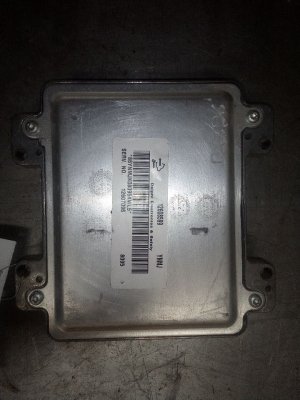
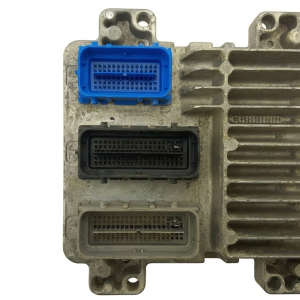
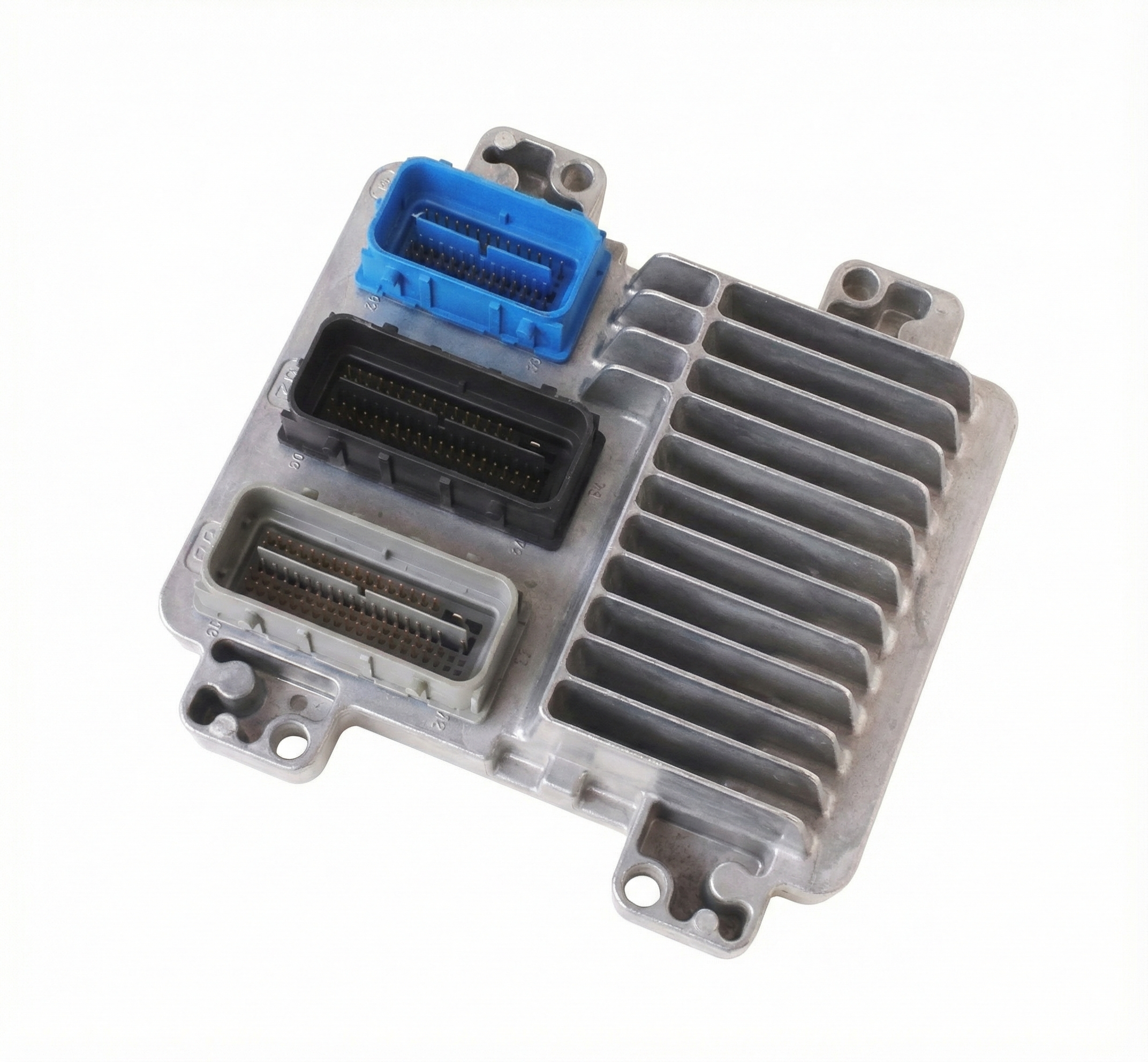
Used OEM Parts in Stock
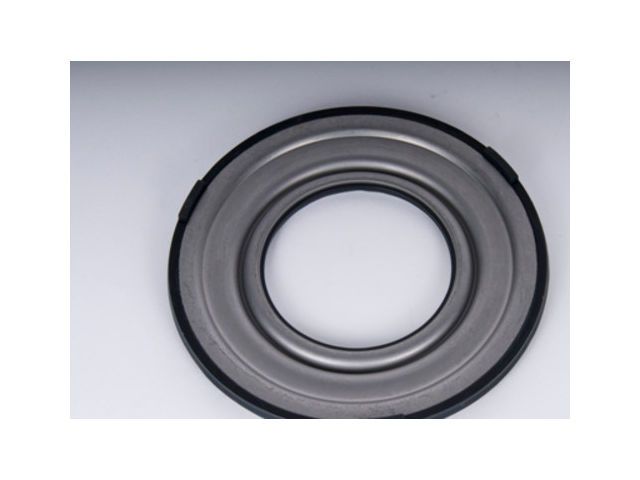
New Aftermarket Parts Available




The information in this article is provided for general reference and educational purposes only. Vehicle specifications, procedures, and part compatibility can vary by production date, trim level, and region. Always consult your vehicle's factory service manual and verify part numbers before purchasing or performing repairs. Safety-critical components such as airbags, seat belts, and braking systems should be installed by a qualified professional.
- Cadillac XLR:
- 🧭 Diagnostic Flowchart
- 🎬 Helpful Videos
- 🛍️ Shop This Part
- What's Unique About the 2007-2009 Cadillac XLR
- Symptoms You May Notice
- Most Likely Causes
- Rare But Worth Checking
- Diagnosis Steps
- Parts You'll Likely Need
- Related Codes That Often Appear With This One
- Technical Service Bulletins (TSBs) & Recalls
- Platform-Specific Known Issues
- Mechanic-Grade Diagnostic Values
- Scan Tool Commands That Help
- Wiring & Ground Locations
- OEM Part Supersession History
- Model Year Variations Within This Range
- 🎟️ Get 5% Off