

P0601 on 2012-2014 Chevrolet Captiva: Internal Module Memory Error Causes and Fixes
P0601 on a 2012-2014 Captiva indicates a fatal internal memory error in a control module, most commonly the Engine Control Module (ECM) or Transmission Control Module (TCM). The only reliable fix is to replace the faulty module and have it professionally programmed. This is not a DIY repair. Before condemning a module, the battery, charging system, and all power/ground connections must be thoroughly checked.
- P0601 is a critical code indicating a fatal internal memory error in either the Engine Control Module (ECM) or Transmission Control Module (TCM).
- The vehicle is not safe to drive and may stall or fail to start at any time.
- Before replacing any expensive modules, always test the battery and charging system, and inspect all related power and ground connections.
- The most common fix is replacing the faulty module, which MUST be professionally programmed to your vehicle's VIN.
- A GM Technical Service Bulletin (PIP4653E) specifically highlights the TCM as a common source of P0601 on the Captiva and its platform mates, making it crucial to identify which module set the code.
What's Unique About the 2012-2014 Chevrolet CAPTIVA
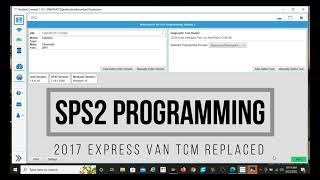
For this generation of Chevrolet Captiva and its platform mates like the Equinox and Terrain, the P0601 code is specifically called out 🎬 Watch: Diagnosing the P0601 checksum error on this platform in GM Technical Service Bulletins. TSB #PIP4653E notes that this code can be stored in the Transmission Control Module (TCM), leading to a check engine light and potential transmission-related symptoms. This is important because while P0601 often points to the main engine computer (ECM), on the Captiva, the TCM is a known point of failure for this specific error code, requiring careful diagnosis to identify the correct faulty module.
Diagnostic Flowchart
Tap your situation to follow the diagnostic path that matches what you're seeing on this vehicle.
Symptoms You May Notice
- Check Engine Light (Malfunction Indicator Lamp) is on.
- Vehicle will not start or has a no-crank condition.
- Engine may stall intermittently or shut off while driving.
- Reduced engine power or vehicle entering 'limp mode'.
- Erratic or harsh automatic transmission shifting.
- Flashing gear selector indicator (P, N, D, etc.) on the instrument cluster.
- Noticeable decrease in fuel economy.
- In some cases, no symptoms are present other than the Check Engine Light, which can be misleading.
- Replacing the wrong module (e.g., replacing the ECM when the TCM was the module that set the code). TSB #PIP4653E specifically warns technicians to verify which module has the stored DTC before proceeding with repairs.
- Replacing a module without first checking for and fixing underlying electrical issues like a failing alternator or bad ground cable, which can cause the new module to fail as well.
Most Likely Causes
- Failed Control Module (ECM or TCM) 🔴 High Probability Internal components of the module can fail due to age, heat, and vibration, leading to memory corruption. GM has issued TSBs acknowledging this code can appear in multiple modules, including the TCM on the Captiva and its platform mates. Forum discussions frequently cite the TCM as the confirmed point of failure.
How to confirm: After confirming battery, power, and ground circuits are good, a professional scan tool is used to verify which module is storing the P0601 code. If the code is in the TCM, it is often accompanied by P0700 in the ECM. If all external inputs are correct, the module itself is condemned.
Typical fix: Replace the faulty control module (ECM or TCM) and have the new unit professionally programmed to the vehicle's VIN.
Est. part cost: $300-$800 - Low Battery Voltage or Charging System Fault 🟡 Medium Probability → Shop Vehicle Battery Voltage spikes or drops from a weak battery or failing alternator can corrupt the memory in control modules during key-on/off cycles. Owners on forums report numerous electrical gremlins tied to low voltage that can precede a P0601 code.
How to confirm: Test the battery's state of charge and health, preferably with a load tester. With the engine running, use a multimeter to check the alternator output voltage at the battery terminals; it should be stable between 13.5 and 14.5 volts.
Typical fix: Replace the battery and/or alternator if they fail testing. Note that if the P0601 code is permanently set, the module may already be damaged and will still require replacement even after fixing the voltage issue.
Est. part cost: $150-$500 - Poor Power or Ground Connections ⚪ Low Probability Corroded or loose battery terminals, main chassis grounds, or module connectors can cause intermittent voltage supply to the ECM/TCM, potentially triggering a memory error. A service bulletin (#13-06-03-001) was also issued for the 2011-2013 Captiva to inspect the starter motor B+ cable attachment, highlighting the sensitivity of the electrical system. One owner traced a similar issue to a poor pin connection at the TCM harness plug.
How to confirm: Visually inspect and physically check the battery terminals, main ground straps from the engine to the chassis, and the electrical connectors at the ECM and TCM for corrosion, damage, or looseness.
Typical fix: Clean or tighten connections. In some cases, a corroded connector, battery cable end, or wire may need to be repaired or replaced.
Est. part cost: $5-$150
Rare But Worth Checking
- Aftermarket Engine/Transmission Tuning: → Shop Transmission Assembly If a non-OEM performance tune has been flashed to the ECM or TCM, an improper write process can corrupt the memory and set a P0601 code.
- Federal Emissions Warranty Coverage: Before paying for a repair, check your vehicle's warranty status. The PCM and ECM are often considered major emissions components and may be covered under the Federal Emissions Warranty for up to 8 years or 80,000 miles, whichever comes first. This could result in a free replacement at a dealership.
Diagnosis Steps
- Scan the vehicle for all stored trouble codes. Crucially, use a scan tool capable of communicating with multiple modules to identify which one (ECM, TCM, etc.) has stored the P0601 code.
- Check the battery. Ensure it is fully charged and healthy using a load tester.
- Test the charging system. With the engine running, verify the alternator is providing stable voltage (typically 13.5-14.5V).
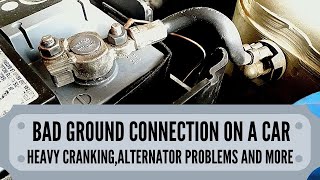
- Inspect all power and ground connections. Check for clean, tight connections at the battery terminals, main engine/chassis grounds, and the affected 🎬 See how to diagnose and solve bad ground connections module's own electrical connector. Pay special attention to battery cable ends for corrosion.
- If the P0601 is in the TCM, inspect the main harness connector at the transmission case for corrosion or damage.
- If all power and ground inputs to the module are good and stable, the fault is internal to the module.
- Attempt to re-flash or reprogram the existing module. This is recommended by TSB PIP4653E as a first step if the code is in the TCM, but it is rarely successful for a permanent P0601 checksum error.
- If reprogramming fails or is not an option, replace the faulty control module.
- Program the new control module using manufacturer-specific software (e.g., GM's Techline Connect). This step is mandatory and requires professional tools.
Parts You'll Likely Need
- Engine Control Module (ECM)
(OEM #12653998 (common base number, verify by VIN))— This is a common cause of P0601 if the scan tool confirms the code is stored in the ECM. The internal memory fails its self-check, requiring complete replacement of the unit.
Trusted brands: ACDelco (GM Genuine Part)
OEM price range: $350-$900
Aftermarket price range: $250-$600 - Transmission Control Module (TCM)
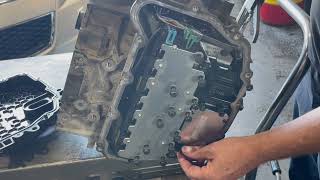
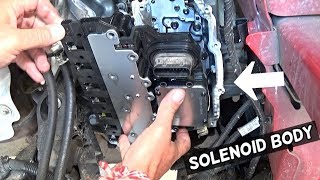
(OEM #24268164 (common for 6T40/6T45, verify by VIN))🎬 Watch: Step-by-step removal of the transmission control module assembly — On the Captiva and its platform mates, the TCM is a very common source for the P0601 code, as highlighted in TSB PIP4653E and multiple owner forums.
Trusted brands: ACDelco (often sold remanufactured)
OEM price range: $400-$700
Aftermarket price range: $250-$500
Related Codes That Often Appear With This One
- P0700 — P0700 is a generic code set by the ECM to indicate that the Transmission Control Module (TCM) has stored a fault. If P0601 is present in the TCM, P0700 will often be present in the ECM, pointing the technician toward the transmission system.
Technical Service Bulletins (TSBs) & Recalls
- PIP4653E: Communicates that DTCs P0601, P0603, P0604, P062F or P1621 can be stored in the Transmission Control Module (TCM) and provides diagnostic guidance to verify the module before replacement.
- 05-06-04-060A: An informational bulletin about various control module DTCs, including P0601, that can be set in multiple different modules.
- 13-06-03-001: A service update to inspect and, if necessary, replace the starter motor B+ cable attachment to prevent no-start conditions and voltage issues.
Platform-Specific Known Issues
- TSB #PIP4653E specifically addresses DTC P0601 (among others) being stored in the Transmission Control Module (TCM) on 2009-2014 Chevrolet Captiva models. It instructs technicians to verify which module has set the code before attempting to reprogram or replace it.
- TSB #05-06-04-060A is an informational bulletin noting that P0601 is a control module code that can be shared across multiple modules, reinforcing the need for precise diagnosis.
- TSB #13-06-03-001 (and its revisions) calls for an inspection of the starter motor B+ cable nut on 2011-2013 Captivas, which can cause no-start conditions and electrical system instability if loose or damaged.
Mechanic-Grade Diagnostic Values
- TCM Power Supply Voltage — expected: Above 11.5 Volts. Failure: A voltage reading below 11.5V at the specified TCM connector pins indicates a power supply issue that must be fixed before condemning the module.
- TCM Ground Circuit Resistance — expected: Less than 3.0 Ohms. Failure: Resistance greater than 3 ohms between the specified TCM ground pins and the negative battery post indicates a poor ground connection.
- Alternator Output Voltage — expected: 13.5 to 14.5 Volts (engine running). Failure: Voltage outside this range indicates a charging system fault that can cause module errors.
Scan Tool Commands That Help
- GDS2 / Techline Connect: SPS (Service Programming System) — This function is mandatory when replacing either the ECM or TCM. It downloads the correct software and VIN information into the new module, synchronizing it with the rest of the vehicle's systems.
- GDS2 / Techline Connect: Replace and Reprogram — This is the specific workflow within the SPS2 software used to initiate the programming of a new control module after the original has been physically replaced.
Wiring & Ground Locations
- G103 — Behind the fuse box in the engine compartment.. This is a primary battery ground point. Corrosion or looseness here can cause widespread electrical issues, including unstable voltage to control modules.
- G105 / G106 — G105 is often on the cylinder block. G106 is often located on the front frame cross rail or strut tower. These are main engine and body ground points.. The ECM and TCM rely on clean engine and chassis grounds. TSBs for related communication codes specifically mention checking these grounds. A poor connection here can create a voltage potential difference, leading to module communication errors and internal faults like P0601.
- TCM Main Connector (14-pin) — On the outside of the transmission case. This connector is the main interface to the internal TCM (TEHCM).. This is the single point of failure for all power, ground, and communication signals going to the TCM. TSBs for related codes point to poor pin fit, corrosion, or damage at this specific connector as a primary cause of transmission module faults.
- ECM Connectors (X1/X2) — The ECM is located in the engine bay, and has large multi-pin connectors, often labeled X1 and X2.. All power, ground, and sensor inputs for the ECM pass through these connectors. A diagnostic video for a 2014 Captiva traced a no-start to a lack of ignition power at the ECM connector, caused by an issue within the underhood fuse block itself.
Real Owner Repair Stories
- Chevrolet Forum user 'shuvl' (2012 Chevrolet Captiva) — A host of electrical issues, including fried fuse box, stalling at low speeds, and problems that were worse when it rained.
❌ Tried (didn't work) Multiple trips to the dealership, replaced alternator, replaced Body Control Module (BCM) three times.
✅ What actually fixed it The user reinforced the factory grounding system by adding supplementary ground straps. One strap was run from the negative battery post to the shock tower, and a second strap was run from the alternator mounting bracket to the other shock tower. This resolved the persistent electrical problems.
OEM Part Supersession History
Multiple Gen 1 TCM PNs (e.g., 24256524, 24258587)→24268164 (Common Gen 2 Part Number)— The Gen 2 TCMs are a revised design intended to improve reliability over the earlier Gen 1 modules used in the 6T40/6T45 transmissions.
Heads up: Part numbers 24268164, 24287425, 24291305, and others are often listed as compatible Gen 2 replacements for the Captiva's 6T45 transmission. It is critical to verify compatibility with the vehicle's VIN before purchasing, as programming is required and may fail if the base hardware is incorrect.
Helpful Videos
Used OEM Parts in Stock
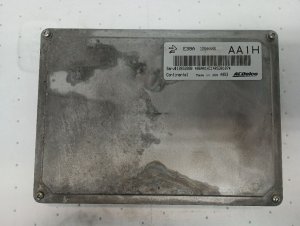
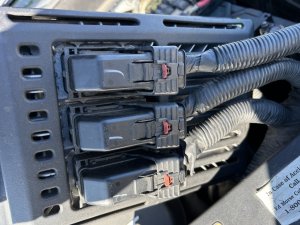
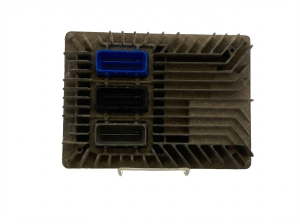
New Aftermarket Parts Available


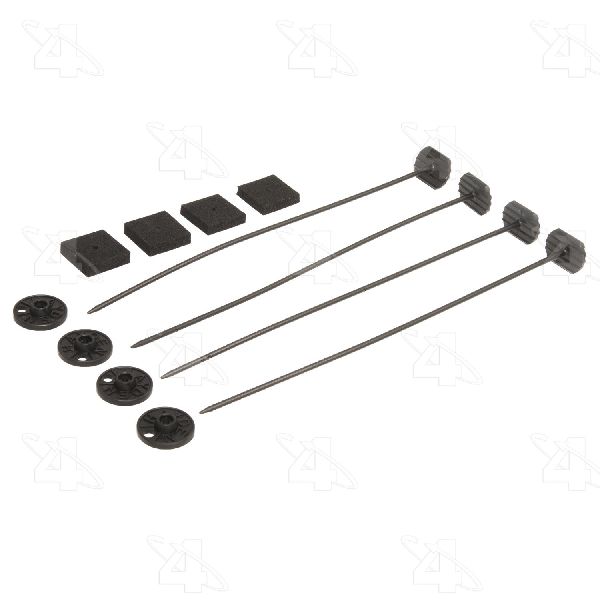

The information in this article is provided for general reference and educational purposes only. Vehicle specifications, procedures, and part compatibility can vary by production date, trim level, and region. Always consult your vehicle's factory service manual and verify part numbers before purchasing or performing repairs. Safety-critical components such as airbags, seat belts, and braking systems should be installed by a qualified professional.
- Chevrolet CAPTIVA:
- 🧭 Diagnostic Flowchart
- 🎬 Helpful Videos
- 🛍️ Shop This Part
- What's Unique About the 2012-2014 Chevrolet CAPTIVA
- Symptoms You May Notice
- Most Likely Causes
- Rare But Worth Checking
- Diagnosis Steps
- Parts You'll Likely Need
- Related Codes That Often Appear With This One
- Technical Service Bulletins (TSBs) & Recalls
- Platform-Specific Known Issues
- Mechanic-Grade Diagnostic Values
- Scan Tool Commands That Help
- Wiring & Ground Locations
- Real Owner Repair Stories
- OEM Part Supersession History
- 🎟️ Get 5% Off