

P0601 on 2007-2014 Chevrolet Impala: Internal Memory Error Causes and Fixes
P0601 on a 2007-2014 Impala indicates a fatal internal memory error in a control module, most commonly the Engine Control Module (ECM) or Transmission Control Module (TCM). The most likely fix is replacing the faulty module, which requires professional programming. Expect costs to range from $400 to over $1100, with some dealer repairs exceeding this. Driving is unsafe as the vehicle can stall or fail to start without warning.
- P0601 is a critical code indicating an internal failure of a control module's memory.
- On the 2007-2014 Impala, the fault could be in the Engine Control Module (ECM) OR the Transmission Control Module (TCM). Diagnosis must check both.
- The vehicle should not be driven, as sudden stalling is a common and dangerous symptom.
- The fix almost always requires replacing the faulty module and having the new one professionally programmed to your car's VIN.
- Before replacing an expensive module, always verify the battery and charging system are healthy and all power/ground connections are clean and tight.
What's Unique About the 2007-2014 Chevrolet IMPALA
For this generation of Impala and other GM vehicles sharing the W-Body and Epsilon II platforms, P0601 is not exclusively an Engine Control Module (ECM) fault. Manufacturer Technical Service Bulletin (TSB) #PIP4653E specifically notes that this code, along with others like P0603, P0604, and P062F, can be stored in the Transmission Control Module (TCM), causing transmission-related symptoms. This is a key distinction, as diagnosis must include checking both the ECM and TCM for the source of the fault. The TCM (often a T42 or similar model) is a known failure point on these platforms.
Diagnostic Flowchart
Tap your situation to follow the diagnostic path that matches what you're seeing on this vehicle.
Generation note: This range covers the end of the 9th generation (2007-2013) and the first year of the 10th generation (2014). The 9th gen continued to be sold as the 'Impala Limited' for fleet sales through 2016. While the underlying cause (module failure) is the same, the specific part numbers for the ECM/TCM and their locations may differ. On many 9th gen models, the TCM is located under the airbox assembly in the engine bay. On the 10th gen (Epsilon II), the TCM may be internal to the transmission.
Symptoms You May Notice
- Check Engine Light is on
- Vehicle stalls unexpectedly while driving or at idle.
- Engine cranks but will not start, or starts and then immediately stalls.
- "Reduced Engine Power" or "Service Stabilitrak" message on the driver information center.
- Harsh or erratic transmission shifting, or getting stuck in one gear.
- Inability to pass an emissions test.
- Intermittent loss of communication with the module, causing gauges and locks to behave erratically.
- Replacing sensors (e.g., crank or cam sensors) because of stalling or no-start symptoms without first addressing the P0601 code. The P0601 indicates the computer itself is faulty, not necessarily the sensors it reads.
- Assuming the ECM is the only possible cause. TSB #PIP4653E makes it clear that the TCM is a common source of P0601 on this platform, and diagnosis must confirm which module stored the code.
Most Likely Causes
- Faulty Engine Control Module (ECM) or Powertrain Control Module (PCM) 🔴 High Probability → Shop Engine Control Module (ECM) Internal components of the module, specifically the memory chips, can fail over time due to heat cycles, vibration, and age, leading to memory corruption. This is the most common reason for a P0601 code when no other codes are present.
How to confirm: After verifying stable power (12.4V+ off, 13.5-14.5V running) and clean ground connections to the module, if the code returns immediately after being cleared, the module itself is condemned. A professional scan tool is required to confirm the fault is isolated to the ECM.
Typical fix: Replace the ECM/PCM and program the new unit to the vehicle's VIN using a tool like GM's MDI with Techline Connect software.
Est. part cost: $250-$700 - Faulty Transmission Control Module (TCM) 🟡 Medium Probability → Shop Transmission Assembly As noted in GM TSB #PIP4653E, the TCM is a known point of failure that can set a P0601 code on this platform, especially when accompanied by shifting problems or code P0700. The TCM on some models is located in the engine bay where it is subject to heat and vibration, while on others it is internal to the transmission.
How to confirm: Use a diagnostic scanner capable of reading codes from individual modules. If P0601 is stored in the TCM (sometimes accompanied by P0700 or U-codes like U0101), the TCM is the culprit.
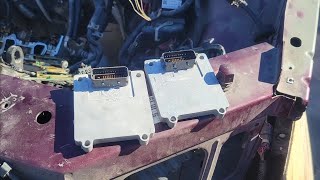
Typical fix: Replace the TCM and program the new unit. On some models, this requires removing the transmission side cover. 🎬 Watch this walkthrough on how to replace the TCM.
Est. part cost: $200-$600 - Low Battery Voltage or Charging System Issues ⚪ Low Probability → Shop Vehicle Battery A weak battery or failing alternator can provide inconsistent voltage to the control modules during startup or operation. This can sometimes corrupt the memory's self-check process and trigger a false checksum error.
How to confirm: Test the battery with a load tester; it should read above 12.4 volts at rest. With the engine running, check alternator output, which should be between 13.5 and 14.5 volts.
Typical fix: Replace the weak battery or faulty alternator.
Est. part cost: $150-$400 - Poor Power/Ground Connections to a Control Module ⚪ Low Probability
How to confirm: Inspect and clean the main power and ground connections at the battery, engine block, chassis, and the specific control module's wiring harness. Check for corrosion or loose terminals. A voltage drop test on the module's power and ground circuits can confirm a bad connection.
Typical fix: Clean or repair the corroded or loose connections. In some cases, the harness connector itself may be damaged and require replacement.
Est. part cost: $5-$50
Rare But Worth Checking
- Aftermarket Tuning or Programming: Improperly installed performance tunes or unauthorized software flashing can corrupt the module's memory and trigger a P0601 code.
- Voltage Spike: A voltage spike from improper jump-starting or a short circuit elsewhere in the vehicle can damage the sensitive internal electronics of a control module.
- Chafed Engine Wiring Harness: → Shop Engine Wiring Harness On 2012-2013 models specifically, TSB PI0631H notes that the engine wiring harness can rub through on the transmission case, causing various electrical faults and DTCs. While not directly citing P0601, such a short could potentially damage a module.
Diagnosis Steps
- Scan for Codes in ALL Modules: Use an advanced OBD-II scanner (like a GM Tech 2 or GDS2) to confirm P0601 is present. Crucially, check WHICH module stored the code (ECM or TCM). Note any other codes, especially P0700 or U-codes.
- Check Battery and Charging System: Test the battery's state of charge and health with a load tester. With the engine running, verify the alternator is producing stable voltage (typically 13.5V-14.5V). Low or unstable voltage can trigger false codes.
- Inspect Wiring and Connections: Visually inspect the wiring harnesses going to the ECM and TCM. Look for any signs of damage, corrosion, or loose connections. Check the main engine and chassis ground straps for tightness and cleanliness. On 9th gen models, the TCM is often under the airbox; check its connector for damage.
- Clear and Re-Scan: Attempt to clear the code. If it returns immediately without driving the vehicle, this indicates a 'hard fault' and strongly confirms the module has an internal failure.
- Check for TSBs and Software Updates: A professional shop can check if any factory software updates are available for the suspect module. TSB #PIP4653E suggests reprogramming the TCM as a first step, 🎬 Watch this tech tip on programming a replacement TCM. but if the code returns, replacement is necessary.
- Condemn the Module: If power and grounds are good, the battery is healthy, and the code returns instantly, the control module (ECM or TCM) has failed and requires replacement.
- Replace and Program: Install a new or remanufactured control module. This new module MUST be programmed by a dealer or qualified shop with the correct software and your vehicle's VIN. A security relearn and CASE relearn will also be required after installation.
Parts You'll Likely Need
- Engine Control Module (ECM/PCM)
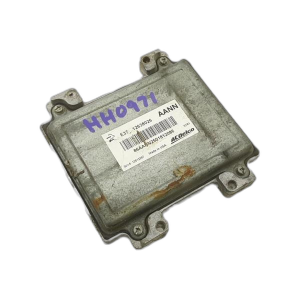
(OEM #12633238, 12612384, 12597121 (E38 type, part numbers vary by year/engine))— This is the primary cause of a P0601 code when it is stored in the engine computer. Internal memory failure requires replacement.
Trusted brands: ACDelco, Cardone, Standard Motor Products 🎬 See how to replace the ECM and perform the relearn.
OEM price range: $400-$700
Aftermarket price range: $250-$500 - Transmission Control Module (TCM)
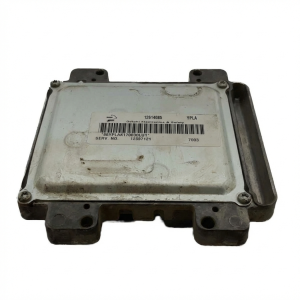
(OEM #24241806, 24252114 (Part numbers vary by year/engine))— As per TSB #PIP4653E, the TCM can be the source of P0601. This is the part to replace if diagnosis confirms the fault is in the transmission module.
Trusted brands: ACDelco, Dorman, ATP
OEM price range: $300-$600
Aftermarket price range: $200-$450
Related Codes That Often Appear With This One
- P0700 — This code is set by the ECM when the Transmission Control Module (TCM) has stored a fault. If you see P0700 with P0601, it strongly suggests the P0601 error is located within the TCM.
- P0602, P0603, P0604, P062F, P1621 — These are all related internal module memory or programming error codes. TSBs #PIP4653E and #05-06-04-060A confirm they can appear together, pointing to a general control module failure.
- U0100, U0101 — These are communication loss codes. A failing module can stop communicating with other modules on the vehicle's data network, triggering these codes alongside the P0601. A forum user with a 2014 Impala reported these codes when their TCM was failing.
Technical Service Bulletins (TSBs) & Recalls
- PIP4653E: Mentions P0601 can be stored in the Transmission Control Module (TCM). It instructs technicians to verify which module set the code before reprogramming or replacing it.
- 05-06-04-060A: Notes that P0601 is one of several codes that can be shared across multiple modules and can be triggered by low voltage conditions.
- PI0631H: Pertains to 2012-2013 Impalas and describes a condition where the engine wiring harness can chafe on the transmission case, causing various electrical issues. While not directly calling out P0601, this type of wiring damage could be a root cause for module failure.
Platform-Specific Known Issues
- Owner complaints filed with the NHTSA describe sudden stalling and no-start conditions where the vehicle would restart after clearing the P0601 code with a handheld scanner, indicating an intermittent but critical fault.
- TSB #PIP4653E specifically addresses that DTCs P0601, P0603, P0604, P062F, or P1621 can be stored in the Transmission Control Module (TCM), not just the ECM. This TSB covers a wide range of GM vehicles, including the 2012-2014 Impala.
- TSB #05-06-04-060A is an informational bulletin noting that P0601 and other related codes can be set in multiple different control modules.
- A user on the ChevyTalk forum with a 2008 Impala reported that their P0601 issue seemed to be heat-related, with the car working fine in cooler temperatures but failing when it was warmer. The ultimate fix was an ECM replacement.
Mechanic-Grade Diagnostic Values
- Battery Voltage (Engine Off) — expected: >12.4 Volts. Failure: A reading below 12.4V indicates a weak or discharged battery that can cause false module codes.
- Charging System Voltage (Engine Running) — expected: 13.5 - 14.5 Volts. Failure: Voltage outside this range indicates a faulty alternator or voltage regulator, which can lead to module damage or incorrect operation.
Scan Tool Commands That Help
- GM Tech 2 / GDS2 or high-end aftermarket scanner: Crankshaft Position System Variation Learn (CASE Relearn) — This procedure is mandatory after replacing the ECM. It synchronizes the new module with the crankshaft position sensor's specific signal to ensure accurate misfire detection. Failure to perform this can leave a Check Engine Light on.
- GM Tech 2 / GDS2 or high-end aftermarket scanner: Security Relearn (VATS Relearn) — Required after replacing the ECM to pair the new module with the vehicle's anti-theft system and keys. The vehicle will not start until this is completed. Some vendors can disable VATS in the replacement module to bypass this step.
- GM Techline Connect: Module Programming and Setup — This is the official GM software used to flash a new ECM or TCM with the correct vehicle-specific calibration and VIN. It is the definitive step for ensuring a replacement module works correctly.
Wiring & Ground Locations
- G101 — Located at the front of the engine, lower block. It may be jumpered to G106.. This is a primary ground point for both the Engine Control Module (ECM) and the Transmission Control Module (TCM). A poor connection here can cause intermittent power loss or voltage drops to either module, potentially triggering a P0601.
- G103 — Located at the left rear of the engine compartment on the cowl, above the brake booster.. This ground serves the Body Control Module (BCM) and the Data Link Connector (DLC). While not a direct ground for the ECM/TCM, a fault here can cause communication errors across the vehicle's network, complicating diagnosis.
- G105 / G106 — Located at the front of the engine compartment, often on the frame cross rail under the crank pulley or behind cooling fan relays.. These are major engine and chassis grounds. All module grounds ultimately rely on these main connections being clean and secure. A loose or corroded G105/G106 can create system-wide electrical issues.
- TCM Connector — On 9th generation models (2007-2013), it's typically located under the airbox assembly in the engine bay. On 10th gen models (2014), it may be internal to the transmission.. The connector itself can be a point of failure. A burnt power pin on the TCM connector due to a loose connection is a known issue that can cause communication loss (U0101) and potentially damage the TCM, leading to P0601.
Real Owner Repair Stories
- Chevy Talk forum user 'schochy' (2008 Impala LT) — P0601 code, 'Reduced Engine Power', 'Disabling Starter' messages on dash. Seemed to be heat-related, working fine under 60 degrees but failing at 77 degrees.
❌ Tried (didn't work) Trying another key, Replacing the battery, Cleaning all connections
✅ What actually fixed it The ECM module was replaced. The car ran great for two months after replacement, confirming the fix. A CASE relearn was still needed to clear the final check engine light. - YouTube user 'Mil-usos Miller' (2006 Impala LT 3.9L (similar 9th gen platform)) — Transmission issues requiring TCM replacement.
❌ Tried (didn't work) Concern about needing expensive dealer programming.
✅ What actually fixed it Replaced the original TCM with a used one from a junkyard from the same model. The replacement was plug-and-play and did not require any additional programming to restore function, which fixed the vehicle for a fraction of the dealer cost.
OEM Part Supersession History
12597121, 12612384, 12625455→12633238— These are various service numbers for the GM E38 ECM used in this vehicle range. Part numbers are superseded over time due to minor hardware revisions or software updates.
Heads up: When ordering a replacement, it is critical to provide the vehicle's VIN to ensure the correct hardware and, more importantly, the correct software/calibration is flashed to the module. While physically interchangeable, the programming is vehicle-specific.24241806→24252114 (Hardware Code)— Part numbers for the TCM change based on application (engine size) and model year. 24241806 is a common part number for the 2011 Impala TCM, which corresponds to hardware family 24252114.
Heads up: Using a TCM from a different engine size or year without correct programming will likely result in failure. For this platform, some used TCMs from identical vehicles have been shown to work without reprogramming, but it is not guaranteed.
Model Year Variations Within This Range
- 2012-2013: These model years are specifically called out in TSB PI0631H for a potential engine wiring harness chafe point. The harness can rub through on the transmission case, causing a wide variety of DTCs. While P0601 is not explicitly listed, a short in a 5-volt reference wire could potentially damage a module.
- 2007-2013 vs. 2014: The location of the Transmission Control Module (TCM) can differ. On the 9th generation (through 2013 and 'Limited' models), the TCM is a separate module typically found in the engine bay, under the air filter housing. On the 10th generation (starting 2014), the TCM may be located inside the transmission itself, making replacement more labor-intensive.
Helpful Videos


Used OEM Parts in Stock
New Aftermarket Parts Available


The information in this article is provided for general reference and educational purposes only. Vehicle specifications, procedures, and part compatibility can vary by production date, trim level, and region. Always consult your vehicle's factory service manual and verify part numbers before purchasing or performing repairs. Safety-critical components such as airbags, seat belts, and braking systems should be installed by a qualified professional.
- Chevrolet IMPALA:
- 🧭 Diagnostic Flowchart
- 🎬 Helpful Videos
- 🛍️ Shop This Part
- What's Unique About the 2007-2014 Chevrolet IMPALA
- Symptoms You May Notice
- Most Likely Causes
- Rare But Worth Checking
- Diagnosis Steps
- Parts You'll Likely Need
- Related Codes That Often Appear With This One
- Technical Service Bulletins (TSBs) & Recalls
- Platform-Specific Known Issues
- Mechanic-Grade Diagnostic Values
- Scan Tool Commands That Help
- Wiring & Ground Locations
- Real Owner Repair Stories
- OEM Part Supersession History
- Model Year Variations Within This Range
- 🎟️ Get 5% Off