

P0601 on 2007-2014 Chevrolet Silverado 1500: Internal Module Failure Causes and Fixes
P0601 on a 2007-2014 Silverado almost always means the Engine Control Module (ECM) or Transmission Control Module (TCM) has failed an internal memory self-test. The only reliable fix is to replace the faulty module and have it professionally programmed to your truck's VIN. This repair typically costs between $800 and $1,500. While checking battery voltage and grounds is a crucial first step, a persistent P0601 code points directly to module failure.
- P0601 is a critical code indicating a fatal error in a control module, usually the ECM or TCM.
- The most common fix is to replace the faulty module, which must be professionally programmed to your truck.
- Do not drive the vehicle, as the engine could stall at any time, posing a serious safety risk.
- Before replacing an expensive module, always verify the battery, alternator, and ground connections are in perfect condition.
- Use a scan tool capable of identifying *which* module set the code to avoid replacing the wrong part.
What's Unique About the 2007-2014 Chevrolet Silverado 1500

For the 2007-2014 Silverado, which spans the GMT900 and early K2XX generations, the P0601 code is a well-documented and serious issue. While many vehicles can log this code, GM has issued specific bulletins acknowledging it can appear in either the Engine Control Module (ECM) or the Transmission Control Module (TCM). This means diagnosis must confirm which module has set the code before replacement. An owner complaint filed with the NHTSA highlights the severity, describing the sudden malfunction as 'very scary'. A Reddit user with an '08 Silverado described a similar experience where the engine would shut off at low speeds, prompting an 'engine power refused' message on the dash.
Diagnostic Flowchart

Tap your situation to follow the diagnostic path that matches what you're seeing on this vehicle.
Generation note: This range covers the second generation (GMT900, 2007-2013) and the first year of the third generation (K2XX, 2014) of the Silverado 1500. While the P0601 code's meaning is the same for both, the specific part numbers for the ECM (e.g., E38 for Gen IV V8s) or TCM (e.g., T43 for 6-speeds) will differ. Diagnosis and repair procedures are otherwise very similar.
Symptoms You May Notice

- Check Engine Light is on
- Engine stalls intermittently or dies while driving, especially after warming up. 🎬 Watch: Diagnosing a Silverado that stalls when the engine gets hot.
- Vehicle will not start, or cranks but won't fire.
- Reduced engine power or entering 'limp mode'.
- Erratic or harsh transmission shifting.
- Warning messages on the driver information center, such as 'Service StabiliTrak', 'Service Traction Control', or 'Engine Power Reduced'.
- ABS and Traction Control lights may illuminate.
- Replacing the ECM when the TCM was the actual cause (or vice-versa). It is critical to use a scan tool that can identify the specific module that set the code, as advised by GM TSB #PIP4653E.
- Replacing a control module when the root cause was a weak battery, failing alternator, or a poor ground connection causing voltage instability.
- Assuming a pre-programmed module from an online vendor will not require any further steps. A security/anti-theft relearn or a crankshaft position variation relearn (for code P0315) is often still necessary.
Most Likely Causes
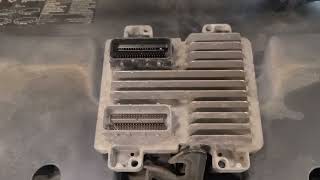
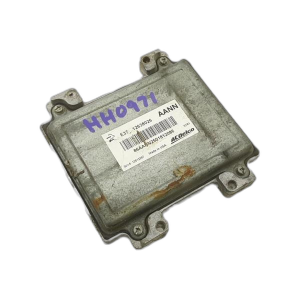
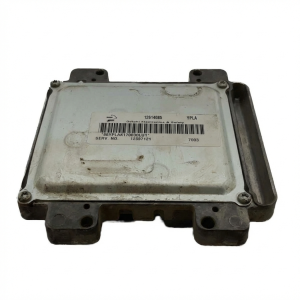
- Failed Engine Control Module (ECM) or Powertrain Control Module (PCM) 🔴 High Probability → Shop Engine Control Module (ECM) The ECM, often an ACDelco E38 model for Gen IV V8 engines in this era, is susceptible to internal processor faults after repeated heat cycles. Poor engine block grounds can also cause voltage irregularities that damage the module over time.
How to confirm: After verifying stable battery voltage (12.6V+ off, 13.5-14.5V running) and clean, tight grounds, if the P0601 code returns immediately after being cleared, the module itself is condemned. A professional scan tool can confirm the code is originating from the ECM.
Typical fix: Replace the ECM and program the new unit to the vehicle. Many specialists offer pre-programmed or cloned modules.
Est. part cost: $300-$1050 - Failed Transmission Control Module (TCM) 🟡 Medium Probability → Shop Transmission Assembly GM TSB #PIP4653E specifically calls out that P0601 can be stored in the TCM on these trucks, which often use a T43-family TCM for 6-speed transmissions. The TCM is subject to similar environmental stresses as the ECM, leading to internal memory corruption.
How to confirm: A professional scan tool (like the GM Tech 2 or GDS2) is required to check which module stored the code. The TSB instructs technicians to verify the code is in the TCM before proceeding with reprogramming or replacement.
Typical fix: Replace the TCM and program the new unit. As with the ECM, pre-programmed units are available.
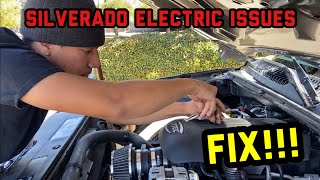
Est. part cost: $250-$700 - Low or Unstable Battery Voltage / Poor Grounds ⚪ Low Probability → Shop Vehicle Battery These trucks are known to be sensitive to voltage issues. A weak battery, failing alternator, or corroded/loose ground straps (especially the main engine-to-chassis grounds) can cause voltage spikes or drops that corrupt the module's memory during key-on or key-off cycles. A recent YouTube repair video on a 2011 truck showed a broken ground wire near the motor mount was the root cause 🎬 See how a broken ground wire can trigger this code. of a P0601.
How to confirm: Load test the battery. With the engine running, use a multimeter to check alternator output at the battery terminals; it should be stable, typically between 13.5 and 14.5 volts. Perform a voltage drop test on the main ground cables from the engine block to the frame and battery to the frame. Resistance on a ground strap should be less than 0.1 Ω.
Typical fix: Replace the failing battery or alternator. Clean all ground connection points with a wire brush until they are shiny metal and tighten securely. Repair any broken ground wires.
Est. part cost: $150-$600
Rare But Worth Checking
- Wiring Harness Issues: While less common than module failure, a short or open in the wiring providing power or ground to the ECM/TCM can mimic internal failure. A thorough check of the harness connectors and ground points is a wise step before ordering an expensive module. A recent repair video showed wiggling wires near a ground by the motor mount caused the P0601 code to reset, indicating a wiring fault.
- Improper Aftermarket Tuning: Flashing the ECM with an unauthorized or improperly written performance tune can corrupt the memory and trigger a P0601 code. A user on a DiabloSport forum reported their P0601 code and stalling issues would disappear when they returned the truck to the stock tune, but reappear when the performance tune was loaded. Another user on an LS1Tech forum bricked their PCM and got a P0601 after an incomplete flash.
Diagnosis Steps
- Connect a professional OBD-II scanner to confirm the P0601 code is active.
- Use the scanner to identify which specific module (ECM, TCM, etc.) has stored the fault code. This is a critical step, as emphasized by GM TSB #PIP4653E.
- Check for any other related trouble codes (e.g., P0603, P0604, U-codes) that may provide more context.
- Inspect the battery terminals for corrosion and ensure they are tight. Test the battery's health with a digital load tester to ensure it's healthy (not just showing good surface voltage).
- With the engine running, use a multimeter to verify the alternator is providing stable voltage (typically 13.5V-14.5V).
- Meticulously inspect and test the main ground straps. Key locations on these trucks are from the battery to the chassis, and from the engine block to the firewall/chassis. 🎬 Watch: How to find and fix common GM truck ground issues. A voltage drop test across these grounds should show less than 0.2 volts. The ECM/TCM ground is G101, at the lower front of the engine block.
- Visually inspect the wiring harness and connectors going to the identified faulty module for any signs of damage, moisture, or corrosion. Pay close attention to the ground wires that attach to the engine block, particularly near the driver's side motor mount.
- Attempt to clear the P0601 code. If it returns immediately upon the next key cycle, it strongly confirms a permanent internal fault in the module.
- If an aftermarket tune is installed, flash the vehicle back to the stock calibration and see if the problem persists.
- If all external factors (power, ground, wiring) are confirmed to be good, the control module is faulty and must be replaced and programmed.
Parts You'll Likely Need

- Engine Control Module (ECM)
(OEM #12633238, 12612384 (Varies by year/engine, always verify with VIN))— This is the most common cause of a P0601 code. The internal memory has failed its integrity check. - Transmission Control Module (TCM)
(OEM #24256939, 24234503 (Varies by year/trans, always verify with VIN))— A less common but documented cause for P0601 on this platform, as per GM TSBs.
Related Codes That Often Appear With This One
- P0603 — Internal Control Module Keep Alive Memory (KAM) Error. This code is often seen with P0601 as it also relates to an internal memory fault within the control module. TSB #PIP4653E lists them together.
- P0604 — Internal Control Module Random Access Memory (RAM) Error. Another internal memory fault code that points to a failing module. TSB #PIP4653E also lists this code.
- P062F — Internal Control Module EEPROM Error. This is another code indicating a problem with the module's internal memory, specifically the long-term storage. It is also mentioned in TSBs #PIP4653E and #05-06-04-060A.
- U0100 — Lost Communication With ECM/PCM. If the ECM is failing internally, it may stop communicating on the vehicle's data bus, triggering communication codes in other modules. TSB 08-07-30-021H discusses communication issues on this platform.
Technical Service Bulletins (TSBs) & Recalls
- Bulletin #PIP4653E: Notes that DTC P0601 can be stored in the Transmission Control Module (TCM) and provides diagnostic guidance, instructing technicians to verify which module set the code before reprogramming.
- Bulletin #05-06-04-060A: Informs technicians that P0601 is a code that can be set in multiple different control modules, emphasizing the need for careful diagnosis.
- Bulletin #21-NA-106: While newer, it provides context on how some P06xx codes may not clear properly unless the TCM is allowed to fully 'go to sleep' for 10+ minutes after a reset, which can be useful diagnostic information.
Platform-Specific Known Issues
- A complaint filed with the NHTSA for a 2012 Silverado describes the check engine light with code P0601, leading to a sudden and scary malfunction while driving.
- GM Technical Service Bulletin #PIP4653E specifically addresses P0601 (among other codes) being stored in the Transmission Control Module (TCM) and advises technicians to confirm the module location before reprogramming or replacement.
- GM Technical Service Bulletin #05-06-04-060A notes that P0601 is one of several DTCs that can be shared across multiple modules, reinforcing the need for precise diagnosis.
- A 2011 Silverado owner on a DiabloSport forum detailed a recurring P0601 and engine stalling that only occurred when his aftermarket tune was loaded, demonstrating a software-induced cause.
- A YouTube video from 2024 titled '2011 GM Truck Stalling And P0601' documented a successful repair where the P0601 was caused by a broken ground wire behind the power steering pump, which was relocated and repaired to fix the issue.
Mechanic-Grade Diagnostic Values
- Battery Voltage (engine off) — expected: 12.6 Volts or higher. Failure: Below 12.4V indicates a weak or discharged battery that can cause spurious codes.
- Alternator Voltage (engine running at idle) — expected: 13.5 - 14.5 Volts. Failure: Voltage below 13V or above 15V indicates a charging system fault that can damage modules.
- Ground Strap Resistance — expected: < 0.1 Ω. Failure: Higher resistance indicates a poor ground connection, which can cause voltage irregularities.
- ECM Power Feed Voltage Drop (under load) — expected: < 0.5 V. Failure: A voltage drop greater than 0.5V indicates excessive resistance in the power supply circuit to the module.
Scan Tool Commands That Help
- GDS2 / Tech 2: Module Diagnostics / DTC Information — This is the first and most critical step to determine which specific module (ECM or TCM) has set the P0601 code, as directed by TSB PIP4653E.
- SPS (Service Programming System) via J2534 device: Replace and Reprogram — This function is required after installing a new ECM or TCM to load the correct VIN-specific software and calibrations onto the blank module.
- GDS2 / Professional Scan Tool: Crankshaft Position Variation Relearn — This procedure is often required after replacing and programming a new ECM. Failure to perform this relearn may result in a persistent P0315 code and a lit Check Engine Light.
- GDS2 / Professional Scan Tool: Security Relearn / Immobilizer Relearn — After installing a new ECM, the vehicle's anti-theft system must be synchronized with the new module. Without this step, the vehicle will typically crank but not start, or start and die after a few seconds.
Wiring & Ground Locations

- G101 — Located at the lower front of the engine, on the engine block.. This is a primary ground point for both the Engine Control Module (ECM) and Transmission Control Module (TCM). A poor connection here can directly cause voltage issues leading to a P0601.
- G104 — Located on the rear of the driver's side (left) cylinder head.. This is another critical engine ground. A ground strap (G108) often connects from here to the firewall, providing a key ground path for the engine assembly.
- Ground near Left Motor Mount — On the engine block, near the power steering pump and left motor mount.. A documented repair showed that broken ground wires at this specific location, which are susceptible to vibration and heat, directly caused a P0601 code by creating an intermittent open in the ground circuit.
- E38 ECM Connector X1, Pin 19 & 20 — The larger of the two main connectors on the Engine Control Module.. Pin 19 is Ignition 1 Voltage and Pin 20 is Battery Positive Voltage. These are the main power inputs to the ECM and must be tested for stable voltage during diagnosis.
- E38 ECM Connector X2, Pin 73 — The smaller of the two main connectors on the Engine Control Module.. This is a primary ground pin for the ECM. A voltage drop test should be performed between this pin and the negative battery terminal to verify the integrity of the ground circuit.
Real Owner Repair Stories
- YouTube channel 'Watch Wes Work' (2012 Chevrolet Silverado, low mileage) — Stalling, intermittent no-crank, P0601 code. Would get crank request signal but starter would not engage.
❌ Tried (didn't work) Monitoring powers and grounds with an oscilloscope showed no obvious faults during initial testing.
✅ What actually fixed it The diagnostic procedure for P0601 is to clear the code, and if it returns on the next ignition cycle, replace the ECM. The ECM was replaced, programmed using ACDelco's online SPS2 service, and a crankshaft position sensor relearn was performed to clear a resulting P0315 code. This resolved all issues. - YouTube channel 'Phillip Bailey' (2011 GM Truck (Silverado 1500)) — Cutting out while driving, P0601 code, ABS and Service Stabilitrac messages, Reduced Power message.
❌ Tried (didn't work) The technician was preparing to replace the ECM as the code suggests.
✅ What actually fixed it While inspecting the wiring, the technician found that wiggling wires near the left motor mount caused the P0601 code to reset. Two ground wires attached to a stud behind the power steering pump had broken. The wires were extended, repaired with new terminals, and moved to a more secure ground location on a nearby bracket, which permanently fixed the P0601 code. - YouTube channel 'MotorSage' (2009 Chevrolet Silverado) — Stalling in hot weather, which eventually triggered a P0601 code.
❌ Tried (didn't work) Checking battery cables, replacing a thermal fuse/resistor on the firewall.
✅ What actually fixed it The owner replaced the PCM (ECM) with a pre-programmed unit from Flagship One. The truck would not start initially. After contacting the supplier for programming/relearn instructions and then taking the truck to a dealer to perform a crankshaft position sensor relearn, the stalling issue was resolved.
When the Usual Fixes Don't Work
- In one documented case for a 2011 Silverado, the persistent P0601 code, stalling, and 'Reduced Power' messages were not caused by a failed ECM as the code implies. The actual root cause was two broken ground wires located on a stud near the driver's side motor mount. Repairing these external wires completely resolved the 'internal' module memory error code. This highlights the absolute necessity of verifying all power and ground circuits to the control module before condemning and replacing the expensive component, even when the diagnostic trouble code points directly to module failure.
OEM Part Supersession History
Varies→12633238— This is a widely used service number for the E38 ECM in 2010-2014 GM trucks and SUVs.
Heads up: Always verify the service number on your original ECM before ordering a replacement. While physically interchangeable, the internal hardware and software calibrations can differ.Varies (e.g., 24234503 for 2007)→Multiple (e.g., 24256939, etc.)— Part numbers for the T43 6-speed TCM changed frequently. A list of compatible numbers is available from specialty suppliers.
Heads up: A TCM must be programmed with the vehicle's specific VIN and calibration file. You cannot simply swap a used TCM from another vehicle without reprogramming.
Model Year Variations Within This Range
- 2007-2013 (GMT900): These models predominantly use the E38 ECM and, for 6-speed models, the T43 TCM. Ground locations and wiring are generally consistent. The 2007 'new body style' has specific TCM part numbers like 24234503.
- 2014 (K2XX): The 2014 model year was a transition to the K2XX platform. While it still uses an E38 ECM (service # 12633238 is common), other modules and wiring architecture began to change. However, the diagnostic approach for P0601 remains focused on verifying power, grounds, and the integrity of the ECM/TCM.
Helpful Videos



Used OEM Parts in Stock
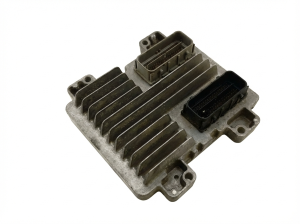
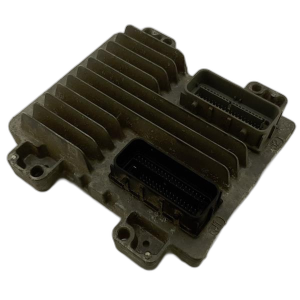
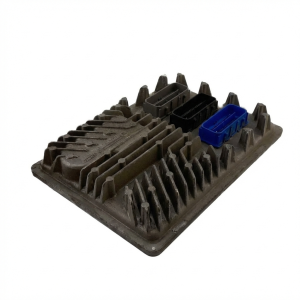
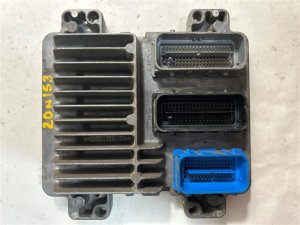
New Aftermarket Parts Available



The information in this article is provided for general reference and educational purposes only. Vehicle specifications, procedures, and part compatibility can vary by production date, trim level, and region. Always consult your vehicle's factory service manual and verify part numbers before purchasing or performing repairs. Safety-critical components such as airbags, seat belts, and braking systems should be installed by a qualified professional.
- Chevrolet SILVERADO 1500:
- 🧭 Diagnostic Flowchart
- 🎬 Helpful Videos
- 🛍️ Shop This Part
- What's Unique About the 2007-2014 Chevrolet Silverado 1500
- Symptoms You May Notice
- Most Likely Causes
- Rare But Worth Checking
- Diagnosis Steps
- Parts You'll Likely Need
- Related Codes That Often Appear With This One
- Technical Service Bulletins (TSBs) & Recalls
- Platform-Specific Known Issues
- Mechanic-Grade Diagnostic Values
- Scan Tool Commands That Help
- Wiring & Ground Locations
- Real Owner Repair Stories
- When the Usual Fixes Don't Work
- OEM Part Supersession History
- Model Year Variations Within This Range
- 🎟️ Get 5% Off