

P0601 on 2015-2018 Chevrolet Suburban: Internal ECM Failure Causes and Fixes
P0601 indicates an internal memory error in your Suburban's Engine Control Module (ECM). While this often means the ECM needs replacement, Chevrolet has issued bulletins advising technicians to first inspect all ECM electrical connections, grounds, and power supply, as these issues can also trigger the code. A replacement ECM costs $800-$1500 and requires professional programming with GM-specific tools, as this is not a simple DIY job.
- P0601 is a serious code indicating an internal failure of your Suburban's main engine computer, the ECM.
- Before replacing the expensive ECM, you must follow GM's TSB #PIP5609 advice: thoroughly inspect the battery, all ground connections, and the ECM's wiring harness connectors for issues, as these can mimic ECM failure.
- This is not a DIY-friendly repair; replacing the ECM requires expensive, specialized tools for programming it to your specific vehicle.
- Driving with this code is unsafe, as the engine can shut down unexpectedly or enter a reduced power mode at any time.
What's Unique About the 2015-2018 Chevrolet SUBURBAN
For the 2015-2018 Suburban and its K2XX platform mates (Tahoe, Yukon, Silverado, Sierra), General Motors has released Technical Service Bulletin #PIP5609. This bulletin explicitly instructs technicians to investigate external factors like the ECM's electrical connections and power/ground supply *before* condemning the module for codes like P0601. The bulletin states, "Low voltage or a momentary loss of power or ground to the ECM may cause a DTC to set." This suggests that on this platform, poor connections or voltage problems are a known cause for what appears to be an internal computer failure, offering a crucial diagnostic step before an expensive replacement.
Diagnostic Flowchart
Tap your situation to follow the diagnostic path that matches what you're seeing on this vehicle.
Symptoms You May Notice
- Check Engine Light is on.
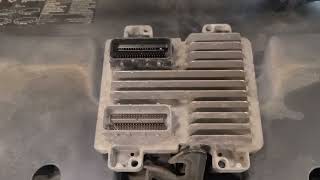
- Engine may crank but not start. 🎬 Watch: Troubleshooting a no-start and replacing a failed ECM
- Intermittent stalling or hesitation while driving.
- Reduced engine power or sluggish acceleration, often with a "Reduced Engine Power" message on the dash.
- Erratic or harsh shifting in the automatic transmission.
- "Service StabiliTrak" message may appear on the driver information center.
- In some cases, no symptoms are noticeable other than the Check Engine Light.
- Replacing the ECM without first thoroughly checking battery voltage, grounds, and connector integrity as explicitly advised by GM TSB #PIP5609.
- Replacing sensors like O2 or crankshaft sensors to address drivability symptoms without recognizing that P0601 points to a module integrity problem, not a sensor input issue.
Most Likely Causes
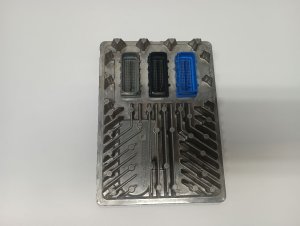
- Faulty Engine Control Module (ECM) 🔴 High Probability → Shop Engine Control Module (ECM) The E92 ECM used in this platform can fail internally from heat cycles, vibration, or age. This is often called the 'kiss of death' for the module.
How to confirm: This is the final diagnosis after all other potential causes are ruled out. If the code returns immediately after being cleared and TSB #PIP5609's checks for power, ground, and connection integrity have been performed, the ECM is faulty. In some cases, a failing ECM may output incorrect voltage on reference circuits; for example, one owner found 9V on a 5V reference pin, confirming an internal short.
Typical fix: Replace the Engine Control Module and have it professionally programmed to the vehicle's VIN.
Est. part cost: $450-$1100 - Poor Electrical Connections or Damaged Wiring 🟡 Medium Probability TSB #PIP5609 specifically calls out inspecting the ECM's electrical connections and terminal tension, indicating this is a known issue for this platform that can mimic ECM failure.
How to confirm: Visually inspect the ECM connectors (X1 and X2) for corrosion, moisture, bent pins, or backed-out terminals. The X1 connector is often blue, and the X2 is gray. Perform a 'wiggle test' on the harness with the engine running to see if symptoms appear. A user on a Tahoe forum emphasized that checking grounds is a 'feel thing' as much as a 'look thing', requiring disassembly and cleaning.
Typical fix: Clean the connectors with an electrical contact cleaner, tighten loose terminals, or repair the damaged section of the wiring harness.
Est. part cost: $10-$50 - Low Battery Voltage or Bad Grounds 🟡 Medium Probability → Shop Vehicle Battery Voltage irregularities from a weak battery, failing alternator, or corroded ground straps can disrupt the ECM's internal self-tests, causing a checksum error. These trucks are known to be sensitive to voltage issues. TSB #PIP5609 directly links low voltage or momentary power/ground loss to setting this code.
How to confirm: Test the battery voltage (should be ~12.6V at rest, 13.5-14.5V when running). Perform a voltage drop test on the main engine and chassis ground straps; resistance should be negligible, and voltage drop should not exceed 0.5 volts on either the power or ground side of the circuit. Key ground locations to inspect on this platform include the main battery-to-chassis strap and engine block grounds like G103 and G104.
Typical fix: Replace the weak battery, failing alternator, or clean/replace corroded ground straps.
Est. part cost: $20-$400
Rare But Worth Checking
- Aftermarket Tuning or Programming: If the vehicle has had performance software installed, an improper or incomplete flash can corrupt the ECM's memory and trigger a P0601 code. A user on an LS1Tech forum experienced this exact issue after an incorrect flash, which locked the PCM. Returning the vehicle to the stock GM tune may resolve the issue, but sometimes the module is permanently damaged.
- Physical ECM Damage: Though uncommon, physical damage to the ECM from water intrusion, excessive vibration, or impact can cause internal circuit board failure leading to a P0601 code.
Diagnosis Steps
- Verify the P0601 code is present using an OBD-II scanner. Note any other codes stored, especially other P06xx or U-series codes.
- Check the battery and charging system. Ensure battery voltage is approximately 12.6V at rest and 13.5-14.5V with the engine running. A weak or failing battery is a common trigger.
- Inspect all main power and ground connections. Disconnect, clean, and tighten the battery terminals, the main engine-to-chassis ground strap, and any grounds connected to the cylinder heads or radiator support. Key grounds include G103 (left front of engine block) and G104 (rear of passenger side cylinder head).
- Follow the guidance of TSB #PIP5609: Disconnect the battery. Carefully unplug the ECM connectors (X1/X2). Inspect for any signs of corrosion (green/white powder), moisture, or damaged/bent pins. Ensure terminals have good tension. Clean with electrical contact cleaner and ensure a secure connection when reinstalled.
- If a capable scan tool is available, attempt to re-flash the ECM with the latest software from GM. A software glitch can sometimes cause this code, and an update can resolve it.
- If all power, ground, and connections are confirmed to be good and the code immediately returns after being cleared, the ECM has an internal hardware failure and must be replaced.
Parts You'll Likely Need
- Engine Control Module (ECM)
(OEM #12692068)— This is the most common fix when the code is caused by an irreversible internal hardware failure after all external electrical checks have been completed.
Trusted brands: ACDelco (OEM), Cardone (Remanufactured), Standard Motor Products
OEM price range: $600-$1100
Aftermarket price range: $450-$800
Related Codes That Often Appear With This One
- U0100 — Lost Communication With ECM/PCM. This code often accompanies P0601 as the module begins to fail, causing it to stop communicating with other modules on the vehicle's data bus.
- P0602 — Control Module Programming Error. This and other P060x codes are part of a family of internal module errors often seen together, as noted in TSB #05-06-04-060A.
- P0603 — Internal Control Module Keep Alive Memory (KAM) Error. This code is also mentioned in TSBs #05-06-04-060A and #PIP4653E as being related to internal module faults.
- P0604 — Internal Control Module Random Access Memory (RAM) Error. This is another related internal memory fault code cited in the same TSBs.
- P0606 — Control Module Processor Fault. This indicates a more general processor failure within the ECM and is often seen with other P06xx codes.
Technical Service Bulletins (TSBs) & Recalls
- PIP5609: Engine codes P0601-P0604, P0606, P062B, P062F, P0630, P16F3, or P262B may be set; advises checking ECM electrical connections and power/grounds before replacement.
- 05-06-04-060A: Information on multiple control modules sharing internal fault codes like P0601.
- PIP4653E: Notes that P0601 can be stored in the Transmission Control Module (TCM), highlighting the need to identify the faulting module.
Platform-Specific Known Issues
- TSB #PIP5609: Explicitly states that for 2016-2018 Suburban, Tahoe, Silverado, Sierra, and Escalade, codes P0601-P0604, P0606, and others can be caused by low voltage or momentary loss of power/ground. It directs technicians to verify all power and ground circuits and check for connection issues before replacing the ECM.
- TSB #05-06-04-060A: An informational bulletin that groups P0601 with several other internal control module fault codes, noting they can be set across multiple different modules in the vehicle, reinforcing the need for precise diagnosis.
- TSB #PIP4653E: While also covering older models, this bulletin mentions that P0601 and related codes can be stored in the Transmission Control Module (TCM), not just the ECM. It's important to use a scan tool that specifies which module set the code.
Mechanic-Grade Diagnostic Values
- Battery Voltage (Key Off, Engine Off) — expected: ~12.6V. Failure: Below 12.4V indicates a weak or discharged battery that can cause false codes.
- Charging System Voltage (Engine Running) — expected: 13.5V - 14.5V. Failure: Voltage outside this range indicates a faulty alternator or voltage regulator, which can cause module errors.
- ECM Power/Ground Circuit Voltage Drop — expected: < 0.5V. Failure: A voltage drop greater than 0.5V on either the power feed or ground circuit to the ECM indicates excessive resistance that must be repaired.
- 5-Volt Reference Circuit at Sensor — expected: 5.0V. Failure: Significantly higher voltage (e.g., 7V-9V) on a 5V reference pin points to an internal short within the ECM.
Scan Tool Commands That Help
- GM GDS2 / Techline Connect (SPS2): Replace and Program ECU — This function is required when installing a new or remanufactured ECM. It downloads the correct VIN-specific software and calibration files to the new module.
- GM GDS2 / Techline Connect (SPS2): Immobilizer Relearn / Theft Deterrent Relearn — After programming a new ECM, this procedure is often necessary to synchronize the new module with the vehicle's anti-theft system so the engine will start.
- GM GDS2 / Techline Connect (SPS2): Crankshaft Position Variation Learn — After replacing an ECM, this procedure may be required to calibrate the new module to the specific crankshaft position sensor signal to prevent misfire detection issues.
Wiring & Ground Locations
- ECM Location — In the engine bay, typically on the driver's side, near the firewall or inner fender.. This is the location of the primary module in question. Physical access is needed to inspect connectors and test wiring.
- ECM Connector X1 — The blue connector at the Engine Control Module.. This is one of the two main connectors for the ECM. TSB #PIP5609 advises inspecting it for corrosion, moisture, or damage as a primary diagnostic step.
- ECM Connector X2 — The gray connector at the Engine Control Module.. This is the second main connector for the ECM. It must also be inspected for integrity issues per GM's diagnostic advice.
- G103 — Located at the left front of the engine block, often part of the main negative battery cable harness.. This is a critical engine ground. A poor connection here can cause a voltage drop to the ECM and trigger a false P0601 code.
- G104 — Located on the rear of the passenger side cylinder head.. This ground point is crucial for various engine components and the ECM. Corrosion or looseness here is a known cause of electrical issues on GM trucks.
Real Owner Repair Stories
- YouTube video from 'DiagnoseDan' (2011 GM Truck (Silverado 1500)) — Stalling while driving, Service Stabilitrac message, Reduced Power message, and codes P0601, P0573, P219A.
❌ Tried (didn't work) Initial scan showed multiple codes, confusing the diagnosis.
✅ What actually fixed it The technician wiggled wires for a ground located behind the power steering line near the left motor mount. Doing so caused the P0601 code to immediately reset, confirming a bad ground connection was the root cause. The fix was to remove, clean, and secure this ground connection. - LS1Tech forum user (Gen V GM Truck) — Reduced power mode, no-start condition.
❌ Tried (didn't work) Unwrapping and inspecting the wiring harness for shorts., Considering a pinched harness after an engine swap.
✅ What actually fixed it The user diagnosed an internal ECM failure by testing the 5-volt reference pin at the ECM connector and finding it was outputting nearly 9 volts. This confirmed an internal short. The final fix was replacing the ECM.
OEM Part Supersession History
12692068→12704476— Standard part revision and update by the manufacturer.
Heads up: The part numbers 12674052, 12674472, 12678815, 12686382, 12692068, and 12704476 are often listed as interchangeable for the E92 ECM used in this vehicle range.
Helpful Videos
Used OEM Parts in Stock
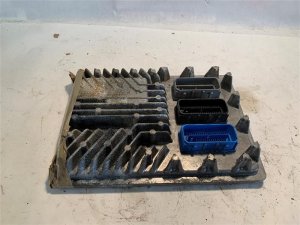
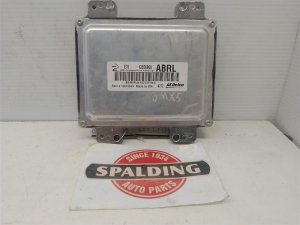
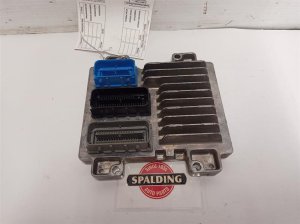
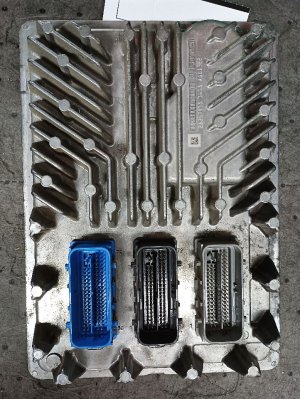
New Aftermarket Parts Available



The information in this article is provided for general reference and educational purposes only. Vehicle specifications, procedures, and part compatibility can vary by production date, trim level, and region. Always consult your vehicle's factory service manual and verify part numbers before purchasing or performing repairs. Safety-critical components such as airbags, seat belts, and braking systems should be installed by a qualified professional.
- Chevrolet SUBURBAN:
- 🧭 Diagnostic Flowchart
- 🎬 Helpful Videos
- 🛍️ Shop This Part
- What's Unique About the 2015-2018 Chevrolet SUBURBAN
- Symptoms You May Notice
- Most Likely Causes
- Rare But Worth Checking
- Diagnosis Steps
- Parts You'll Likely Need
- Related Codes That Often Appear With This One
- Technical Service Bulletins (TSBs) & Recalls
- Platform-Specific Known Issues
- Mechanic-Grade Diagnostic Values
- Scan Tool Commands That Help
- Wiring & Ground Locations
- Real Owner Repair Stories
- OEM Part Supersession History
- 🎟️ Get 5% Off