

P0601 on 2009-2015 Chevrolet Traverse: Internal Control Module Memory Fault Guide
P0601 on a 2009-2015 Traverse indicates a fatal internal memory error in a control module, most commonly the Engine Control Module (ECM) or Transmission Control Module (TCM). The fix almost always requires replacing the faulty module and having it programmed, a job that can cost between $700 and $1,100. Before condemning a module, all power and ground connections should be thoroughly checked, as poor grounds and engine harness chafing are known issues on this platform.
- P0601 is a critical code indicating an internal failure of a control module, usually the ECM or TCM.
- The most common fix is to replace the faulty module, which must be programmed to your vehicle.
- Before replacing an expensive module, always verify the battery is healthy and all power/ground connections to the module are clean and tight.
- Due to GM TSBs, it's important to confirm if the code is in the ECM or TCM, as symptoms can overlap.
- This is not a DIY-friendly repair for most people due to the need for specialized programming tools.
What's Unique About the 2009-2015 Chevrolet Traverse
On the first-generation Chevrolet Traverse and its GM Lambda platform-mates (Buick Enclave, GMC Acadia, Saturn Outlook), the P0601 code is notable because it can appear in different modules, not just the main engine computer. General Motors issued Technical Service Bulletins (TSBs) acknowledging that codes like P0601 can be found in the Transmission Control Module (TCM) as well as other modules. [Bulletin #PIP4653E, Bulletin #05-06-04-060A] This means a diagnosis must confirm which specific module is reporting the fault before a replacement is ordered. 🎬 Watch: Understanding the P0601 memory checksum error and common fixes. TSB PIP4653E specifically lists the 2009-2014 Traverse among many other GM vehicles where P0601 in the TCM is a recognized issue. A key variation is the engine change: 2009-2012 models primarily use the LLT engine with a Bosch ECM, while 2013-2015 models use the LFX engine with a Delphi ECM, which are not interchangeable.
Diagnostic Flowchart
Tap your situation to follow the diagnostic path that matches what you're seeing on this vehicle.
Symptoms You May Notice
- Check Engine Light is on.
- Engine may crank but fail to start.
- Intermittent stalling while driving.
- Reduced engine power or entering 'limp mode'.
- Harsh or erratic transmission shifting.
- Vehicle may be stuck in one gear.
- No symptoms at all, other than the Check Engine Light.
- Replacing sensors (like oxygen sensors or throttle position sensors) when drivability issues are present, without first addressing the P0601 code that points to the control unit itself.
- Immediately replacing the ECM/TCM without first performing a full battery/charging system test and inspecting all relevant power and ground connections.
Most Likely Causes
- Internal Failure of the Engine Control Module (ECM/PCM) 🔴 High Probability → Shop Engine Control Module (ECM) Control modules can fail due to age, heat cycles, or internal component degradation. This is the most common cause for a P0601 code. The ECM is responsible for thousands of calculations per second, and an internal memory error corrupts this process.
How to confirm: After confirming stable power and ground to the module, a professional scan tool is used to verify the code is originating from the ECM. If the module cannot be reprogrammed or the code returns immediately after clearing, the ECM is condemned. An owner on a Trailblazer SS forum (a similar GM platform) confirmed that even after checking all connections, only a new ECM fixed the stalling and P0601 code.
Typical fix: Replace the Engine Control Module and program it to the vehicle.
Est. part cost: $250-$450 - Internal Failure of the Transmission Control Module (TCM) 🟡 Medium Probability → Shop Transmission Assembly As noted in GM TSB #PIP4653E, the P0601 code can be stored in the TCM on this platform, leading to shifting problems. The TCM (part of the TEHCM unit) is located inside the transmission on the valve body, subjected to heat and vibration, making it a common failure point.
How to confirm: A full system scan will show the P0601 code stored in the TCM, often accompanied by other transmission-related codes like P0700. This strongly points the finger at the TCM itself.
Typical fix: Replace the Transmission Control Module, which is located inside the transmission on the valve body, and program it. This is a labor-intensive job that requires dropping the transmission pan.
Est. part cost: $200-$400 - Low or Unstable Battery Voltage ⚪ Low Probability → Shop Vehicle Battery While less common, very low battery voltage during cranking or voltage spikes from a failing alternator can corrupt module memory and trigger this code. A user on one forum noted the P0601 code appeared on their 2011 Traverse only after heavily taxing the electrical system with the engine off, suggesting a weak battery could be a trigger.
How to confirm: Test the battery's health with a load tester and check the alternator's output. The battery should hold a charge above 12.4 volts, and the alternator should produce 13.5-14.5 volts when running. If the battery or alternator is weak, replace it first, clear the codes, and see if P0601 returns. If it does, the module may have been permanently damaged.
Typical fix: Replace the weak battery or failing alternator. Clear codes and see if P0601 returns. If it does, the module was likely damaged permanently.
Est. part cost: $150-$400
Rare But Worth Checking
- Corrupted Software from Improper Programming: If the code appeared immediately after an attempt to tune or reflash the module with non-OEM software, the programming may have failed and corrupted the module's memory.
- Poor Power or Ground Connections: A corroded or loose ground strap or power feed to the affected module can cause intermittent voltage drops that mimic an internal failure. On the Traverse platform, poor grounds are a known cause of bizarre electrical issues. A Reddit user identified ground G110, on the right rear of the engine cylinder head, as a common ground for the TCM and ECM. Always inspect the wiring harness and ground points like G110 and G113 before replacing an expensive module.
- Engine Wiring Harness Chafing: → Shop Engine Wiring Harness GM has noted that the engine wiring harness on these vehicles can chafe against chassis components, causing intermittent shorts. Key areas to inspect are where the harness contacts the ECM/TCM mounting bracket, the driver's side upper control arm, and the shock tower. This can cause a wide variety of electrical issues, including damage to control modules.
Diagnosis Steps
- Check and verify battery voltage is stable and above 12.4V. Perform a load test on the battery.
- Charge the battery and clean the terminals if necessary. Ensure connections are tight.
- Use a professional-grade scan tool to read codes from ALL modules (Engine, Transmission, Body, etc.).
- Identify which specific module is storing the P0601 code. This is the most critical step.
- Inspect the wiring harness and connectors to the identified module for any signs of damage, corrosion, or looseness.
- Verify the module has a clean and stable power supply and a solid ground connection. Specifically check ground points G110 (right front of engine) and G113 (left side of engine at transmission stud) for corrosion or looseness.
- Thoroughly inspect the engine wiring harness for chafing, especially near the ECM/TCM bracket, the driver's side upper control arm, and the shock tower.
- Attempt to clear the codes. If P0601 returns immediately, the module has a hard internal fault.
- Check for any available software updates for the module. A dealership or qualified shop may be able to reflash it, but this is unlikely to fix a hardware checksum error.
- If reflashing is unsuccessful or the code persists, the module must be replaced and programmed.
- Before paying for a replacement, check if your vehicle is covered under the Federal Emissions Warranty (8 years/80,000 miles), which often covers the ECM/PCM.
Parts You'll Likely Need
- Engine Control Module (ECM)
(OEM #12636355, 12630594, 12617230)— This is the most common cause of P0601. The internal processor or memory has failed its integrity check.
Trusted brands: ACDelco, GM Genuine Parts
OEM price range: $350-$500
Aftermarket price range: $200-$400 - Transmission Control Module (TCM)
(OEM #24256960 (This is a common service number for the Gen 1 6T70/6T75 TEHCM unit, but always verify with VIN))— A known issue on this platform where the TCM, located inside the transmission, can fail and set a P0601 code, causing severe shifting problems.
Trusted brands: ACDelco
OEM price range: $300-$450
Aftermarket price range: $200-$350
Related Codes That Often Appear With This One
- P0603 — This code indicates a Keep Alive Memory (KAM) error, which is related to the module's memory functions and often appears with other internal faults. [Bulletin #05-06-04-060A]
- P0604 — This code points to a Random Access Memory (RAM) error, another type of internal module memory fault. [Bulletin #05-06-04-060A]
- P0700 — This is a generic code requested by the Transmission Control Module (TCM). If you see P0700 alongside P0601, it strongly suggests the fault is within the TCM.
Technical Service Bulletins (TSBs) & Recalls
- 05-06-04-060A: Information on Control Module Diagnostic Trouble Codes P0601, P0602, P0603, P0604, P0606, P062F, P06F3, P1621.
- PIP4653E: Diagnostic information for vehicles with Malfunction Indicator Lamp on and DTCs P0601, P0603, P0604, P062F, or P1621 in the TCM.
Platform-Specific Known Issues
- TSB #PIP4653E notes that DTCs P0601, P0603, P0604, P062F, or P1621 may be found stored in the Transmission Control Module (TCM), requiring specific diagnostic attention to that module.
- TSB #05-06-04-060A is an informational bulletin for technicians regarding a group of control module DTCs, including P0601, that can be shared across multiple modules, emphasizing the need to identify the source module.
- Grounding Issues: The GM Lambda platform is known for having electrical issues stemming from poor grounds. A bad ground can cause voltage fluctuations that may either trigger a false P0601 or damage the module over time. A video of a 2011 Traverse with a no-communication issue traced the fault to a bad ground connection for the TCM. Another video on a 2015 Traverse showed bizarre electrical problems, including dash lights dimming and foreign languages on the display, all caused by a bad ground at the B-pillar.
Mechanic-Grade Diagnostic Values
- Battery Voltage (engine off) — expected: >12.4 Volts. Failure: Below 12.4V indicates a weak or discharged battery that can cause module errors.
- Alternator Output Voltage (engine running) — expected: 13.5 - 14.5 Volts. Failure: Voltage below 13.5V or spiking above 14.5V can indicate a failing alternator, which can corrupt or damage control modules.
- ECM/PCM Operating Voltage — expected: 10.5 - 14.5 Volts. Failure: Voltage dropping below 10.5V during cranking or operation can trigger memory-related fault codes.
Scan Tool Commands That Help
- GDS2 / Tech2 / J2534 Interface: Module Programming / VIN Programming — This is a mandatory step when replacing the ECM or TCM. The new module must be programmed with the vehicle's VIN to communicate with other modules and the security system.
- GDS2 / Tech2 / J2534 Interface: Security System Relearn / Password Relearn — Required after installing a replacement ECM if the vehicle cranks but does not start, or starts and stalls. This procedure marries the new ECM to the vehicle's existing immobilizer system (SKIM module).
Wiring & Ground Locations
- Engine Harness Chafe Point 1 — Where the engine harness rests against the metal ECM/TCM mounting bracket in the engine bay.. Vibrations can cause the harness to rub through, shorting power or data wires and potentially damaging the ECM or TCM or causing intermittent communication faults that could trigger a P0601.
- Engine Harness Chafe Point 2 — Where the engine harness passes near the driver's side upper control arm.. Engine movement can cause the harness to make contact with the control arm, leading to chafing and short circuits.
- Engine Harness Chafe Point 3 — Where the engine harness passes near the driver's side shock tower bolt.. Another potential contact point where engine vibration can wear through wire insulation, causing unpredictable electrical faults.
- ECM Ignition Voltage Input — On some models, this is a Pink wire at Pin 54 of the ECM connector.. This is a primary power feed to the ECM. A voltage drop or loss on this circuit will prevent the ECM from operating correctly and can lead to various codes, including internal faults if voltage is unstable.
- ECM Ground — On some models, a key ground is at Pin 2 (Black/White wire) of the X2 connector.. A poor ground connection is a common cause of module malfunction. Verifying continuity to ground at this pin is a critical diagnostic step.
Real Owner Repair Stories
- CarKiller Forum User (2011 Chevrolet Traverse, 196,000km) — Check Engine Light with code P0601.
❌ Tried (didn't work) Clearing the code (it returned after 400km).
✅ What actually fixed it The code appeared on two separate occasions immediately after heavily taxing the vehicle's electrical system with the engine off (charging a laptop and phone). The strong implication and recommended fix was to load test the battery and alternator, as the unstable/low voltage state likely triggered the memory checksum error.
OEM Part Supersession History
12617230, 12635019→12636355 (also cross-references to 19300014, 19300015)— Standard part revision and consolidation by the manufacturer.
Heads up: This Bosch ECM is not compatible with 2013+ models using the LFX engine and Delphi ECM.12643248 (Hardware Number)→12648906 (Service Number)— Standard part revision.
Heads up: Verify by VIN, as some 2012 models may have the earlier LLT or later LFX engine setup.N/A→12653998— Part for the newer LFX engine platform.
Heads up: This Delphi ECM is not compatible with pre-2013 models using the LLT engine and Bosch ECM.24239224, 24252114 (Hardware Number)→24256960 (Service Number)— Part revision for the 6T70/6T75 Transmission Control Module (TEHCM).
Heads up: Always verify with VIN, but this is the most commonly cited TCM part number for P0601 issues in the transmission.
Model Year Variations Within This Range
- 2009-2012: These models primarily use the 3.6L LLT V6 engine, which is equipped with a Bosch-manufactured Engine Control Module (ECM). This ECM has specific part numbers (e.g., 12636355) and is not interchangeable with later models.
- 2013-2015: Following the 2013 model year facelift, these vehicles use the updated 3.6L LFX V6 engine. This engine is paired with a Delphi-manufactured ECM (e.g., 12653998). The LFX engine also features integrated exhaust manifolds, making it mechanically different from the LLT.
Helpful Videos
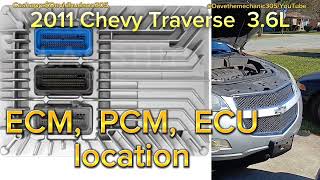
Used OEM Parts in Stock
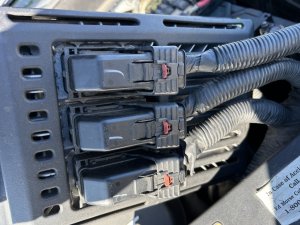
New Aftermarket Parts Available

The information in this article is provided for general reference and educational purposes only. Vehicle specifications, procedures, and part compatibility can vary by production date, trim level, and region. Always consult your vehicle's factory service manual and verify part numbers before purchasing or performing repairs. Safety-critical components such as airbags, seat belts, and braking systems should be installed by a qualified professional.
- Chevrolet TRAVERSE:
- 🧭 Diagnostic Flowchart
- 🎬 Helpful Videos
- 🛍️ Shop This Part
- What's Unique About the 2009-2015 Chevrolet Traverse
- Symptoms You May Notice
- Most Likely Causes
- Rare But Worth Checking
- Diagnosis Steps
- Parts You'll Likely Need
- Related Codes That Often Appear With This One
- Technical Service Bulletins (TSBs) & Recalls
- Platform-Specific Known Issues
- Mechanic-Grade Diagnostic Values
- Scan Tool Commands That Help
- Wiring & Ground Locations
- Real Owner Repair Stories
- OEM Part Supersession History
- Model Year Variations Within This Range
- 🎟️ Get 5% Off