

P0601 on 2011-2015 Chevrolet Volt: Internal Memory Error Causes and Fixes
P0601 on a 2011-2015 Chevy Volt indicates a fatal internal memory error in a critical control module. The most common culprit is the Hybrid Powertrain Control Module 2 (HPCM2), though other modules can be at fault. The only reliable fix is replacing the faulty module, which is an expensive repair requiring professional programming with GM-specific tools.
- P0601 is a critical code indicating a fatal internal error in one of the Volt's control modules.
- The vehicle should not be driven, as it can stall or fail to start at any moment.
- The most common fix is replacing the faulty control module, which is an expensive repair that is not DIY-friendly due to programming requirements.
- Before condemning a module, always test the 12V auxiliary battery and check its connections, as low voltage can sometimes trigger this code.
- A professional diagnosis with an advanced scan tool is required to determine which of the Volt's many control modules has failed.
What's Unique About the 2011-2015 Chevrolet VOLT
The Chevrolet Volt is a highly complex vehicle with numerous interconnected control modules managing its unique hybrid powertrain. For the 2011-2015 generation, the P0601 code most frequently points to an internal failure of the Hybrid Powertrain Control Module 2 (HPCM2), which is distinct from the main Engine Control Module (ECM). A GM Technical Service Bulletin (TSB #05-06-04-060A) explicitly notes that P0601 can be set by multiple modules across various GM vehicles. This means the fault could also originate in the Transmission Control Module (TCM) or Battery Energy Control Module (BECM), making accurate diagnosis with an advanced scan tool like the GM GDS2 essential to pinpoint the exact faulty unit before replacing any expensive parts.
Diagnostic Flowchart
Tap your situation to follow the diagnostic path that matches what you're seeing on this vehicle.
Symptoms You May Notice
- Check Engine Light is on
- Vehicle may not start or may crank but not fire
- Engine may stall intermittently or shut down while driving
- Reduced engine power or entering "limp mode"
- Other warning lights may illuminate on the dashboard
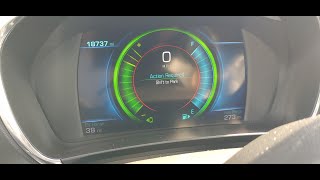
- "Shift to Park" message may appear on the driver information center (DIC), even when the vehicle is in park, potentially related to module communication faults. 🎬 See what the 'Shift to Park' message looks like in action.
- "Service High Voltage Charging System" message may appear
- Replacing the Engine Control Module (ECM) without using a scan tool to confirm it was the module that set the code. On a Volt, the HPCM2 is a more likely culprit for P0601.
- Replacing sensors or other components to address drivability issues without recognizing that P0601 points specifically to a module's internal integrity.
- Condemning a module before thoroughly testing the 12V auxiliary battery and checking all main power and ground connections.
Most Likely Causes
- Hybrid Powertrain Control Module 2 (HPCM2) Internal Failure 🔴 High Probability → Shop Engine Control Module (ECM) The HPCM2 is a complex module that manages the intricate operations of the Volt's hybrid system. Like any advanced electronic component, it is susceptible to failure from age, heat cycles, and internal component degradation, making it the most common source for P0601 on this platform.
How to confirm: After verifying the 12V battery and all power/grounds are good, if the P0601 code returns immediately after clearing, the module is condemned. A professional scan tool (GM GDS2) is required to confirm that the HPCM2 is the specific module that has set the code.
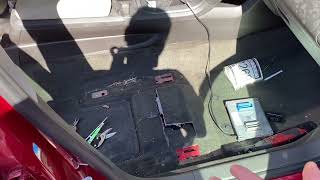
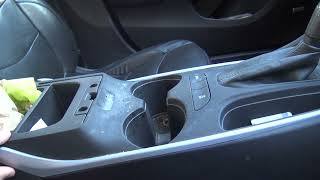
Typical fix: Replace the faulty HPCM2 and program the new unit 🎬 Watch this walkthrough on how to remove the HPCM2 module. to the vehicle's VIN using GM's Service Programming System (SPS).
Est. part cost: $500-$900 (remanufactured) - Low Battery Voltage ⚪ Low Probability → Shop Vehicle Battery Like most modern vehicles, the Volt's electronics are sensitive to voltage. A weak 12V auxiliary battery can cause voltage drops during startup sequences, potentially corrupting a module's self-test process and triggering a false P0601.
How to confirm: Test the 12V battery with a professional load tester, not just a voltmeter. Voltage should be above 12.4V at rest. Check the charging system output, which should be stable between 13.5-14.5V when the vehicle is on.
Typical fix: Replace the weak 12V AGM battery. Clear codes and see if P0601 returns. This is a crucial first step before replacing expensive modules.
Est. part cost: $150-$300 - Poor Power or Ground Connection to a Module ⚪ Low Probability A poor ground or loose power connection can cause intermittent voltage fluctuations to a module, mimicking an internal failure. GM has issued bulletins for other models regarding high resistance in communication circuits under sill plates, which could be a potential, though less common, issue.
How to confirm: Inspect the main power and ground wires and connectors at the HPCM2 for corrosion, damage, or looseness. Perform a voltage drop test on the power and ground circuits. Resistance between the module's ground pin and the chassis should be less than 0.1 Ohms.
Typical fix: Clean or repair the corroded or loose connection. Ensure all connectors are securely seated.
Est. part cost: $0-$50
Rare But Worth Checking
- Corrupted Aftermarket Tune: If the vehicle's software has been modified with a non-OEM tune, an improper flash or corrupted file can cause a checksum error.
- Voltage Spike: An improper jump-start or a failure in the vehicle's charging system can send a voltage spike that damages the sensitive electronics within a control module.
- Federal Emissions Warranty Coverage: Before paying for a repair, check your warranty. The HPCM2 is often considered a major emissions control component and may be covered under the Federal Emissions Warranty, which typically lasts for 8 years or 80,000 miles. This could result in a no-cost replacement at a dealership.
Diagnosis Steps
- Verify the P0601 code is active with a quality OBD-II scanner.
- Use an advanced scan tool (ideally a GM GDS2) to determine which specific control module (e.g., HPCM2, ECM, TCM, BECM) has stored the code. This is the most critical diagnostic step.
- Thoroughly test the 12V auxiliary battery. It must pass a load test, not just show good voltage at rest.
- With the vehicle in the 'Ready' state, check the charging system voltage at the 12V battery terminals. It should be stable, typically between 13.5 and 14.5 volts.
- Inspect the battery terminals, main power feeds, and chassis ground connections for the identified module. Check for corrosion, looseness, or damage.
- If all power, grounds, and the 12V battery are confirmed good, an attempt to re-flash the faulty module with the latest OEM software via the SPS may be performed. This is rarely successful for a P0601 checksum error but is a final diagnostic step.
- If the code returns immediately after clearing or the re-flash fails, the control module is faulty and must be replaced.
- Install the new module and have it professionally programmed to the vehicle's VIN and existing systems.
Parts You'll Likely Need
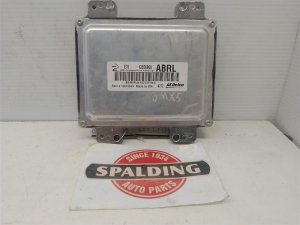
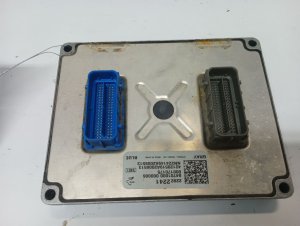
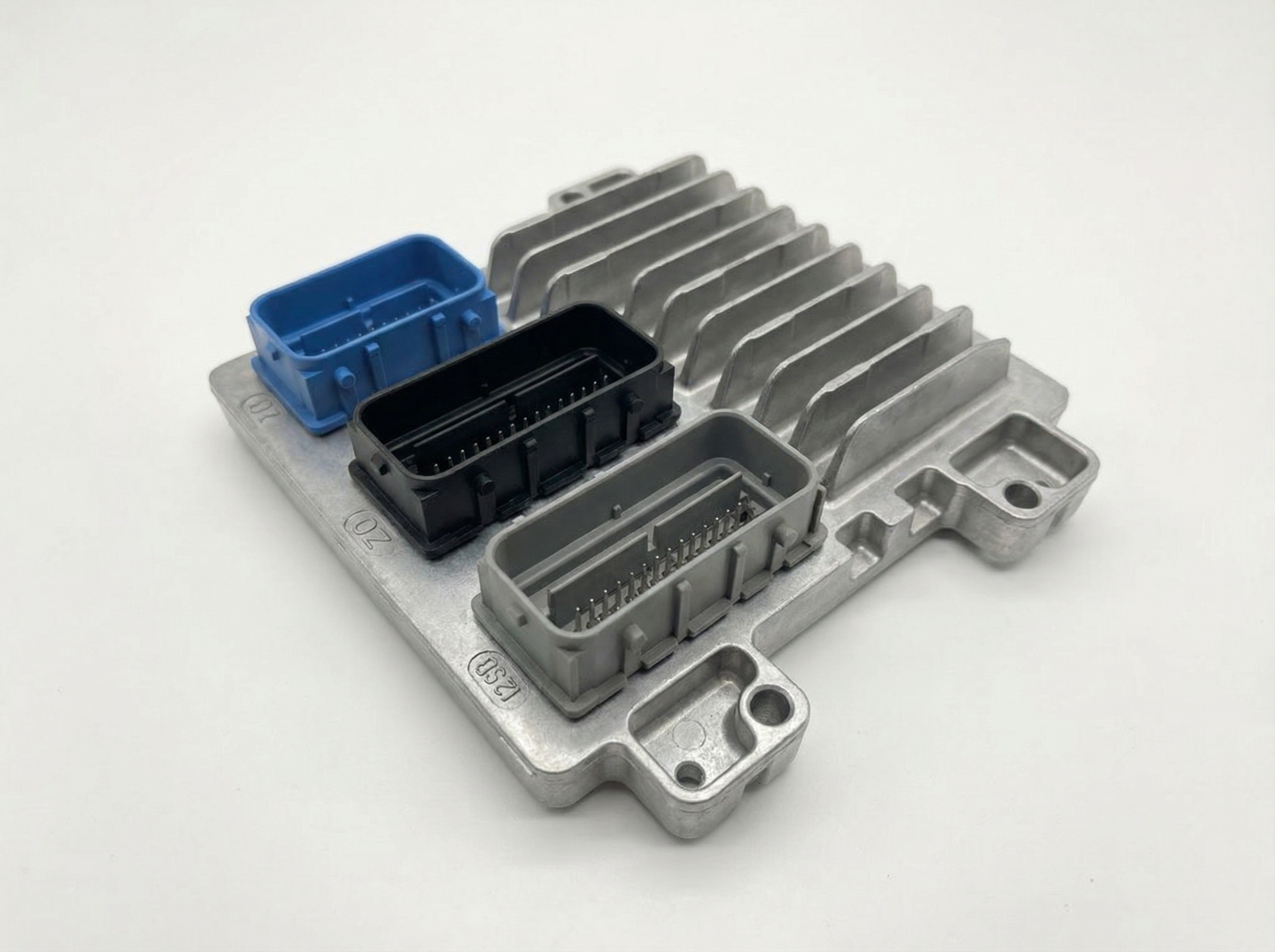
- Hybrid Powertrain Control Module 2 (HPCM2)
(OEM #24291550 (supersedes 20882022, 22762258, 22854018, 22994053, 24283995 for 2011-2013 models))— This is the most common control module to fail and set a P0601 code on the first-generation Volt. The specific module must be identified by a scan tool.
Trusted brands: ACDelco (GM Genuine)
OEM price range: $600-$1000
Aftermarket price range: $400-$800 (remanufactured) - Engine Control Module (ECM)
(OEM #12649603)— A less common but possible source for P0601. Diagnosis must confirm the ECM is the source before replacement.
Trusted brands: ACDelco
OEM price range: $500-$1200
Aftermarket price range: $300-$800 (remanufactured)
Related Codes That Often Appear With This One
- P0602 — Control Module Programming Error
- P0603 — Internal Control Module Keep Alive Memory (KAM) Error
- P0604 — Internal Control Module Random Access Memory (RAM) Error
- P0606 — ECM/PCM Processor Fault - Also commonly caused by 12V battery issues on the Volt.
Technical Service Bulletins (TSBs) & Recalls
- 05-06-04-060A: Communicates that DTCs like P0601 can be shared in multiple modules and provides information to technicians.
- PIP4653E: Reinforces that P0601 can be set by the TCM on many GM vehicles, highlighting the need for specific module identification, though the Volt is not explicitly listed.
Platform-Specific Known Issues
- Per TSB #05-06-04-060A, code P0601 can be set by multiple different control modules on GM vehicles, making proper identification of the faulty module with a professional scan tool essential.
- The first-generation Volt has several critical control modules, including the Battery Energy Control Module (BECM), which has been the subject of owner complaints and a separate TSB (18-NA-261) for other issues. While not directly linked to P0601, a failure in any of these complex modules is possible.
- Owner experiences on forums like gm-volt.com frequently point to the HPCM2 as the cause of P0601, often accompanied by no-start conditions. Reprogramming attempts are rarely successful for this specific code, with replacement being the ultimate fix.
Mechanic-Grade Diagnostic Values
- 12V AGM Battery Voltage (Key Off) — expected: 12.4V or higher. Failure: Voltage below 12.4V indicates a weak battery that can cause spurious module codes.
- Charging System Voltage (Vehicle 'Ready') — expected: 13.5V - 14.5V. Failure: Voltage below 13.5V or above 14.5V suggests an issue with the Accessory Power Module (14V Power Module), which can damage other electronics.
- Module Ground Circuit Resistance — expected: < 0.1 Ohms. Failure: Higher resistance between the module's ground pin and a clean chassis point indicates a poor ground, causing voltage instability.
Scan Tool Commands That Help
- GM GDS2 / Techline Connect: Service Programming System (SPS) — This function is mandatory after replacing the HPCM2, ECM, or other control modules. It downloads the correct software and VIN-specific calibration from GM's servers and flashes it to the new module, integrating it with the vehicle's other systems.
- GM GDS2: Module-Specific DTC Identification — Since TSB #05-06-04-060A states P0601 can be set by multiple modules, the first step is to use the scan tool to enter each powertrain-related module (HPCM2, ECM, TCM, BECM) and see which one actually stored the P0601 fault. This prevents misdiagnosis.
Wiring & Ground Locations
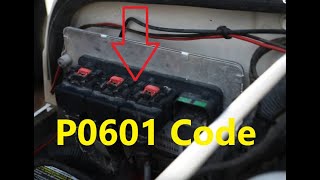
- HPCM2 (Hybrid Powertrain Control Module 2) — Located under the driver's seat. Access may be possible by removing two rear seat bolts and tilting the seat forward, rather than full removal.. This is the most common module to fail and set a P0601 code. Its location makes physical inspection of connectors for corrosion or damage a necessary step.
- Engine Compartment Fuse Box — Located on the driver's side in the engine compartment.. Contains primary fuses and relays for powertrain control modules. A blown fuse here could cut power to a module and should be checked early in diagnosis.
- Rear Compartment Fuse Box — Located behind a cover on the left side of the rear compartment/hatch area.. Supplies power to various vehicle components, including the Accessory Power Module (14V Power Module), which is responsible for charging the 12V battery.
- Instrument Panel Fuse Blocks — Located on both the driver's and passenger's sides of the instrument panel, behind trim covers.. These fuse blocks power various body and data communication modules. A fault here could potentially disrupt network communication and trigger codes.
Real Owner Repair Stories
- VXDIAG Blog / User testimonial (2012 Chevrolet Volt) — Check Engine Light on, DTCs present, vehicle would not charge (no green light).
❌ Tried (didn't work) Initially, clearing codes with a GDS2 tool worked, but the issue eventually returned and could no longer be cleared.
✅ What actually fixed it The user purchased a VXDIAG VCX Nano (a J2534 Passthru device) and a 2-year, 1-VIN subscription to GM's ACDelco TDS. Using the Techline Connect software, they successfully reprogrammed the Hybrid Powertrain Control Module 2 (HPCM2). This cleared the DTCs and restored normal charging functionality. The total process took 2-3 hours.
OEM Part Supersession History
20882022, 22762258, 22854018, 22994053, 24283995→24291550— Standard part revision and consolidation by the manufacturer.
Heads up: This part requires professional programming and/or special setup procedures using GM Service Information (SPS) to ensure proper operation in the vehicle. A used module from another vehicle cannot be installed without reprogramming.
Helpful Videos
We Have This Part in Stock

The information in this article is provided for general reference and educational purposes only. Vehicle specifications, procedures, and part compatibility can vary by production date, trim level, and region. Always consult your vehicle's factory service manual and verify part numbers before purchasing or performing repairs. Safety-critical components such as airbags, seat belts, and braking systems should be installed by a qualified professional.
- Chevrolet VOLT:
- 🧭 Diagnostic Flowchart
- 🎬 Helpful Videos
- 🛍️ Shop This Part
- What's Unique About the 2011-2015 Chevrolet VOLT
- Symptoms You May Notice
- Most Likely Causes
- Rare But Worth Checking
- Diagnosis Steps
- Parts You'll Likely Need
- Related Codes That Often Appear With This One
- Technical Service Bulletins (TSBs) & Recalls
- Platform-Specific Known Issues
- Mechanic-Grade Diagnostic Values
- Scan Tool Commands That Help
- Wiring & Ground Locations
- Real Owner Repair Stories
- OEM Part Supersession History
- 🎟️ Get 5% Off