

P0601 on 2008-2010 Dodge Challenger 5.7L: Internal PCM Failure Causes and Fixes
P0601 on a 2008-2010 Dodge Challenger almost always means the main engine computer (PCM) has failed an internal self-test. The only fix is to replace the PCM, which requires professional programming to your car's VIN. Expect costs to range from $800 to $1,500 for a programmed module and labor. Before replacement, it is critical to rule out low battery voltage or a failing alternator, as these can sometimes trigger a false P0601.
- P0601 is a critical code indicating the engine computer (PCM) has failed internally.
- Do not drive the vehicle, as it can stall without warning.
- The most common and almost certain fix is to replace the PCM.
- A replacement PCM must be professionally programmed to your car's VIN to function.
- Before replacing the expensive PCM, always rule out battery, connection, and alternator problems first.
- Check for coverage under the 8-year/80,000-mile Federal Emissions Warranty, which may cover the PCM replacement for free.
What's Unique About the 2008-2010 Dodge Challenger
On Dodge and Chrysler vehicles of this era, the P0601 code is a very common and definitive indicator of a failed PCM. While external issues like low voltage can theoretically trigger it, experience from technicians and owners shows that in the vast majority of cases for this platform, the module itself has developed an internal, non-repairable fault. The repair is complicated by the vehicle's anti-theft system (Sentry Key Immobilizer), which requires a new or remanufactured PCM to be professionally programmed to the vehicle's specific VIN using a J2534 compliant scan tool. Simply swapping a used module from another car will not work.
🎬 Watch: How to replace a Chrysler Dodge PCMSymptoms You May Notice
- Check Engine Light is on
- Engine stalls intermittently or completely fails to start
- Engine may crank but not fire up
- Vehicle enters 'limp mode' with reduced power and acceleration
- Erratic automatic transmission shifting
- ABS and Traction Control lights may illuminate
- No communication with the scan tool, or a 'No Bus' message on the instrument cluster
- Fuel gauge and other instruments may behave erratically
- Replacing sensors (crankshaft, camshaft, etc.) hoping to fix stalling, when the root cause is the PCM itself.
- Replacing the battery without also cleaning all related ground connections and testing the alternator.
- Assuming a used PCM from a junkyard will work without programming 🎬 Watch: Crucial checks before installing a new PCM; it will not due to the VIN and immobilizer mismatch.
Most Likely Causes
- Powertrain Control Module (PCM) Internal Failure 🔴 High Probability → Shop Engine Control Module (ECM) Heat, vibration, and age can lead to internal short circuits or failure of memory components on the PCM's circuit board. This is a well-documented failure on many Chrysler/Dodge products of this era. Sometimes a burnt smell may be noticeable near the module.
How to confirm: After confirming stable battery voltage (12.5V+ off, 13.5-14.5V running) and clean, tight power/ground connections to the PCM, the presence of P0601 itself condemns the module. A professional scan tool may also show 'No Communication' with the PCM.
Typical fix: Replace the Powertrain Control Module (PCM) with a new or remanufactured unit and program it to the vehicle's VIN.
Est. part cost: $300-$800 - Low Battery Voltage or Poor Connections ⚪ Low Probability → Shop Vehicle Battery The Challenger's battery is located in the trunk, which means long cable runs to the engine bay. This provides more opportunities for corrosion or loose connections at the battery terminals, remote jump posts, or PCM connectors, which can cause voltage drops that corrupt the PCM during startup.
How to confirm: Test the battery to ensure it holds a charge above 12.5 volts. Clean all battery terminals and PCM power/ground connections until they are free of corrosion. Perform a voltage drop test on the power and ground circuits to the PCM.
Typical fix: Charge or replace the battery. Clean or replace corroded battery terminals and cables.
Est. part cost: $10-$250
Rare But Worth Checking
- Failing Alternator: → Shop Alternator An alternator producing unstable voltage (spikes or drops) can corrupt the PCM's memory, leading to a P0601 code. On these vehicles, the voltage regulator is internal to the PCM, so a charging system fault can be a symptom of PCM failure itself. In some cases, an external voltage regulator can be wired in as a temporary fix if the PCM is failing to command the alternator to charge. Before replacing the PCM, it's wise to have the charging system tested to ensure it's providing a stable 13.5-14.5 volts.
- Aftermarket Tuning/Programming: An improper or failed attempt to 'flash' the PCM with a performance tune can corrupt its memory and trigger this code.
Diagnosis Steps
- Scan for any other diagnostic trouble codes. Codes like U0100 or P0562 (System Voltage Low) can provide important context.
- Thoroughly inspect the battery. Ensure it is fully charged (above 12.5V) and that the terminals are clean and tight. The battery is in the trunk on these models.
- Inspect the vehicle's main power and ground connections, including the remote jump posts under the hood and the primary engine/chassis grounds. Clean any corrosion.
- With the engine running, test the alternator's output to ensure it is stable and within the 13.5-14.5 volt range.
- Check all fuses related to the PCM and engine controls.
- If all power and ground inputs to the PCM are verified to be good and the battery/alternator are healthy, the P0601 code confirms the PCM has failed internally.
- The final step is to replace the PCM with a unit that has been programmed to the vehicle's VIN.
- Check if the vehicle is still under the Federal Emissions Warranty (8 years/80,000 miles), as PCM replacement may be covered.
Parts You'll Likely Need
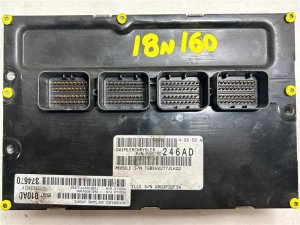
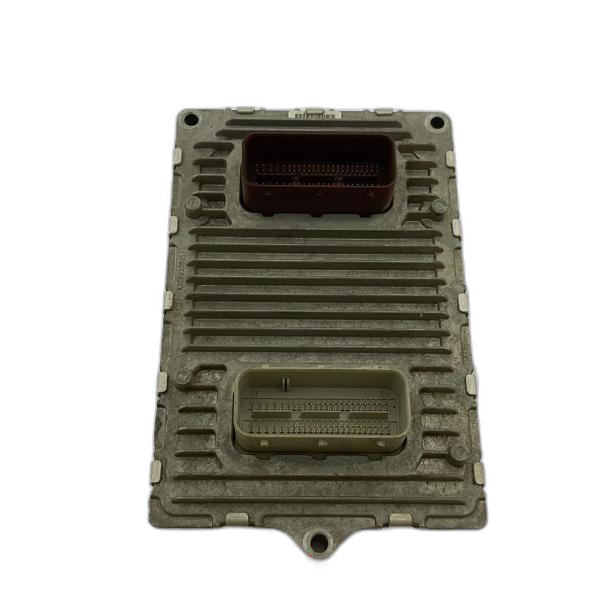
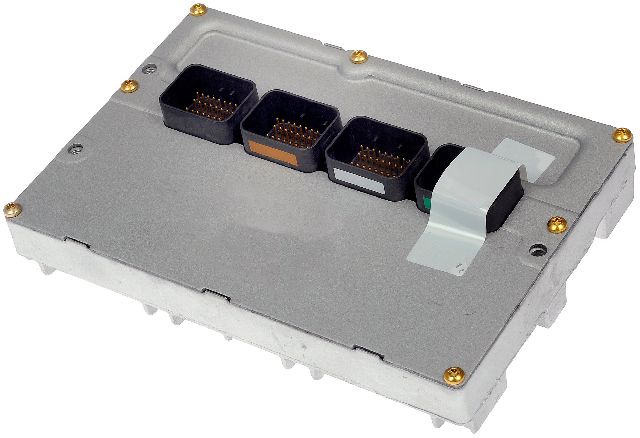
- Powertrain Control Module (PCM)
(OEM #68061226AA (superseded, multiple numbers exist based on year/options, VIN lookup required))— This code indicates a fatal internal memory error in the PCM. In over 90% of cases for this vehicle, replacing the module is the only solution.
Trusted brands: Mopar (OEM), Cardone, Flagship One, FS1
OEM price range: $500-$800
Aftermarket price range: $300-$500
Related Codes That Often Appear With This One
- U0100 — This code means 'Lost Communication with ECM/PCM'. It often appears with P0601 as the PCM begins to fail, causing it to stop communicating with other modules on the vehicle's data network.
- P0606 — This code indicates a 'PCM Processor Fault'. Like P0601, it points to a fatal internal error within the engine computer. Both codes typically lead to the same diagnosis: a failed PCM.
- P0562 — This code for 'System Voltage Low' is a critical clue. If seen with P0601, it suggests the root cause may be a battery or charging system issue that must be fixed before condemning the PCM.
Platform-Specific Known Issues
- The Totally Integrated Power Module (TIPM), which is the main fuse box, is a known weak point on this platform and can cause a variety of electrical issues, including communication codes that may accompany P0601 or mimic PCM failure.
- Water leaks into the trunk from tail light seals or the rear window are a known issue and can cause corrosion at the battery terminals, leading to voltage problems that can damage the PCM.
- The voltage regulator is integrated into the PCM. A failure in the charging circuit within the PCM can cause the alternator to stop charging, leading to low voltage conditions that can also trigger a P0601.
Mechanic-Grade Diagnostic Values
- PCM Power Supply Voltage Drop — expected: < 0.5 V. Failure: A voltage drop greater than 0.5V indicates high resistance in the power feed circuit to the PCM, which can cause checksum errors.
- PCM Ground Circuit Resistance — expected: < 0.1 Ω. Failure: Resistance greater than 0.1 ohms between the PCM ground pin and the negative battery terminal points to a poor ground connection, a common cause of intermittent electrical faults.
- Battery Voltage (Cranking) — expected: Not below ~11 V. Failure: Voltage dropping below 11V while cranking can cause the PCM to reset or corrupt its memory, potentially triggering a P0601.
Scan Tool Commands That Help
- wiTECH (Dealer Tool) or equivalent professional scanner: Module Communication Test / Request Live Data — After confirming P0601, use this function to see if the PCM responds to commands. A failure to respond or the return of corrupted data helps confirm the PCM is internally non-communicative.
- wiTECH (Dealer Tool) or equivalent professional scanner: PCM Flash/Reprogram — This is a last-ditch effort before replacement. If the code was caused by a failed previous update, a reflash might correct it. However, if the hardware has failed, the flash will likely fail, confirming the need for replacement.
Wiring & Ground Locations
- PCM Location — Typically mounted in the engine bay, on the passenger side firewall.. Physical access is required to inspect connectors for corrosion and to perform voltage/ground tests directly at the module's pins.
- G100 / G101 — G100 is on the left front of the engine compartment; G101 is on the right front.. These are major engine compartment grounds. A loose or corroded connection at these points can create unstable voltage for the PCM, leading to memory errors like P0601.
- PCM C1 Connector (Black) — One of the four main connectors on the Powertrain Control Module.. This connector contains critical power and ground circuits. Specifically, Pins 9 and 18 are grounds (Z12 circuit), and Pin 29 is a fused battery feed (A14 circuit). Verifying voltage and ground integrity at these specific pins is a key diagnostic step.
- PCM C4 Connector (Green) — One of the four main connectors on the Powertrain Control Module.. This connector also contains essential ground circuits. For example, on related platforms, pins 18 and 38 are often primary grounds. A wiring diagram must be used to confirm the exact pinout for the Challenger.
Real Owner Repair Stories
- DodgeForum.com user 'tjnc' (2001 Dodge Caravan 3.3L (similar Chrysler platform)) — P0601 code present.
❌ Tried (didn't work) The previous owner had significant PCM-related work done by a dealership without a permanent fix.
✅ What actually fixed it The user suspected the root cause was a leaky battery that the previous owner used for a while, causing voltage irregularities that eventually damaged the PCM. The final fix is implied to be a PCM replacement after confirming external factors. - NHTSA ODI #11309374 (Dodge Dakota - cross-manufacturer reference) — An owner reported that the P0601 code, indicating a memory checksum error, appeared intermittently specifically during cold weather conditions.
OEM Part Supersession History
05187912AH→05187912AG, 05150397AE (generic number)— Standard part revisions for bug fixes and hardware updates.
Heads up: Part numbers are specific to transmission type (automatic vs. manual) and other vehicle options. Always verify the correct part number with the VIN.
Diagnostic Flowchart
Other Known Issues on This Vehicle
Issues unrelated to this code that are worth knowing about as an owner of this generation:
- MDS Lifter / Camshaft Failure ('Hemi Tick') 🔴 High — Very common, especially on engines with extended idle time or inconsistent oil changes. Can occur at any mileage but is more frequent over 70,000 miles. (Ref: NHTSA recall on some 2008-2012 models for timing chain failure related to MDS.)
- Totally Integrated Power Module (TIPM) Failure 🟠 Medium — Common across many Chrysler/Dodge/Jeep vehicles from this era. Can cause a wide range of difficult-to-diagnose electrical problems like no-start, fuel pump issues, or erratic accessory operation.
- Manual Transmission Clutch Sticking 🟡 Low → Shop Transmission Assembly — Reported on early manual transmission models (2009-2010). The clutch disc sticks on the transmission input shaft splines due to factory grease consistency, making shifting difficult.
- Alternator Failure 🟠 Medium → Shop Alternator — A known issue, particularly in 2011-2014 models but also seen in earlier years. The voltage regulator is inside the PCM, so alternator issues can be linked to PCM failure. (Ref: A recall was issued for some 2011-2014 models.)
Used vs. New Parts: Buying Guide for This Vehicle
When a used part is the smart pick: A used PCM from a junkyard is almost never a smart choice for this repair. While cheaper, it will not start the car due to the Sentry Key Immobilizer system being programmed to the donor vehicle's VIN. The cost and difficulty of finding a specialist to 'virginize' and reprogram a used module often outweighs the savings.
OEM-only on this vehicle (don't cheap out):
- Powertrain Control Module (PCM)
Aftermarket brands forum-validated for this vehicle:
- Flagship One (FS1)
- Cardone (Remanufactured)
- Flashmasters
Brands owners have reported issues with on this vehicle:
- Unbranded, non-programmed units from online marketplaces like eBay or Amazon, as they often lack the correct software or cannot be programmed properly.
Real Owner Stories
Aggregated from forums and TSBs cited above. Mileages and costs reflect what owners reported in those sources.
2008-2014 Dodge Challenger
Symptoms: Vehicle had a no crank, no start condition with no response from the PCM/ECU, throwing codes U0100 and P0601.
What fixed it: The TIPM (Totally Integrated Power Module) was failing to supply power to the PCM; replacing the TIPM resolved the codes.
Source hint: Go-Parts (summary of YouTube video): 'No Crank No Start. FIXED. No response from the PCM/ECU. U0100 P0601. 2008-2014 Dodge Challenger'
2005-2010 Jeep Grand Cherokee (WK) 5.7L V8
Symptoms: P0601 code present. Replaced the PCM, but the code returned shortly after installation.
What fixed it: Ensuring the battery was disconnected during installation and verifying all connectors were tight to prevent voltage spikes.
Source hint: Reddit r/GrandCherokee: 'P0601, bad PCM, dirty grounds or low voltage?'
2006-2010 Dodge Caravan (Chrysler Platform)
Symptoms: Owner suspected the PCM was not the root cause despite the P0601 code, suggesting external factors like alternator voltage spikes.
What fixed it: Research suggested investigating leaky batteries causing alternator spikes or intermittent wiring shorts before replacing the PCM.
Source hint: DodgeForum.com: 'OBDII #P0601 is almost never the PCM?'
Related OBD-II Codes
Frequently Asked Questions
Will the Federal Emissions Warranty cover the PCM replacement on my 2008-2010 Dodge Challenger?
My Challenger has a 'No Bus' message and won't start; is this related to P0601?
Could the battery being in the trunk cause a P0601 code on my HEMI Challenger?
Is there a recall for the alternator or PCM on the 2008-2010 models?
Can a water leak in the trunk affect my Challenger's PCM?
Does the TIPM cause the same symptoms as a bad PCM?
Helpful Videos
Used OEM Parts in Stock
New Aftermarket Parts Available

The information in this article is provided for general reference and educational purposes only. Vehicle specifications, procedures, and part compatibility can vary by production date, trim level, and region. Always consult your vehicle's factory service manual and verify part numbers before purchasing or performing repairs. Safety-critical components such as airbags, seat belts, and braking systems should be installed by a qualified professional.
- Dodge Challenger:
- 🧭 Diagnostic Flowchart
- 🎬 Helpful Videos
- 🛍️ Shop This Part
- What's Unique About the 2008-2010 Dodge Challenger
- Symptoms You May Notice
- Most Likely Causes
- Rare But Worth Checking
- Diagnosis Steps
- Parts You'll Likely Need
- Related Codes That Often Appear With This One
- Platform-Specific Known Issues
- Mechanic-Grade Diagnostic Values
- Scan Tool Commands That Help
- Wiring & Ground Locations
- Real Owner Repair Stories
- OEM Part Supersession History
- Other Known Issues on This Vehicle
- Used vs. New Parts: Buying Guide for This Vehicle
- Real Owner Stories
- 2008-2014 Dodge Challenger
- 2005-2010 Jeep Grand Cherokee (WK) 5.7L V8
- 2006-2010 Dodge Caravan (Chrysler Platform)
- Related OBD-II Codes
- Frequently Asked Questions
- 🎟️ Get 5% Off