

P0601 on 2006-2010 Dodge Charger SRT8: Internal PCM Failure Causes and Fixes
P0601 on a 2006-2010 Dodge Charger almost always means the Powertrain Control Module (PCM) has failed an internal self-test. The only reliable fix is replacing the PCM, which costs $500-$1000 for a programmed unit and labor. Before replacement, you must confirm the battery and alternator are working perfectly, as voltage issues can sometimes trigger the code.
- P0601 on a 2006-2010 Charger means the engine computer (PCM) has failed an internal self-test.
- DO NOT continue to drive the vehicle. The engine can stall at any time, creating a serious safety hazard.
- Before replacing the expensive PCM, you MUST test the battery and alternator. A bad charging system can trigger this code.
- The fix is to replace the PCM with a unit that is programmed to your car's VIN. This is not a simple DIY swap and requires professional tools.
- Check if your vehicle is covered under the 8-year/80,000-mile federal emissions warranty, which could cover this repair for free.
What's Unique About the 2006-2010 Dodge Charger
On many vehicles, a P0601 code might warrant a lengthy diagnostic process. However, on Chrysler and Dodge products from this era, including the Charger, this code is a very common and well-documented indicator of a definitive PCM hardware failure. The PCM is located in the hot engine bay on the passenger side, where years of heat cycles and vibration contribute to the failure of internal solder joints and electronic components. Technicians and experienced owners know that this code on a Charger almost inevitably leads to PCM replacement after external voltage issues are ruled out.
Symptoms You May Notice
- Check Engine Light is on
- Engine may stall intermittently or shut off while driving
- Engine may not start at all (no-crank or crank-no-start)
- Vehicle may enter 'limp mode' with reduced power
- Erratic automatic transmission shifting
- In many cases, no noticeable symptoms other than the Check Engine Light, which can be misleading.
- Replacing sensors like the crankshaft or camshaft position sensors. P0601 is an internal computer fault, not a sensor fault.
- Installing a used PCM from a junkyard without programming. It will not start the vehicle because it is not matched to the car's security system.
- Immediately replacing the PCM without first testing the battery and alternator. A faulty charging system must be ruled out first.
Most Likely Causes
- Powertrain Control Module (PCM) Internal Failure 🔴 High Probability → Shop Engine Control Module (ECM) This is a widely documented failure item on Dodge/Chrysler vehicles of this period, often due to age, heat cycles, and vibration leading to internal circuit board failure. The PCM's location in the engine bay exacerbates this issue.
How to confirm: After confirming the battery, alternator, and all PCM-related wiring and grounds are in perfect condition, the P0601 code itself is the confirmation of internal PCM failure. An attempt to reflash the module is highly unlikely to succeed for a hardware fault.
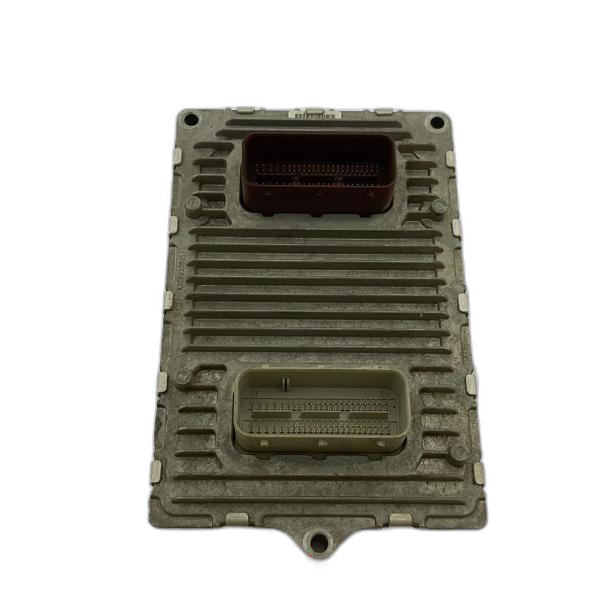
Typical fix: Replace the Powertrain Control Module (PCM). The new or remanufactured unit must be professionally programmed to the vehicle's VIN and security key (SKIM) information.
Est. part cost: $300-$700 - Low Battery Voltage or Failing Alternator 🟡 Medium Probability → Shop Alternator
How to confirm: Test the battery with a digital battery tester to check its state of health and cranking amps. A healthy battery should read above 12.4V at rest. With the engine running, use a multimeter to check alternator output at the battery terminals; it should be steady between 13.5 and 14.5 volts.
Typical fix: Replace the weak battery or faulty alternator. Clear codes and see if P0601 returns. This MUST be done before replacing the PCM.
Est. part cost: $150-$400
Rare But Worth Checking
- Corroded or Loose PCM Connectors/Wiring: Voltage drops or spikes from a poor connection can mimic PCM failure. Always inspect the PCM connectors for corrosion and ensure they are fully seated before replacing the module.
- Aftermarket Tuning/Programming: Improperly flashing the PCM with an aftermarket performance tune can sometimes corrupt the memory and trigger a P0601 code. It's crucial to revert to a stock tune, if possible, during diagnosis.
- Internal Short Circuit: Beyond general failure, a specific internal short circuit can occur due to component degradation over time. A burnt electronic smell near the PCM is a rare but definitive sign of this.
Diagnosis Steps
- Verify the P0601 code is present using an OBD-II scanner.
- CRITICAL: Test the battery. Ensure it is fully charged (12.6V+) and passes a load test. A weak battery is a common cause of memory corruption that can falsely trigger P0601.
- CRITICAL: Test the charging system. Start the engine and measure the voltage at the battery terminals. It should be stable, between 13.5V and 14.5V. An over-charging or under-charging alternator can damage control modules.
- Inspect all battery cables and PCM ground straps for corrosion or looseness. Clean and tighten as necessary. Pay special attention to the main engine ground straps.
- Visually inspect the PCM and its connectors for physical damage, corrosion, or signs of water intrusion. The PCM is located in the engine bay on the passenger side, near the firewall.
- Check all PCM-related fuses in both the front (underhood) and rear (trunk) power distribution centers.
- If the battery, alternator, and wiring are all confirmed to be in perfect condition, the PCM is faulty.
- Before purchasing a new PCM, check with a Dodge dealer to see if your vehicle's VIN falls under the 8-year/80,000-mile federal emissions warranty, which may cover the replacement for free.
Parts You'll Likely Need
- Powertrain Control Module (PCM)
(OEM #Varies by year and calibration. Examples include 04606837AE (2005), 05094811AE (2007), 05150310AA/AB/AC (2008).)— This is the direct cause of the P0601 code in over 90% of cases on this vehicle, once electrical system issues are ruled out.
Trusted brands: Mopar (OEM), Cardone, Flagship One (FS1)
OEM price range: $500-$800
Aftermarket price range: $300-$700
Related Codes That Often Appear With This One
- P0606 — Indicates a general 'PCM Processor Fault'. Both codes point to a fatal internal error within the PCM and require its replacement.
- P0562 — Means 'System Voltage Low'. This code is a major clue that a weak battery or failing alternator might be the root cause, corrupting the PCM's memory and triggering the P0601.
- U0100 — Means 'Lost Communication with ECM/PCM'. It can appear if the internal PCM failure is severe enough to disrupt its ability to communicate on the vehicle's data network.
Technical Service Bulletins (TSBs) & Recalls
- While no TSB is a direct fix for a P0601 hardware failure, bulletins like TSB 18-003-06 Rev. A ('Flash: Driveability and Shift Quality Improvements') show that software updates were common for these PCMs. This highlights the importance of ensuring any replacement module is flashed with the latest available software.
Platform-Specific Known Issues
- The federal emissions warranty, which covers the PCM for 8 years or 80,000 miles, may apply to some of these vehicles, potentially making the repair free at a dealership.
- The PCM is located on the passenger side of the engine bay, making it susceptible to heat and vibration which contributes to its high failure rate.
Mechanic-Grade Diagnostic Values
- PCM Ground Circuit Resistance — expected: < 0.1 Ω. Failure: A reading higher than 0.1 Ω indicates a poor ground connection that can cause erratic PCM behavior.
- PCM Power Feed Voltage Drop (under load) — expected: < 0.5 V. Failure: A voltage drop greater than 0.5 V on the main power wire to the PCM signifies excessive resistance in the circuit.
- Alternator Output Voltage (Engine Running) — expected: 13.5 V - 14.5 V. Failure: Voltage outside this range indicates a faulty charging system, which can cause spikes or drops that corrupt PCM memory.
- Battery Voltage (Engine Off) — expected: > 12.4 V. Failure: Low static voltage indicates a weak or discharged battery that must be addressed before condemning the PCM.
Scan Tool Commands That Help
- wiTECH or StarSCAN: Restore Vehicle Configuration / Flash PCM — This is a mandatory first step after installing a new or remanufactured PCM. It loads the correct base software and VIN, and configures the module for the vehicle's specific options.
- wiTECH or StarSCAN: SKIM Key Programming / Secret Key Transfer — Required after PCM replacement to synchronize the Sentry Key Immobilizer Module (SKIM) with the new PCM. Without this, the vehicle will start and stall after a few seconds, or not crank at all.
- wiTECH or StarSCAN: Check PCM Odometer / Calibrate Odometer — Used to synchronize the vehicle's mileage from the instrument cluster to the new PCM after replacement.
Wiring & Ground Locations
- Main PCM Grounds — Typically found on a stud on the top of the alternator bracket. Wires are often black with a tan tracer.. A loose or corroded main ground at this location can cause intermittent voltage issues and unpredictable behavior, potentially leading to PCM memory corruption and a false P0601 code. This is a critical check before replacing the PCM.
- Engine Block to Chassis Ground — A heavy gauge braided strap or cable connecting the engine block to the vehicle's chassis/frame, often near a motor mount.. This is a primary ground path for the entire engine management system. If this strap is broken or corroded, the PCM and its sensors may find weaker ground paths, leading to electrical noise and potential module damage.
- G300 — Below the driver's side 'B' pillar trim.. This is a major chassis ground point. While not a direct PCM ground, a fault here can cause widespread, difficult-to-diagnose electrical problems that could potentially affect PCM voltage stability.
- G301 — Below the passenger's side 'B' pillar trim.. Similar to G300, this is another major chassis ground. A poor connection here can contribute to floating grounds and electrical instability throughout the vehicle.
Real Owner Repair Stories
- YouTube user 'Garage Grunt' (2006 Chevrolet Trailblazer SS (demonstrates similar GM issue with P0601)) — Car would shut off once it reached operating temperature (170-180°F) and set code P0601.
❌ Tried (didn't work) Cleaned PCM connectors and applied dielectric grease.
✅ What actually fixed it The PCM was faulty and required replacement. The owner sent the original unit to a specialized service (ARES Technologies) for repair/replacement, which resolved the issue. - DodgeForum.com user (2001 Dodge Caravan 3.3L (demonstrates cross-platform Chrysler issue)) — Persistent P0601 code.
❌ Tried (didn't work) Extensive research and debate on whether the PCM was truly the cause.
✅ What actually fixed it The user suspected the root cause was a previous leaky battery that caused voltage spikes or corrosion, leading to the P0601. The final fix was implied to be a PCM replacement or reflash after addressing the underlying electrical system integrity. - NHTSA Owner Report (Dodge Dakota cross-reference) — NHTSA ODI #11309374 describes a memory checksum error code P0601 that appeared intermittently during cold weather.
OEM Part Supersession History
68004368AA→68004368AB, 68004368AC, 68004368AD, R8004368AD— Standard hardware and software revisions by the manufacturer over time.
Heads up: While these part numbers are often listed as interchangeable for 6.1L vehicles, it is always critical to match the part number from the original PCM or verify with a VIN. Software differences can exist even with compatible hardware, affecting vehicle options or performance.
Model Year Variations Within This Range
- 2006-2010: While the engine and diagnosis for P0601 are consistent, PCM part numbers can vary significantly by model year. For example, part numbers for a 2006 model may not be compatible with a 2008-2010 model, and vice-versa. Always verify the correct part number for the specific VIN before ordering a replacement.
Diagnostic Flowchart
Other Known Issues on This Vehicle
Issues unrelated to this code that are worth knowing about as an owner of this generation:
- Front Suspension Clunk (Tension Strut Failure) 🟠 Medium — Very common. A clunking or banging noise from the front end when going over bumps is a typical sign. The fluid-filled bushings in the forward control arms (tension struts) fail, causing excessive movement.
- Transmission Conductor Plate Failure (NAG1/W5A580) 🔴 High → Shop Transmission Assembly — A very common failure on the 5-speed automatic. Symptoms include the vehicle entering 'limp mode' (stuck in 2nd gear) and throwing transmission-related fault codes. The internal speed sensors on the plate fail.
- Shifter Stuck in Park ('Pink Thingy' Failure) 🟡 Low — Extremely common across the LX platform. A small plastic lever inside the shifter assembly breaks, preventing the shifter from moving out of Park. The fix is to replace the plastic piece with a more durable metal aftermarket part.
- HEMI Tick (Lifter/Camshaft Failure) 🔴 High — A known potential issue on Gen 3 HEMI engines. The 6.1L is considered less prone than the 5.7L and 6.4L engines with MDS, but roller lifter failure can still occur, leading to camshaft damage.
Used vs. New Parts: Buying Guide for This Vehicle
When a used part is the smart pick: A used PCM from a salvage yard is a viable cost-saving option ONLY if you have immediate access to a Dodge dealership or a specialist shop with a wiTECH 2.0 scan tool. The used module is guaranteed NOT to be plug-and-play and will require professional VIN and SKIM key programming to function. It makes sense if the cost of the used part plus programming labor is significantly less than a pre-programmed remanufactured unit.
Donor-vehicle mileage cap: roughly under 120000 miles for the part to have meaningful remaining life.
What to inspect on the donor part:
- Verify the part number is an exact match or a confirmed superseded number for your vehicle's VIN.
- Inspect the connectors for any signs of corrosion, bent pins, or physical damage.
- If possible, confirm the donor vehicle did not have extensive electrical damage or flood damage.
OEM-only on this vehicle (don't cheap out):
- Powertrain Control Module (PCM) - While aftermarket remanufactured units are common, their quality can be inconsistent. For maximum reliability, a new Mopar PCM is the best choice, followed by a unit from a highly reputable remanufacturer with a strong warranty and good reviews.
Aftermarket brands forum-validated for this vehicle:
- Cardone (Commonly available, ensure it comes with a good warranty)
- Flagship One (FS1) (Specializes in pre-programmed modules)
Brands owners have reported issues with on this vehicle:
- Unbranded or generic eBay/Amazon sellers with no warranty or programming support. A P0601 fix requires both a functional part and correct software; buying from a source that can't provide both is a significant risk.
Real Owner Stories
Aggregated from forums and TSBs cited above. Mileages and costs reflect what owners reported in those sources.
2006-2010 Dodge Charger HEMI 6.1L V8 SRT8
Symptoms: The Check Engine Light was on, but there were no other noticeable symptoms. The owner researched whether external faults like bad batteries or wiring could be the cause.
What fixed it: The consensus for Chrysler products in this situation is that the PCM has failed and requires replacement, despite the lack of driveability issues.
Source hint: DodgeForum.com: OBDII #P0601 is almost never the PCM?
Dodge Platform Owner Report
Symptoms: An owner reported that code P0601, indicating a memory checksum error, would come on intermittently in cold weather (NHTSA ODI #11309374).
What fixed it: While the owner noted the code could be cleared, the underlying checksum error typically points to internal module degradation.
Related OBD-II Codes
Frequently Asked Questions
Will the federal emissions warranty cover the P0601 repair on my 2006-2010 Dodge Charger SRT8?
Can I just reflash my PCM to fix the P0601 internal checksum error?
Where is the PCM located on my 6.1L HEMI Charger, and why does it fail so often?
Can I buy a used PCM from a salvage yard for my SRT8?
Should I replace my battery before replacing the PCM for a P0601 code?
Are there specific aftermarket brands recommended for a replacement PCM?
Helpful Videos
We Have This Part in Stock

The information in this article is provided for general reference and educational purposes only. Vehicle specifications, procedures, and part compatibility can vary by production date, trim level, and region. Always consult your vehicle's factory service manual and verify part numbers before purchasing or performing repairs. Safety-critical components such as airbags, seat belts, and braking systems should be installed by a qualified professional.
- Dodge Charger:
- 🧭 Diagnostic Flowchart
- 🎬 Helpful Videos
- 🛍️ Shop This Part
- What's Unique About the 2006-2010 Dodge Charger
- Symptoms You May Notice
- Most Likely Causes
- Rare But Worth Checking
- Diagnosis Steps
- Parts You'll Likely Need
- Related Codes That Often Appear With This One
- Technical Service Bulletins (TSBs) & Recalls
- Platform-Specific Known Issues
- Mechanic-Grade Diagnostic Values
- Scan Tool Commands That Help
- Wiring & Ground Locations
- Real Owner Repair Stories
- OEM Part Supersession History
- Model Year Variations Within This Range
- Other Known Issues on This Vehicle
- Used vs. New Parts: Buying Guide for This Vehicle
- Real Owner Stories
- 2006-2010 Dodge Charger HEMI 6.1L V8 SRT8
- Dodge Platform Owner Report
- Related OBD-II Codes
- Frequently Asked Questions
- 🎟️ Get 5% Off