

P0601 on 2004-2008 Ford F-150: Internal Memory Error Causes and Fixes
P0601 on a 2004-2008 F-150 almost always means the Powertrain Control Module (PCM) has failed its internal self-test. The only reliable fix is to replace and program the PCM, a job for a professional. Before condemning the PCM, it is critical to first check the battery, charging system, and the PCM power relay to rule out simple electrical issues that can mimic PCM failure.
- P0601 is a critical code indicating the engine computer (PCM) has an internal memory failure.
- Do not continue to drive the vehicle, as it can stall without warning.
- Before condemning the expensive PCM, always test the battery, charging system, and PCM power relay first.
- The most common fix is to replace the PCM with a new or remanufactured unit.
- A replacement PCM must be professionally programmed to your truck's VIN and keys to function.
What's Unique About the 2004-2008 Ford F-150
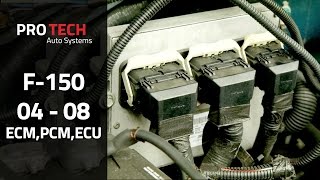
For the 11th generation F-150 (2004-2008), the P0601 code is a straightforward but serious issue. Unlike some vehicles where this code can be intermittent or caused by various obscure faults, on this F-150 it typically points directly to a terminal failure of the PCM itself. While external factors like low voltage from a weak battery or failing alternator should always be checked first, owners and technicians report that the module itself is the root cause in the vast majority of cases. The PCM is located on the passenger-side firewall in the engine bay, and replacement is physically easy, 🎬 Watch: See this step-by-step PCM replacement walkthrough. but programming is mandatory and requires specialized tools to sync with the vehicle's VIN and PATS anti-theft system.
Symptoms You May Notice
- Check Engine Light is on
- Engine stalling intermittently or shutting off while driving
- No-start or hard-to-start condition, where the engine cranks but won't fire
- Rough or erratic idle
- Reduced engine power or sluggish acceleration
- Transmission shifting problems
- Inability to communicate with the PCM using a scan tool
- Black smoke on acceleration in some cases
- Replacing throttle bodies or other sensors. A failing PCM can send false signals, causing codes for other components to appear. If P0601 is present, it is the primary fault and should be addressed first, as it indicates the 'brain' itself is compromised.
- Replacing the Fuel Pump Driver Module (FPDM). The FPDM is a known failure point on these trucks, causing crank-no-start or stalling. However, FPDM failure typically sets codes like P1233 or P0627, not P0601. While its symptoms can be similar, it's a separate issue.
Most Likely Causes
- Failed Powertrain Control Module (PCM) 🔴 High Probability → Shop Engine Control Module (ECM) Internal components of the PCM, such as memory chips or processors, can fail due to age, heat cycles, and vibration over many years, leading to memory corruption. Some owners report the issue occurring after a voltage spike from a jump-start.
How to confirm: After confirming all power and ground circuits to the PCM are good and the battery/charging system is healthy, the diagnosis defaults to a failed PCM. If a reflash is attempted and fails, or if the module has a burnt smell, it also confirms a bad module.
Typical fix: Replace the PCM. The new or remanufactured unit must be programmed with the vehicle's VIN and PATS key information.
Est. part cost: $250-$800 for a remanufactured, pre-programmed unit. - Low Battery Voltage or Failing Alternator 🟡 Medium Probability → Shop Alternator Voltage spikes or drops during startup or operation can corrupt the PCM's memory or interrupt its self-test, triggering a checksum error. An aging battery or failing alternator is a common source of unstable voltage.
How to confirm: Test the battery voltage at rest (should be >12.4V, ideally >12.6V). Test the alternator output with the engine running (should be 13.5V-14.5V). Perform a load test on the battery. Check for corroded or loose battery terminals.
Typical fix: Recharge or replace the battery, and/or replace the alternator. Clean and tighten all battery connections.
Est. part cost: $150-$400 - Faulty PCM Power Relay ⚪ Low Probability The relay that supplies power to the PCM can fail, causing intermittent power loss, no-start, or no-communication symptoms that can be mistaken for a dead PCM.
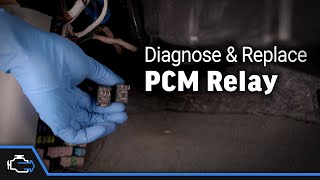
How to confirm: The PCM relay is located in the passenger side footwell fuse box (Central Junction Box). A simple test is to swap it with an identical relay from a non-critical system, such as the fog lights (Relay R03), and see if the truck starts. The PCM relay is typically in position R203. 🎬 Watch: How to find and test the PCM relay.
Typical fix: Replace the PCM power relay. A common part number is a simple 4-pin or 5-pin relay.
Est. part cost: $10-$30
Rare But Worth Checking
- Corrupted Aftermarket Tune: If the truck has been modified with a performance tune, an error during the flashing process or a bug in the tune itself can corrupt the PCM's memory and cause a P0601 code. Always try flashing back to the stock tune if possible before replacing hardware.
- Poor PCM Ground Connection: A corroded or loose ground wire for the PCM can cause erratic behavior and trigger internal fault codes. Before replacing the PCM, it's worth inspecting the main ground connections. On this F-150, a key ground strap is located on the firewall near the PCM and connects to a stud on the back of the passenger-side cylinder head. Ensuring this connection is clean and tight is a crucial diagnostic step.
Diagnosis Steps
- Verify the code with an OBD-II scanner. Note any other codes that are present. If P0601 is present, it is the highest priority.
- Check the battery and charging system. Ensure battery voltage is above 12.4V with the engine off, and between 13.5V and 14.5V with the engine running. Clean any corrosion from the battery terminals and perform a load test on the battery.
- Locate the PCM power relay (R203) in the passenger footwell fuse box. Swap it with the identical fog lamp relay (R03) to see if the fault clears or the vehicle starts.
- Inspect the PCM connectors on the firewall for any signs of corrosion, moisture, or bent pins. Ensure they are securely connected.
- Inspect the PCM ground strap. It runs from the firewall near the PCM to a stud on the rear of the passenger-side cylinder head. Ensure it is clean, tight, and free of corrosion.
- If an aftermarket tune is installed, attempt to flash the PCM back to the stock Ford programming.
- If all the above steps check out, the PCM is confirmed to be faulty and must be replaced and programmed.
Parts You'll Likely Need
- Powertrain Control Module (PCM)
(OEM #Varies by VIN and calibration. Examples: 4L3A-12A650-APC, 6L3A-12A650-CMB. Must match original part number.)— This code indicates a fatal internal memory error in the PCM. In over 90% of cases for this vehicle, replacing the module is the only solution.
Trusted brands: Motorcraft (OEM), Cardone (Remanufactured), Flagship One (Pre-Programmed), Auto Computer Exchange (Pre-Programmed)
OEM price range: $800-$1050
Aftermarket price range: $250-$500
Related Codes That Often Appear With This One
- P0606 — This code indicates a more general 'ECM/PCM Processor Fault'. If both are present, it strongly confirms the PCM has failed internally.
- U0100 — This code means 'Lost Communication With ECM/PCM'. If the PCM is failing, it may stop communicating with other modules on the vehicle's network, like the ABS or transmission control module.
Technical Service Bulletins (TSBs) & Recalls
- While no TSB directly addresses P0601 for this vehicle, TSB 05-4-6 was issued for 2005 models with the 5.4L engine for codes P061B and P2106, which also relate to internal PCM calculations. The fix was a PCM reflash, indicating that software updates for these modules are sometimes required.
- Other PCM-related issues on this platform, such as those caused by failed ignition coils, have led to companies like Circuit Board Medics offering specific repair services for the 2004-2008 F-150 PCM, indicating a known pattern of failure.
Platform-Specific Known Issues
- A thread on Ford-Trucks.com titled 'Code P0601?' from 2007 shows a user experiencing the code after installing an aftermarket exhaust, though the final diagnosis was an unrelated ICP sensor. This highlights the importance of methodical diagnosis.
- Another user on a forum reported that disconnecting the batteries and turning the lights on for 10 minutes to drain residual power can sometimes clear temporary communication glitches, though this is unlikely to fix a true P0601 checksum error.
Mechanic-Grade Diagnostic Values
- PCM Power Feed Voltage Drop — expected: < 0.5 V under load. Failure: A voltage drop greater than 0.5V indicates excessive resistance in the power supply circuit to the PCM, which can cause low voltage issues.
- PCM Ground Strap Resistance — expected: < 0.1 Ω. Failure: Resistance higher than 0.1 ohms indicates a poor ground connection, which can cause erratic PCM behavior and trigger various fault codes.
- Battery Voltage at Rest (Engine Off) — expected: ≥ 12.6 V. Failure: Voltage below 12.4V suggests a weak or discharged battery, a common cause of voltage-related PCM faults like P0601.
Scan Tool Commands That Help
- Ford IDS (Integrated Diagnostic System): Programmable Module Installation (PMI) — This function is required when installing a new or used PCM. It downloads the existing module configuration (As-Built data) and uploads it to the replacement module, then performs key relearns for the PATS system.
- Ford IDS (Integrated Diagnostic System): Relearn Vehicle Data — A specific service function used to write the correct VIN from the BCM to a used (junkyard) PCM. This can resolve a P160a code (Module ID mismatch) that may appear after swapping a used module.
- Ford IDS (Integrated Diagnostic System): As-Built Data Manual Entry — If a PCM is not listed in the As-Built tab during PMI, a technician can use a special function (by entering code 53061) to manually enter the vehicle's As-Built data from Ford's service portal.
- FORScan: PATS Programming — FORScan is a powerful aftermarket tool that can perform the PATS security relearn procedure after a PCM is replaced, which is necessary for the engine to start. This can sometimes be an alternative to using the dealer's IDS.
Wiring & Ground Locations
- C175B, C175E, C175T — These are the three main connectors for the Powertrain Control Module (PCM), located on the passenger-side firewall in the engine bay. C175B is for Body/Cowl, C175E is for Engine, and C175T is for Transmission.. Corrosion or moisture in any of these connectors can interrupt power, ground, or data signals to the PCM, potentially causing internal faults or communication errors that could mimic or lead to a P0601 code.
- G104 — Located on the LH (driver's side) front of the engine compartment. This is a primary chassis ground point.. While the main PCM ground is on the passenger side, poor chassis grounds in general can create electrical noise and voltage stability issues that affect sensitive modules like the PCM.
- G100 / G101 — Located on the rear, RH (passenger) side of the engine. This is the specific ground strap for the PCM mentioned in the Pass 2 diagnosis.. This is the most critical ground for the PCM. A loose or corroded connection here is a known, though rare, cause of P0601 and other severe drivability issues. It must be checked before condemning the PCM.
- G200 — Located in the RH (passenger) front footwell, behind the kick panel.. This is an interior ground point. It provides the ground path for several interior modules and the Central Junction Box, where the PCM power relay is located. A fault here could affect power delivery to the PCM.
Real Owner Repair Stories
- Go-Parts.com forum summary (Ford F-150 (year not specified)) — Stalling, erratic shifting, and P0601 code.
❌ Tried (didn't work) Initial diagnosis pointed to a failed PCM.
✅ What actually fixed it A technician found a corroded and loose main ground wire for the PCM. Wiggling the cable caused the P0601 code to reset. The final fix was extending and re-grounding the wires to a solid bracket bolt, which resolved all symptoms without replacing the PCM.
Model Year Variations Within This Range
- 2004-2008: The 2004 model year marked the introduction of the CAN (Controller Area Network) bus system on the F-150. Prior models used older protocols. This means diagnostic approaches and the way modules communicate are fundamentally different from the 10th generation (pre-2004) trucks. All 2004-2008 models use this CAN bus architecture.
- 2004-2008: The PCM uses three separate connectors: C175B (Body), C175E (Engine), and C175T (Transmission). While this layout is consistent across the generation, the physical orientation of the PCM may be inverted on some vehicles, which is important to note when referencing pinout diagrams.
Diagnostic Flowchart
Other Known Issues on This Vehicle
Issues unrelated to this code that are worth knowing about as an owner of this generation:
- 5.4L 3V Cam Phaser Failure 🔴 High — Very common, often starts as a light ticking or 'diesel' sound at hot idle around 80k-120k miles. Caused by low oil pressure from failing timing chain tensioner seals. (Ref: TSB 06-19-8)
- Two-Piece Spark Plug Breakage 🔴 High — Extremely common on 5.4L 3V engines built before 10/9/07. The long ground shield seizes in the cylinder head with carbon, causing the plug to break during removal. (Ref: TSB 08-7-6)
- Fuel Pump Driver Module (FPDM) Corrosion 🔴 High — Extremely common. The aluminum-bodied module is mounted to the steel frame above the spare tire, causing galvanic corrosion that cracks the housing, allowing water intrusion and failure. Symptoms are crank-no-start or stalling.
- Timing Chain Tensioner and Guide Failure 🔴 High — Widespread issue on the 5.4L 3V. Plastic timing chain guides break, and tensioner seals blow out, leading to low oil pressure, chain slap, and eventual cam phaser failure.
- Variable Camshaft Timing (VCT) Solenoid Failure 🟠 Medium — Common failure item. The solenoids get clogged with debris or fail electronically, causing rough idle, stalling, and poor performance. Often replaced during a full timing job.
Used vs. New Parts: Buying Guide for This Vehicle
When a used part is the smart pick: A used PCM from a junkyard can be a cost-effective option, saving hundreds of dollars compared to a new or remanufactured unit ($750+ vs ~$125). It makes sense if you have access to a professional-level scan tool like Ford's IDS or a capable independent shop that can perform the necessary reprogramming. Without the ability to program, a used module is a paperweight.
Donor-vehicle mileage cap: roughly under 150000 miles for the part to have meaningful remaining life.
What to inspect on the donor part:
- Match the hardware ID number exactly. This is printed on the PCM's sticker and is more important than the main part number.
- Source the part from a southern or dry-climate state if possible to minimize the risk of internal corrosion.
- Inspect the connectors on the donor PCM for any bent pins, corrosion, or signs of water intrusion before purchasing.
OEM-only on this vehicle (don't cheap out):
- While aftermarket PCMs exist, this is a component where OEM (Motorcraft) or a reputable remanufacturer (like Cardone, Flagship One) that uses OEM boards is highly recommended. The complexity of programming and vehicle integration makes cheap, no-name units a significant risk.
Aftermarket brands forum-validated for this vehicle:
- Cardone (Remanufactured)
- Flagship One (Pre-Programmed)
- Auto Computer Exchange (Pre-Programmed)
Brands owners have reported issues with on this vehicle:
- Unbranded, generic modules from online marketplaces that do not offer programming services or a warranty.
Real Owner Stories
Aggregated from forums and TSBs cited above. Mileages and costs reflect what owners reported in those sources.
2004-2008 Ford F-150 5.4L
Symptoms: The truck experienced a no-start or no-communication symptom that could be mistaken for a dead PCM.
What fixed it: Swapping the PCM power relay (R203) with the fog lamp relay (R03) in the passenger footwell fuse box.
Source hint: YouTube: PCM Relay (with ChrisFix!) – 2004-2008 5.4L Ford F-150
2007 Ford F-150
Symptoms: The owner experienced code P0601 after installing an aftermarket exhaust system.
What fixed it: The final diagnosis was an unrelated ICP sensor, though the P0601 code was initially present.
Source hint: Ford-Trucks.com thread titled 'Code P0601?'
2004-2008 Ford F-150
Symptoms: Temporary communication glitches and checksum errors.
What fixed it: Disconnecting the batteries and turning the lights on for 10 minutes to drain residual power (though noted as unlikely to fix a permanent hardware failure).
Source hint: Vehicle-specific issues
Related OBD-II Codes
Frequently Asked Questions
Does TSB 05-4-6 apply to my 2005 Ford F-150 with the 5.4L engine?
Can I test if my PCM is bad by swapping a relay in my 2004-2008 F-150?
Where is the PCM ground strap located on this generation of F-150?
Is it true that a jump-start can cause a P0601 code on my Ford?
Will an aftermarket tune cause a P0601 checksum error?
How much does it cost to fix a P0601 on a 2004-2008 F-150?
Helpful Videos
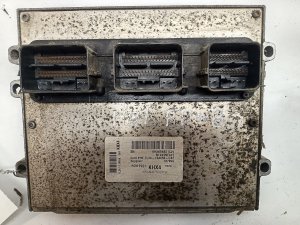
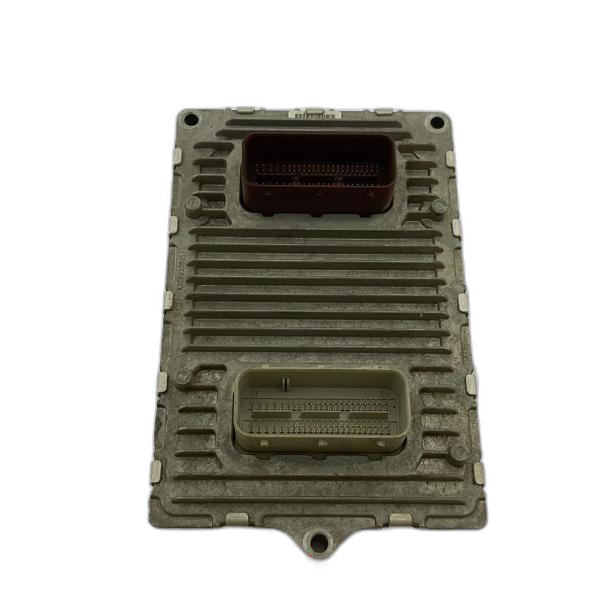
Used OEM Parts in Stock
New Aftermarket Parts Available
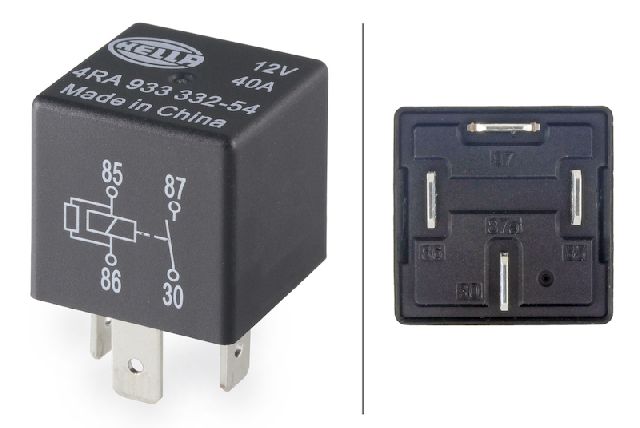

The information in this article is provided for general reference and educational purposes only. Vehicle specifications, procedures, and part compatibility can vary by production date, trim level, and region. Always consult your vehicle's factory service manual and verify part numbers before purchasing or performing repairs. Safety-critical components such as airbags, seat belts, and braking systems should be installed by a qualified professional.
- Ford F-150:
- 🧭 Diagnostic Flowchart
- 🎬 Helpful Videos
- 🛍️ Shop This Part
- What's Unique About the 2004-2008 Ford F-150
- Symptoms You May Notice
- Most Likely Causes
- Rare But Worth Checking
- Diagnosis Steps
- Parts You'll Likely Need
- Related Codes That Often Appear With This One
- Technical Service Bulletins (TSBs) & Recalls
- Platform-Specific Known Issues
- Mechanic-Grade Diagnostic Values
- Scan Tool Commands That Help
- Wiring & Ground Locations
- Real Owner Repair Stories
- Model Year Variations Within This Range
- Other Known Issues on This Vehicle
- Used vs. New Parts: Buying Guide for This Vehicle
- Real Owner Stories
- 2004-2008 Ford F-150 5.4L
- 2007 Ford F-150
- 2004-2008 Ford F-150
- Related OBD-II Codes
- Frequently Asked Questions
- 🎟️ Get 5% Off