

P0601 on 2007-2011 GMC Savana: Internal Memory Error Causes and Fixes
P0601 on a 2007-2011 GMC Savana almost always means the Engine Control Module (ECM) has failed internally. The fix requires replacing the ECM and having it professionally programmed, with costs typically ranging from $700 to $1,800. Before replacement, it is critical to rule out power/ground issues and use a professional scan tool to confirm if the fault is in the ECM or the Transmission Control Module (TCM).
- P0601 is a critical code indicating an internal failure of a control module, most often the ECM.
- Do not drive the vehicle, as it can stall at any time, creating a serious safety risk.
- The fix is to replace the faulty module, which requires professional programming. This is not a DIY repair for most people.
- Before replacing any expensive parts, always test the battery, charging system, and check all main ground connections, especially G103 on the engine head.
- Use a professional scan tool to confirm if the fault is in the Engine Control Module (ECM) or Transmission Control Module (TCM), as either can cause this code on a Savana.
What's Unique About the 2007-2011 Gmc SAVANA
For this generation of GMC vans and trucks, P0601 is not exclusively an ECM code. As noted in GM Technical Service Bulletins #05-06-04-060A and #PIP4653E, this fault can be reported by multiple control modules. On the Savana and its platform mates like the Chevrolet Express and GMC Sierra, the Transmission Control Module (TCM) is another known cause for this code. Therefore, it is crucial to use a professional scan tool to determine exactly which module has the internal fault before replacing any parts.
Diagnostic Flowchart
Tap your situation to follow the diagnostic path that matches what you're seeing on this vehicle.
Symptoms You May Notice
- Check Engine Light is on
- Engine stalls unexpectedly, sometimes after warming up 🎬 Watch: Real-world diagnosis of a stalling GM truck with P0601
- Engine will not start or is hard to start (cranks but won't fire)
- Vehicle enters 'Reduced Power' or 'Limp Mode'
- Erratic or harsh shifting (if TCM is the cause)
- Warning messages on the dash like 'Service StabiliTrak' or 'Service Traction Control'
- ABS and Traction Control lights may illuminate
- Replacing the ECM when the fault is actually in the TCM.
- Replacing a control module when the root cause is a poor ground connection, a failing alternator, or a weak battery causing voltage instability.
Most Likely Causes
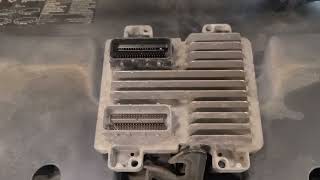
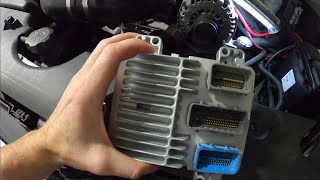
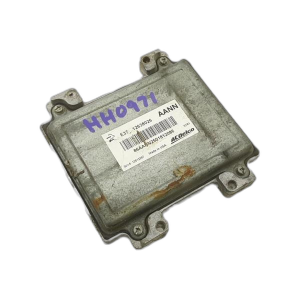
- Failed Engine Control Module (ECM) 🔴 High Probability → Shop Engine Control Module (ECM) The ECM (often an ACDelco E38 on V8 models) can fail due to age, heat cycles, and electrical stress, leading to internal hardware 🎬 See this breakdown of P0601 causes and common fixes or software corruption. This is the most common cause for P0601. Technicians note that repeated heat cycles can cause cold solder joints on the main processor to develop over time.
How to confirm: After confirming stable power (12.6V+ off, 13.5-14.5V running) and clean ground connections, if the code cannot be cleared or returns immediately, the ECM is condemned. A professional scan tool will confirm the fault is originating within the ECM. Sometimes a burnt electronic smell can be detected near the module.
Typical fix: Replace the Engine Control Module and program the new unit to the vehicle. Services exist that can clone your old module's data to a replacement unit.
Est. part cost: $250-$1200 - Failed Transmission Control Module (TCM) 🟡 Medium Probability → Shop Transmission Assembly As noted in GM TSBs #05-06-04-060A and #PIP4653E for this platform, the P0601 code can also originate in the TCM. This is a documented issue on the Savana, Express, and related trucks/SUVs.
How to confirm: A professional scan tool is required to communicate with individual modules and identify that the P0601 code is stored in the TCM, not the ECM. This is a critical diagnostic step emphasized in GM service literature.
Typical fix: Replace the Transmission Control Module and perform the necessary programming and setup procedures.
Est. part cost: $250-$500 - Poor Power or Ground Connections ⚪ Low Probability These vans are sensitive to voltage issues. A weak battery, failing alternator, or corroded/loose ground straps can cause voltage spikes or drops that may corrupt module memory or trigger a false P0601. GM service documents for related issues point to key ground locations G103 (rear of LH engine head) and G104/G105/G106 as potential problem areas. Forum users often recommend checking the main battery-to-engine and battery-to-firewall grounds first.
How to confirm: Test the battery and charging system. Load test the battery and verify alternator output is between 13.5 and 14.5 volts. Perform a voltage drop test on the ECM/TCM power and ground circuits. Inspect and clean all major ground connections from the battery to the chassis and engine block, paying special attention to the locations specified in service manuals.
Typical fix: Replace the weak battery, repair the charging system, or clean/tighten ground connections.
Est. part cost: $0-$300
Rare But Worth Checking
- Aftermarket Tuning or Programming: Improperly installed performance tunes or unauthorized reflashing can sometimes corrupt the module's memory and trigger this code. Attempting to reflash the stock tune can sometimes resolve the issue, but often the module is permanently damaged.
Diagnosis Steps
- Connect a professional scan tool (like a GM Tech 2 or GDS2) to confirm the P0601 code and, crucially, to identify which module is setting the code (ECM, TCM, etc.).
- Check for any other stored trouble codes. Address them in the order they were stored, as a different code could potentially cause the P0601.
- Thoroughly test the battery to ensure it is fully charged and healthy. A weak or failing battery is a common source of electrical issues that can trigger false module codes.
- With the engine running, test the alternator's output. It should be stable and typically between 13.5 and 14.5 volts. Voltage spikes or drops can damage control modules.
- Inspect all battery cables and main ground straps. On a Savana, check the primary ground from the battery to the engine block and the strap to the firewall/chassis. Per GM documents, also inspect grounds G103, G104, G105, and G106 for tightness and corrosion.
- Perform a voltage drop test on the power and ground pins directly at the connector of the module that set the code. This confirms the module itself is receiving stable power.
- Visually inspect the wiring harness and connectors going to the identified faulty module. Look for any signs of damage, corrosion, or loose pins.
- If all power, ground, and wiring inspections pass, the identified control module is faulty. An attempt to reflash the module with the latest factory software can be made, but it is unlikely to succeed with a true checksum error.
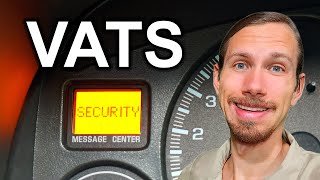
- Install the new module and program it to the vehicle using specialized equipment. This includes VIN programming and a security system (VATS) relearn procedure.
Parts You'll Likely Need
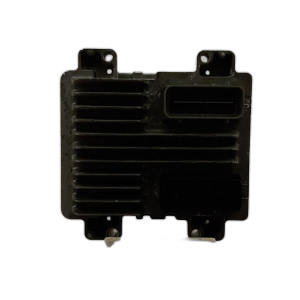
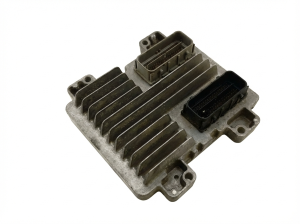
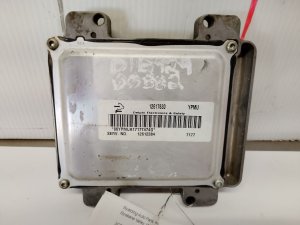
- Engine Control Module (ECM)
(OEM #12628593, 12617082, 19260758 (ACDelco E38/E67, VIN specific))— This is the most common cause of a P0601 code. The internal memory fails its self-test, requiring complete replacement of the unit.
Trusted brands: ACDelco (OEM), Cardone (Remanufactured), FS1 (Pre-programmed)
OEM price range: $400-$1200
Aftermarket price range: $250-$700 - Transmission Control Module (TCM)
(OEM #VIN Specific (e.g., for 6L80/6L90 transmissions))— A known, but less common, cause for P0601 on this platform, as identified in GM TSBs. Requires replacement if a scan tool confirms it as the source of the fault.
Trusted brands: ACDelco (OEM), Sonnax (Repair components), ATP (Remanufactured)
OEM price range: $300-$600
Aftermarket price range: $200-$450
Related Codes That Often Appear With This One
- P0602 — This code indicates a Control Module Programming Error and can appear alongside P0601 if the module's memory is failing or has been corrupted.
- P0606 — This code indicates a PCM/ECM Processor Fault, another type of critical internal module failure that can be related to the conditions causing P0601.
- U-series codes (e.g., U0100, U0101) — If the failing module also controls network communication, you may see Loss of Communication codes with other modules on the vehicle.
Technical Service Bulletins (TSBs) & Recalls
- Bulletin #05-06-04-060A: An informational bulletin for technicians regarding various control module diagnostic trouble codes, including P0601, that can be set in multiple different modules.
- Bulletin #PIP4653E: Specifically addresses DTCs P0601, P0603, P0604, etc., when stored in the Transmission Control Module (TCM) and stresses the importance of identifying the correct module before diagnosis.
Platform-Specific Known Issues
- Per TSB #05-06-04-060A, this code is part of a group of DTCs that can be shared across multiple modules, highlighting the need for precise diagnosis to avoid replacing the wrong component.
- Per TSB #PIP4653E, DTCs like P0601 stored in the TCM are a specific known issue on a wide range of GM vehicles from this era, including the Express/Savana.
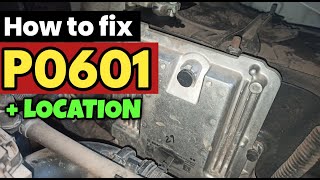
- The physical location of the ECM in the engine bay exposes it to significant heat cycles and vibration, which are contributing factors to eventual hardware failure.
Mechanic-Grade Diagnostic Values
- ECM/TCM Power & Ground Circuit Voltage Drop — expected: Less than 0.1V is ideal; up to 0.3V may be acceptable.. Failure: A reading greater than 0.5V indicates excessive resistance in the circuit that must be found and repaired.
- Charging System Voltage (Engine Running) — expected: 13.5V - 14.8V. Note that on these vans, the Regulated Voltage Control (RVC) system will cause the voltage to fluctuate, which is normal.. Failure: Consistently below 13.2V or above 15.5V points to a fault in the alternator or BCM control of the charging system.
- Battery Voltage (Engine Off) — expected: 12.4V - 12.6V.. Failure: Below 12.4V indicates a discharged or weak battery that can cause numerous false electrical codes and must be addressed before condemning a module.
Scan Tool Commands That Help
- GM Tech 2 / GDS2 or Manual Procedure: VATS (Vehicle Anti-Theft System) Relearn — This procedure is mandatory after replacing the ECM. It synchronizes the new module with the vehicle's immobilizer system. Failure to perform this will result in a no-start condition. The common method is the '30-Minute Relearn': Turn the key to ON (don't start) for 10 minutes until the security light goes out, turn OFF for 5-30 seconds, and repeat this cycle three times.
- J2534 Pass-Thru Device with ACDelco TDS Subscription: Service Programming System (SPS) — This is the factory method for programming a new or used ECM or TCM. It downloads the correct VIN-specific software and calibration files from GM's servers and flashes them to the module. This is required to make the new module operational in the vehicle.
Wiring & Ground Locations
- G103 — Location varies by specific engine/year. On GMT900 trucks (similar platform), it is located on the front of the passenger side (right) cylinder head. Other GM diagrams place it on the cowl, above the brake booster. Technicians should verify the location for their specific engine.. This is a primary engine ground. Poor contact here can cause unstable voltage to multiple systems, potentially affecting the ECM.
- G104 — On the back of the driver's side (left) cylinder head, often where a large ground strap from the firewall connects.. This is a critical body-to-engine ground. A loose or corroded connection here is a common source of widespread, intermittent electrical issues.
- G101 — Located at the lower front of the engine block.. This ground point is specified as a ground for the Engine Control Module (ECM) and Transmission Control Module (TCM), making its integrity essential for preventing codes like P0601.
- ECM Power/Ground Pins — At the main connectors of the ECM (e.g., X1, X2). Specific pin numbers for power (Battery Positive Voltage, Ignition Voltage) and ground (Low Reference) must be identified from a vehicle-specific wiring diagram.. These are the exact points to perform a voltage drop test to confirm the module itself is receiving clean, stable power and has a solid ground connection, ruling out the vehicle's wiring as the cause.
Real Owner Repair Stories
- YouTube channel 'SuperMarioDiagnostics' (2011 Chevrolet Silverado 1500 (same platform)) — Vehicle would cut out while driving, setting P0601. Also displayed 'Reduced Power', 'Service StabiliTrak', and ABS messages.
❌ Tried (didn't work) Replacing the brake switch twice with aftermarket parts, which failed to resolve a separate P0573 code and complicated diagnosis.
✅ What actually fixed it The P0601 and associated stalling/limp mode were resolved by replacing the Engine Control Module (ECM) and performing the necessary programming and relearn procedures. - CorvetteForum user (2006 Corvette with E38 ECM) — Intermittent stalling and rough running. The car would sputter and die when put into gear, then sometimes run fine later.
❌ Tried (didn't work) Verifying fuel pressure (was stable at 60 psi)., Verifying spark and injector pulse with a noid light., Checking all visible ground connections., Reflashing the existing ECM with an updated OS.
✅ What actually fixed it After all external inputs were verified as good, a new ECM was installed, and the security and crank relearn procedures were performed. This permanently resolved the stalling issue.
OEM Part Supersession History
Various E38 Service Numbers→Various E38 Service Numbers— Hardware revisions and internal component changes were made throughout the production run of the E38 ECM.
Heads up: CRITICAL: E38 ECMs from different years are not always cross-compatible. Attempting to program an ECM (e.g., a 2009 unit) with a calibration file intended for a different year (e.g., 2007) can permanently 'brick' the module, making it unresponsive and unrecoverable with standard dealer tools. The Service Programming System (SPS) may block the operation, but using aftermarket tuning tools can force the flash and cause the failure.
Model Year Variations Within This Range
- 2007+: These models use a Regulated Voltage Control (RVC) system where the Body Control Module (BCM) commands the alternator's output based on electrical demand and battery state. Technicians and owners should be aware that the voltmeter on the instrument cluster will fluctuate, often between 12.5V and 15V+. This is normal operation and not an indication of a faulty alternator.
Helpful Videos
Used OEM Parts in Stock
New Aftermarket Parts Available






The information in this article is provided for general reference and educational purposes only. Vehicle specifications, procedures, and part compatibility can vary by production date, trim level, and region. Always consult your vehicle's factory service manual and verify part numbers before purchasing or performing repairs. Safety-critical components such as airbags, seat belts, and braking systems should be installed by a qualified professional.
- Gmc SAVANA:
- 🧭 Diagnostic Flowchart
- 🎬 Helpful Videos
- 🛍️ Shop This Part
- What's Unique About the 2007-2011 Gmc SAVANA
- Symptoms You May Notice
- Most Likely Causes
- Rare But Worth Checking
- Diagnosis Steps
- Parts You'll Likely Need
- Related Codes That Often Appear With This One
- Technical Service Bulletins (TSBs) & Recalls
- Platform-Specific Known Issues
- Mechanic-Grade Diagnostic Values
- Scan Tool Commands That Help
- Wiring & Ground Locations
- Real Owner Repair Stories
- OEM Part Supersession History
- Model Year Variations Within This Range
- 🎟️ Get 5% Off