

P0601 on 2007-2014 GMC Yukon: Internal Control Module Memory Error Fixes
P0601 on a 2007-2014 GMC Yukon almost always indicates a fatal internal failure of a control module, most commonly the Engine Control Module (ECM/PCM). This is a critical fault that requires module replacement and programming, with shop costs often exceeding $800-$1100. Before replacement, always verify battery, charging system, and all major ground connections are perfect.
- P0601 is a critical code indicating a failed control module, usually the ECM.
- Do not drive the vehicle. It is unreliable and could stall at any time.
- Before replacing the expensive ECM, use a professional scan tool to confirm the code isn't coming from the Transmission Control Module (TCM), as noted in GM TSBs.
- This is not a DIY repair. The replacement module must be professionally programmed to your Yukon's VIN.
- Always check the battery, alternator, and ground connections first as a simple preliminary step, but expect the module to be the ultimate cause.
What's Unique About the 2007-2014 Gmc YUKON
For the GMT900 platform, which includes the 2007-2014 Yukon, Tahoe, and Silverado, P0601 is a well-documented and serious code that typically signals the end of the line for the affected control module. What's particularly important for this generation is GM's explicit acknowledgment in TSB PIP4653E that P0601 can originate not just in the main engine computer (ECM) but also in the transmission computer (TCM). This makes it crucial to use a high-level scan tool to determine which module is actually setting the code before ordering expensive parts. Owner forums are filled with stories of these symptoms, confirming it's a common failure point for the platform.
Diagnostic Flowchart
Tap your situation to follow the diagnostic path that matches what you're seeing on this vehicle.
Symptoms You May Notice
- Check Engine Light is on
- Vehicle will not start or cranks but does not start
- Engine stalls intermittently or while driving, often without warning
- "Reduced Engine Power" message on the 🎬 Watch: A simple fix for the Reduced Engine Power message dashboard
- "Service Stabilitrak" and/or ABS/Traction Control lights may illuminate
- Erratic transmission shifting
- Vehicle may require the DTC to be cleared with a scanner before it will crank or start again
- Replacing the ECM when the P0601 code was actually set by the TCM.
- Replacing sensors or other components in an attempt to fix drivability issues caused by the failing module, without addressing the root P0601 code.
- Immediately condemning the ECM without first thoroughly testing and cleaning the battery, charging system, and all major ground connections.
Most Likely Causes
- Failed Engine Control Module (ECM/PCM) 🔴 High Probability → Shop Engine Control Module (ECM) The E38 ECM used in these trucks can fail internally from heat, vibration, and age. This is often called the 'kiss of death' for the module and is the most frequent resolution for a P0601 code.
How to confirm: After confirming all power and ground connections to the ECM are perfect (ideally by load testing them), and the code returns immediately after clearing, the module itself is condemned. Sometimes a burnt electronic smell can be detected near the module.
Typical fix: Replace the Engine Control Module and have it programmed by a dealer or qualified shop with access to GM's SPS (Service Programming System).
Est. part cost: $400-$1100 - Failed Transmission Control Module (TCM) 🟡 Medium Probability → Shop Transmission Assembly As per GM TSB #PIP4653E, the TCM is a known source for this code on this platform. The TCM is located inside the transmission and can fail internally, mimicking an ECM failure.
How to confirm: Use a professional scan tool to verify that the P0601 code is specifically stored in the TCM, not the ECM. The TSB explicitly warns against misdiagnosis here.
Typical fix: Replace the Transmission Control Module and perform any necessary programming or setup procedures.
Est. part cost: $300-$700 - Low Battery Voltage or Poor Connections ⚪ Low Probability → Shop Vehicle Battery These trucks are very sensitive to voltage drops. While a weak battery is a cause, a more common scenario is corroded or loose battery terminals and, critically, bad ground straps from the engine to the frame. A poor ground can cause voltage fluctuations that corrupt the module's self-test.
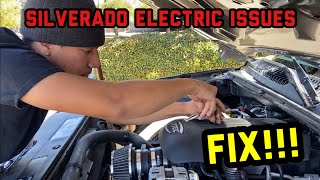
How to confirm: Test the battery (must be above 12.4V at rest) and charging system (13.5-14.5V running). Physically remove, clean, and re-secure all main battery terminals and ground connections, especially the main strap from the engine block to the chassis/firewall. 🎬 See how to find and fix common GM ground issues
Typical fix: Replace the weak battery, fix the charging system, or clean/repair ground connections. This should always be done before replacing a module.
Est. part cost: $20-$250
Rare But Worth Checking
- Corrupted Software from Aftermarket Tuning: If the vehicle has been modified with a non-OEM performance tune, a failed or improper flash can corrupt the module's memory and trigger a P0601 code.
- Wiring Harness Issues: A short or open in the wiring harness providing power or ground to the control module can mimic an internal failure. A thorough inspection of the harness near the module, including load testing the power/ground wires at the connector, is a wise final step before replacement.
Diagnosis Steps
- Verify the P0601 code with a reliable OBD-II scanner.
- Use an advanced scan tool to determine WHICH module is storing the code (ECM, TCM, etc.). This is the most critical step.
- Check for any other accompanying trouble codes.
- Thoroughly test the battery's health and the alternator's output. Ensure voltage is stable and within specification (typically 13.5-14.5V when running).
- CRITICAL: Inspect, clean, and tighten all power and ground connections. This includes battery terminals, the main fuse block connections, and the primary engine-to-chassis ground straps. Wiggle test connections to check for intermittent faults.
- Visually inspect the wiring harness leading to the module for any signs of damage, chafing, or melting. Check for a burnt electronic smell near the module itself.
- If possible, load test the power and ground wires directly at the suspect module's connector using a headlamp bulb to ensure the circuit can carry current, not just show voltage.
- If all external checks (power, ground, wiring) are good and the code persists, the control module itself is faulty and needs to be replaced.
Parts You'll Likely Need
- Engine Control Module (ECM/PCM)
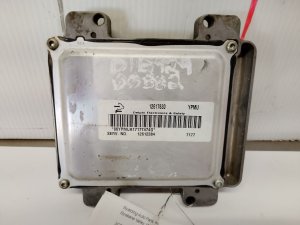
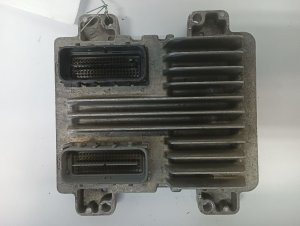
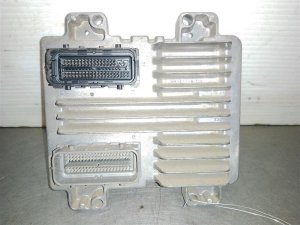
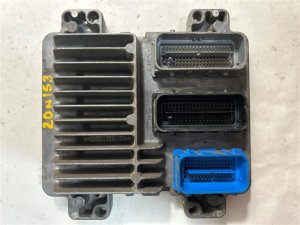
(OEM #Varies by year. Examples: 12597121 (2007), 12612384 (2008), 12625455 (2009), 12633238. Match the service number on your original unit.)— This is the most common cause of a P0601 code. The internal memory has failed its self-check.
Trusted brands: ACDelco (OEM), Cardone (Remanufactured), FS1 (Remanufactured)
OEM price range: $500-$1100
Aftermarket price range: $300-$800 - Transmission Control Module (TCM) — A known, documented cause for P0601 on this platform, as cited in GM TSB #PIP4653E.
Trusted brands: ACDelco
OEM price range: $400-$800
Aftermarket price range: $250-$600
Related Codes That Often Appear With This One
- P0603 — Related to Keep Alive Memory (KAM) errors, often seen with module power interruptions.
- P0604 — Indicates a RAM error within the control module, another internal fault.
- P062F — Relates to an internal EEPROM error in the control module.
- P1621 — A GM-specific code for a control module's long-term memory performance.
Technical Service Bulletins (TSBs) & Recalls
- PIP4653E: Discusses P0601 and other codes being stored in the Transmission Control Module (TCM).
- 05-06-04-060A: Mentions that P0601 and other module-related DTCs can be shared in multiple modules.
Platform-Specific Known Issues
- TSB Confirms TCM as a Source: TSB #PIP4653E specifically notes that on 2008-2014 GMC Yukon models (among others), DTCs P0601, P0603, P0604, P062F, or P1621 can be stored in the Transmission Control Module (TCM). It stresses the importance of verifying which module set the code before attempting a repair.
- TSB on Shared Module DTCs: TSB #05-06-04-060A provides information that a cluster of control module DTCs, including P0601, can be shared across multiple modules, indicating a systemic electrical or module communication issue.
- Owner Experience: Intermittent Failure and Dealer Frustration: On TahoeYukonForum.com, a user with a P0601 described their vehicle suddenly stalling with multiple warnings, then refusing to restart until the code was cleared. They took it to a dealer who charged a diagnostic fee but couldn't replicate the problem and didn't want to replace the 'expensive' ECM. This highlights the intermittent nature of the failure and the critical importance of checking simple things like grounds (especially in rust-belt states) before going to a shop.
Mechanic-Grade Diagnostic Values
- ECM Battery Positive Voltage — expected: 12.6V+ (Engine Off), 13.5-14.5V (Engine Running). Failure: Voltage below 12.4V or unstable readings indicate a battery, charging, or connection issue that must be fixed before condemning the ECM.
- ECM Ignition 1 Voltage — expected: 12V+ with Key On, Engine Off. Failure: No voltage indicates a problem with the ignition switch, fuse, or wiring, not the ECM itself.
- ECM Ground Circuit Resistance — expected: Less than 0.5 Ohms. Failure: High resistance indicates a poor ground connection, which is a very common cause of module issues on these trucks.
Scan Tool Commands That Help
- GDS2 / Tech2Win: Module Diagnostic - Vehicle DTC Information — To confirm which specific module (ECM, TCM, FPCM, etc.) has stored the P0601 code. This is the most critical first step to avoid misdiagnosis, as confirmed by TSB PIP4653E.
- GM Service Programming System (SPS): Replace and Program ECU — This function is required after physically installing a new or used ECM. It downloads the correct calibration file for the vehicle's VIN and writes the VIN into the new module, which is necessary for the vehicle to start and run correctly.
- GDS2 / Tech2Win: Clear DTCs — Used after a repair to clear the P0601 code. In some cases of intermittent failure, the vehicle may not restart after a stall until the code is cleared.
Wiring & Ground Locations
- G101 / G106 — Located at the front of the engine, lower block area, sometimes jumpered to the frame cross rail under the crank pulley.. This is a primary ground point for the Engine Control Module (ECM) and Transmission Control Module (TCM). Corrosion or looseness here can cause voltage fluctuations leading to a P0601.
- G102 — Located at the left rear of the engine, typically on the cylinder head.. This grounds the ignition coil packs. While not a direct ECM ground, electrical noise from a poor coil ground can sometimes interfere with module operation.
- G103 — Located on the front of the passenger side (right) cylinder head.. This is another critical engine ground point. A video guide for GMT900 trucks specifically identifies this as a key ground to check and clean.
- Engine Harness Chafing Point — Inspect the engine harness where it passes the ECM/TCM bracket, the driver's side upper control arm, and the shock tower bolt.. GM has documented that the harness can rub through in these locations, causing shorts to ground for various circuits. This can create electrical chaos that may trigger a P0601 before the ECM is actually faulty.
- ECM Connector X1 — The 73-pin main connector on the Engine Control Module.. This is where direct power and ground tests must be performed. Key pins are Pin 19 (Ignition Voltage) and Pin 20 (Battery Positive Voltage).
Real Owner Repair Stories
- 2CarPros Forum User (Chevrolet Colorado (similar GMT platform electronics)) — Intermittent stall and no-start condition. The truck would run for about five minutes, stall, and then not restart. The cluster displayed "Reduced Power" and the only code was P0601.
❌ Tried (didn't work) The owner initially suspected the ECM was faulty due to the P0601 code.
✅ What actually fixed it The owner cleaned all ground points and both battery connections, including the connections at the main fuse relay box. After ensuring all grounds were clean and secure, the problem was resolved.
OEM Part Supersession History
12597121, 12612384, 12625455→12633238— Standard hardware and software revisions over the model years.
Heads up: While later part numbers are generally backward compatible when programmed correctly, it's critical to match the service number from the original ECM whenever possible. Using an ECM from a different engine or transmission combination (e.g., a truck ECM in a Corvette) can cause programming issues even with the same service number.
Model Year Variations Within This Range
- 2009+: Many 2009 and newer models received a different throttle body, which required a corresponding change in the non-reprogrammable portion of the E38 ECM's software. This makes sourcing a used ECM more complex, as the module's original model year becomes more critical for compatibility.
Helpful Videos
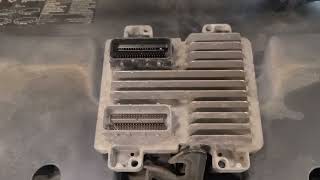

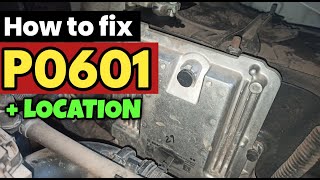
Used OEM Parts in Stock
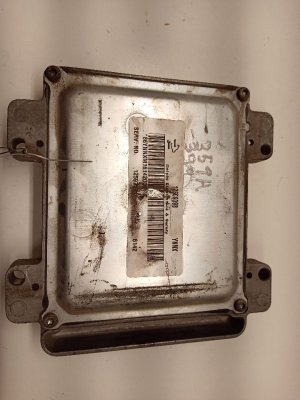
New Aftermarket Parts Available

The information in this article is provided for general reference and educational purposes only. Vehicle specifications, procedures, and part compatibility can vary by production date, trim level, and region. Always consult your vehicle's factory service manual and verify part numbers before purchasing or performing repairs. Safety-critical components such as airbags, seat belts, and braking systems should be installed by a qualified professional.
- Gmc YUKON:
- 🧭 Diagnostic Flowchart
- 🎬 Helpful Videos
- 🛍️ Shop This Part
- What's Unique About the 2007-2014 Gmc YUKON
- Symptoms You May Notice
- Most Likely Causes
- Rare But Worth Checking
- Diagnosis Steps
- Parts You'll Likely Need
- Related Codes That Often Appear With This One
- Technical Service Bulletins (TSBs) & Recalls
- Platform-Specific Known Issues
- Mechanic-Grade Diagnostic Values
- Scan Tool Commands That Help
- Wiring & Ground Locations
- Real Owner Repair Stories
- OEM Part Supersession History
- Model Year Variations Within This Range
- 🎟️ Get 5% Off