

P0601 on 2012-2013 GMC Yukon Denali: Internal Module Memory Error Causes and Fixes
P0601 on a 2012-2013 Yukon Denali means a critical control module has failed. It's most often a bad Engine Control Module (ECM), but can also be the Transmission Control Module (TCM). The fix is to replace the faulty module and have it professionally programmed, costing between $650 and $1,500.
- P0601 is a critical code indicating a failed control module (ECM or TCM); do not continue to drive the vehicle.
- You MUST use a professional scan tool to determine which module is at fault before buying parts.
- Always check the battery, alternator, and all major ground connections before condemning an expensive module, as electrical issues can sometimes trigger this code.
- This is not a DIY repair for most people, as the replacement module requires programming to your vehicle's VIN.
What's Unique About the 2012-2013 Gmc YUKON DENALI
On this specific GMT900 platform, P0601 is not exclusively an engine computer problem. Manufacturer Technical Service Bulletins (TSBs) confirm this code can be set by either the Engine Control Module (ECM) or the Transmission Control Module (TCM). Specifically, TSB #PIP4653E lists the 2008-2015 GMC Yukon Denali as a vehicle where P0601 can be stored in the TCM. This makes it absolutely critical to use a professional-grade scan tool (like a GM Tech 2 or GDS2) to identify which module is reporting the internal fault before replacing any expensive parts. Simply assuming it's the ECM could lead to a costly misdiagnosis.
Diagnostic Flowchart
Tap your situation to follow the diagnostic path that matches what you're seeing on this vehicle.
Symptoms You May Notice
- Check Engine Light is on
- Engine stalls or shuts down unexpectedly while driving
- Vehicle enters 'Reduced Power' mode, often with a corresponding dash message
- Engine cranks but will not start
- Intermittent no-start conditions
- Harsh or erratic transmission shifting if the TCM is the source of the fault
- No noticeable symptoms in some rare cases, though this is unlikely for a persistent P0601
- Replacing the ECM without first using a scan tool to confirm which module (ECM or TCM) set the code, as per TSB #PIP4653E.
- Replacing sensors or other components, when P0601 is an internal module fault, not a sensor fault.
- Overlooking a simple bad ground or weak battery, which can mimic module failure on these voltage-sensitive trucks.
Most Likely Causes
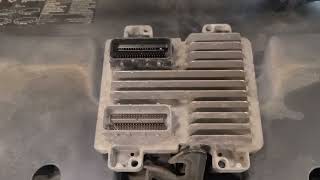
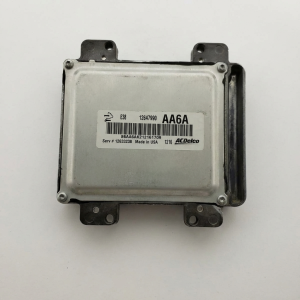
- Failed Engine Control Module (ECM/PCM) 🔴 High Probability → Shop Engine Control Module (ECM) The Delphi/ACDelco E38 ECM used in these trucks is known to fail from thermal stress and heat cycles, which can cause cold or cracked solder joints on the main processor, leading to memory corruption. This is the most common reason for a P0601 code on this platform.
How to confirm: After verifying battery voltage (>12.4V) and alternator output (13.5-14.5V) are good, and inspecting all related grounds (G103, G104), use a scan tool to confirm P0601 is stored in the ECM. If the code returns immediately after clearing or after a failed re-flash attempt, the ECM is condemned. A real-world repair on a 2012 Yukon confirmed PCM replacement was the fix after stalling and 'Reduced Power' messages.
Typical fix: Replace the Engine Control Module and program the new unit to the vehicle's VIN. This requires specialized tools like GM's SPS (Service Programming System) and may also require a CASE (Crankshaft Variation) relearn and VATS (Vehicle Anti-Theft System) relearn procedure. Mail-in cloning services are also an option.
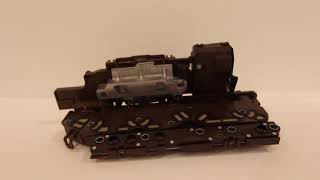
Est. part cost: $400-$1200 - Failed Transmission Control Module (TCM) 🟡 Medium Probability → Shop Transmission Assembly As documented in GM TSB #PIP4653E, the TCM is a known module to set the P0601 code on 2008-2015 Yukon models. The TCM (part of the TEHCM) is located inside the transmission oil pan, where it is subjected to constant heat and vibration, leading to eventual electronic failure.
How to confirm: Use a professional scan tool capable of reading codes from all modules, not just a basic engine code reader. If the P0601 code is stored in the TCM, the fault lies there. The TSB specifically warns technicians to verify which module set the code before proceeding.
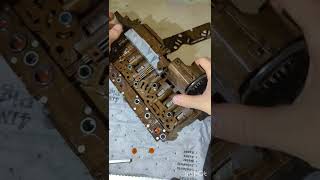
Typical fix: Replace the Transmission Control Module, which is typically part of the valve body assembly (TEHCM) inside the transmission. This requires draining the transmission fluid, dropping the pan, and replacing the unit, followed by professional programming. 🎬 Watch: What you need to know about TEHCM and TCM replacements
Est. part cost: $250-$500 - Low Voltage or Poor Ground Connection ⚪ Low Probability GMT900 platform trucks are notoriously sensitive to voltage irregularities. A weak battery, failing alternator, or corroded/loose ground straps can cause voltage drops during startup or operation that corrupt a module's self-test, triggering a false P0601.
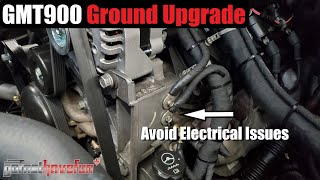
How to confirm: Test the battery with a load tester (>12.4V at rest). With the engine running, verify alternator output is 13.5V-14.5V. Visually inspect and physically check major ground connections, especially G103 (front passenger cylinder head) and G104 (rear driver's side cylinder head to firewall). Disassemble, clean, and tighten these grounds even if they look okay. 🎬 See how to clean and upgrade your truck's ground connections
Typical fix: Replace the weak battery, faulty alternator, or clean and repair corroded ground connections. This should always be the first diagnostic step before condemning an expensive module.
Est. part cost: $0-$400
Rare But Worth Checking
- Corrupted Aftermarket Tune: If the vehicle has been modified with a non-OEM performance tune, a data writing error during the flashing process could corrupt the module's memory and trigger a P0601. A documented case on a 2011 Sierra (same platform) showed that a P0601 and stalling issues were resolved by reverting from an aftermarket tune back to the stock factory calibration. Flashing back to stock is a key diagnostic step if the vehicle is tuned.
Diagnosis Steps
- Check Battery and Charging System: Using a multimeter and load tester, verify battery voltage is above 12.4V with the engine off and that the alternator is charging between 13.5V and 14.5V when running. A weak battery is a common source of electrical issues on these trucks.
- Inspect Power and Ground Connections: Thoroughly inspect, disassemble, and clean battery terminals and critical chassis/engine grounds. Pay special attention to ground G103 (front of passenger cylinder head) and G104 (rear of driver's cylinder head to firewall), as they are frequently cited as problem areas.
- Scan All Vehicle Modules: Use a professional-grade scan tool (e.g., GM Tech 2/GDS2) to check ALL control modules. Critically, determine if the P0601 code is stored in the Engine Control Module (ECM) or the Transmission Control Module (TCM), as advised by TSB #PIP4653E.
- Attempt to Clear Code & Re-flash: Clear the DTC and cycle the ignition. If P0601 returns immediately, it strongly confirms a permanent hardware fault. If the vehicle has an aftermarket tune, flash it back to the stock GM calibration. As a final diagnostic step, a shop may attempt to re-flash the existing module with the latest factory software; if the process fails or the code returns, the module is bad.
- Condemn the Module: If all power and ground inputs to the module are verified as good and the code persists, the module itself has an internal, non-repairable hardware failure and must be replaced.
Parts You'll Likely Need
- Engine Control Module (ECM)
(OEM #12633238, 12653784)— This is the most common cause of P0601 on the 2012-2013 Yukon. The internal memory fails its integrity check, requiring module replacement. Part number 12633238 is a common hardware family for this vehicle, with 12653784 being a specific compatible number for a 2012 model.
Trusted brands: ACDelco, Cardone, Flagship One, Solo PCMS
OEM price range: $500-$1200
Aftermarket price range: $400-$800 - Transmission Control Module (TCM)
(OEM #24252114)— A known, but less common, cause for P0601 on this platform, as cited in GM TSB #PIP4653E. The module is often located inside the transmission oil pan as part of the TEHCM (Transmission Electro-Hydraulic Control Module) and fails due to heat and vibration.
Trusted brands: ACDelco, Dorman
OEM price range: $300-$500
Aftermarket price range: $250-$400
Related Codes That Often Appear With This One
- P0603 — This code indicates a Keep Alive Memory (KAM) error, which can be related to power supply issues or internal module faults that also cause P0601. TSB #05-06-04-060A and #PIP4653E group these codes together.
- P0604 — This code indicates a Random Access Memory (RAM) error, another internal module fault that points to a failing computer. It is also mentioned in TSBs #05-06-04-060A and #PIP4653E.
- P1621 — This GM-specific code relates to control module long-term memory performance and is often seen alongside P0601 as noted in TSBs #05-06-04-060A and #PIP4653E.
Technical Service Bulletins (TSBs) & Recalls
- 05-06-04-060A: An informational bulletin explaining that internal module fault codes like P0601 are not specific to one module and can be shared among several, mandating a full-system scan.
- PIP4653E: A bulletin that specifically identifies the Transmission Control Module (TCM) as a possible source for P0601 on this platform, warning against automatically replacing the ECM.
Platform-Specific Known Issues
- A real-world case on a 2012 GMC Yukon with symptoms of sudden stalling and a 'Reduced Power' message was fixed by replacing the Powertrain Control Module (PCM/ECM) with a used unit after verifying grounds were good.
- On the Tahoe/Yukon forums, a 2014 Yukon owner experienced stalling with Stabilitrak errors and a P0601 code. The vehicle would not restart until the codes were cleared, only to die again minutes later, highlighting the severity and safety risk.
Mechanic-Grade Diagnostic Values
- ECM Power Supply Voltage (Key On) — expected: 12.4V or higher (equal to battery voltage). Failure: A reading below 12.4V, especially under 10.5V, indicates a power supply issue that can trigger false codes.
- ECM Ground Circuit Voltage Drop — expected: Less than 0.1 Volts. Failure: A reading greater than 0.3 Volts indicates excessive resistance in the ground path, requiring cleaning or repair of the ground connection.
- Alternator Output Voltage (Engine Running) — expected: 13.5 - 14.5 Volts. Failure: Voltage below 13.5V or above 14.8V indicates a charging system fault that can cause module instability.
- ECM Power and Ground Pin Resistance — expected: < 5.0 Ohms. Failure: Resistance greater than 5.0 Ohms on a power or ground circuit points to an open or high resistance in the wiring harness.
Scan Tool Commands That Help
- GM GDS2 (Global Diagnostic System 2): Vehicle DTC Information — This is the initial command to run a full vehicle scan, which is critical for P0601 to determine which module (ECM, TCM, etc.) has stored the fault code.
- GM SPS2 (Service Programming System 2): Reprogram ECU / Replace and Program ECU — This function, part of Techline Connect, is required after installing a new or used ECM or TCM. It downloads the correct VIN-specific software and calibration files to the module.
- GM GDS2 / Tech2Win: Control/Reset Functions — After module programming, special functions like 'CASE Relearn' (Crankshaft Position System Variation Learn) and 'VATS Relearn' (Vehicle Anti-Theft System) must be performed to synchronize the new module with the engine and security systems.
Wiring & Ground Locations
- G103 — On the front of the passenger-side cylinder head.. This is a primary ground point for the ECM and TCM. Corrosion or looseness here can cause intermittent voltage drops, mimicking internal module failure.
- G104 — On the rear of the driver's-side cylinder head, often near the firewall.. This is another critical engine ground. A poor connection here can cause a variety of electrical faults, including module communication errors.
- ECM Connector X1 (J1) — The larger of the two main connectors on the Engine Control Module, located under the battery tray on the driver's side.. This connector contains the primary power and ground inputs. Specifically, Pin 19 (Ignition 1 Voltage) and Pin 20 (Battery Positive Voltage) must be tested here to confirm the ECM is receiving stable power.
- ECM Connector X1, Pin 50 (Dark Green/White wire) — In the black ECM connector (X1).. While primarily for the Fuel Pump Control Module (FPCM) signal, a short or open on this wire can sometimes cause cascading electrical issues and codes. Checking for a valid signal here is part of a thorough electrical diagnosis.
Real Owner Repair Stories
- ScannerDanner Forum (2012 GMC Yukon) — Engine would suddenly stop while running, 'Reduced Power' message appeared on the dash, and DTC P0601 was stored.
❌ Tried (didn't work) Cleaning battery terminals, Checking and cleaning engine and body grounds
✅ What actually fixed it The Powertrain Control Module (PCM/ECM) was replaced with a used unit, which permanently resolved the stalling and the P0601 code.
OEM Part Supersession History
12633238→This part number is a service ECM and is often used as a remanufactured assembly. It fits a wide range of GM vehicles from 2010-2015.— This is a hardware family number. The specific software flashed to it determines the final application.
Heads up: This part absolutely requires professional programming using GM's SPS2 (Service Programming System) via Techline Connect to match the vehicle's VIN and options. It is not a plug-and-play part.
Helpful Videos

Used OEM Parts in Stock
New Aftermarket Parts Available


The information in this article is provided for general reference and educational purposes only. Vehicle specifications, procedures, and part compatibility can vary by production date, trim level, and region. Always consult your vehicle's factory service manual and verify part numbers before purchasing or performing repairs. Safety-critical components such as airbags, seat belts, and braking systems should be installed by a qualified professional.
- Gmc YUKON DENALI:
- 🧭 Diagnostic Flowchart
- 🎬 Helpful Videos
- 🛍️ Shop This Part
- What's Unique About the 2012-2013 Gmc YUKON DENALI
- Symptoms You May Notice
- Most Likely Causes
- Rare But Worth Checking
- Diagnosis Steps
- Parts You'll Likely Need
- Related Codes That Often Appear With This One
- Technical Service Bulletins (TSBs) & Recalls
- Platform-Specific Known Issues
- Mechanic-Grade Diagnostic Values
- Scan Tool Commands That Help
- Wiring & Ground Locations
- Real Owner Repair Stories
- OEM Part Supersession History
- 🎟️ Get 5% Off