

P0601 on 2007-2011 GMC Yukon Denali XL: Internal Module Memory Error Fixes
P0601 on a 2007-2011 GMC Yukon Denali XL indicates an internal memory failure in a control module, most commonly the Engine Control Module (ECM) or Transmission Control Module (TCM). The fix is almost always replacing the faulty module and having it programmed, which can cost between $550 and $1,500. Before replacement, all power and ground connections must be verified as stable.
- P0601 means a control module has failed an internal self-test and is unreliable.
- On your Yukon, the fault could be the Engine Control Module (ECM) OR the Transmission Control Module (TCM). A proper scan is needed to know which one.
- Before condemning an expensive module, always verify the battery is healthy and the alternator is charging correctly, as low voltage can trigger this code.
- This is not a DIY-friendly repair. The replacement module must be professionally programmed to your vehicle's VIN.
- The most likely fix is replacing the faulty module identified during diagnosis.
What's Unique About the 2007-2011 Gmc YUKON DENALI XL
For the 2007-2011 GMC Yukon Denali XL and its GMT900 platform mates, P0601 is not exclusively an engine computer problem. As documented in Technical Service Bulletin (TSB) #PIP4653E, this code can specifically point to a failure within the Transmission Control Module (TCM), which is often a T42 or T43 module paired with the 6L80 transmission. Another TSB, #05-06-04-060A, confirms that P0601 and similar codes can be set by multiple different control modules on the vehicle. This makes it crucial to use a high-quality scan tool that can identify which specific module is reporting the internal fault before ordering any parts.
Diagnostic Flowchart
Tap your situation to follow the diagnostic path that matches what you're seeing on this vehicle.
Symptoms You May Notice
- Check Engine Light is on
- ABS or Traction Control lights may illuminate
- Message on dash: 'Service StabiliTrak' or 'Engine Power is Reduced'
- Vehicle may not start or may be hard to start
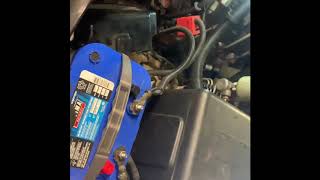
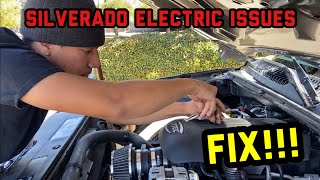
- Engine may stall intermittently or die when coming to a stop 🎬 Watch: Real-world diagnosis of a stalling GM truck with P0601.
- Reduced engine power (Limp Mode)
- Harsh or erratic transmission shifting, sometimes with a 'bang' or 'jolt' when accelerating from a stop
- Decrease in fuel economy
- In some cases, no symptoms are present other than the Check Engine Light
- Replacing sensors (like oxygen sensors or crank/cam sensors) hoping to fix performance issues without realizing the core problem is the computer itself.
- Replacing the battery without testing the alternator, leading to the new battery being drained and the code returning.
- Replacing the ECM without first checking if the code was set by the TCM, leading to wasted money and the problem persisting.
Most Likely Causes
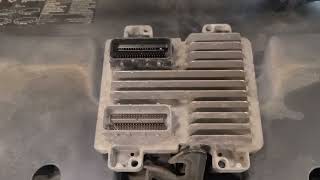
- Internal Failure of the Engine Control Module (ECM/PCM) 🔴 High Probability → Shop Engine Control Module (ECM) The ECM (often an ACDelco E38 type) is subject to constant heat cycles and vibration. Over many years, internal solder joints or electronic components can fail, leading to memory corruption. This is often referred to as the 'kiss of death' for the module.
How to confirm: After confirming stable power and ground by load-testing the circuits, a professional scan tool will show the P0601 code originating from the ECM. Attempting to re-flash the software may fail or the code may return immediately, confirming a hardware fault.
Typical fix: Replace the Engine Control Module and program it to the vehicle. This is not a plug-and-play part; it requires programming to the vehicle's VIN and security system.
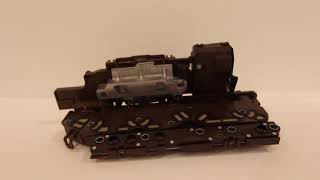
Est. part cost: $250-$450 - Internal Failure of the Transmission Control Module (TCM) 🟡 Medium Probability → Shop Transmission Assembly TSB #PIP4653E specifically identifies the TCM (often an ACDelco T42/T43 inside the 6L80 transmission) as a potential source for P0601 on this platform. The TCM is located inside the transmission oil pan, where it is subjected to heat and vibration, leading to eventual failure.
How to confirm: A full-system scan with a tool like a Tech 2 or GDS2 will show the P0601 code stored in the TCM, not the ECM. The vehicle may exhibit significant shifting problems, such as being stuck in one gear or harsh shifts.
Typical fix: Replace the Transmission Control Module, which is located inside the transmission and requires removing the pan. 🎬 See how to remove the TCM from a 6L80 transmission. The new module must be programmed.
Est. part cost: $200-$800 - Low or Unstable Battery Voltage 🟡 Medium Probability → Shop Vehicle Battery These GMT900 trucks are known to be sensitive to voltage. Weak batteries, failing alternators, or poor ground connections can provide inconsistent voltage, which can corrupt a control module's memory during startup or shutdown cycles, potentially triggering a false P0601.
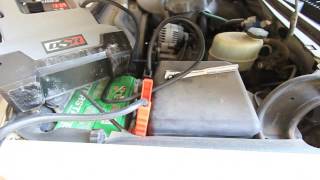
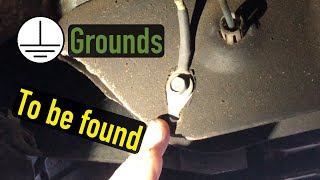
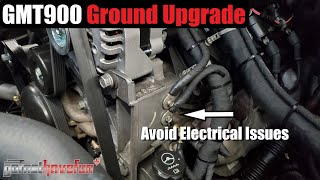
How to confirm: Test the battery with a load tester; it should read above 12.4 volts at rest. With the engine running, check alternator output; it should be between 13.5 and 14.5 volts. Critically, inspect and clean all major ground connections: battery to chassis, engine block to chassis, and smaller grounds on the cylinder heads and firewall. 🎬 Watch: How to upgrade and fix GMT900 ground connections.
Typical fix: Replace the weak battery, faulty alternator, or clean/repair corroded connections. In some cases, this may resolve the code if the module itself is not yet permanently damaged.
Est. part cost: $150-$400
Rare But Worth Checking
- Corrupted Software from Aftermarket Tuning: If the vehicle has been modified with a non-OEM performance tune, an error during the flashing process or a bug in the tune itself can corrupt the module's memory and trigger a P0601 code. Reverting to the stock OEM tune is a necessary diagnostic step.
- Wiring Harness Damage: While less common than module failure, a short or open in the power or ground circuit to the ECM or TCM can cause voltage issues that lead to this code. A visual inspection of the harness and connector is warranted, especially checking for corrosion in the connectors or chafing against engine components.
- Voltage Spike from Improper Jump-Start: Connecting jumper cables incorrectly or using a high-voltage industrial booster can create a voltage spike that damages sensitive electronics, including the ECM or TCM, leading to an immediate P0601 code.
Diagnosis Steps
- Check and record any other stored trouble codes. Pay close attention to codes like P0700, which point towards the transmission system.
- Test the battery's state of charge and health with a load tester. Ensure it is fully charged and capable of holding a load. A weak battery is a common cause of electrical gremlins on these trucks.
- With the engine running, use a multimeter to verify the alternator is charging correctly (typically 13.5V - 14.5V).
- Thoroughly inspect all power and ground connections. This includes battery terminals, the main ground strap from the engine to the chassis, and smaller ground points on the firewall and cylinder heads. Disassemble, clean, and tighten any corroded or loose connections.
- Using a professional-grade scan tool (e.g., Tech 2, GDS2), determine which specific module (ECM, TCM, etc.) has stored the P0601 code. This is the most critical diagnostic step.
- Inspect the wiring harness and connector for the identified module for any signs of physical damage, corrosion, or moisture intrusion.
- If all wiring, power, and grounds are confirmed to be good (ideally by load-testing the circuits at the module connector), the module itself is almost certainly faulty.
- An attempt to re-flash the module with the latest OEM software can be made as a last resort. If the re-flash fails or the code returns immediately, replacement is necessary.
- Replace the faulty module and perform the necessary programming and setup procedures with a compatible scan tool.
Parts You'll Likely Need
- Engine Control Module (ECM)
(OEM #ACDelco E38 family (e.g., 12612384, 12633238 - specific P/N varies by year/engine))— This is the most common cause for a P0601 code when no other issues are found. It is the primary computer for the engine.
Trusted brands: ACDelco (OEM), CARDONE (Remanufactured), Dorman (Remanufactured)
OEM price range: $400-$600
Aftermarket price range: $250-$450 - Transmission Control Module (TCM)
(OEM #ACDelco T42/T43 family (e.g., 24256960, 24234274 - specific P/N varies))— A known issue on this platform, as cited by TSB PIP4653E. If the code is logged by the TCM, this part is the required fix.
Trusted brands: ACDelco (OEM), Dorman, ATP
OEM price range: $400-$900
Aftermarket price range: $200-$800
Related Codes That Often Appear With This One
- P0700 — Transmission Control System (MIL Request). This is a generic code indicating the TCM has detected a fault and has requested the Check Engine Light to be turned on. It is very common to see P0700 alongside P0601 when the TCM is the source of the failure.
- P0603 — Internal Control Module Keep Alive Memory (KAM) Error. This is another internal memory fault, often appearing with P0601.
- P0604 — Internal Control Module Random Access Memory (RAM) Error. This indicates a different type of internal memory failure.
- P0606 — ECM/PCM Processor Fault. This is a more severe code indicating a failure of the main processor, not just the memory checksum.
- P1621 — Control Module Long Term Memory Performance. This is a GM-specific code that, per TSB #PIP4653E, can accompany P0601 when the TCM is at fault.
Technical Service Bulletins (TSBs) & Recalls
- 05-06-04-060A: Information on control module DTCs P0601, P0602, P0603, P0604, P0606, P062F, P06F3, P1621 which can be shared in multiple modules.
- PIP4653E: Diagnostic aid for vehicles with DTCs P0601, P0603, P0604, P062F or P1621 stored in the Transmission Control Module.
Platform-Specific Known Issues
- TSB #05-06-04-060A: Notes that P0601 is one of several codes that can be shared across multiple modules, indicating a need for careful diagnosis to pinpoint the faulty component.
- TSB #PIP4653E: Specifically calls out the Transmission Control Module (TCM) as a potential source of P0601, which is critical information for this platform.
Mechanic-Grade Diagnostic Values
- Battery Voltage, Engine Off — expected: 12.4V or higher. Failure: Below 12.4V indicates a weak or discharged battery that can cause false module errors.
- Alternator Charging Voltage, Engine Running — expected: 13.5V - 14.5V. Failure: Voltage below 13.5V or above 14.5V indicates a charging system fault that can damage control modules.
Scan Tool Commands That Help
- Tech 2 / GDS2: Module Programming/Flashing — This is required when replacing the ECM or TCM. The new module must be programmed with the vehicle's VIN and specific configuration to function.
- Tech 2 / GDS2: Crankshaft Variation Relearn — This procedure may be required after replacing the ECM to prevent a P0315 code and ensure accurate misfire detection.
Wiring & Ground Locations
- G101 — Lower front of the engine block.. This ground point is specified as a ground for both the Engine Control Module (ECM) and the Transmission Control Module (TCM), making it a critical point of inspection for a P0601 code.
- G103 — On the front of the passenger side cylinder head.. This is a primary engine ground point. A poor connection here can cause a variety of electrical issues, including unstable voltage to the control modules.
- G104 — On the rear of the driver's side cylinder head, connected via a strap to the firewall.. This is another critical engine-to-chassis ground. Verifying this strap (and its connection point G108 on the firewall) is tight and corrosion-free is essential.
- TCM Fuses — In the underhood fuse block on the driver's side.. Fuse #14 and Fuse #19 are specifically for the Transmission Control Module (TCM). Checking these fuses is a basic but crucial step if a P0601 is suspected to be from the TCM.
- ECM/PCM Relay — In the underhood fuse block on the driver's side.. This relay controls power to the engine computer. A faulty relay can cause intermittent power loss to the ECM, potentially leading to memory errors or no-start conditions.
Real Owner Repair Stories
- Diablosport Forums user 'lsteiner72' (2011 GMC Sierra (similar GMT900 platform)) — Vehicle would intermittently shut off while idling or driving, setting a P0601 code.
❌ Tried (didn't work) Clearing the code would temporarily fix it, but the issue would return.
✅ What actually fixed it The issue only occurred when an aftermarket 87 octane or Diablo tune was loaded. Reverting the vehicle to the stock factory tune permanently resolved the stalling and the P0601 code, indicating the aftermarket software was the cause. - GMTNation forum user (2007-2014 GM SUV (specific model not stated)) — Persistent battery light, followed by engine stalling with Stabilitrak warning and P0601 code.
❌ Tried (didn't work) Replacing the battery., Replacing the alternator., Cleaning and checking ground points with a multimeter.
✅ What actually fixed it The vehicle was taken to a shop where the final diagnosis was a failed PCM. Replacing the PCM resolved the issues.
"I Checked Everything" — The Actual Cause
- In the context of P0601, the equivalent of a 'smoke test clean' scenario is when all external factors like the battery, alternator, and all visible power/ground wires test perfectly fine. Multiple owner accounts confirm that even after meticulously cleaning grounds and verifying voltage, the P0601 code and symptoms like intermittent stalling persisted, ultimately requiring the replacement of the internally-failed ECM or TCM.
OEM Part Supersession History
24234503, 24230461, 24252114→24256960— Standard part revision and consolidation for the T42 Transmission Control Module.
Heads up: The newer part number (24256960) is a direct replacement for the older numbers, but like all modules, it must be programmed to the vehicle's VIN.12612384 (example for earlier years)→12633238 (example for later years)— Part revision for the E38 Engine Control Module to accommodate vehicle updates.
Heads up: While physically similar, E38 ECMs from different years may have different internal hardware or processor masks. It is critical to match the service number or use a correctly programmed replacement for the specific model year.
Model Year Variations Within This Range
- 2007-2008: While the Yukon Denali consistently used the 6L80 transmission with an internal TCM, some non-Denali Yukon models in these years used a 4-speed automatic (4L60-E) which has an EXTERNAL Transmission Control Module located under the hood. This can be a point of confusion when diagnosing the broader GMT900 platform, but for the Denali, the TCM is always inside the transmission pan.
Helpful Videos

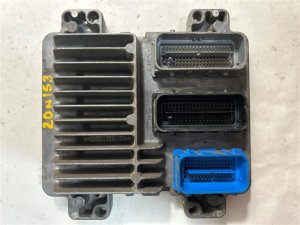
Used OEM Parts in Stock
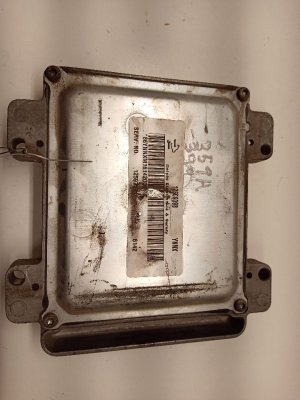
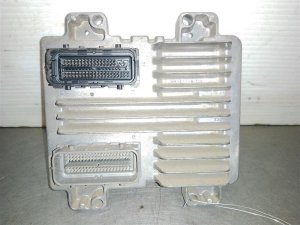
New Aftermarket Parts Available

The information in this article is provided for general reference and educational purposes only. Vehicle specifications, procedures, and part compatibility can vary by production date, trim level, and region. Always consult your vehicle's factory service manual and verify part numbers before purchasing or performing repairs. Safety-critical components such as airbags, seat belts, and braking systems should be installed by a qualified professional.
- Gmc YUKON DENALI XL:
- 🧭 Diagnostic Flowchart
- 🎬 Helpful Videos
- 🛍️ Shop This Part
- What's Unique About the 2007-2011 Gmc YUKON DENALI XL
- Symptoms You May Notice
- Most Likely Causes
- Rare But Worth Checking
- Diagnosis Steps
- Parts You'll Likely Need
- Related Codes That Often Appear With This One
- Technical Service Bulletins (TSBs) & Recalls
- Platform-Specific Known Issues
- Mechanic-Grade Diagnostic Values
- Scan Tool Commands That Help
- Wiring & Ground Locations
- Real Owner Repair Stories
- "I Checked Everything" — The Actual Cause
- OEM Part Supersession History
- Model Year Variations Within This Range
- 🎟️ Get 5% Off