

P0601 on 2007-2014 GMC Yukon XL: Control Module Failure Causes and Fixes
The P0601 code on a 2007-2014 GMC Yukon XL almost always signifies a fatal internal error in a control module, typically the Engine Control Module (ECM) or Transmission Control Module (TCM). The fix is to replace the faulty module and have it professionally programmed, costing between $600 and $1,200.
- P0601 is a serious code indicating a control module has failed an internal memory test.
- On a 2007-2014 Yukon XL, the fault could be in the Engine Control Module (ECM) or the Transmission Control Module (TCM).
- Do not drive the vehicle, as it may stall or fail to start at any time.
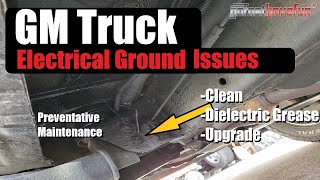
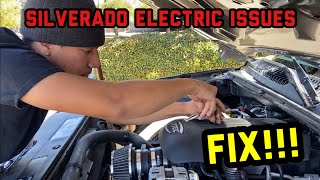
- Before replacing any expensive modules, always verify the battery and charging system are healthy and all power/ground connections are clean and tight.
- Replacement of the ECM or TCM is not a DIY job and requires professional programming.
What's Unique About the 2007-2014 Gmc YUKON XL
On the GMT900 platform, which includes the 2007-2014 Yukon XL, this code is not exclusively for the main engine computer. The specific ECM used, the ACDelco E38, is known to develop internal failures such as cold solder joints on the main processor after years of heat cycles, leading to intermittent no-starts and eventual failure with a P0601 code. Additionally, GM has issued Technical Service Bulletins (TSBs) acknowledging that P0601 can also be stored in the Transmission Control Module (TCM). This is a key distinction, as drivability symptoms like poor shifting could point toward the TCM, while a no-start or stalling might point toward the ECM.
🎬 Watch: Real-world diagnosis of a GM truck stalling with P0601.Diagnostic Flowchart
Tap your situation to follow the diagnostic path that matches what you're seeing on this vehicle.
Symptoms You May Notice
- Check Engine Light is on
- Engine may crank but not start
- Engine stalling intermittently or dying while driving, sometimes requiring a code clear to restart temporarily.
- Reduced engine power or entering "limp mode"
- Service Stabilitrak message may appear on the dash.
- ABS or Traction Control lights may illuminate.
- Erratic or improper transmission shifting (if the TCM is the cause)
- Replacing sensors or other components when the root cause is the control module itself.
- Replacing the ECM when the fault is actually low voltage from a bad battery or alternator.
- Replacing the ECM when the fault is in the TCM.
Most Likely Causes
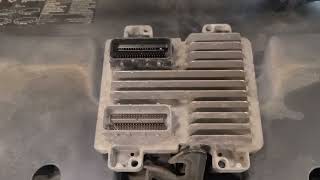
- Failed Engine Control Module (ECM/PCM) 🔴 High Probability → Shop Engine Control Module (ECM) The ACDelco E38 ECM used in these trucks is known to fail internally from heat cycle stress, causing processor and memory faults. This is the most direct cause of a memory checksum error.
How to confirm: After verifying all power and grounds are good, a technician will attempt to reflash the module. If the code returns immediately or the reflash fails, the module hardware is condemned. A professional scan tool is needed to confirm the P0601 code is stored in the ECM, not another module.
Typical fix: Replace the ECM and program it to the vehicle.
Est. part cost: $450-$1050 - Failed Transmission Control Module (TCM) 🟡 Medium Probability → Shop Transmission Assembly As noted in GM TSB #PIP4653E, the TCM is a known module to set this code on this platform. Models with the 4-speed automatic (e.g., 4L60E) have an external T42 TCM, while 6-speed models (e.g., 6L80E) have an internal TCM (TEHCM) inside the transmission oil pan, which is more labor-intensive to replace.
How to confirm: Using a high-level scan tool like a Tech 2 or GDS2, a technician can confirm if the P0601 code is stored specifically in the TCM.
Typical fix: Replace the TCM and program it to the vehicle.
Est. part cost: $250-$500 - Low Battery Voltage or Charging System Fault ⚪ Low Probability → Shop Vehicle Battery These trucks are sensitive to low or unstable voltage. A weak battery or failing alternator can corrupt module memory or cause voltage spikes during key cycles, leading to internal faults.
How to confirm: Test the battery's health and state of charge. With the engine running, check the alternator output, which should typically be between 13.5 and 14.5 volts. Many owners report checking the battery and connections as the first step before module replacement.
Typical fix: Replace the battery and/or alternator.
Est. part cost: $150-$500 - Poor Power or Ground Connections ⚪ Low Probability
How to confirm: Perform a voltage drop test on the main power and ground circuits for the ECM/TCM. A reading over 0.5 Volts indicates excessive resistance. Inspect connections for corrosion or looseness, especially critical GMT900 ground points like G103 (front of passenger side cylinder head) and G104/G110 (rear of driver's side cylinder head).
Typical fix: Clean, tighten, or repair the affected wiring and connection points.
Est. part cost: $0-$50
Rare But Worth Checking
- Failed Aftermarket Programming: If the vehicle has an aftermarket engine or transmission tune, a failed or corrupted flash process can trigger this code. Reverting to the stock tune may resolve the issue, but sometimes the module is permanently damaged.
Diagnosis Steps
- Scan for all DTCs and note which module(s) have stored the P0601 code. This is a critical first step.
- Check battery voltage and test the health of the battery. Ensure terminals are clean and tight.
- Start the engine (if possible) and verify the charging system is operating correctly (typically 13.5-14.5V).
- Inspect all power and ground connections to the battery, engine block, and frame. Pay special attention to known problematic grounds on the GMT900 platform: G103 (front of passenger cylinder head) and G104/G110 (rear of driver's side cylinder head).
- Perform a voltage drop test on the primary power and ground wires at the suspect module's connector to ensure there is no excessive resistance in the wiring.
- If all power and ground circuits are good, the next step is to attempt to re-program/re-flash the faulty module with the latest factory software. This requires professional tools like a Tech2 or GDS2 and a stable power supply.
- If the code returns immediately after a reflash, the control module has an internal hardware failure and must be replaced.
- Install the new module and program it to the vehicle's VIN. This may also require a security key relearn and crankshaft position variation relearn.
Parts You'll Likely Need
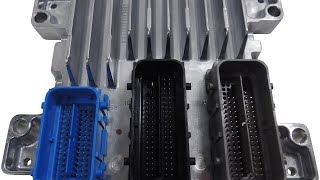
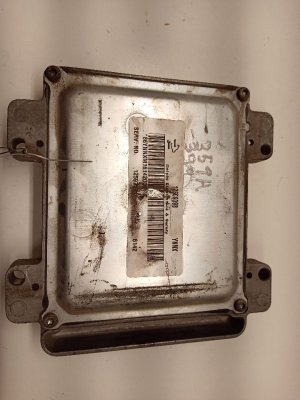
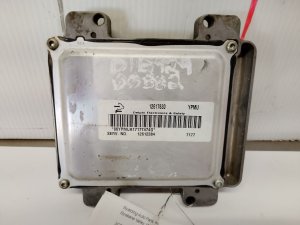
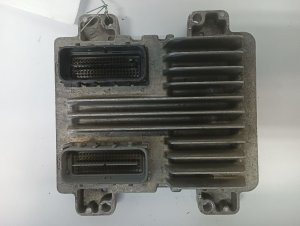
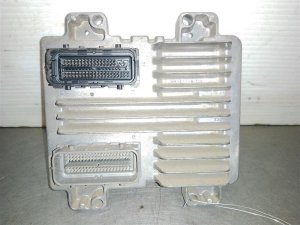
- Engine Control Module (ECM/PCM)
(OEM #12633238 (example for 2010-2014), 12612384 (example for 2008). Always verify with VIN.)— This is the most common cause of a P0601 code, indicating an irreparable internal failure.
Trusted brands: ACDelco (OEM), Flashmasters, FS1
OEM price range: $450-$700
Aftermarket price range: $150-$550 (often pre-programmed) - Transmission Control Module (TCM)
(OEM #24239647, 24252114, 24235340 (examples for external T42 and internal 6L80 TCMs). Always verify with VIN.)— A known failure point on this platform that can set a P0601 code, as documented in TSBs. Location and part vary between 4-speed (external) and 6-speed (internal) transmissions.
Trusted brands: ACDelco (OEM)
OEM price range: $300-$500
Aftermarket price range: $200-$400
Related Codes That Often Appear With This One
- P0603 — Relates to Keep Alive Memory (KAM) error, often linked to power supply issues or internal module faults.
- P0604 — Indicates a Random Access Memory (RAM) error within the control module.
- P062F — Relates to an internal control module EEPROM error.
- P1621 — A GM-specific code for Control Module Long Term Memory Performance, often cited alongside P0601 in TSBs.
- P0700 — This is a generic code indicating the TCM has stored a fault. It will often appear with P0601 if the TCM is the source of the problem.
Technical Service Bulletins (TSBs) & Recalls
- PIP4653E: Notes that DTCs P0601, P0603, P0604, P062F, or P1621 can be stored in the Transmission Control Module (TCM) on a wide range of GM vehicles including the 2008-2015 Yukon XL.
- 05-06-04-060A: An informational bulletin about various control module DTCs (including P0601) being shared in multiple modules, emphasizing the need to identify the faulting module correctly.
Platform-Specific Known Issues
- TSB #PIP4653E specifically notes that DTC P0601 can be stored in the Transmission Control Module (TCM) on 2008-2015 Yukon XL models, and instructs technicians to verify which module set the code before taking action.
- TSB #05-06-04-060A is an informational bulletin for technicians noting that P0601 and other related module codes can be shared across multiple control modules and are not specific to one controller.
- The ACDelco E38 ECM used on this platform is known for developing internal solder joint failures on the processor due to repeated heat cycles, making ECM failure a common root cause for P0601.
Mechanic-Grade Diagnostic Values
- Battery Voltage (at rest) — expected: 12.6 Volts or higher. Failure: Below 12.4V indicates a weak or discharged battery that can cause module errors.
- Alternator Output Voltage (engine running) — expected: 13.5 - 14.7 Volts. Failure: Voltage below 13.5V or above 14.7V indicates a charging system fault that can damage modules.
- ECM/TCM Ground Circuit Resistance — expected: < 0.1 Ω. Failure: Higher resistance indicates a poor ground connection, which can cause intermittent module operation.
- ECM/TCM Power Circuit Voltage Drop — expected: < 0.5 Volts. Failure: A voltage drop greater than 0.5V under load points to excessive resistance in the power feed wiring.
- CAN Bus Resistance (at OBD-II port) — expected: Approximately 60 Ω (with battery disconnected). Failure: A reading of 120 Ω suggests a module or terminating resistor is offline. A reading near 0 Ω indicates the CAN Hi and Lo wires are shorted together.
Scan Tool Commands That Help
- Tech2 / GDS2: Service Programming System (SPS) — This function is required to program a new or used replacement ECM or TCM to the vehicle. It downloads the correct VIN and software calibrations to the module.
- Tech2 / GDS2: Theft Deterrent Relearn — After replacing the ECM, the anti-theft system must be relearned to recognize the new module, otherwise the vehicle will not start or will stall after a few seconds. This often involves a 10-minute key-on procedure.
- Tech2 / GDS2: Crankshaft Position Variation Relearn — After ECM replacement or programming, this procedure is necessary to calibrate the new module to the specific crankshaft position sensor signal to prevent misfire detection codes (like P0300) and ensure accurate engine timing.
- Tech2 / GDS2: Module Communication Test (Bi-Directional) — Before condemning a module, a technician can use the scan tool to request live data or send a command. If the module fails to respond, it helps confirm a communication breakdown, which could be the module itself or its wiring.
Wiring & Ground Locations
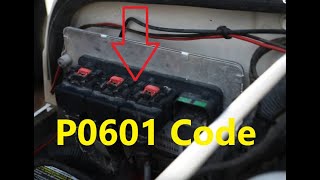
- ECM Power Relay — In the underhood fuse block on the driver's side. It is one of three identical relays in a row.. A faulty relay can cause intermittent or no power to the ECM, leading to various faults including P0601.
- G103 — On the front of the passenger side cylinder head.. This is a primary engine ground. A loose or corroded connection here can cause unstable voltage to multiple sensors and the ECM, potentially leading to module errors.
- G104 / G110 — On the rear of the driver's side cylinder head.. This is a critical ground point for the engine and control modules. Wires here are known to break inside the insulation right at the terminal, causing intermittent stalling and communication codes like U0100, which can accompany P0601.
- G102 — On the driver's side of the engine block, below the exhaust manifold.. This ground serves the ignition coils. While not a direct cause, electrical noise from a poor ground here can interfere with module operation.
- ECM Connector X1, Pin 20 — The main 73-pin connector at the Engine Control Module.. This pin (RD/WH wire) is a primary Battery Positive Voltage feed. It should have constant battery voltage. A voltage drop test here can confirm the integrity of the power supply circuit.
- ECM Connector X1, Pin 19 — The main 73-pin connector at the Engine Control Module.. This pin (PK wire) is the Ignition 1 Voltage feed. It should have battery voltage when the key is in the RUN or START position. Loss of this signal will cause a no-start.
- TCM Fuses — In the underhood fuse block, typically positions #14 and #19.. If the P0601 code is determined to be in the TCM, checking these dedicated fuses is a critical first step before inspecting wiring or replacing the module.
Real Owner Repair Stories
- WillPowered Garage on YouTube (via Go-Parts.com article) (2008 Chevrolet Tahoe (GMT900 platform)) — Intermittent stalling, especially when shifting into reverse. Gauges acting erratically, low oil pressure warning, and eventually codes U0100/U0101.
❌ Tried (didn't work) Initial diagnosis focused on the oil pressure warning, including dropping the oil pan to check the pickup tube screen.
✅ What actually fixed it The technician found that wiggling the main engine harness could induce a stall. The root cause was a broken ground wire inside the insulation, right at the ring terminal connecting to the engine block ground stud (G110/G108). The wire would lose connection when the engine torqued, causing module communication loss and stalling.
Model Year Variations Within This Range
- 2007-2009 (approx.): Earlier models in this generation were more likely to be equipped with the 4-speed 4L60-E automatic transmission, which uses an external T42 Transmission Control Module (TCM). This module is easier and cheaper to access and replace than the later 6-speed's internal module.
- 2009-2014 (approx.): Later models predominantly used the 6-speed 6L80 automatic transmission. The Transmission Control Module (TCM), known as a TEHCM, is located inside the transmission oil pan, bolted to the valve body. This makes replacement significantly more labor-intensive, requiring removal of the pan and fluid.
- 2007: For the 2007 model year, GM produced both the older GMT800 platform (as the "Classic") and the new GMT900 platform. It is critical to correctly identify the vehicle platform, as parts, including the ECM and its programming, are not interchangeable. GMT900 trucks have a one-piece headlight assembly, while GMT800 "Classic" models have a two-piece assembly with a bar in the middle.
Helpful Videos
Used OEM Parts in Stock
New Aftermarket Parts Available

The information in this article is provided for general reference and educational purposes only. Vehicle specifications, procedures, and part compatibility can vary by production date, trim level, and region. Always consult your vehicle's factory service manual and verify part numbers before purchasing or performing repairs. Safety-critical components such as airbags, seat belts, and braking systems should be installed by a qualified professional.
- Gmc YUKON XL:
- 🧭 Diagnostic Flowchart
- 🎬 Helpful Videos
- 🛍️ Shop This Part
- What's Unique About the 2007-2014 Gmc YUKON XL
- Symptoms You May Notice
- Most Likely Causes
- Rare But Worth Checking
- Diagnosis Steps
- Parts You'll Likely Need
- Related Codes That Often Appear With This One
- Technical Service Bulletins (TSBs) & Recalls
- Platform-Specific Known Issues
- Mechanic-Grade Diagnostic Values
- Scan Tool Commands That Help
- Wiring & Ground Locations
- Real Owner Repair Stories
- Model Year Variations Within This Range
- 🎟️ Get 5% Off