

P0601 on 2007-2009 Hummer H2: Internal Control Module Memory Error Causes and Fixes
P0601 on a 2007-2009 Hummer H2 indicates a fatal internal memory error in a control module, most often the Powertrain Control Module (PCM) or Transmission Control Module (TCM). This is a hard fault that can cause stalling or a no-start condition. The most common fix is to replace the faulty module, which requires professional programming. Expect costs to range from $600 to over $1,200.
- P0601 is a critical fault indicating the failure of a major control module, usually the PCM or TCM.
- Do not continue to drive the vehicle, as it can stall at any time, posing a serious safety risk.
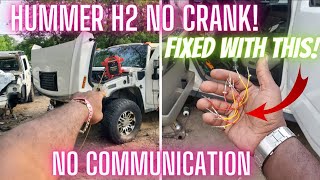
- Always check the battery, alternator, and all power/ground connections to the modules before condemning the module itself.
- Replacement of the faulty module is the most common fix and requires professional programming to sync it with your vehicle.
What's Unique About the 2007-2009 Hummer H2
For the 2007-2009 Hummer H2, this period covers a significant powertrain update. The 2007 model uses a 6.0L V8 with a 4L65-E transmission, while the 2008-2009 models feature a more powerful 6.2L V8 and a 6L80-E six-speed automatic transmission. This distinction is critical because the specific PCM (ACDelco E38 for 6.2L) and TCM (ACDelco T43 for 6L80) are different between these versions. GM issued technical service bulletins acknowledging that P0601 and related internal fault codes could appear in multiple modules, including the TCM, indicating a known pattern on this GMT900 platform.
🎬 Watch: Understanding how checksum errors impact your control module memory.Diagnostic Flowchart
Tap your situation to follow the diagnostic path that matches what you're seeing on this vehicle.
Generation note: The 2007-2009 H2 spans a major powertrain update. The 2007 model is equipped with the 6.0L LY6 V8 and the 4L65-E transmission. The 2008-2009 models were upgraded to the 6.2L L92 V8 and the 6L80-E transmission. The specific ECM (E38) and TCM (T43) part numbers differ between these two versions, and a professional scan tool is needed to identify which module has failed.
Symptoms You May Notice
- Check Engine Light is on
- Engine stalling or shutting down while driving, sometimes at highway speeds.
- No-start or hard-starting condition, may be intermittent.
- Vehicle enters 'limp mode' with reduced power and limited gear availability (often stuck in 2nd gear).
- Erratic or harsh transmission shifting.
- ABS and Traction Control lights may illuminate.
- Loss of communication with the scan tool, or multiple unrelated codes appearing simultaneously.
- Replacing sensors (like oxygen sensors or throttle position sensors) hoping to fix drivability issues, when the root cause is the control module itself.
- Assuming the P0601 is always a PCM failure and replacing it, when TSB PIP4653E specifically identifies the Transmission Control Module (TCM) as a common culprit on this platform, especially if shifting issues are present.
Most Likely Causes
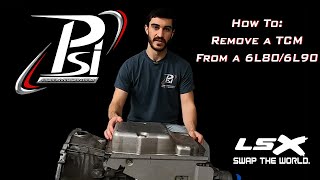
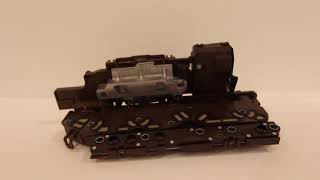
- Failed Powertrain or Transmission Control Module (PCM/TCM) 🔴 High Probability → Shop Transmission Assembly Internal components on the module's circuit board, such as the EEPROM or processor, can fail over time due to heat cycles, vibration, or age. On the GMT900 platform, both the E38 PCM and the T43 TCM (located inside the 6L80 transmission pan) are known failure points for this code.
How to confirm: After confirming stable power (13.5-14.5V running) and clean, tight ground connections, if the P0601 code returns immediately after being cleared (a hard fault), it indicates a permanent internal module failure. A professional scan tool is required to determine if the code originated in the PCM or TCM.
Typical fix: Replace the faulty control module (PCM or TCM) and program the new unit to the vehicle using GM-specific software.
Est. part cost: $250-$950 - Low or Unstable Battery Voltage 🟡 Medium Probability → Shop Vehicle Battery GM vehicles of this era are sensitive to voltage fluctuations. A weak battery, failing alternator, or poor battery terminal connections can cause voltage spikes or drops during startup or operation, which can corrupt module memory and trigger a false P0601.
How to confirm: Test the battery's state of charge and load capacity. With the engine running, use a multimeter to check alternator output at the battery terminals; it should be stable, typically between 13.5 and 14.5 volts. Inspect battery terminals and main chassis/engine ground straps for corrosion and tightness.
Typical fix: Replace the weak battery, faulty alternator, or clean/replace the battery terminal connectors and ground straps.
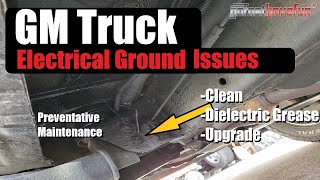
Est. part cost: $150-$500 - Poor Ground or Power Connections to the Module ⚪ Low Probability The GMT900 platform has several key ground locations that can become corroded or loose. A poor ground can create intermittent power supply issues to the control modules, mimicking an internal failure. Technicians specifically point to grounds near the engine block as a potential cause.
How to confirm: Locate the main power and ground wires for the PCM/TCM. Perform a voltage drop test on the power and ground circuits to check for high resistance (should be < 0.1 Ω). Visually inspect module connectors for corrosion, moisture, or backed-out pins.
Typical fix: Clean, tighten, or repair the ground connections (e.g., engine block to chassis). Repair or replace the damaged section of the wiring harness or connector.
Est. part cost: $20-$200
Rare But Worth Checking
- Aftermarket Programming/Tuning: An improper or failed attempt to flash the PCM with an aftermarket performance tune can corrupt the memory and set a P0601 code. Using unauthorized reflashing tools is a known trigger.
- Voltage Spike from Jump-Start: Improperly jump-starting the vehicle can cause a voltage spike that damages sensitive electronics, including the PCM or TCM, leading to internal memory failure.
Diagnosis Steps
- Scan the vehicle for all DTCs using a professional scan tool. Crucially, determine which module (ECM or TCM) has stored the P0601 code.
- Check the battery. Ensure it is fully charged (>12.4V) and passes a load test. Clean any corrosion from the terminals and ensure connections are tight.
- With the engine running, test the alternator output to ensure it is providing stable voltage (typically 13.5-14.5V).
- Inspect the main power and ground connections for the PCM and TCM. Pay special attention to engine-to-chassis ground straps. Perform a voltage drop test on these circuits.
- Attempt to clear the P0601 code. If it returns immediately without starting the engine, this strongly suggests a permanent internal module fault (hard fault).
- If a software update is available, a technician may attempt to reflash the module as a last resort before replacement, though this is rarely successful for a hard P0601 fault.
- If the code persists and power/grounds are confirmed good, the faulty module (PCM or TCM) must be replaced. The new module will require programming by a dealer or a qualified shop with the correct tools.
Parts You'll Likely Need
- Engine Control Module (ECM/PCM)
(OEM #12612384 (2008 6.2L), 12616477 (2007 6.0L), 12633238 (supersedes 12612384))— This is the primary cause of a P0601 code when power and grounds are good. The internal memory has failed. For this platform, it is an ACDelco E38 controller.
Trusted brands: ACDelco (OEM/Reman), Dorman, Cardone
OEM price range: $240-$500
Aftermarket price range: $200-$400 - Transmission Control Module (TCM)
(OEM #24244539 (For 6L80 in 2008-2009 models))— If the code is isolated to the transmission system, the TCM is the likely failure point, as noted in TSB PIP4653E. This module (ACDelco T43) is located inside the transmission oil pan and is a known failure point.
Trusted brands: ACDelco (OEM), Dorman
OEM price range: $300-$950
Aftermarket price range: $250-$700
Related Codes That Often Appear With This One
- P0603 — Internal Control Module Keep Alive Memory (KAM) Error. This is another internal memory fault often cited in the same TSBs.
- P0604 — Internal Control Module Random Access Memory (RAM) Error. This is another internal memory fault often cited in the same TSBs.
- P062F — Internal Control Module EEPROM Error. This is another internal memory fault often cited in the same TSBs.
- P1621 — Control Module Long Term Memory Performance. This is a GM-specific code indicating a memory/programming issue, often related to the TCM.
Technical Service Bulletins (TSBs) & Recalls
- PIP4653E: Discusses DTCs P0601, P0603, P0604, P062F or P1621 stored in the Transmission Control Module (TCM). The fix may involve reprogramming the TCM.
- 05-06-04-060A: An informational bulletin about various control module DTCs including P0601 being shared in multiple modules. Emphasizes identifying the source module.
Platform-Specific Known Issues
- GM issued TSB #05-06-04-060A, an informational bulletin stating that P0601 and other internal memory codes can be set in multiple control modules on various GM vehicles, including the Hummer H2. It advises technicians to use a scan tool to identify which module set the code before diagnosis.
- TSB #PIP4653E specifically addresses finding P0601, P0603, P0604, P062F or P1621 stored in the Transmission Control Module (TCM). The bulletin advises that if the code is isolated to the TCM, a reprogram should be attempted before replacement.
Mechanic-Grade Diagnostic Values
- Alternator Voltage Output at Battery Terminals (Engine Running) — expected: 13.5 - 14.5 Volts DC. Failure: Voltage below 13.0V or above 15.0V can indicate a faulty alternator or charging system issue, which may trigger false module codes.
- E38 ECM (PCM) Power Supply Voltage — expected: 12V+ (Key-On) at Pin 19 (Ignition 1 Voltage) and Pin 20 (Battery Positive Voltage) of the X1 connector.. Failure: Loss of voltage at these pins indicates a problem with the fuse block, wiring, or ignition switch, not the PCM itself.
- E38 ECM (PCM) Ground Connection — expected: Continuity to ground (less than 0.2 Ohms) at Pin 73 of the X1 connector.. Failure: High resistance or an open circuit on the ground pin points to a bad ground connection (like G101/G102) or a wiring fault.
Scan Tool Commands That Help
- GM SPS (Service Programming System): Replace and Reprogram ECU — This function is required after installing a new or remanufactured PCM or TCM. It flashes the module with the correct VIN-specific software and calibrations. Failure to perform this step will result in a no-start condition or limp mode.
- GM Tech 2 / GDS2 or equivalent professional scan tool: Transmission Adaptive Pressure Reset — After replacing and programming a TCM (especially the T43 in the 6L80), this procedure should be performed to clear learned shift adapts and allow the new module to learn baseline pressures.
- GM Tech 2 / GDS2 or equivalent professional scan tool: Crankshaft Variation Relearn (CASE Relearn) — Often required after replacing the PCM. If not performed, a P0315 code may set, and the check engine light will remain on even if the engine runs normally.
Wiring & Ground Locations
- ECM (PCM) — For 2008-2009 models, the Engine Control Module (E38) is located in the engine compartment on the driver's side, below the battery and underhood fuse block.. This is the primary module that sets P0601. Its location makes it susceptible to heat and potential corrosion from battery fumes or leaks.
- G101 / G102 — G101 is located at the lower front of the engine block. G102 is at the left front side of the engine block. These grounds are critical for the ECM and TCM.. A poor connection at these primary engine grounds can cause intermittent voltage drops to the control modules, mimicking an internal P0601 failure.
- G103 / G104 — Located at the top rear of the engine, on the left (G104) and right (G103) sides.. These grounds serve various engine components and sensors. While not the primary PCM ground, high resistance here can cause erratic sensor data, potentially confusing diagnostic efforts.
- Underhood Fuse Block — Located at the left side of the engine compartment, near the battery.. This block contains the primary fuses and relays that supply power to the PCM and TCM. A corroded fuse holder or faulty relay can cut power and cause a P0601 or no-communication issue.
Real Owner Repair Stories
- HummerForums.com user 'demillion' (2008 Hummer H2) — Losing power, stalling when warm, no-restart until cooled down. Service Stabilitrak and Traction Control lights would appear. Multiple codes present including P0016, P0106, and several transmission codes (P0711, P0776, P0796).
❌ Tried (didn't work) Replaced fuel pump, Replaced fuel pump control module, Replaced crankshaft position sensor, Replaced camshaft position sensor, Replaced MAF sensor, Replaced MAP sensor, Replaced ECU (PCM)
✅ What actually fixed it The user was advised by another forum member that the symptoms (stalling at speed, multiple codes) strongly pointed towards clogged catalytic converters, which create excessive backpressure when hot. The user confirmed this was the eventual diagnosis and fix. - HummerForums.com user 'Llamafood' (2008 Hummer H2 with 50k miles) — Stalling at a stop light when the engine was cold, rough idle, and extended cranking/hard starts. Stabilitrak/Traction control errors also appeared.
❌ Tried (didn't work) Replaced EVAP valve, Cleaned throttle body, Cleaned fuel injectors, Replaced fuel pump
✅ What actually fixed it The thread did not have a final confirmed fix from the original poster, but the repeated replacement of fuel system components without resolution points away from the fuel system and towards a potential electronic or sensor-related issue that was causing the stalling and hard starts.
OEM Part Supersession History
12612384→12633238— GM regularly updates service parts to integrate new materials, technologies, or software calibrations.
Heads up: Part number 12633238 is the common service replacement for many 2010+ GM trucks and SUVs but is also listed as the supersession for earlier E38 ECMs like the one in the 2008-2009 H2. It is critical that this module is programmed with the specific VIN of the vehicle, as a blank or incorrectly programmed module will not work.
Model Year Variations Within This Range
- 2007: Uses the 6.0L LY6 V8 with a 4L65-E 4-speed transmission. The PCM (likely an E67 controller) and external TCM are different from the 2008-2009 models.
- 2008-2009: Uses the 6.2L L92 V8 with a 6L80 6-speed transmission. This powertrain uses the E38 PCM and an internal T43 TCM (also called a TEHCM - Transmission Electro-Hydraulic Control Module). The T43 is located inside the transmission pan and is a common failure point for P0601 when transmission symptoms are present.
Helpful Videos
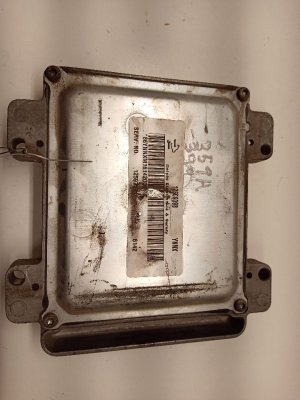
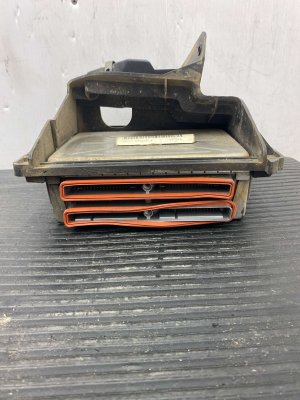
Used OEM Parts in Stock
New Aftermarket Parts Available


The information in this article is provided for general reference and educational purposes only. Vehicle specifications, procedures, and part compatibility can vary by production date, trim level, and region. Always consult your vehicle's factory service manual and verify part numbers before purchasing or performing repairs. Safety-critical components such as airbags, seat belts, and braking systems should be installed by a qualified professional.
- Hummer H2:
- 🧭 Diagnostic Flowchart
- 🎬 Helpful Videos
- 🛍️ Shop This Part
- What's Unique About the 2007-2009 Hummer H2
- Symptoms You May Notice
- Most Likely Causes
- Rare But Worth Checking
- Diagnosis Steps
- Parts You'll Likely Need
- Related Codes That Often Appear With This One
- Technical Service Bulletins (TSBs) & Recalls
- Platform-Specific Known Issues
- Mechanic-Grade Diagnostic Values
- Scan Tool Commands That Help
- Wiring & Ground Locations
- Real Owner Repair Stories
- OEM Part Supersession History
- Model Year Variations Within This Range
- 🎟️ Get 5% Off