

P0601 on 2012-2017 Hyundai Accent: Internal Computer Failure Causes and Fixes
P0601 on a 2012-2017 Hyundai Accent means the engine's main computer (ECM) has an internal memory failure. The most likely fix is replacing the ECM, which must be programmed by a professional. Before replacement, always confirm the battery and charging system are healthy, as voltage issues can trigger this code.
- P0601 is a critical code indicating the engine's computer has failed an internal self-test.
- Do not continue to drive the vehicle, as it can stall without warning.
- Before spending money on a new ECM, you MUST verify that the battery, alternator, and all power/ground connections are in perfect condition.
- Replacing the ECM is not a simple DIY swap; it requires professional programming to work with your car's keys and systems.
- Check if your vehicle is still covered under the 8-year/80,000-mile federal emissions warranty, as it may cover the cost of the ECM replacement.
What's Unique About the 2012-2017 Hyundai Accent
For the fourth-generation (RB) Hyundai Accent, the P0601 code is a straightforward and serious fault. There are no common platform-specific quirks that mimic this code; it almost always points to a genuine internal failure of the ECM or a critical power supply issue. One specific fail-safe mode for the Accent with this code can be the transmission becoming locked in 4th gear. The code can also be triggered by unauthorized aftermarket engine tuning that illegally modifies the ECM's programming.
Symptoms You May Notice
- Check Engine Light is on
- Engine may crank but will not start
- Intermittent stalling or engine shutting off while driving
- Reduced engine power and poor acceleration (Limp Mode)
- Vehicle enters 'limp mode'
- Transmission may be locked in 4th gear
- Failure to pass state emissions inspection
- Replacing other engine sensors like O2 sensors or the MAF sensor. While these can cause drivability issues, they will not set a P0601 code. The code specifically points to an internal computer error.
Most Likely Causes
- Internal Engine Control Module (ECM) Failure 🔴 High Probability → Shop Engine Control Module (ECM) Internal components like capacitors and integrated circuits can degrade over time from heat cycles and vibration, leading to memory corruption. This is the most common final diagnosis after all other possibilities are eliminated.
How to confirm: After confirming battery and charging system are healthy, and all ECM power/ground wires are secure, the persistence of the P0601 code upon clearing points to internal failure. A professional scan tool may fail to communicate with the module.
Typical fix: Replace the Engine Control Module (ECM). The new or refurbished unit must be programmed to the vehicle's VIN and security system.
Est. part cost: $250-$1200 - Low Battery Voltage or Charging System Fault 🟡 Medium Probability → Shop Vehicle Battery Significant voltage drops (weak battery) or spikes (faulty alternator) can corrupt the ECM's memory during self-tests or write cycles, leading to a P0601 code.
How to confirm: Test the battery voltage with the engine off (should be ~12.6V). Perform a load test on the battery. Test the alternator output with the engine running (should be ~13.5-14.5V). Check battery terminals and cables for corrosion and tightness.
Typical fix: Replace the weak battery, faulty alternator, or clean/tighten battery connections.
Est. part cost: $100-$400
Rare But Worth Checking
- Corrupted ECM Software from Improper Tuning: If the vehicle has had aftermarket performance software installed ('tuned' or 'flashed'), a bad flash can corrupt the memory and trigger this code. Reverting to the stock OEM software may fix the issue, but sometimes the module is permanently damaged.
- Poor ECM Power/Ground Connections: A loose, corroded, or damaged wire or pin at the ECM connector can cause intermittent power loss, mimicking an internal failure. A known issue on this platform is the engine wiring harness chafing on a bracket near the transmission, which can cause shorts.
Diagnosis Steps
- Read the codes with an OBD-II scanner. Confirm P0601 is the primary code.
- Crucial First Step: Test the vehicle's battery. Ensure it is fully charged (12.6V+) and passes a load test. A weak battery is a common cause of memory-related codes.
- With the engine running, test the alternator's output. Voltage should be stable and within the 13.5-14.5V range. Unstable voltage can corrupt the ECM.
- Inspect the battery terminals and main engine/chassis ground connections for tightness and corrosion. Clean and tighten as necessary.
- Inspect the wiring harness and connectors at the ECM for any visible damage, corrosion, or loose pins. Pay special attention to the area near the transmission where harness chafing is known to occur.
- Check all fuses related to the ECM/PCM.
- If the battery, charging system, and wiring are all confirmed to be good, attempt to clear the code.
- If the P0601 code returns immediately after clearing, it confirms a permanent internal fault in the ECM.
- The final step is to replace the ECM and have it programmed by a dealership or qualified shop with programming capabilities.
Parts You'll Likely Need
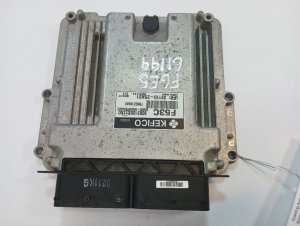
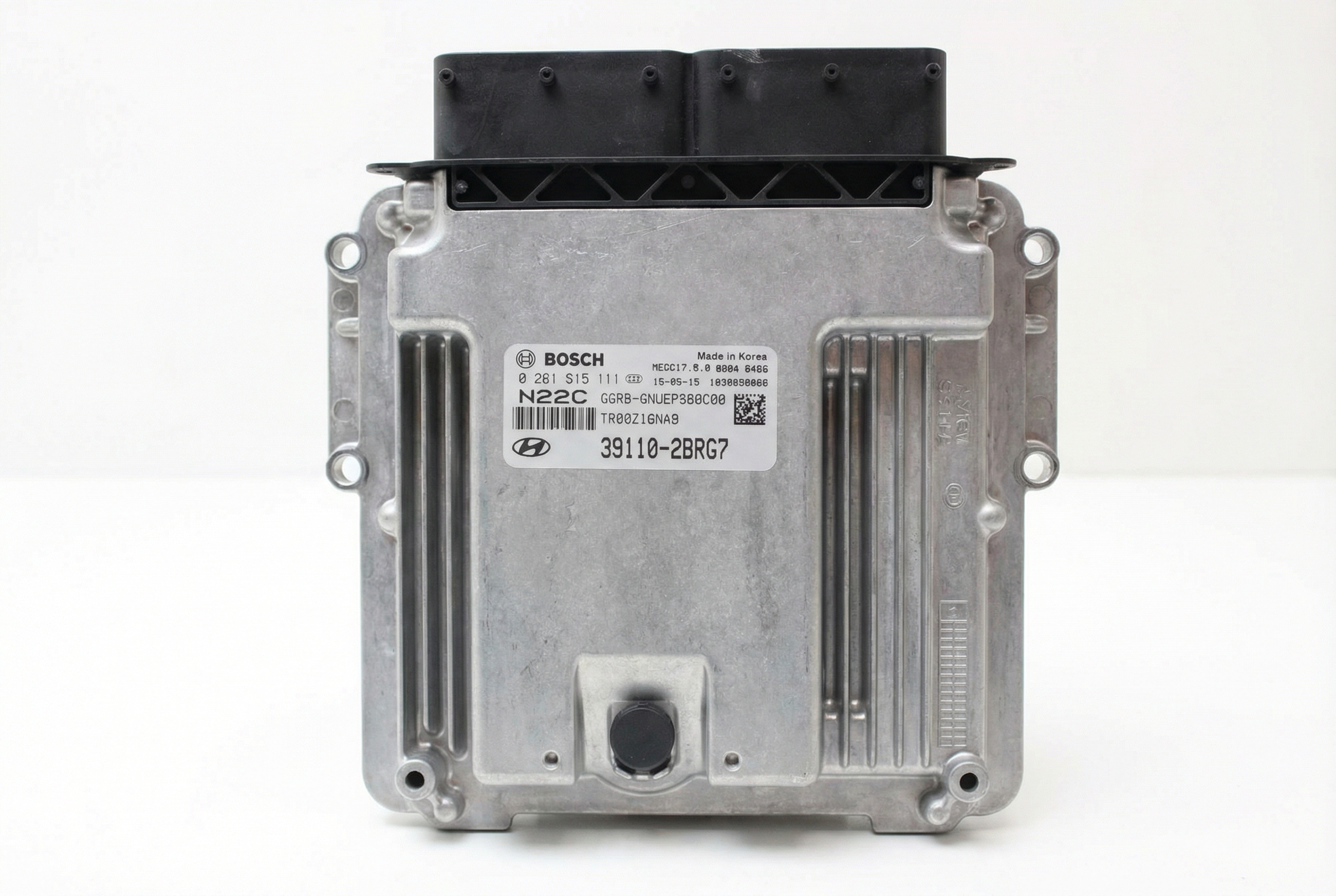
- Engine Control Module (ECM)
(OEM #39110-2BRG7, 39110-2BRG8, 39110-2BAS1 (Examples, must verify by VIN))— This is the component that has failed internally when a P0601 code is set and external electrical issues have been ruled out.
Trusted brands: Hyundai (OEM), Bosch, Cardone (Remanufactured), Flagship One (Remanufactured/Programmed)
OEM price range: $800-$1200
Aftermarket price range: $250-$600
Related Codes That Often Appear With This One
- U0100 — This code indicates a loss of communication with the ECM. It often appears when the ECM fails internally and can no longer communicate on the vehicle's network.
- P0562 — Indicates low system voltage. This can be a root cause for the P0601, as insufficient voltage can corrupt the ECM's memory.
- P0563 — Indicates high system voltage. This points to a charging system problem, like a faulty alternator, which can send voltage spikes that damage the ECM.
Platform-Specific Known Issues
- The federal emissions warranty may cover the ECM for 8 years or 80,000 miles. It is worth checking with a Hyundai dealer to see if your vehicle is still covered, even if you are not the original owner.
Mechanic-Grade Diagnostic Values
- ECM Power Ground Pins to Chassis Ground — expected: Max. 50 mV. Failure: A reading significantly higher than 50 mV indicates a poor ground connection, which can cause voltage drops and trigger false module codes.
- ECM Battery Voltage Supply Pin (after main relay) — expected: Battery Voltage (approx. 12.6V engine off, 13.5-14.5V engine running). Failure: Voltage below 12V with engine off or unstable/out-of-range voltage with engine running points to a battery, alternator, or wiring issue that must be fixed before condemning the ECM.
Scan Tool Commands That Help
- Hyundai GDS (Global Diagnostic System): Write VIN — This function is mandatory when installing a new, 'virgin' ECM. The vehicle's 17-digit VIN must be written to the module. This process can only be performed once and is irreversible.
- Hyundai GDS (Global Diagnostic System): ECU Upgrade — Used to apply official software updates from Hyundai. While it will not fix a hardware-based P0601 fault, it's a necessary step to ensure a replacement module has the latest stable software.
- KTAG or MagPro2 X17: ECU Cloning — When using a salvaged (used) ECM. Since the VIN cannot be rewritten on a used Hyundai ECM with GDS, a specialized tool is needed to read the full data (including VIN, immobilizer keys, and coding) from the original failed ECM and write it to a compatible used donor ECM.
Wiring & Ground Locations
- ECM Location — Under the hood, on the driver's side, near the firewall and brake fluid reservoir. It is a silver metal box with two large multi-pin connectors.. Physical inspection for connector corrosion, pin damage, or signs of water intrusion is a key diagnostic step. Its location makes it susceptible to water damage if the windscreen plenum drains are clogged.
- GGG01 / GGG02 — Main engine compartment ground points, located on the chassis frame rail on the left (driver's) side of the engine compartment.. These are primary ground points for the ECM and other engine components. A loose or corroded connection here can cause a voltage drop to the ECM, potentially triggering a P0601 code or other electrical faults.
- ECM Power Ground Pins — Pins 3 and 4 on the main ECM harness connector (Connector EGG-K).. These are the direct ground paths for the ECM. A technician can perform a voltage drop test on these specific pins to verify the integrity of the ground circuit directly at the module.
OEM Part Supersession History
39110-2BAD5→39110-2BAS1, 39110-2BAS9, 39110-2BAD7— Part revision and consolidation for 2012-2014 US market automatic transmission models.
Heads up: Always verify the exact part number by VIN. While superseded parts may be compatible, programming requirements remain. Using an ECM from a manual transmission vehicle in an automatic, or vice-versa, will not work.
Diagnostic Flowchart
Other Known Issues on This Vehicle
Issues unrelated to this code that are worth knowing about as an owner of this generation:
- Intake Valve Carbon Buildup 🟠 Medium — Common on GDI engines, especially after 60,000 miles. Can cause misfires, rough idle, and power loss.
- Starter Motor/Solenoid Failure 🟠 Medium — Widespread reports of a 'clicking' sound with a no-start condition, often traced to a failing starter or solenoid.
- Brake Light Switch Failure 🔴 High — Subject to a major recall (e.g., NHTSA 15V-566). A faulty switch could cause brake lights to fail, the shifter to be stuck in Park, and cruise control to not disengage. (Ref: Recall 131 / NHTSA 15V566000)
- Engine Wiring Harness Chafing 🔴 High → Shop Engine Wiring Harness — The harness can rub against a bracket near the transmission, wearing through insulation and causing shorts. This can lead to blown fuses, misfires, or a no-start condition.
- Ignition Coil Failure 🟠 Medium — A common cause for engine misfires and rough idling on this platform.
Used vs. New Parts: Buying Guide for This Vehicle
When a used part is the smart pick: A used ECM is a viable, cost-effective option ONLY if you use a specialized service to 'clone' your original ECM's data onto the used donor unit. A straight swap will not work due to the immobilizer.
Donor-vehicle mileage cap: roughly under 100000 miles for the part to have meaningful remaining life.
What to inspect on the donor part:
- Match the OEM part number EXACTLY. Even a single digit difference can mean incompatibility.
- Source from a vehicle with the same engine and transmission type (AT vs MT).
- Inspect the donor ECM's connectors for any bent, corroded, or pushed-out pins.
- Avoid units from flood-damaged vehicles or those with visible case damage.
OEM-only on this vehicle (don't cheap out):
- Engine Control Module (ECM) - While used/reman units work, they require special programming. A new OEM unit from a dealer is the most straightforward, albeit expensive, path as they handle the required VIN writing.
Aftermarket brands forum-validated for this vehicle:
- Flagship One (Pre-programmed remanufactured)
- Cardone (Remanufactured, may require programming)
Brands owners have reported issues with on this vehicle:
- Unknown eBay/Amazon sellers offering 'unlocked' or 'plug and play' units without requiring your VIN for programming. These are often scams as Hyundai ECMs cannot be 'unlocked' in this way.
Real Owner Stories
Aggregated from forums and TSBs cited above. Mileages and costs reflect what owners reported in those sources.
2012 Hyundai Accent
Symptoms: The vehicle experienced no-start symptoms. The owner also noted the presence of codes P0601 and P0605.
What fixed it: After confirming the battery was good, the PCM (ECM) was diagnosed as failed and required replacement and programming.
Source hint: Hyundai-Forums.com (Thread: '2012 Accent P0601 and P0605')
Related OBD-II Codes
Frequently Asked Questions
Will the federal emissions warranty cover the ECM replacement on my 2012-2017 Hyundai Accent?
Can I use a used ECM from a 2012-2017 Kia Rio to fix my Accent's P0601 code?
My 2012 Accent has a P0601 and won't shift out of 4th gear. Is this related?
Is there a recall for the P0601 code on the Hyundai Accent?
Can I buy a 'plug and play' unlocked ECM from eBay to fix this?
Could a bad battery really cause a P0601 internal memory code?
Helpful Videos

Used OEM Parts in Stock
New Aftermarket Parts Available

The information in this article is provided for general reference and educational purposes only. Vehicle specifications, procedures, and part compatibility can vary by production date, trim level, and region. Always consult your vehicle's factory service manual and verify part numbers before purchasing or performing repairs. Safety-critical components such as airbags, seat belts, and braking systems should be installed by a qualified professional.
- Hyundai Accent:
- 🧭 Diagnostic Flowchart
- 🎬 Helpful Videos
- 🛍️ Shop This Part
- What's Unique About the 2012-2017 Hyundai Accent
- Symptoms You May Notice
- Most Likely Causes
- Rare But Worth Checking
- Diagnosis Steps
- Parts You'll Likely Need
- Related Codes That Often Appear With This One
- Platform-Specific Known Issues
- Mechanic-Grade Diagnostic Values
- Scan Tool Commands That Help
- Wiring & Ground Locations
- OEM Part Supersession History
- Other Known Issues on This Vehicle
- Used vs. New Parts: Buying Guide for This Vehicle
- Real Owner Stories
- 2012 Hyundai Accent
- Related OBD-II Codes
- Frequently Asked Questions
- 🎟️ Get 5% Off