

P0601 on 2011-2016 Hyundai Elantra: Internal Computer Failure Causes and Fixes
P0601 on a 2011-2016 Hyundai Elantra means the engine's main computer (ECM) has an internal memory failure. The most common fix is replacing the ECM, which must be programmed to the vehicle. Expect costs to range from $800 to over $1,800 for a professional replacement. Before replacement, always confirm the battery and charging system are healthy.
- P0601 is a critical code indicating the Engine Control M
What's Unique About the 2011-2016 Hyundai Elantra
For the 2011-2016 Elantra (fifth generation, MD/UD), the P0601 code is a straightforward, serious fault. There are no common platform-specific issues that mimic this code; it almost always points to a true internal hardware failure of the ECM. Unlike some vehicles where this code can be triggered by a simple software glitch that can be reflashed, on this Elantra, it typically signifies a permanent hardware problem within the module itself, necessitating replacement. The Federal Emissions Warranty may cover the ECM for up to 8 years or 80,000 miles, so it is worth checking with a dealer even if the standard warranty has expired.
Symptoms You May Notice
- Check Engine Light is on
- Engine may crank but will not start
- Intermittent stalling or engine shutting off while driving
- Reduced engine power or hesitation (Limp Mode)
- Transmission may not shift properly or may be locked in one gear (e.g., 4th gear)
- ABS and Traction Control lights may also illuminate
- Loss of communication with the diagnostic scanner
- Replacing sensors (like O2 or crank sensors) when drivability issues are present. P0601 points specifically to the computer's integrity, not the data it's receiving.
Most Likely Causes
- Internal ECM Failure 🔴 High Probability Internal components like memory chips or the circuit board can fail over time due to heat cycles, vibration, or age. This is the most common cause for a P0601 code.
How to confirm: After confirming stable battery voltage (12.6V+) and clean power/ground connections to the ECM, the presence of P0601 as a primary code that returns immediately after clearing strongly indicates the ECM itself is faulty. A professional scan tool may fail to communicate with the module.
Typical fix: Replace the Engine Control Module (ECM). The new or refurbished unit must be programmed to the vehicle's VIN and security system.
Est. part cost: $250-$1350 - Low Battery Voltage or Charging System Fault ⚪ Low Probability → Shop Vehicle Battery Significant voltage drops (weak battery) or spikes (faulty alternator) can corrupt the ECM's memory during self-tests, leading to a P0601 code. The alternators on this generation Elantra are a known failure point.
How to confirm: Test the battery with a load tester to ensure it's healthy (should be at least 12.6V at rest). With the engine running, check the alternator output with a multimeter (should be roughly 13.5-14.5V).
Typical fix: Replace the weak battery or faulty alternator. Clear codes and see if P0601 returns. If it does, the ECM was likely permanently damaged by the voltage issue and will still need replacement.
Est. part cost: $150-$500
Rare But Worth Checking
- Poor Power or Ground Connection to ECM: A corroded or loose wire supplying power or ground to the ECM can mimic an internal failure. It's a crucial check before condemning an expensive computer. A voltage drop test on these circuits is recommended.
- Aftermarket Tuning or Improper Reflashing: If a non-OEM tune was installed or a reflash procedure was interrupted, it can corrupt the ECM's memory and trigger this code. Hyundai specifically notes that illegal reprogramming can cause this fault.
- Water Intrusion: Though uncommon, if water enters the cabin or engine bay and reaches the ECM, it can short-circuit the board and cause memory corruption. A physical inspection for corrosion on the ECM case and connectors is warranted if water damage is suspected.
Diagnosis Steps
- Read the codes: Use an OBD-II scanner to confirm P0601 is present and note any other codes, especially communication (U-codes) or voltage codes (P0562/P0563).
- Check Battery and Charging System: Ensure the battery has a full charge (12.6V+) and passes a load test. With the engine running, verify the alternator is charging correctly (13.5-14.5V). This is a critical first step.
- Inspect ECM Power and Ground Wires: Visually inspect the wiring harness and connectors at the ECM for any signs of corrosion, damage, or looseness. Use a multimeter to perform a voltage drop test on the main power and ground circuits to ensure the ECM is receiving stable voltage.
- Attempt to Clear Codes: Clear the P0601 code and cycle the ignition. If the code returns immediately, it confirms a hard, internal fault within the ECM.
- Check Warranty Coverage: Before paying for a repair, contact a Hyundai dealer with your VIN to check for any remaining Federal Emissions Warranty (8yr/80k miles) or extended warranty coverage that might apply to the ECM.
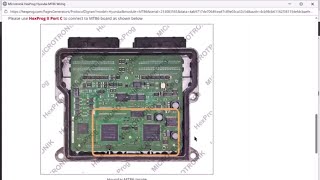
- Professional Diagnosis & ECM Replacement: If the above steps do not resolve the issue, the vehicle must be taken to a qualified technician or dealership. They will confirm the failure and, if necessary, replace the ECM. The replacement module must be programmed 🎬 Watch: How to program an aftermarket Hyundai ECM to the car's VIN and security system.
Parts You'll Likely Need
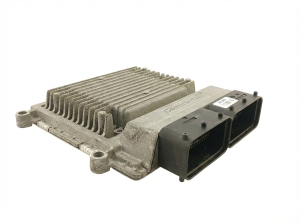
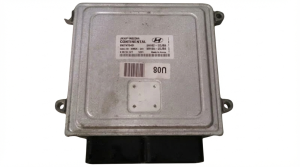
- Engine Control Module (ECM)
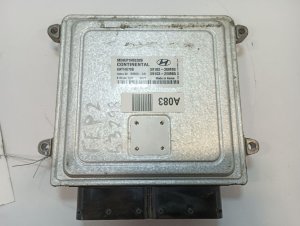
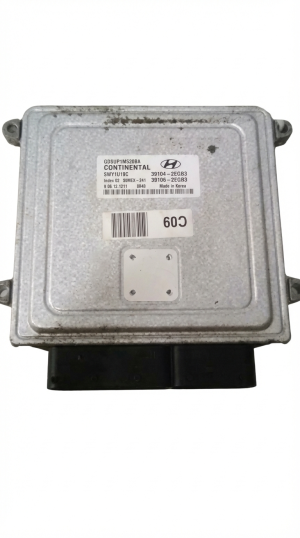
(OEM #39103-2EMB2, 39103-2EMB3, 39103-2EMB4, 39103-2EMA2)— This code indicates a fatal internal memory error, and in over 90% of cases, the entire module must be replaced. Part numbers vary by year, emissions (Federal/California), and features (e.g., smart key). Always verify the correct part number with the vehicle's VIN.
Trusted brands: Hyundai (OEM), Bosch (OEM supplier), Cardone (Remanufactured), Flagship One (Remanufactured/Programmed)
OEM price range: $1300-$1800
Aftermarket price range: $250-$600 (Remanufactured/Used)
Related Codes That Often Appear With This One
- U0100 — This code indicates a loss of communication with the ECM. It often appears when the ECM fails internally and can no longer communicate on the vehicle's network.
- P0562 — Indicates low system voltage. This can be a root cause for the P0601, as insufficient voltage can corrupt the ECM's memory.
- P0563 — Indicates high system voltage. This points to a charging system problem, like a faulty alternator, which can send voltage spikes that damage the ECM.
Platform-Specific Known Issues
- A user on Hyundai-Forums.com with a 2011 Elantra reported a P0601 code appearing after the vehicle struggled to start. After confirming the battery and alternator were good, the dealership diagnosed a failed PCM and replaced it under the 8yr/80k mile emissions warranty. This is a real-world example of the typical failure pattern and the importance of checking warranty coverage.
Mechanic-Grade Diagnostic Values
- ECM Ground Circuit Resistance — expected: 1Ω or less. Failure: Resistance greater than 1Ω indicates a poor ground connection that must be repaired before condemning the ECM.
- ECM Power Supply (Main Relay) — expected: Battery Voltage (approx. 12.6V with engine off, 13.5-14.5V with engine running). Failure: Voltage below 12V or significant voltage drop (>0.5V) indicates a power supply issue to the module.
- Throttle Position Sensor (TPS) Signal at ECM — expected: 0.3V ~ 0.9V at closed throttle. Failure: While not a direct test for P0601, verifying correct sensor inputs helps rule out external factors before blaming the ECM. An out-of-spec reading could indicate a wiring or sensor fault.
Scan Tool Commands That Help
- Hyundai GDS (Global Diagnostic System) or equivalent J2534 pass-thru device: VIN Writing — This function is mandatory when installing a new or 'virgin' ECM. The vehicle's 17-digit VIN must be programmed into the module. This process is irreversible on a given module.
- Hyundai GDS (Global Diagnostic System) or equivalent J2534 pass-thru device: ECU Upgrade / Reprogramming — Used to apply software updates from Hyundai. While unlikely to fix a hard P0601 fault, it's a step to ensure the module has the latest software before condemning it, especially if other drivability TSBs are active.
- Hyundai GDS (Global Diagnostic System) or equivalent J2534 pass-thru device: Immobilizer Key Teaching — After an ECM is replaced and the VIN is written, the vehicle's keys must be synchronized to the new module. Without this step, the anti-theft system will prevent the engine from starting.
Wiring & Ground Locations
- Engine Control Module (ECM) — In the engine compartment, mounted to the air cleaner assembly/airbox.. This is the component that has failed. Its location makes it susceptible to engine bay heat and vibration, which contribute to eventual failure.
- ECM Power Ground Pins — Specific pins on the main ECM harness connector (e.g., Pins 3 and 4 on a 2012 1.6L MPI model's connector). These wires lead to a chassis ground point.. A poor ground connection at these specific pins can cause voltage irregularities that either damage the ECM or mimic the symptoms of an internal failure. A voltage drop test should be performed on these pins before replacing the module.
Real Owner Repair Stories
- Hyundai-Forums.com user (2011 Hyundai Elantra) — Struggled to start, then threw P0601 code.
❌ Tried (didn't work) The owner first verified the battery and alternator were in good condition, which they were.
✅ What actually fixed it The dealership diagnosed a failed PCM (ECM) and replaced it. The repair was covered under the 8-year/80,000-mile Federal Emissions Warranty.
OEM Part Supersession History
39103-2EMB2→39103-2EMB3, 39103-2EMB4— Internal revisions and component updates by the manufacturer.
Heads up: Crucially, part numbers differ based on Federal vs. California (SULEV) emissions, conventional key vs. smart key, and even the vehicle's assembly plant (US vs. Korea-built for 2014+ models). You must match the part number on your original ECM or verify with a dealer using your VIN.39103-2EMA2→39103-2EMA3— Internal revisions for California emissions (SULEV) models.
Heads up: A Federal emissions ECM will not work in a California emissions vehicle, and vice-versa, as they have different software and hardware to meet stricter standards.
Model Year Variations Within This Range
- 2014-2016: The 2014 model year introduced a facelift and a new, more powerful 2.0L GDI engine option for the Sport and GT trims. While the 1.8L MPI engine was still available on SE/Limited trims, this means there are more potential ECM part numbers for these years. Additionally, 2014+ Elantras were built in both Korea and the US (Alabama), and their ECMs are not interchangeable. The build location is specified on the driver's door jamb sticker and is a critical factor when sourcing a replacement ECM.
Diagnostic Flowchart
Other Known Issues on This Vehicle
Issues unrelated to this code that are worth knowing about as an owner of this generation:
- Engine Ticking / Piston Slap (1.8L Nu Engine) 🔴 High — Widespread issue, often noticeable on cold starts. Can lead to oil consumption and eventual engine failure. (Ref: Subject of class-action lawsuit (Brown v. Hyundai) and subsequent warranty extension (10yr/120k miles) for the engine short block. See TSBs 22-EM-007H and 22-EM-009H.)
- Worn Steering Coupler 🟠 Medium — Extremely common. Owners report a clicking or 'thud' noise in the steering column when turning the wheel. Does not typically cause loss of steering control. (Ref: Hyundai extended the warranty for this part to 10 years/100,000 miles. See TSB 17-ST-002. The replacement part is 56315-2K000-FFF.)
- Premature Alternator Failure 🟠 Medium → Shop Alternator — A commonly reported failure point for this generation, which can lead to a dead battery and potentially trigger other electrical codes like P0601.
- Suspension Noises (Clunking) 🟡 Low — Often caused by worn front sway bar end links or bushings, resulting in clunking sounds over bumps.
Used vs. New Parts: Buying Guide for This Vehicle
When a used part is the smart pick: A used ECM is a very sensible and cost-effective option for this repair, provided it is purchased from a reputable seller who offers a pre-programming (cloning) service. Since the P0601 code indicates a hardware failure, a simple software reflash of the old unit is not a solution. A used, pre-programmed module can be a plug-and-play fix.
Donor-vehicle mileage cap: roughly under 120000 miles for the part to have meaningful remaining life.
What to inspect on the donor part:
- Match the OEM part number exactly. There are many variations based on emissions, key type, and build location that are not interchangeable.
- Inspect the casing for any signs of physical damage, corrosion, or water intrusion.
- Ensure all connector pins are straight, clean, and free of any green or white corrosion.
- Purchase from a seller that guarantees the part is tested and offers a warranty.
- Strongly prefer sellers who can pre-program or 'clone' the used ECM with your vehicle's VIN and immobilizer data before shipping.
OEM-only on this vehicle (don't cheap out):
- Engine Control Module (ECM)
Aftermarket brands forum-validated for this vehicle:
- For this specific part, 'reputable remanufacturer' is more applicable than 'brand'. Companies like Cardone or Flagship One specialize in remanufacturing and programming OEM modules.
Brands owners have reported issues with on this vehicle:
- Avoid any unknown eBay or Amazon sellers offering 'virgin' or used modules without a clear programming service or warranty. A used ECM without proper programming is a paperweight, as it will not start the car.
Real Owner Stories
Aggregated from forums and TSBs cited above. Mileages and costs reflect what owners reported in those sources.
2012 Hyundai Elantra 2.0L
Symptoms: The car would start but hesitate during acceleration, especially when climbing hills. The check engine light came on with code P0601 “Internal Control Module Memory Error.”
What fixed it: Replacement of the ECU and reprogramming it using a Launch X431 Pro handheld programmer to flash the vehicle's unique calibration data.
Source hint: ECUCRITIC report: 'Engine Control Unit 39101-26AC1: A Reliable ECU Solution for Hyundai Vehicles'
2011 Hyundai Elantra
Symptoms: The vehicle struggled to start, followed by a P0601 code appearing.
What fixed it: The dealership diagnosed a failed PCM and replaced it under the 8yr/80k mile emissions warranty.
Source hint: Hyundai-Forums.com, Thread: 'P0601 on 2011 Elantra'
2012 Hyundai Elantra
Symptoms: Experienced a dead battery followed by rough start and stall conditions with an ECU-related code.
What fixed it: Diagnosis highlighted the link between voltage issues (dead battery) and computer problems.
Source hint: Reddit r/autorepair
Related OBD-II Codes
Frequently Asked Questions
Will the Federal Emissions Warranty cover the ECM replacement on my 2011 Elantra?
Can a bad alternator on my Elantra cause the P0601 code?
My 1.8L Elantra has a ticking noise and now a P0601; are they related?
Is there a specific part number for the steering clunking I hear along with these electrical issues?
Can I program a replacement ECM myself for my 2012 Elantra?
Why is my Elantra's transmission locked in 4th gear when the Check Engine Light is on?
Helpful Videos

We Have This Part in Stock

The information in this article is provided for general reference and educational purposes only. Vehicle specifications, procedures, and part compatibility can vary by production date, trim level, and region. Always consult your vehicle's factory service manual and verify part numbers before purchasing or performing repairs. Safety-critical components such as airbags, seat belts, and braking systems should be installed by a qualified professional.
- Hyundai Elantra:
- 🧭 Diagnostic Flowchart
- 🎬 Helpful Videos
- 🛍️ Shop This Part
- What's Unique About the 2011-2016 Hyundai Elantra
- Symptoms You May Notice
- Most Likely Causes
- Rare But Worth Checking
- Diagnosis Steps
- Parts You'll Likely Need
- Related Codes That Often Appear With This One
- Platform-Specific Known Issues
- Mechanic-Grade Diagnostic Values
- Scan Tool Commands That Help
- Wiring & Ground Locations
- Real Owner Repair Stories
- OEM Part Supersession History
- Model Year Variations Within This Range
- Other Known Issues on This Vehicle
- Used vs. New Parts: Buying Guide for This Vehicle
- Real Owner Stories
- 2012 Hyundai Elantra 2.0L
- 2011 Hyundai Elantra
- 2012 Hyundai Elantra
- Related OBD-II Codes
- Frequently Asked Questions
- 🎟️ Get 5% Off