

P0601 on 2008-2013 Hyundai Genesis: Internal Memory Error Causes and Fixes
P0601 on a 2008-2013 Hyundai Genesis indicates a fatal internal memory error in the main engine computer (PCM/ECM). The only reliable fix is replacing the computer, which requires professional programming. Expect to pay $800-$2000+ for a replacement and programming.
- P0601 is a critical code indicating the engine computer (PCM) has failed internally.
- Do not drive the vehicle, as it can stall without warning.
- Before replacing the expensive PCM, always test the battery and alternator and inspect the PCM's wiring connections.
- The only reliable fix is to replace the PCM, which must be professionally programmed to your car's VIN.
What's Unique About the 2008-2013 Hyundai Genesis
For the first-generation (BH) Hyundai Genesis, the P0601 code is a straightforward, serious fault. It almost always points directly to a hardware failure within the Powertrain Control Module (PCM), which is a KEFICO-branded unit. While external factors like low voltage can theoretically trigger it on other cars, on this platform, the code is a strong indicator that the PCM itself has reached the end of its service life and will need to be replaced and programmed. An attempt to reflash the software is rarely successful for a true P0601 hardware failure.
Symptoms You May Notice
- Check Engine Light is on
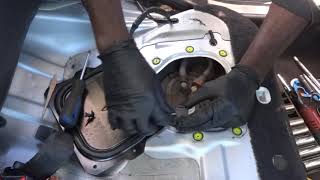
- Engine will not start (cranks but does not fire 🎬 Watch: How to test the fuel pump during a no-start.)
- Sudden or intermittent stalling while driving
- Vehicle enters 'limp mode' with severely reduced engine power
- Hesitation or poor acceleration
- Erratic automatic transmission shifting
- Inability to communicate with the PCM using a scan tool
- Poor fuel economy
- Replacing sensors (like crankshaft or camshaft sensors) hoping to fix a no-start or stalling condition without first addressing the P0601 code. The P0601 indicates the computer itself is the source of the problem, not the sensors it reads.
Most Likely Causes
- Internal Powertrain Control Module (PCM) Failure 🔴 High Probability → Shop Engine Control Module (ECM) Electronic components can fail over time due to heat cycles, vibration, and age. This is the most common reason for a P0601 code, indicating a permanent hardware fault.
How to confirm: After ruling out all other possibilities (power, ground, and charging system issues), the diagnosis points to the PCM. If a reflash fails or is not possible, the module is condemned. A burnt smell or visible damage like a hole burned in the circuit board is a definitive sign of failure.
Typical fix: Replace the PCM with a new or remanufactured unit. The new module must be professionally programmed to the vehicle's VIN and security system using a factory scan tool.
Est. part cost: $600-$1910 - Low Battery Voltage or Charging System Fault ⚪ Low Probability → Shop Vehicle Battery A weak battery or failing alternator can provide unstable voltage or spikes to the PCM, especially during startup, which can corrupt its memory or, in rare cases, mimic a checksum error. Alternator failure is a known issue on the Genesis sedan.
How to confirm: Test the battery with a digital tester; it should have at least 12.4 volts at rest. With the engine running, check the alternator output; it should be between 13.5 and 14.5 volts.
Typical fix: Replace the battery and/or alternator.
Est. part cost: $150-$600 - Corrupted Software from Failed Reprogramming ⚪ Low Probability An aftermarket tune or an interrupted factory software update can corrupt the PCM's memory, causing a checksum error. This is often referred to as being 'reprogrammed illegally'.
How to confirm: This is usually known from the vehicle's recent history. A dealer or specialized shop can attempt to reflash the module with factory software.
Typical fix: Attempt to reflash the PCM with the correct OEM software. If the reflash fails, the PCM must be replaced.
Est. part cost: $0 (if reflash works) - $1910
Rare But Worth Checking
- Poor Power or Ground Connections at the PCM: Corroded or loose terminals on the PCM connector can cause intermittent voltage drops, mimicking an internal failure. It's a simple and important check before replacing an expensive module. 🎬 Watch: Essential checks to perform before replacing your PCM.
- Water Intrusion: If the PCM is exposed to moisture, it can cause short circuits and corrosion on the internal circuit board, leading to a P0601 code. Inspect the area around the PCM for signs of water leaks.
Diagnosis Steps
- Verify the P0601 code is present using an OBD-II scanner. 🎬 See a breakdown of what the P0601 checksum error means.
- Check the Battery and Charging System: Test the battery voltage at rest (should be >12.4V). Start the engine and measure alternator output (should be 13.5V-14.5V). A weak or unstable power supply must be fixed first.
- Inspect PCM Connections: Disconnect the battery. Inspect the PCM connectors for any signs of corrosion, moisture, or bent/damaged pins. Clean and secure the connections.
- Check Power and Ground to the PCM: Using a wiring diagram for the specific vehicle, verify that the PCM is receiving proper voltage and has a solid ground connection at the chassis. Check main grounds like GM01 (left end of dash) and GE04 (right rear of engine compartment).
- Attempt a Reflash (Professional Step): If all wiring and voltage checks are good, a dealer or qualified shop may attempt to reflash the PCM with the latest factory software. This rarely fixes a true checksum error but can resolve software glitches from a prior failed update.
- Replace the PCM: If the code returns after clearing, and all previous steps have been followed, the PCM is faulty and must be replaced. The new module will require programming to the vehicle.
Parts You'll Likely Need
- Powertrain Control Module (PCM)
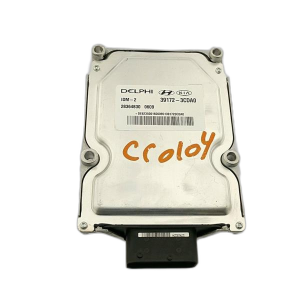
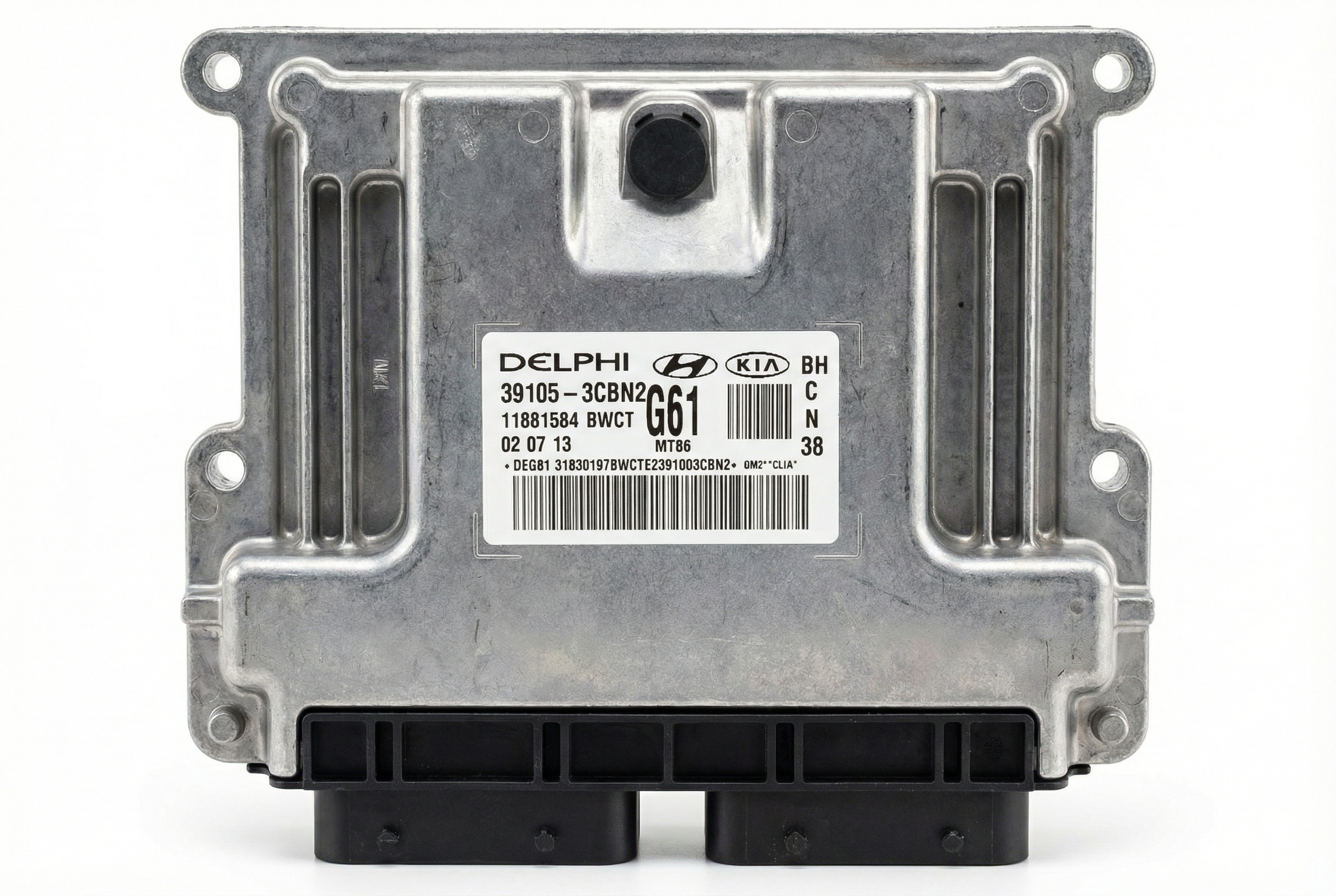
(OEM #39110-3F270, 39110-3F271, 39110-3F272, 39110-3F280 (for 4.6L V8); 39106-3C560, 39105-3CBN0 (for 3.8L V6). Part numbers vary by year and engine, always verify with VIN.)— This is the most common cause of a P0601 code, indicating an irreversible internal hardware failure.
Trusted brands: Hyundai (OEM), Bosch, KEFICO
OEM price range: $800-$1910
Aftermarket price range: $600-$900 (Remanufactured)
Related Codes That Often Appear With This One
- U0100 — Lost Communication With ECM/PCM. This code can appear when the PCM fails internally and stops communicating on the vehicle's network.
- P0562 — System Voltage Low. This may be stored alongside P0601 if a weak battery or failing alternator is the root cause of the memory corruption.
- P0606 — ECM/PCM Processor Fault. This is another internal computer failure code that can accompany P0601, pointing conclusively to a failed module.
- P0630 — VIN Not Programmed or Mismatch - ECM/PCM. This code will appear after installing a new PCM until the vehicle's VIN is correctly programmed into it using a tool like the Hyundai GDS.
Technical Service Bulletins (TSBs) & Recalls
- TSB 19-FL-003H: This technical service bulletin details the official procedure for writing the VIN to a new ECM/PCM using the GDS-Mobile tool. It explicitly warns that a VIN, once written, cannot be overwritten and that using a module from another vehicle as a permanent repair is not supported.
Platform-Specific Known Issues
- Owner Experience with P0601: A user on the Genesis Owners forum reported their 2012 3.8L sedan suddenly went into limp mode with a flashing check engine light. The dealer diagnosed P0601 and confirmed PCM failure. The total cost for replacement and programming was approximately $1,800. The owner noted that checking battery and alternator first is crucial, but for a persistent P0601, replacement is the only path.
- DIY Attempt and Failure: A forum thread detailed an owner's attempt to fix a P0601 on their 2009 4.6L Genesis by purchasing a used PCM from a salvage yard. The vehicle would not start after installation because the used module could not be reprogrammed to their car's immobilizer system. They ultimately had to purchase a new unit from the dealer, confirming that used modules are not a viable solution.
Mechanic-Grade Diagnostic Values
- PCM Operating Voltage — expected: 10.5V - 14.5V. Failure: Voltage below 10.5V can trigger memory errors or prevent operation.
- Alternator Output Voltage (Engine Running) — expected: 13.5V - 14.5V. Failure: Readings outside this range indicate a charging system fault that can damage the PCM.
- Battery Voltage (Engine Off) — expected: >12.4V. Failure: A reading below 12.4V indicates a weak battery that can cause voltage-related codes.
Scan Tool Commands That Help
- Hyundai GDS (GDS-Mobile): S/W Management -> Engine Control -> Write VIN — This function is mandatory after installing a new or 'virginized' PCM. It programs the vehicle's VIN into the module, which is required for it to operate correctly and will clear a P0630 DTC.
- Specialized Bench Programming Tool (e.g., OBDSTAR DC700): ECU Cloning / Read & Write MCU Data — Used by specialists when the original PCM is non-communicative (e.g., burned). This process reads data directly from the processor chip for transfer to a donor unit. If the chip cannot be read electronically, it must be physically transplanted.
Wiring & Ground Locations
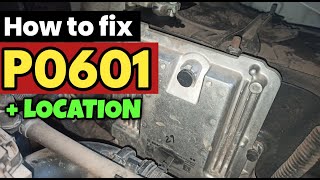
- ECM (Engine Control Module) — Located in the engine compartment, on the left side (driver's side in LHD vehicles), often in a black plastic housing.. This is the component that has failed. Physical inspection for water intrusion or burn marks is a key diagnostic step.
- GM01 — Main chassis ground located at the left end of the dashboard.. A poor ground at this location can cause a variety of electrical issues, including unstable voltage to the PCM, potentially mimicking an internal failure.
- GE04 — Engine compartment ground located at the lower right rear of the engine compartment.. Ensures the engine block and its components, which the PCM monitors and controls, have a solid ground reference. A bad ground here can cause erratic sensor readings.
- Starter Motor Ground — A main ground connection is often made at one of the starter motor mounting bolts.. The starter draws immense current during cranking. A poor ground connection here can cause significant voltage drops across the entire electrical system, potentially corrupting PCM memory during startup.
Real Owner Repair Stories
- YouTube channel 'Carlos's Auto Repair' (2011 Hyundai Genesis) — No communication with the original ECM. A visible hole was burned through the circuit board.
❌ Tried (didn't work) Attempting to read the original ECM with a bench tool failed due to the physical damage.
✅ What actually fixed it The specialist physically de-soldered the BGA (Ball Grid Array) processor chip from the burned original board and re-soldered it onto a used donor ECM. This 'cloned' the immobilizer and VIN data, allowing the used module to work in the car. - YouTube channel 'ECU Team Corp' (Hyundai Genesis 5.0L R-Spec) — Car starts but has no throttle response after installing a replacement ECU.
❌ Tried (didn't work) Simply installing a new/virgin module without full programming.
✅ What actually fixed it The replacement ECU had to be programmed with not only the correct VIN but also the correct 'power class' software. Once both were programmed correctly using specialist tools, the throttle response was restored and the car operated normally.
OEM Part Supersession History
39110-3F270→Unknown— Part number 39110-3F270 is listed for 2009-2011 4.6L models. Later part numbers (3F271, 3F272) exist but a clear supersession path is not documented in public sources. Exact part number matching by VIN is critical.
Heads up: A used PCM from a salvage yard is NOT interchangeable. It is locked with the donor vehicle's VIN and immobilizer data and cannot be reprogrammed by a dealer. A new OEM unit or a professionally 'virginized' remanufactured unit is required for dealer programming.
Model Year Variations Within This Range
- 2008-2013: PCM part numbers are different for the 3.8L V6, 4.6L V8, and 5.0L V8 engines. Furthermore, there may be different part numbers within the same engine size depending on the model year and specific options. Always verify the part number with the vehicle's VIN.
Diagnostic Flowchart
Other Known Issues on This Vehicle
Issues unrelated to this code that are worth knowing about as an owner of this generation:
- ZF 6-Speed Automatic Transmission Problems 🔴 High → Shop Transmission Assembly — Common after 100k miles, especially on 4.6L V8 models. Symptoms include rough shifting (especially 5-6 gear), hesitation, and slipping.
- Failing Alternator 🟠 Medium → Shop Alternator — A very common failure item, often occurring around 100k-120k miles. Failure is preceded by a distinct howling sound.
- Failing Door Lock Actuators 🟡 Low — Common failure, especially in hot and humid climates. Doors may fail to lock or unlock with the remote or interior switch.
- Rearview Camera Failure 🟡 Low — The backup camera is known to fail, often resulting in a black or static screen. The issue is the camera unit itself.
- Peeling Interior Chrome Trim 🟡 Low — The matte clear coat on chrome-plated plastic interior pieces (door handles, cupholders, steering wheel) is known to flake and peel over time.
- Noisy Cold Starts 🟡 Low — Many owners report a brief (1-2 second) engine rattle or noise on cold starts, which is generally considered normal for the V6 and V8 engines.
Used vs. New Parts: Buying Guide for This Vehicle
When a used part is the smart pick: A used part from a salvage yard is ONLY a viable option if you are sending it, along with your original PCM, to a specialist service for 'cloning'. This is typically done by physically transferring the processor/memory chip from your old board to the used donor board. This is often the only solution if your original PCM is physically burned and non-communicative.
What to inspect on the donor part:
- Ensure the part number on the donor PCM is an exact match.
- Inspect the donor PCM for any signs of physical damage, corrosion, or water intrusion.
- Buy from a reputable salvage yard with a warranty, in case the donor unit is also faulty.
OEM-only on this vehicle (don't cheap out):
- Powertrain Control Module (PCM/ECM). For a standard replacement procedure at a dealership or independent shop, you MUST use a NEW OEM module or a remanufactured module that has been specifically 'virginized' or 'unlocked' to accept new programming. A standard used part will not work.
Aftermarket brands forum-validated for this vehicle:
- ECU Team Corp (Remanufactured/Unlocked/Cloning Services)
- Flagship One (Remanufactured/Programmed)
- AES Modules (Repair/Remanufacturing Services)
Brands owners have reported issues with on this vehicle:
- Any generic, non-specialized remanufacturer that does not explicitly state the module is 'virginized' or 'unlocked' for Hyundai and ready for VIN programming.
Real Owner Stories
Aggregated from forums and TSBs cited above. Mileages and costs reflect what owners reported in those sources.
2012 Hyundai Genesis 3.8L Sedan
Symptoms: The vehicle suddenly entered limp mode with severely reduced engine power and a flashing check engine light.
What fixed it: The dealer diagnosed a PCM failure and replaced the unit with a new, programmed module.
Cost: $1,500-$1,800
Source hint: GenesisOwners.com forum thread mentioned in 'Owner Experience with P0601'
2009 Hyundai Genesis 4.6L
Symptoms: Owner attempted to replace the PCM with a used unit from a salvage yard to clear a P0601 code.
What fixed it: The used module failed because it could not be reprogrammed to the immobilizer; the owner had to purchase a new unit from the dealer.
Source hint: GenesisOwners.com forum thread 'DIY Attempt and Failure'
2010 Hyundai Genesis 4.6L
Symptoms: The engine would crank but would not fire/start.
What fixed it: A dealer-programmed PCM replacement.
Source hint: Hyundai-Forums.com thread on a 2010 Genesis 4.6L
Related OBD-II Codes
Frequently Asked Questions
Can I use a used PCM from a salvage yard for my 2009 4.6L Genesis to fix P0601?
What is the official Hyundai procedure for installing a new PCM on my Genesis?
Could my Genesis alternator failure be causing the P0601 code?
Is there a specific ground connection I should check on my 2008-2013 Genesis before replacing the PCM?
How much should I expect to pay for a dealer to fix P0601 on a 2012 Genesis 3.8L?
My Genesis is hesitating and shifting erratically; could this be the PCM or the ZF transmission?
Helpful Videos
We Have This Part in Stock

The information in this article is provided for general reference and educational purposes only. Vehicle specifications, procedures, and part compatibility can vary by production date, trim level, and region. Always consult your vehicle's factory service manual and verify part numbers before purchasing or performing repairs. Safety-critical components such as airbags, seat belts, and braking systems should be installed by a qualified professional.
- Hyundai Genesis:
- 🧭 Diagnostic Flowchart
- 🎬 Helpful Videos
- 🛍️ Shop This Part
- What's Unique About the 2008-2013 Hyundai Genesis
- Symptoms You May Notice
- Most Likely Causes
- Rare But Worth Checking
- Diagnosis Steps
- Parts You'll Likely Need
- Related Codes That Often Appear With This One
- Technical Service Bulletins (TSBs) & Recalls
- Platform-Specific Known Issues
- Mechanic-Grade Diagnostic Values
- Scan Tool Commands That Help
- Wiring & Ground Locations
- Real Owner Repair Stories
- OEM Part Supersession History
- Model Year Variations Within This Range
- Other Known Issues on This Vehicle
- Used vs. New Parts: Buying Guide for This Vehicle
- Real Owner Stories
- 2012 Hyundai Genesis 3.8L Sedan
- 2009 Hyundai Genesis 4.6L
- 2010 Hyundai Genesis 4.6L
- Related OBD-II Codes
- Frequently Asked Questions
- 🎟️ Get 5% Off