

P0601 on 2007-2012 Hyundai Santa Fe 3.3L: Internal ECM Failure Causes and Fixes
P0601 on a 2007-2012 Santa Fe almost always means the Engine Control Module (ECM) has failed internally due to memory corruption. The only reliable fix is to replace the ECM and have it programmed to your vehicle's VIN. Before condemning the ECM, verify the battery and charging system are stable. Expect to pay $400-$850+ for a shop to replace it with a refurbished unit.
- P0601 is a critical code indicating your Hyundai Santa Fe's engine computer has failed.
- Do not drive the vehicle, as it can stall without warning, posing a major safety risk.
- Before condemning the expensive ECM, always check the battery, alternator, and all related power/ground connections first.
- The fix is replacing the ECM, which MUST be programmed to your vehicle's VIN by a professional with the correct tools.
What's Unique About the 2007-2012 Hyundai Santa Fe
For the second-generation (CM) Santa Fe with the 3.3L Lambda V6 (2007-2009), the P0601 code is a straightforward, albeit serious, diagnosis. Unlike some codes that have numerous potential causes, this one points almost exclusively to a hardware failure within the ECM. While external electrical issues should always be checked first, this platform has a documented history of ECM failures that manifest as P0601 or similar internal error codes, making the module itself the primary suspect. The diagnostic procedure in the factory service manual confirms that if the code is present after a key cycle and all connections are good, the final step is to substitute with a known-good PCM.
Symptoms You May Notice
- Check Engine Light is on
- Engine cranks but will not start
- Engine stalls intermittently while driving or at idle
- Noticeable loss of power and poor acceleration
- Vehicle enters 'limp mode' with reduced power
- Transmission may shift erratically or get stuck in one gear
- Rough running, engine hesitation, or misfiring
- Failure to pass emissions tests
- Replacing sensors like the crankshaft or camshaft position sensors. While these can cause no-start or stalling issues, they will set their own specific codes and will not cause a P0601.
- Replacing the battery or alternator without checking if P0601 immediately returns. While a bad charging system can be a contributing factor, if the ECM memory is already corrupted, the code will persist after the electrical system is fixed, indicating the ECM itself is now also faulty.
Most Likely Causes
- Failed Engine Control Module (ECM/PCM) 🔴 High Probability → Shop Engine Control Module (ECM) The ECM in this generation Santa Fe is known to fail internally over time due to heat, vibration, and age, leading to corruption of the internal flash memory or EEPROM.
How to confirm: After verifying battery voltage is stable (>12.4V) and all ECM power and ground connections are clean and tight, clear the code. If P0601 returns immediately as a 'Present' fault upon the next key cycle, the ECM is faulty.
Typical fix: Replace the Engine Control Module and have the new unit professionally programmed to the vehicle. Sending the original unit to a specialist for cloning to a refurbished unit is also an option.
Est. part cost: $200-$500 for a pre-programmed refurbished unit. - Low Battery Voltage or Failing Alternator ⚪ Low Probability → Shop Alternator The 3.3L V6 has a notorious issue where the front valve cover gasket leaks oil directly onto the alternator, causing it to fail. This can lead to voltage irregularities that may corrupt the ECM over time.
How to confirm: Test the battery voltage with a multimeter; it should be above 12.4V with the engine off. With the engine running, check alternator output, which should be stable between 13.5V and 14.8V. Visually inspect the alternator for signs of oil saturation from above.
Typical fix: Replace the weak battery or faulty alternator. If the alternator is oil-soaked, the valve cover gasket must also be replaced to prevent a repeat failure.
Est. part cost: $150-$400 - Poor ECM Power or Ground Connections ⚪ Low Probability
How to confirm: Visually inspect the ECM's electrical connectors for looseness, corrosion, or damage. Check the main engine and chassis ground straps for tightness and corrosion. A voltage drop test on the power and ground circuits should show less than 0.1V drop.
Typical fix: Clean or repair the corroded terminals or tighten the loose connections.
Est. part cost: $0-$20
Rare But Worth Checking
- Aftermarket Tuning/Programming: An improper or failed attempt to reprogram ('reflash') the ECM with performance software can corrupt the memory and trigger a P0601 code.
- Voltage Spike from Improper Jump-Start: Connecting jumper cables incorrectly or a voltage surge from the donor vehicle can cause electrical damage to the sensitive ECM, leading to internal memory failure.
Diagnosis Steps
- Verify the code with a quality OBD-II scanner. Note if the code is 'Present' or 'History'.
- Check the battery. Ensure it is fully charged (above 12.4V) and passes a load test. Check terminals for corrosion.
- Start the engine (if possible) and check the charging system voltage. It should be stable, between 13.5V and 14.8V. Visually inspect the alternator for oil contamination from a potential valve cover leak.
- Turn the vehicle off. Inspect the battery terminals and main chassis/engine ground straps for corrosion and tightness.
- Locate the ECM and carefully inspect its connectors for any signs of corrosion, moisture, or bent/damaged pins.
- If all wiring, grounds, and voltage levels are perfect, clear the DTCs.
- Cycle the ignition key off, then on again. If code P0601 returns immediately and shows as a 'Present' fault, the ECM has failed its internal self-check and must be replaced.
Parts You'll Likely Need
- Engine Control Module (ECM)
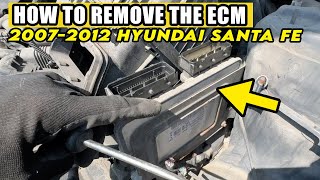
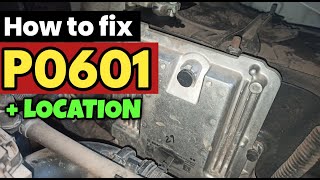
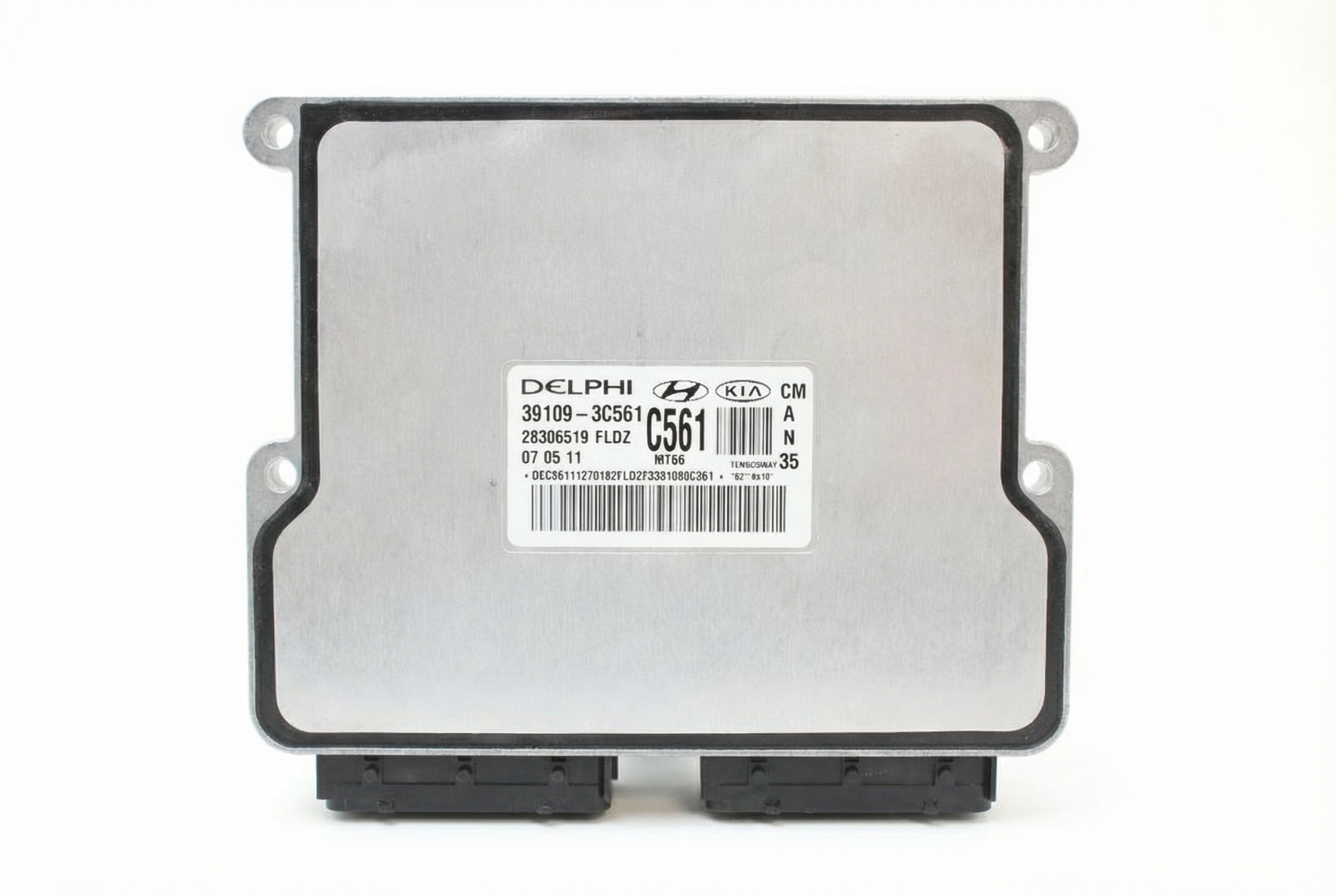
(OEM #39110-3C560 (2007-2009). Superseded by 39110-3C561. Also compatible: 39110-3C562, 39110-3C563. Always verify with VIN.)🎬 Watch: How to remove the ECM from your Santa Fe — This is the component that has failed internally when a P0601 code is set and external electrical issues have been ruled out.
Trusted brands: Hyundai (OEM), Bosch (OEM supplier), Cardone (Remanufactured), Flagship One (Remanufactured/Programmed)
OEM price range: $800-$1200+
Aftermarket price range: $200-$500 (Remanufactured)
Related Codes That Often Appear With This One
- P0600 — This code indicates a Serial Communication Link Malfunction, which can be a direct result of the internal ECM failure that also causes P0601.
- P0562 / P0563 — These codes for low or high system voltage can appear if the root cause of the ECM memory corruption is a failing battery or alternator.
Technical Service Bulletins (TSBs) & Recalls
- While no TSB directly addresses P0601, several TSBs address common related failures on this platform. TSB 15-01-031 (part of Service Campaign 936/976) was issued for the leaking front valve cover gasket that can destroy the alternator.
- TSB 06-20-002 was issued for early production 2007 Santa Fe models to fix faulty timing chain tensioners that cause a startup rattle.
Platform-Specific Known Issues
- The federal emissions warranty may cover the ECM for 8 years or 80,000 miles. It is worth checking with a Hyundai dealer to see if your vehicle is still covered, even if you are not the original owner.
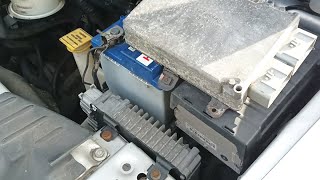
- This platform is known for a leaking front valve cover gasket that drips oil directly onto the alternator. A failing alternator can cause voltage spikes or drops that may contribute to ECM damage over time. This leak should be addressed to protect the replacement ECM 🎬 See how to replace the alternator and valve cover gasket and charging system.
Mechanic-Grade Diagnostic Values
- ECM Power Supply Pins Voltage (at ECM connector) — expected: Battery Voltage (approx. 12.6V with key on, engine off). Failure: Low or no voltage points to an issue with the main relay or supply wiring, not the ECM itself.
- ECM Power Ground Pins Resistance (at ECM connector) — expected: < 0.1 Ohms to a clean chassis ground. Failure: Higher resistance indicates a corroded or loose ground connection that must be repaired before condemning the ECM.
- ECM Power Ground Pins Voltage Drop (at ECM connector) — expected: Max. 50 mV with key on. Failure: Voltage significantly higher than 50 mV indicates a poor ground connection.
- Alternator Output Voltage (at battery terminals) — expected: 13.5V - 14.5V (Engine Running). Failure: Voltage fluctuating outside this range or the presence of AC ripple suggests a failing alternator which can damage the ECM.
Scan Tool Commands That Help
- Hyundai GDS (Global Diagnostic System): Vehicle S/W Management > ECU Upgrade — This function is used to attempt a re-flash of the existing ECM's software. If the process fails repeatedly or the P0601 code returns immediately after a successful flash, it confirms a hardware failure within the ECM.
- Hyundai GDS (Global Diagnostic System): Vehicle S/W Management > VIN Writing — This is a mandatory step after installing a new or used ECM. The vehicle's 17-digit VIN must be programmed into the module. Failure to do so will set a DTC P0630.
- Hyundai GDS (Global Diagnostic System): ECM Neutral Mode & Key Teaching — For vehicles with an immobilizer or smart key, after installing a replacement ECM, it must be put into 'Neutral Mode' and then taught the vehicle's existing keys. Without this procedure, the car will not start.
Wiring & Ground Locations
- ECM Location — Under the hood on the driver's side, next to the battery and under-hood fuse box.. Technicians need to access the ECM to test its connectors for power and ground, and to physically replace the unit if it is condemned.
- ECM Power Ground Pins — Pins 3 & 4 on the main ECM harness connector.. These are the primary ground connections for the ECM. High resistance or a poor connection here can cause erratic operation and internal faults like P0601.
- ECM Power Supply Pins — Pins 5 & 6 on the main ECM harness connector (receive voltage from the main relay).. These pins must have stable battery voltage for the ECM to operate. A voltage drop test here can rule out issues with the power supply circuit before condemning the ECM.
- Main Chassis Ground (G01/G52) — A major chassis ground point is located on the body near the right front of the engine compartment. Another is found by following the main negative battery cable to where it bolts to the chassis.. A corroded or loose main ground can cause system-wide voltage instability, potentially leading to ECM data corruption and a P0601 code.
Real Owner Repair Stories
- Reddit r/MechanicAdvice (Vehicle not specified, but symptoms match Santa Fe issue) — P0601 code only appears on a cold start.
❌ Tried (didn't work) Not specified, user was asking for advice.
✅ What actually fixed it The consensus from technicians was that even with intermittent cold-start-only symptoms, the root cause is a failing PCM. The advice was to verify the battery and terminals first, but that the ultimate fix is almost certainly ECM replacement.
OEM Part Supersession History
39110-3C560→39110-3C561, 39110-3C562, 39110-3C563— Standard part updates for hardware revisions and software improvements.
Heads up: These part numbers are specific to the 3.3L V6 (2007-2009) and are not compatible with the 2.7L V6 or the later 2010-2012 models with the 2.4L I4 or 3.5L V6 engines.
Model Year Variations Within This Range
- 2007-2009: These pre-facelift models were equipped with the 3.3L Lambda V6 engine. Their ECMs (e.g., 39110-3C56x series) are specific to this engine and the 5-speed automatic transmission.
- 2010-2012: The 2010 facelift replaced the 3.3L V6 with a new 3.5L Lambda II V6 (and a 2.4L I4). These models use entirely different ECMs and 6-speed transmissions, and their parts are not interchangeable with the earlier models.
Diagnostic Flowchart
Other Known Issues on This Vehicle
Issues unrelated to this code that are worth knowing about as an owner of this generation:
- Leaking Front Valve Cover Gasket Destroys Alternator 🔴 High → Shop Alternator — Very common. The leaking oil drips directly onto the alternator, causing it to fail, which can lead to stalling while driving and battery/charging issues. (Ref: Service Campaign 936/976 (related to TSB 15-01-031) was issued to address this.)
- Leaking Oil Pressure Switch 🟠 Medium — Common. The switch, located in the engine valley, leaks oil that runs down the back of the engine, often being misdiagnosed as a more expensive rear main seal leak.
- Timing Chain Tensioner Rattle on Startup 🟠 Medium — Common, especially on earlier models. The hydraulic tensioners can lose oil pressure when parked, causing a brief but loud chain rattle for a few seconds on a cold start. If ignored, it can lead to timing issues. (Ref: TSB 06-20-002 addresses this for early 2007 models with an updated part.)
Used vs. New Parts: Buying Guide for This Vehicle
When a used part is the smart pick: A used ECM from a junkyard can be a cost-effective option, but ONLY if you have access to a professional with a Hyundai GDS scan tool. The used module is useless without being reprogrammed to your car's VIN and immobilizer system.
Donor-vehicle mileage cap: roughly under 120000 miles for the part to have meaningful remaining life.
What to inspect on the donor part:
- Verify the part number on the used ECM exactly matches a compatible number for your vehicle.
- Source the part from a vehicle that was not involved in a flood or front-end collision.
- Inspect the connectors on the donor ECM for any signs of corrosion, bent pins, or physical damage.
- Ask for the VIN of the donor vehicle if possible; this can sometimes help the programmer.
OEM-only on this vehicle (don't cheap out):
- Engine Control Module (ECM/PCM) - While remanufactured units are common, a brand-new OEM unit from Hyundai is the most reliable, albeit expensive, option. Avoid unverified 'repaired' modules from unknown sellers.
Aftermarket brands forum-validated for this vehicle:
- Flagship One (Remanufactured/Programmed)
- Cardone (Remanufactured)
Brands owners have reported issues with on this vehicle:
- Untested, non-programmed used units from individual sellers on auction sites, as they cannot be installed without specialized tools.
Real Owner Stories
Aggregated from forums and TSBs cited above. Mileages and costs reflect what owners reported in those sources.
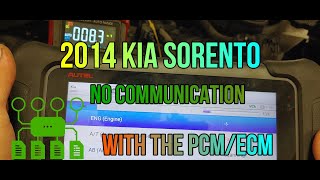
2014 Kia Sorento 3.3L V6
Symptoms: The vehicle experienced a total loss of communication with the ECM, resulting in a no-start condition.
What fixed it: The technician confirmed no communication with the module and condemned the unit, requiring a full PCM replacement.
Source hint: YouTube - JL's Auto Solution
2010 Hyundai Santa Fe (CM) 3.3L V6
Symptoms: The vehicle triggered a P0601 code, which was identified as an internal PCM/TCM checksum error.
What fixed it: Replacement of the Engine Control Module (ECM/PCM).
Source hint: AutoHex Online Help
2007-2012 Hyundai Santa Fe 3.3L V6
Symptoms: The P0601 code appeared specifically during cold starts.
What fixed it: After verifying the battery was in good condition, the owner was advised the PCM was faulty and required replacement.
Source hint: Reddit r/MechanicAdvice
Related OBD-II Codes
Frequently Asked Questions
Will the federal emissions warranty cover the ECM replacement on my 2007-2012 Hyundai Santa Fe?
Is there a TSB for the oil leak that ruins the alternator on the 3.3L V6?
My 2007 Santa Fe has a loud rattle for a few seconds when I start it; is this related to P0601?
Can I use a used ECM from a junkyard to fix the P0601 code?
How can I tell if my P0601 code is definitely a failed ECM and not just a bad battery?
Does the 3.3L V6 have any other common oil leaks I should check while diagnosing electrical issues?
Helpful Videos
We Have This Part in Stock

The information in this article is provided for general reference and educational purposes only. Vehicle specifications, procedures, and part compatibility can vary by production date, trim level, and region. Always consult your vehicle's factory service manual and verify part numbers before purchasing or performing repairs. Safety-critical components such as airbags, seat belts, and braking systems should be installed by a qualified professional.
- Hyundai Santa Fe:
- 🧭 Diagnostic Flowchart
- 🎬 Helpful Videos
- 🛍️ Shop This Part
- What's Unique About the 2007-2012 Hyundai Santa Fe
- Symptoms You May Notice
- Most Likely Causes
- Rare But Worth Checking
- Diagnosis Steps
- Parts You'll Likely Need
- Related Codes That Often Appear With This One
- Technical Service Bulletins (TSBs) & Recalls
- Platform-Specific Known Issues
- Mechanic-Grade Diagnostic Values
- Scan Tool Commands That Help
- Wiring & Ground Locations
- Real Owner Repair Stories
- OEM Part Supersession History
- Model Year Variations Within This Range
- Other Known Issues on This Vehicle
- Used vs. New Parts: Buying Guide for This Vehicle
- Real Owner Stories
- 2014 Kia Sorento 3.3L V6
- 2010 Hyundai Santa Fe (CM) 3.3L V6
- 2007-2012 Hyundai Santa Fe 3.3L V6
- Related OBD-II Codes
- Frequently Asked Questions
- 🎟️ Get 5% Off