

P0601 on 2007-2010 Pontiac G6: Internal Control Module Memory Error Fixes
P0601 on a Pontiac G6 almost always means the main engine computer (PCM/ECM) or, very commonly, the Transmission Control Module (TCM) has failed an internal self-test. The fix is replacing the faulty module and having it programmed, costing between $700 and $900 at a shop.
- P0601 is a critical code indicating an internal failure of a control module, most often the PCM or TCM.
- On the Pontiac G6, the Transmission Control Module (TCM) is a very common source for this code, a fact supported by GM Technical Service Bulletins.
- Diagnosis must begin with verifying battery health and checking module power/ground connections before condemning the expensive computer.
- Replacement of the faulty module is the only reliable fix, and it requires professional programming to the vehicle's VIN.
- Driving with this code is unsafe due to the high risk of stalling or unpredictable vehicle behavior.
What's Unique About the 2007-2010 Pontiac G6
For the Pontiac G6 and its platform mates like the Chevy Malibu and Saturn Aura, P0601 is not just a generic code. Manufacturer Technical Service Bulletins (TSBs) specifically highlight that this code frequently originates in the Transmission Control Module (TCM), a separate computer from the main engine computer (PCM). The G6 often uses a GM T42 model TCM, which is known for this type of failure. 🎬 Watch: How to locate and replace the T42 TCM This is a crucial distinction because symptoms like erratic shifting or a transmission-related warning message might lead a technician to correctly suspect the TCM first, rather than defaulting to a PCM replacement.
Diagnostic Flowchart
Tap your situation to follow the diagnostic path that matches what you're seeing on this vehicle.
Symptoms You May Notice
- Check Engine Light is on
- Vehicle may not start or may be hard to start
- Engine may stall intermittently while driving
- Reduced engine power or 'limp mode' activation, sometimes with a "Reduced Power" message on the display
- Erratic or improper automatic transmission shifting, such as harsh shifts or being stuck in one gear
- ABS and Traction Control lights may also illuminate
- Odometer display may show "ERROR"
- Replacing the throttle body. A U0107 code (Lost Communication with Throttle Actuator Control Module) can sometimes appear with P0601, but the root cause is often the failing PCM disrupting communication, not the throttle body itself.
Most Likely Causes
- Failed Powertrain Control Module (PCM) or Transmission Control Module (TCM) 🔴 High Probability → Shop Engine Control Module (ECM) Internal hardware failure due to age, heat cycles, and vibration is the most common cause. TSBs for this platform explicitly acknowledge that P0601 is a known failure mode for both the PCM and, frequently, the TCM. The code indicates the module's internal memory is corrupted and cannot be trusted.
How to confirm: After ruling out power/ground issues, a professional scan tool (like a Tech 2 for GM) is used to determine which module is storing the P0601 code. If a software reflash fails to clear the code, the module's hardware is confirmed as faulty.
Typical fix: Replace the faulty control module (PCM or TCM) and program the new unit to the vehicle's VIN.
Est. part cost: $250-$600 - Low or Unstable Battery Voltage 🟡 Medium Probability → Shop Vehicle Battery Like many computer-controlled vehicles, the G6's modules are sensitive to voltage. A weak battery, failing alternator, or poor connections can cause voltage spikes or drops that may corrupt the module's memory during startup or shutdown. While often a trigger, it's less common to be the root cause if the P0601 code is persistent.
How to confirm: Test the battery with a load tester. With the engine running, use a multimeter to check alternator output at the battery terminals; it should be stable between 13.5 and 14.5 volts. Ensure battery terminals are clean and tight.
Typical fix: Replace the weak battery, faulty alternator, or clean/tighten battery terminals and chassis grounds.
Est. part cost: $150-$400 - Poor Power or Ground Connections to the Module ⚪ Low Probability Corrosion or loose connections at the module's wiring harness or main chassis ground points can create intermittent power loss, mimicking an internal module failure. A known issue on some GM vehicles involves a bad ground stud on the transmission, which can cause a host of electrical issues.
How to confirm: Visually inspect the PCM/TCM connectors for corrosion or bent pins. Locate the main engine-to-chassis and battery-to-chassis ground straps and ensure they are clean, tight, and free of corrosion. A voltage drop test on the ground circuit can confirm high resistance.
Typical fix: Clean the ground connection points with a wire brush and ensure they are secure. Repair or replace any damaged wiring or connectors.
Est. part cost: $5-$50
Rare But Worth Checking
- Open or High Resistance in Communication Enable Circuit:
Diagnosis Steps
- Check for other DTCs. Use a professional scanner to see which module (PCM or TCM) has stored the P0601 code. Codes like P0606 or other module communication codes (U-codes) help confirm a module failure.
- Test the battery and charging system. Ensure the battery holds a proper charge (at least 12.6V at rest) and that the alternator provides a stable voltage (typically 13.5-14.5V) when the engine is running.
- Inspect all power and ground connections. Check battery terminals, main chassis grounds, and the wiring harness connectors at the PCM and TCM for tightness, corrosion, or damage. Pay special attention to the ground stud on the transmission case, located underneath the throttle body area. 🎬 See how to find and clean a bad ground connection
- Attempt a software reflash (Professional Step). A dealership or qualified shop may try to update the module's software. If the code returns immediately, it confirms a hardware failure. This step is explicitly mentioned in TSB PIP4653E for TCM-related faults.
- If all other steps fail, replace the faulty control module. This is the most common resolution for a persistent P0601.
- Program the new module. The replacement PCM or TCM must be programmed with the vehicle's VIN and security information using specialized equipment like a GM Tech 2 or equivalent.
Parts You'll Likely Need
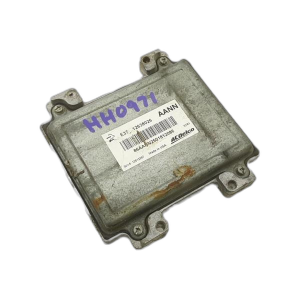
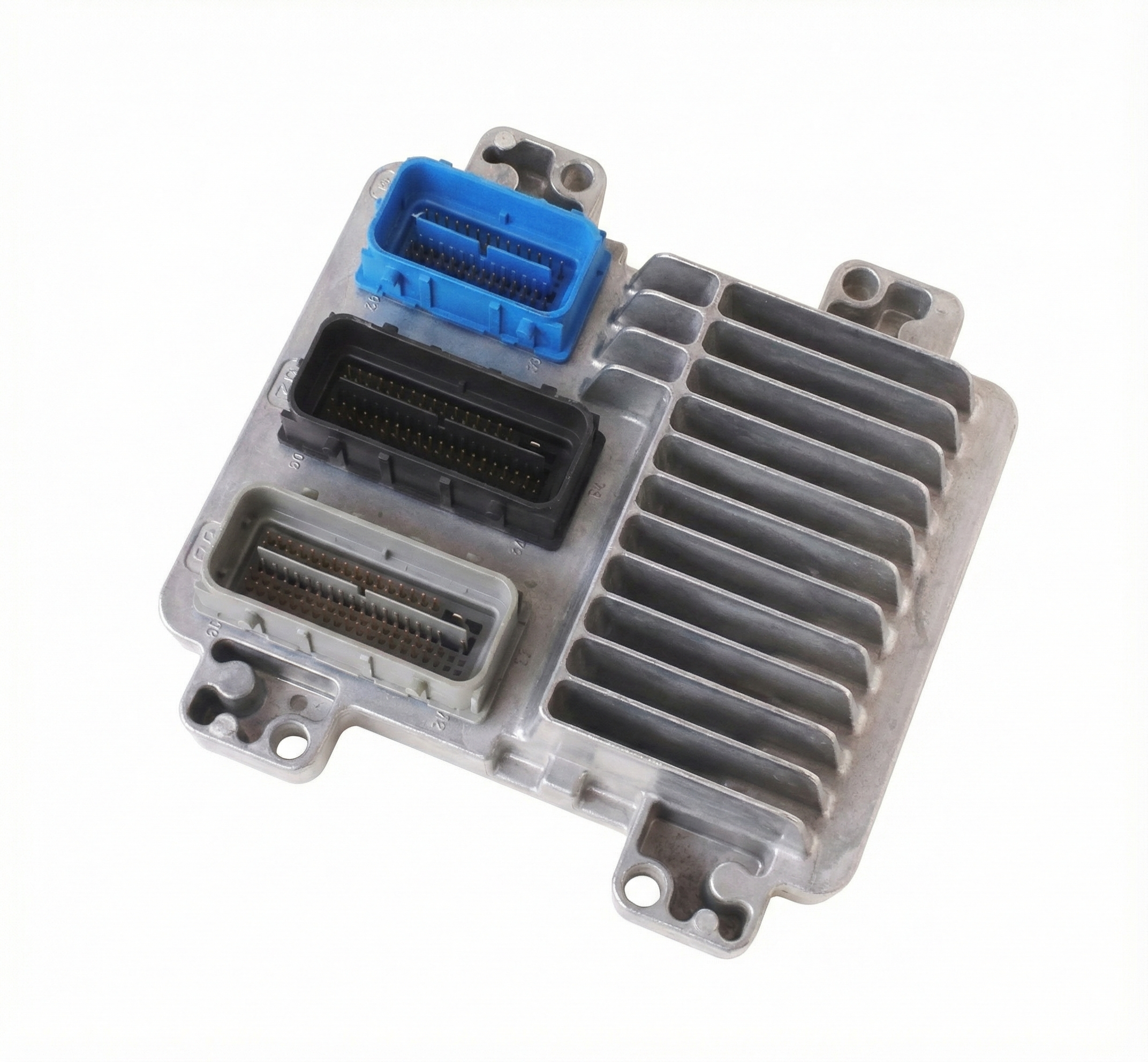
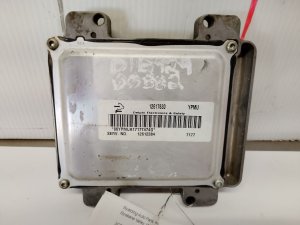
- Powertrain Control Module (PCM/ECM)
(OEM #12619077, 12617174, 12622141 (Part numbers vary by year, engine, and calibration; always verify with VIN))— This is a very common cause of a P0601 code, indicating an irreparable internal hardware failure. 🎬 Watch: Diagnosing a no-start caused by a faulty ECM
Trusted brands: ACDelco (OEM), CARDONE Reman, Dorman, Flagship One
OEM price range: $400-$600
Aftermarket price range: $250-$450 - Transmission Control Module (TCM)
(OEM #24234274, 24241806, 24252114 (Often a T42 hardware type; part numbers are specific, always verify with VIN))— TSBs specifically indicate that the P0601 code frequently originates in the TCM on this platform. If diagnostics point to the transmission computer, it will need replacement.
Trusted brands: ACDelco (OEM), GM Genuine Parts
OEM price range: $300-$500
Aftermarket price range: $200-$350
Related Codes That Often Appear With This One
- P0606 — This code indicates a 'PCM Processor Fault' and is another type of fatal internal computer error. Seeing them together strongly suggests the PCM has failed.
- P0602, P0603, P0604 — These are all related internal memory or programming error codes. Their presence alongside P0601 points directly to a faulty control module.
- U0107 — This code indicates a loss of communication with the throttle actuator control module. A failing PCM can disrupt this communication, leading to this code being set as a secondary fault.
Technical Service Bulletins (TSBs) & Recalls
- PIP4653E: Addresses various DTCs, including P0601, being stored in the Transmission Control Module and advises verifying the faulting module before reprogramming or replacement.
- 05-06-04-060A: An informational bulletin about control module DTCs, including P0601, being shared in multiple modules.
Platform-Specific Known Issues
- TSB #PIP4653E is critical for this vehicle. It notes that DTCs P0601, P0603, P0604, P062F or P1621 may be stored specifically in the Transmission Control Module (TCM) and advises technicians to verify which module set the code before taking action.
- TSB #05-06-04-060A is an informational bulletin confirming that P0601 is one of several internal module fault codes that can be set by various controllers on the vehicle, reinforcing the need for precise diagnosis.
Mechanic-Grade Diagnostic Values
- PCM/TCM Ground Circuit Voltage Drop (Key On, Engine Off) — expected: < 50 millivolts (0.050 V). Failure: A reading higher than 50mV indicates high resistance in the ground circuit, which can starve the module of a clean ground and cause internal errors.
- PCM/TCM Ground Circuit Voltage Drop (Engine Cranking) — expected: < 85 millivolts (0.085 V). Failure: Voltage drop exceeding 85mV during the high-current draw of cranking points to a significant ground integrity problem.
- Main Ground Strap Resistance — expected: < 0.1 Ω. Failure: Higher resistance indicates a corroded or failing ground strap, which can cause unstable voltage to modules.
- CAN Bus Network Resistance — expected: 60 Ω. Failure: Measure resistance between Pin 6 and Pin 14 of the DLC with the battery disconnected. A reading of 120 Ω indicates one of the two terminating resistors (often in the ECM and BCM) is offline, suggesting a module or wiring issue. A reading other than 60 or 120 Ω suggests a wiring short.
- PCM Power Supply at Connector — expected: Battery Voltage (approx. 12.6V). Failure: With the key on, checking Pin 20 (on the main ECM connector) should show full battery voltage. A lack of voltage indicates a problem in the power supply circuit, not the PCM itself.
Scan Tool Commands That Help
- Tech 2 / GDS2: Read DTCs by Module — This is the most critical first step. Since both the PCM and TCM can set a P0601 on this platform, you must use this function to determine which module is the source of the code before ordering parts.
- Tech 2 / GDS2: SPS (Service Programming System) — As a final diagnostic step, a technician may attempt to re-flash the module's software. If the P0601 code returns immediately after a successful re-flash, it provides 100% confirmation of an internal hardware failure, condemning the module.
Wiring & Ground Locations
- G105 — On a transmission stud, located on the left rear side of the engine compartment, often below the upper coolant hose.. This is a primary ground point for both the PCM and TCM. It is a well-documented failure point where the wires break inside the insulation or corrode at the terminal, causing intermittent no-starts, communication codes, and false P0601s. Wiggling this harness can often temporarily restore function, confirming it as the fault area.
- PCM Connector X2 (Gray) — The smaller of the two main connectors on the Engine Control Module.. Pin 73 on this connector is a primary ground for the PCM. A voltage drop test between this pin and the negative battery terminal is a key test to verify ground integrity directly at the module.
- PCM Connector X1 (Black) — The larger of the two main connectors on the Engine Control Module.. Pin 20 is a main battery positive voltage feed. Verifying battery voltage at this pin confirms the module is receiving power.
- G103 — On top of the left (driver's side) front strut tower in the engine compartment.. This is another major chassis ground point in the engine bay that provides a ground path for various components. While not as directly implicated as G105, poor contact here can contribute to floating grounds and electrical instability.
Real Owner Repair Stories
- YouTube channel 'A&Z Auto Masters' (2007 Pontiac G6 3.5L) — No crank, no start, 'ERROR' message on the instrument cluster, and multiple communication codes (U-codes).
❌ Tried (didn't work) Initial scan showed communication loss with multiple modules.
✅ What actually fixed it The technician performed a CAN bus network diagnosis and found voltage irregularities. Inspection of the wiring harness revealed that the main ground wires for the ECM and TCM were broken off their terminal at the G105 ground stud on top of the transmission. The wires were repaired and re-secured, which restored communication and fixed the no-start condition. - YouTube channel 'ScannerDanner' (Pontiac G6 (year not specified, but same platform)) — Intermittent no-crank, no-start condition. Sometimes would start after wiggling wires.
❌ Tried (didn't work) The vehicle would intermittently lose the ground signal for the Park/Neutral switch, preventing startup.
✅ What actually fixed it A voltage drop test on the ground circuit for the transmission range sensor led the technician to the G105 ground point on the transmission stud. The wires in the harness near the crimped terminal were broken internally. Repairing the broken ground wires resolved the intermittent no-start. - 2CarPros Forum (2008 Pontiac G6 2.4L with 140,000 miles) — Unspecified drivability issues leading to the discovery of two burned pins on the ECM connector.
✅ What actually fixed it The owner confirmed the fix was to replace the ECM itself and also the pigtail connector that had been damaged by heat from the poor connection. This highlights that the connector can be a failure point, not just the module or grounds.
"I Checked Everything" — The Actual Cause
- A common scenario for a P0601 that is not a true module failure is when basic electrical checks (like battery voltage) appear normal, but the car still intermittently stalls or fails to start. The root cause is often a high-resistance or broken ground wire at the G105 stud on the transmission. This connection can test 'OK' with a simple multimeter continuity check but fail under electrical load, causing the module to lose its ground reference, crash, and set a P0601 code. A voltage drop test while the circuit is loaded is required to find this fault.
OEM Part Supersession History
24252114→24252893— Internal revisions and updates by the manufacturer for improved reliability or component changes.
Heads up: When replacing a TCM, it is critical to use a part number known to be compatible with the specific year, engine, and vehicle options. The new module must be programmed with the vehicle's VIN.
Model Year Variations Within This Range
- 2007-2010: The physical location of ground G106 can vary depending on the engine (2.4L, 3.5L, 3.6L, or 3.9L), but the critical G105 ground for the PCM/TCM is consistently located on a transmission stud in the left-rear area of the engine bay. Always use a wiring diagram specific to the engine and year for precise locations.
Helpful Videos

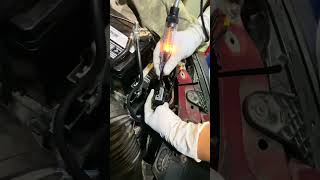
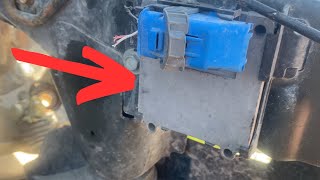
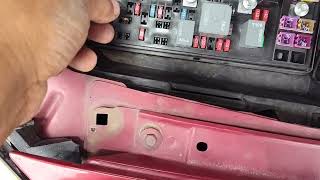
Used OEM Parts in Stock
New Aftermarket Parts Available



The information in this article is provided for general reference and educational purposes only. Vehicle specifications, procedures, and part compatibility can vary by production date, trim level, and region. Always consult your vehicle's factory service manual and verify part numbers before purchasing or performing repairs. Safety-critical components such as airbags, seat belts, and braking systems should be installed by a qualified professional.
- Pontiac G6:
- 🧭 Diagnostic Flowchart
- 🎬 Helpful Videos
- 🛍️ Shop This Part
- What's Unique About the 2007-2010 Pontiac G6
- Symptoms You May Notice
- Most Likely Causes
- Rare But Worth Checking
- Diagnosis Steps
- Parts You'll Likely Need
- Related Codes That Often Appear With This One
- Technical Service Bulletins (TSBs) & Recalls
- Platform-Specific Known Issues
- Mechanic-Grade Diagnostic Values
- Scan Tool Commands That Help
- Wiring & Ground Locations
- Real Owner Repair Stories
- "I Checked Everything" — The Actual Cause
- OEM Part Supersession History
- Model Year Variations Within This Range
- 🎟️ Get 5% Off