

P0602 on 2007-2013 Chevrolet Avalanche: Control Module Programming Error Explained
P0602 on a Chevy Avalanche means the main engine computer (ECM/PCM) has a software problem. This is not a DIY fix; the most common solution is having a professional shop or dealer reprogram the module, which is necessary after a replacement or a failed update. This code often points to a blank replacement module or a programming attempt that was interrupted by low battery voltage.
- P0602 is a programming error, not a mechanical fault. The most common fix is reprogramming the ECM, not replacing it.
- This is not a DIY job. It requires expensive, specialized tools (J2534 device) and a software subscription from GM.
- Always check the battery and charging system first. Unstable voltage is a common cause of this code and can damage a new ECM during programming.
- If the ECM is replaced, the new unit MUST be programmed to the vehicle's VIN, or it will not start.
- The code often appears with communication (U-series) codes, pointing to a network-wide issue that may originate from wiring problems or the ECM itself.
What's Unique About the 2007-2013 Chevrolet AVALANCHE
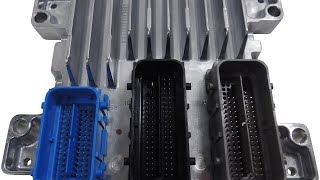
For this generation of GM trucks (GMT900 platform), the ECM is typically an ACDelco E38 (for 4.8L/5.3L engines) or E67 (for 6.0L/6.2L engines). A Technical Service Bulletin (TSB #05-06-04-060A) notes that code P0602 is an informational code that can be shared among multiple control modules. This means it doesn't always point to a catastrophic failure of the ECM itself. It can be triggered by system-wide issues like low battery voltage during startup, or more commonly, it indicates a module has been replaced and is waiting for vehicle-specific programming. These ECMs are known to develop cold solder joints on the main processor over time, which can cause intermittent no-start conditions that mimic a programming error.
Diagnostic Flowchart
Tap your situation to follow the diagnostic path that matches what you're seeing on this vehicle.
Symptoms You May Notice
- Check Engine Light is on
- Vehicle will not start or has an intermittent no-start condition
- Engine stalls or runs rough
- Harsh or incorrect transmission shifting
- Reduced engine power (limp mode) message on Driver Information Center (DIC)
- Decrease in fuel economy
- Cooling fans run constantly, even with the engine off, draining the battery
- Replacing the ECM without attempting to reprogram it first. Many functional ECMs are replaced when they simply needed to be flashed with the correct software.
- Blaming the ECM for issues caused by a weak battery or poor ground connections. Always verify the power supply is stable before condemning the module.
Most Likely Causes
- Engine Control Module (ECM) Not Programmed 🔴 High Probability → Shop Engine Control Module (ECM) This is the most frequent cause, typically occurring after the original ECM has been replaced with a new or remanufactured unit that has not yet been flashed with the vehicle's specific VIN and software calibration. These modules are not plug-and-play.
How to confirm: Use a professional scan tool to check the ECM's VIN and software calibration data. If it's blank, mismatched, or shows a generic calibration, it needs programming. A P0602:00 code on a GM-specific scanner explicitly means 'Control Module Not Programmed'.
Typical fix: Program the ECM using a GM-compliant J2534 device and a subscription to the GM Service Programming System (SPS). 🎬 Watch: How to program a GM computer using SPS2. This typically costs $150-$250 at a dealer or qualified independent shop.
Est. part cost: $0 - Low Battery Voltage or Unstable Power Supply 🟡 Medium Probability → Shop Vehicle Battery Control modules are sensitive to voltage. A weak battery, failing alternator, or poor connections (especially corroded battery cables and engine grounds common on these trucks) 🎬 See how to fix every ground wire on your Chevy. can cause data corruption or communication errors, triggering P0602. This is especially critical during a programming attempt, where a voltage drop can permanently damage the module.
How to confirm: Test the battery's state of charge and health, even if it's new. With the engine running, check the alternator output (typically 13.7-14.7 volts). Inspect battery terminals and main engine ground connections (G102, G103, G104) for corrosion or looseness.
Typical fix: Replace the weak battery, failing alternator, or clean/tighten all power and ground connections before attempting to reprogram the module. Using a battery maintainer that provides a stable ~13.4V is essential during programming.
Est. part cost: $150-$400 - Failed or Corrupt ECM ⚪ Low Probability While less common than a programming issue, the E38/E67 ECM can fail internally. Common failures include cold solder joints on the processor from heat cycling, or failure of the internal fan relay driver. This can cause intermittent no-starts or a constantly running fan that drains the battery.
How to confirm: This is diagnosed by exclusion. If the power supply is stable, wiring and grounds are intact, and the module repeatedly fails to accept programming from a known-good tool, the ECM itself is condemned.
Typical fix: Replace the Engine Control Module and program the new unit to the vehicle's VIN.
Est. part cost: $300-$700
Rare But Worth Checking
- Damaged Wiring or Connectors: Although not the first place to look, a damaged wire or corroded pin in the CAN bus harness or at the ECM connector can interrupt communication and mimic a module failure. TSB 08-07-30-021H specifically points to potential corrosion in the transmission harness connector on GMT900 trucks causing communication loss.
- Aftermarket Performance Tune: If an aftermarket performance programmer was used to flash the ECM, an error during that process or an incompatible tune can cause a P0602 code. Restoring the factory tune may resolve the issue, but sometimes the original file can be corrupted, requiring a dealer reflash.
Diagnosis Steps
- Check the battery and charging system. Ensure voltage is stable and above 12.4V with the key on, engine off. A load test is recommended.
- Scan for all DTCs in all modules. Note any communication (U-series) codes, as they point to network issues.
- Inspect the ECM connectors and nearby wiring for any signs of damage, corrosion, or loose pins. Pay special attention to the main engine grounds (G102, G103, G104) and battery cable connections.
- Using a professional scan tool, attempt to communicate with the ECM. Check if a VIN is programmed into the module. A blank or mismatched VIN, or a P0602:00 status code, confirms a programming issue.
- If the ECM is new or has a mismatched VIN, it must be programmed. This is the most common required step.
- CRITICAL: Connect a stable battery maintainer or regulated power supply before attempting any programming. Voltage must remain above 12.5V and ideally be held around 13.4V. Voltage drops can cause irreversible damage to the module.
- Attempt to reprogram/reflash the ECM with the latest GM-certified calibration using a J2534 pass-thru device and a GM SPS subscription.
- If reprogramming is successful but the code returns, re-check power and ground circuits to the ECM using a multimeter to test for voltage drops.
- If reprogramming fails repeatedly with a known-good tool and stable voltage, the ECM is likely defective and requires replacement. The new module must then be programmed.
Parts You'll Likely Need
- Engine Control Module (ECM/PCM)
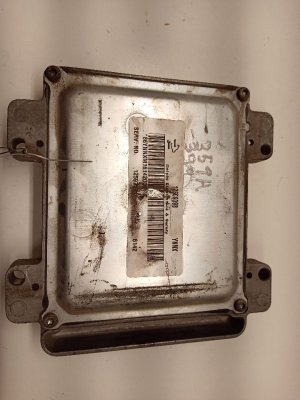
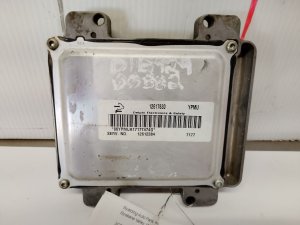
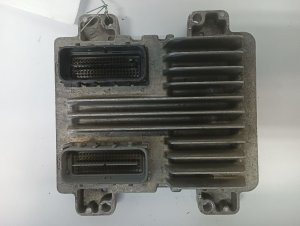
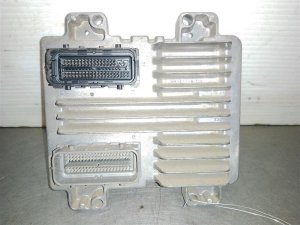
(OEM #Varies by VIN and engine. Common service numbers for the ACDelco E38/E67 family include 12612384, 12633238, but must be verified with a dealer.)— This part is only needed if the original module is internally faulty and cannot be reprogrammed. A replacement ECM is the hardware that stores the vehicle's operating software.
Trusted brands: ACDelco (OEM), Cardone (Remanufactured), Flagship One (Pre-programmed)
OEM price range: $400-$700
Aftermarket price range: $250-$500
Related Codes That Often Appear With This One
- U-series codes (e.g., U0100, U0073) — U-codes indicate a loss of communication between modules. They often appear with P0602 because the underlying programming error prevents the ECM from talking to other modules on the vehicle's network. TSB 08-07-30-021H addresses this exact scenario on GMT900 trucks.
- P069E — This code indicates a fault requested by the Fuel Pump Control Module (FPCM). A programming issue in the ECM can disrupt its communication with the FPCM, causing this code to appear alongside P0602.
Technical Service Bulletins (TSBs) & Recalls
- 05-06-04-060A: An informational bulletin for technicians regarding control module DTCs P0601, P0602, P0603, P0604, P0606, etc. It advises that these codes can be shared in multiple modules and do not automatically mean the module needs replacement.
- 08-07-30-021H: Addresses loss of high-speed GMLAN communication on 2007-2014 trucks, which can cause a no-start and multiple U-codes. It points to checking for corrosion in various connectors, including the transmission harness, before replacing modules.
Platform-Specific Known Issues
- Per TSB #05-06-04-060A, this code is informational and can be set across various modules, often related to programming events or voltage fluctuations rather than a hard part failure.
- A known failure on the E38/E67 ECMs used in these trucks is the development of cold solder joints on the processor, leading to intermittent no-start conditions that can be misdiagnosed as a simple programming error.
- Owners on forums report widespread electrical issues, including this code, after a simple battery replacement, highlighting the sensitivity of the GMT900 electrical system to voltage changes.
Mechanic-Grade Diagnostic Values
- System Voltage During Programming — expected: Stable voltage of 12.5V or higher; ideally ~13.4V using a dedicated power supply.. Failure: Any fluctuation, spike, or drop below 12.5V can cause programming to fail and potentially damage the module.
- ECM Constant Power (Pin X1-20) — expected: 12V+ at all times (battery voltage).. Failure: 0V or low voltage indicates a wiring or fuse issue between the battery and the ECM.
- ECM Ignition Power (Pins X1-19, X1-47) — expected: 12V+ with Key On, Engine Off (KOEO).. Failure: 0V or low voltage indicates a problem with the ignition switch circuit or related fuses.
Hidden / Shadow Codes Worth Checking
- P0602:00: The ':00' is a GM-specific symptom byte that explicitly means 'Control Module Not Programmed'. (see via This is visible on professional GM scan tools like a Tech 2 or a modern tool running GDS2 software.)
Scan Tool Commands That Help
- GDS2 / Techline Connect: Service Programming System (SPS) — This is the main function used to flash or reprogram any control module, including the ECM. It downloads the correct calibration from GM's servers and installs it onto the module.
- GDS2 / Techline Connect: Module Setup / VIN Relearn — This function is required after installing a new or replacement ECM. It writes the vehicle's VIN into the module and configures it to work with the other systems on the truck, such as the immobilizer and BCM.
Wiring & Ground Locations
- G103 — On the front of the passenger side cylinder head.. This is a primary engine and ECM ground point. Corrosion or looseness here can cause unstable voltage to the ECM, leading to communication errors or programming failures.
- G102 — On the front of the driver's side cylinder head.. Another critical engine ground. Along with G103, it ensures the engine block has a solid ground path, which is essential for all sensors and the ECM.
- G104 — On the left rear corner of the engine, mounted to the driver's side cylinder head.. Provides a ground path for components at the rear of the engine and firewall area. A bad connection here can cause intermittent electrical issues that are hard to trace.
- G100 / G101 — On the radiator core support, G100 on the driver's side and G101 on the passenger's side.. These are primary chassis grounds. The main negative battery cable often connects near here, making them crucial for the entire vehicle's electrical system stability.
Real Owner Repair Stories
- Tahoe Yukon Forum (2007 GMC Yukon) — After a battery replacement, the radio, rear sensors, and all dash gauges stopped working. The vehicle would run.
❌ Tried (didn't work) Checking and replacing every fuse in the vehicle (both interior and underhood fuse blocks). Replacing the starter (which was a separate, known-bad component).
✅ What actually fixed it The voltage fluctuation from the battery change had damaged both the instrument panel cluster (IPC) and the radio module. The cluster was sent to a specialty shop for repair, and a used radio was installed. After reinstalling the repaired cluster and new radio, all functions returned to normal. The owner also replaced the battery cables as a precaution.
Model Year Variations Within This Range
- 2009-2013: Around 2009, many Avalanche models were equipped with the 6-speed 6L80E automatic transmission, replacing the older 4-speed 4L60E. The 6L80E uses an internal Transmission Control Module (TCM) known as a T43. This requires different software and calibration within the E38/E67 ECM to communicate correctly, compared to the software for earlier models with an external TCM.
Helpful Videos

We Have This Part in Stock

The information in this article is provided for general reference and educational purposes only. Vehicle specifications, procedures, and part compatibility can vary by production date, trim level, and region. Always consult your vehicle's factory service manual and verify part numbers before purchasing or performing repairs. Safety-critical components such as airbags, seat belts, and braking systems should be installed by a qualified professional.
- Chevrolet AVALANCHE:
- 🧭 Diagnostic Flowchart
- 🎬 Helpful Videos
- 🛍️ Shop This Part
- What's Unique About the 2007-2013 Chevrolet AVALANCHE
- Symptoms You May Notice
- Most Likely Causes
- Rare But Worth Checking
- Diagnosis Steps
- Parts You'll Likely Need
- Related Codes That Often Appear With This One
- Technical Service Bulletins (TSBs) & Recalls
- Platform-Specific Known Issues
- Mechanic-Grade Diagnostic Values
- Hidden / Shadow Codes Worth Checking
- Scan Tool Commands That Help
- Wiring & Ground Locations
- Real Owner Repair Stories
- Model Year Variations Within This Range
- 🎟️ Get 5% Off