

P0602 on 2012-2015 Chevrolet Camaro: Control Module Programming Error Causes and Fixes
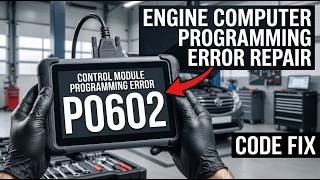
P0602 on a Camaro with the LSA engine indicates the Engine Control Module (ECM) has a programming error. This most often happens after a failed aftermarket tune, installing a new ECM without programming it, or a sudden loss of power during a software update. This is a critical fault that requires professional reprogramming with GM-specific tools and is not a DIY fix.
- P0602 means your Camaro's ECM has a software problem, it's not a mechanical fault.
- This code is most often caused by a failed aftermarket tune or an improperly installed replacement ECM.
- Do not drive the vehicle. It is unsafe due to the risk of stalling or unpredictable engine behavior.
- This is not a DIY repair. The fix requires expensive, specialized tools to reprogram the ECM.
- Before assuming the ECM is bad, always have a professional check the battery, charging system, and all related wiring first, as unstable voltage is a root cause of the software corruption.
What's Unique About the 2012-2015 Chevrolet Camaro
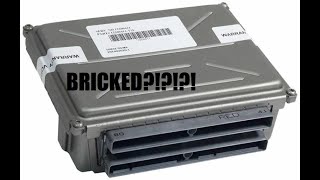
For the fifth-generation Camaro equipped with the high-performance LSA 6.2L supercharged V8, the P0602 code is not a common random failure. Instead, it is most frequently associated with the aftermarket tuning community. Owners often use tools like HP Tuners to flash performance calibrations. If this process is interrupted by a voltage drop, a poor connection, or using an incompatible operating system, it can corrupt the ECM's memory and 'brick' the module, triggering P0602. While underlying electrical issues can be a cause, the context of performance modification is the most probable trigger for this specific vehicle.
Symptoms You May Notice
- Engine will not start or has a no-crank condition. 🎬 See this Camaro no-crank and no-communication diagnostic
- Engine stalls unexpectedly, sometimes during deceleration or at idle.
- Reduced engine power ('Limp Mode') message on the Driver Information Center (DIC).
- Check Engine Light is on.
- Service StabiliTrak message may appear, as the ECM is critical to this system.
- Harsh or erratic automatic transmission shifting.
- Fuel gauge may read empty or not work, as the ECM can fail to communicate with other modules.
- Replacing the battery without attempting to reprogram the ECM first. While a bad battery can cause the issue, the corruption in the ECM memory remains even after power is restored.
- Replacing other engine sensors. This code is specific to the control module's internal state and is not caused by external sensor inputs.
- Assuming the ECM is permanently damaged. In many cases, especially after a failed tune, the ECM can be recovered by a professional with the right tools without needing replacement.
Most Likely Causes
- Failed or Incomplete Aftermarket Tune 🔴 High Probability The LSA engine is a popular platform for performance tuning with tools like HP Tuners or DiabloSport. If the connection is lost, battery voltage drops below a stable 12.6V, or the wrong file is used during the flash process, the ECM's memory can be corrupted, triggering P0602. This is often referred to as 'bricking' the ECM.
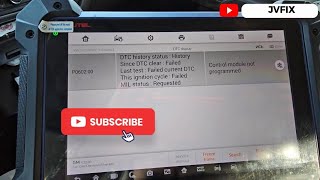
How to confirm: Confirm if a tuning attempt was recently made. Use a high-level scan tool to check if the ECM reports a valid VIN and software calibration. Often, it will show as blank, corrupted, or timed out on communication attempts.
Typical fix: The ECM must be recovered by re-flashing it with a known-good stock tune using professional GM tools (SPS). Sometimes, the original tuner can perform a 'write entire' operation to recover it. In severe cases, the ECM may require specialized bench recovery services or outright replacement.
Est. part cost: $0-$250 for a re-flash service - ECM Replaced But Not Programmed 🟡 Medium Probability
How to confirm: If the ECM was recently replaced with a new or used unit, it will set this code until programmed. A scan tool will show a blank or incorrect VIN stored in the new module.
Typical fix: The new ECM must be programmed to the vehicle using GM's Service Programming System (SPS) or equivalent professional tools. This process writes the VIN, security information (for key learning), and vehicle-specific software to the module.
Est. part cost: $100-$300 for programming labor - Power or Ground Supply Issue to ECM ⚪ Low Probability While not unique to this car, low system voltage is a known cause of programming corruption. A weak battery in a car that sits frequently, like many ZL1s, can be a factor.
How to confirm: Check the vehicle's battery and charging system. A weak battery or faulty alternator can cause voltage drops during operation or programming that corrupt the ECM's memory. Inspect all power and ground wires and connections at the ECM for corrosion or damage. Key grounds are on the cylinder heads and chassis rails.
Typical fix: Replace the weak battery, repair the charging system, or clean/repair the faulty wiring. The ECM will likely need to be reprogrammed after the underlying electrical issue is resolved, as the corrupted data will remain.
Est. part cost: $20-$400
Rare But Worth Checking
- Internal ECM Failure: While less common than a programming error, the ECM itself can fail internally. This is usually the diagnosis after all other possibilities (programming, power, ground) have been eliminated. A user on Camaro5 forums reported a bad ECM at 56,000 miles causing similar issues.
Diagnosis Steps
- Scan for All Codes: Use a professional-grade scan tool to check for P0602 and any other accompanying codes (like U-codes or other P06xx codes). Note if communication with the ECM is possible at all.
- Check Battery and Charging System: This is a critical first step. Ensure the battery is fully charged (above 12.6V) and holds a load. With the engine running (if possible), verify the alternator output is stable and within the 13.5-14.8V range. Low or unstable voltage is a primary cause of programming failure and corruption.
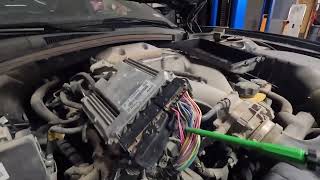
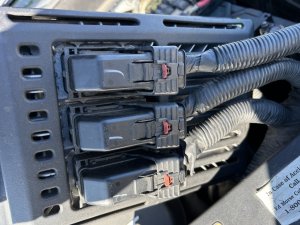
- Inspect ECM Connections and Grounds: Visually inspect the three large ECM connectors for any signs of corrosion, moisture, or bent/damaged pins. Ensure they are securely connected. Check the main engine-to-chassis ground straps and the ECM ground points on the cylinder heads.
- Verify ECM Programming: Using a scan tool, navigate to the module identification screen. Check if the VIN displayed matches the vehicle's actual VIN. If it is blank, mismatched, or shows garbage characters, the ECM is not programmed correctly.
- Attempt Reprogramming (Professional Step): If all wiring and power sources are confirmed good, the next step is to attempt to reprogram the ECM with the correct GM factory software. This requires a J2534 pass-thru device and a subscription to GM's Techline Connect (SPS2) software. A stable power supply must be connected during this process.
- Replace ECM: If the ECM fails to accept programming after multiple attempts from a known-good power source, it is likely internally faulty ('bricked') and must be replaced. The new module will also require programming.
Parts You'll Likely Need
- Engine Control Module (ECM)
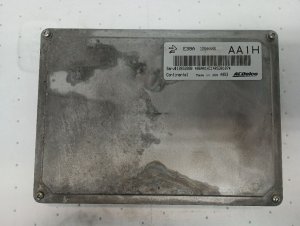
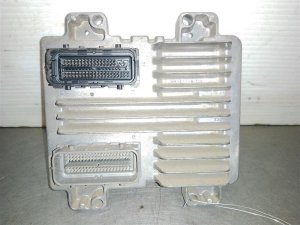
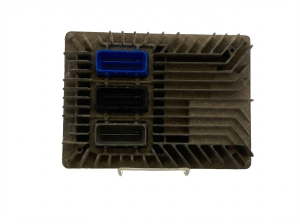
(OEM #ACDelco 12633264 (superseded by other numbers), GM E67)— This is only needed if the original ECM is internally damaged and cannot be reprogrammed. In most cases, the original ECM can be recovered. The LSA engine in this Camaro uses a GM E67 type ECM. 🎬 Watch: How to recover a bricked E67 ECM
Trusted brands: ACDelco (GM Genuine)
OEM price range: $400-$800
Aftermarket price range: $250-$500 (Remanufactured)
Related Codes That Often Appear With This One
- U0100 — Lost Communication With ECM/PCM. If the ECM's software is corrupted, it may be unable to communicate with other modules on the vehicle's CAN bus network, triggering this code.
- P0601 — Internal Control Module Memory Check Sum Error. This is a related code indicating a specific type of internal memory fault within the ECM. P0601 often points to a hardware failure, whereas P0602 is more often a software/programming issue.
- P0606 — ECM/PCM Processor Fault. This code can be triggered by tune file corruption, similar to P0602. Forum users report that incorrect electronic throttle control parameters in a custom tune can cause P0606.
Technical Service Bulletins (TSBs) & Recalls
- GM TSB #05-06-04-060A: While not specific to the Camaro ZL1, this general bulletin informs technicians that codes like P0601, P0602, P0603, etc., are informational codes related to module programming. It directs them to verify software and programming status before replacing a module.
- TSB Bulletin #05-06-04-060A: This manufacturer record notes that P0602 is an informational bulletin communicating data to technicians regarding control module DTCs that can be shared across multiple modules.
Platform-Specific Known Issues
- source — A user on the LS1Tech forums described bricking their PCM while attempting to write a new tune with HP Tuners. The software crashed mid-write, leaving the car in a no-start condition with no fuel pump prime. The consensus was that the ECM was bricked and would require either replacement or a bench reflash with a Tech-II tool to recover. This highlights the risk of DIY tuning without a stable power supply and robust computer connection.
- source — On Camaro5 forums, a ZL1 owner experienced intermittent stalling, 'Engine Reduced Power', and 'Service Stabilitrak' messages. After disconnecting the battery, the car would restart. Another user with similar symptoms traced the issue to a bad ECM that needed replacement at 56,000 miles, confirming that while rare, an internal failure can manifest as these symptoms before setting a hard P0602.
Mechanic-Grade Diagnostic Values
- ECM Battery Positive Voltage — expected: Should be equal to battery voltage (approx. 12.6V with key on, engine off).. Failure: Voltage below 12.4V can cause programming errors or prevent the ECM from powering on.
- ECM Ignition 1 Voltage — expected: Should be equal to battery voltage when the ignition is in the ON or START position.. Failure: 0V when the key is on indicates a problem with the ignition switch or related wiring/fuses.
- ECM Ground/Low Reference — expected: Less than 0.1V (100mV) when testing voltage drop between the pin and a known-good chassis ground. Less than 5 ohms resistance between the pin and the negative battery terminal.. Failure: High resistance or voltage indicates a poor ground connection, a common cause of intermittent module issues.
- CAN Bus Resistance — expected: Approximately 60 ohms between CAN High and CAN Low pins at the OBD-II port (Pins 6 and 14).. Failure: A reading of 120 ohms suggests one of the two terminating resistors is offline. A reading near 0 ohms indicates a short between the CAN lines.
Scan Tool Commands That Help
- GM GDS2/Techline Connect (SPS2): Replace and Reprogram — This function is used when installing a new or used ECM. It downloads the correct vehicle-specific calibration from GM's servers and writes the VIN to the module.
- GM GDS2/Techline Connect (SPS2): Reprogram — This function is used to update the software on the existing ECM. It can be used to attempt recovery of a module with corrupted software, as long as it still communicates.
- Tech 2 or high-end scan tool: CASE Relearn (Crankshaft Position System Variation Learn) — This procedure must be performed after replacing or reprogramming the ECM. It synchronizes the ECM with the crankshaft position sensor's signal to ensure accurate misfire detection. Failure to do so may result in a separate trouble code (like P0315) and a persistent Check Engine Light.
- GM GDS2: Module Information / Identification — Before any programming, use this function to verify if the ECM is communicating and to check the currently stored VIN and calibration part numbers. A blank or incorrect VIN is a definitive sign of a programming issue.
Wiring & Ground Locations
- G110 / G112 — Attached to the rear of the driver's side and passenger's side cylinder heads.. These are primary ground points for the engine harness and ECM. A loose or corroded ground here is a well-known cause of intermittent electrical issues, including module communication problems that can mimic a failed ECM.
- ECM Connector X1, Pin 53 — The gray ECM connector.. This is a CAN bus pin. A real-world repair story confirmed that a single unseated pin here can cause a total loss of communication with the ECM, preventing diagnostics and tuning, even though the engine may still run.
- G103 — Located at the left rear of the engine compartment on the cowl, often near the brake booster.. This is a critical body ground that provides the ground path for the BCM, Instrument Panel Cluster (IPC), and the Data Link Connector (DLC). A fault here can prevent a scan tool from communicating with any module on the vehicle.
- G105 / G106 — Located on the radiator support in the front of the engine bay.. While primarily for lighting, these grounds are part of the main chassis grounding scheme. Corrosion in this area due to exposure can create system-wide voltage stability problems.
Real Owner Repair Stories
- EFILive Forum User (89 Mustang with a Blueprint 427 LS swap using a GMPP E67 Controller Kit) — Engine starts and runs, but there is zero communication with the ECM via HP Tuners, SCT, or EFILive. Scan tools report 'vehicle not connected'.
❌ Tried (didn't work) Verifying continuity on CAN +/- wires from the OBD-II port to the ECM connector pins (33 and 53)., Checking power and grounds at the OBD-II port.
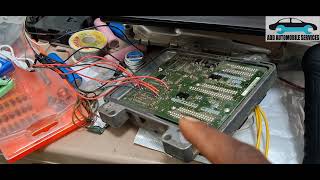
✅ What actually fixed it The CAN bus pin 53 in the gray ECM connector was not fully seated. After disassembling the connector and properly re-seating the pin, full communication with the ECM was restored. - YouTube Video by ADD AUTOMOBILE SERVICES (Vehicle with an ACDelco E67 ECM) — ECM was 'bricked' during a cloning attempt with a programming tool. The flash process failed at 3%, and the ECM would no longer communicate via the OBD-II port.
❌ Tried (didn't work) Attempting to re-flash the ECM through the OBD-II port again.
✅ What actually fixed it The ECM was recovered using a bench setup with a specialized tool (u-Link NT) connected directly to the microprocessor on the ECM's circuit board (BDM - Background Debug Mode). This allowed the tool to erase the corrupted memory and write a known-good flash file directly, bypassing the non-communicating OBD-II interface. - EFILive Forum User (Standalone E67 ECM on a bench harness) — No communication with the E67 ECM using an EFILive FlashScan V2 tuning tool. The tool worked fine on an older LS1b ECM.
❌ Tried (didn't work) Verifying power and ground continuity to the ECM and OBD-II port., Checking CAN wire continuity.
✅ What actually fixed it The issue was the EFILive V2 tuning tool itself. The user tried a second, identical V2 tool which connected to the E67 ECM without issue. The first tool had a suspected internal failure of its CAN transceiver chip.
OEM Part Supersession History
12633264→12678513 (and others)— Part consolidation and minor revisions by the manufacturer.
Heads up: While the service number may be interchangeable, the internal hardware of E67 ECMs can differ. Attempting to flash an operating system (OS) from a different application (e.g., a Corvette OS onto an ECM from a truck) can fail or 'brick' the module if the hardware doesn't support it. It is critical to use a calibration intended for the specific hardware service number.
Model Year Variations Within This Range
- 2012-2015: The primary differences between early (2012-2013) and late (2014-2015) ZL1 models were cosmetic and related to interior features. This includes updated rear taillights and the introduction of a color Head-Up Display (HUD) and Driver Information Center (DIC) for 2014-2015. There are no documented changes to the LSA engine, E67 ECM, or core wiring that would affect the diagnosis or repair of a P0602 code within this year range.
Diagnostic Flowchart
Other Known Issues on This Vehicle
Issues unrelated to this code that are worth knowing about as an owner of this generation:
- Supercharger Isolator Rattle 🟠 Medium — Very common. The factory spring-loaded isolator in the supercharger snout wears out, causing a distinct rattling or 'marbles in a can' sound at idle. If left unaddressed, it can wear the supercharger shaft.
- Magnetic Ride Control (MRC) Shock Failure 🟠 Medium — Moderately common, especially on higher-mileage cars or those driven on poor roads. The shocks can begin to leak fluid, leading to a bouncy, uncontrolled ride and potential 'Service Suspension System' messages. Replacement is expensive.
- Rear Differential Whine or Failure 🟡 Low — Less common than other issues, but some owners have reported rear differential noise or failure, particularly on cars that are frequently launched or driven hard.
- Torque Converter Shudder (Automatic Transmission) 🟡 Low — Some owners of automatic transmission models report a shudder or vibration at low speeds (around 30-55 mph), which has been traced to the torque converter in some cases. (Ref: A similar issue was common on other GM vehicles, often addressed with a fluid flush and updated fluid type, though no specific ZL1 TSB is widely cited.)
Used vs. New Parts: Buying Guide for This Vehicle
When a used part is the smart pick: A used ECM is a very smart choice for this repair, as the hardware is robust and the failure is almost always software-related. Companies specialize in acquiring used ECMs in bulk and reprogramming them for specific vehicle applications, making them a cost-effective alternative to a new module from a dealer.
Donor-vehicle mileage cap: roughly under 200000 miles for the part to have meaningful remaining life.
What to inspect on the donor part:
- Match the GM Service Number printed on the case of the old ECM (e.g., 12633264). While not a guarantee of internal hardware, it's the most important first step.
- Ensure the seller guarantees the unit is programmable and not from a flood or fire-damaged vehicle.
- Check for physical damage to the case and, most importantly, the connector pins. Bent or corroded pins make the unit worthless.
OEM-only on this vehicle (don't cheap out):
- ECM Programming Software: The only reliable way to program a replacement ECM (new or used) is with official GM Service Programming System (SPS2) software via a Techline Connect subscription. Aftermarket 'cloning' tools carry a high risk of bricking the module.
Aftermarket brands forum-validated for this vehicle:
- PCM of NC
- Flashmasters
- EFI Connection
Brands owners have reported issues with on this vehicle:
- Avoid generic, unverified sellers on platforms like eBay or Amazon who do not offer VIN programming service and a warranty. The hardware is useless without proper, vehicle-specific programming.
Real Owner Stories
Aggregated from forums and TSBs cited above. Mileages and costs reflect what owners reported in those sources.
2012-2015 Chevrolet Camaro LSA 6.2L
Symptoms: The owner was attempting to write a new tune with HP Tuners when the software crashed. This resulted in a no-start condition and the fuel pump failing to prime.
What fixed it: The consensus for recovery was either a bench reflash with a Tech-II tool or a total ECM replacement.
Source hint: ls1tech.com thread titled 'I think I bricked my PCM - help'
2012-2015 Chevrolet Camaro ZL1 LSA 6.2L — 56000 miles
Symptoms: Intermittent stalling, 'Engine Reduced Power' message, and 'Service Stabilitrak' warnings. The car would temporarily restart after disconnecting the battery.
What fixed it: The issue was traced to an internal ECM failure, requiring a full replacement of the module.
Source hint: camaro5.com forum thread 'Intermittent Stalling and Service Stabilitrak'
Related OBD-II Codes
Frequently Asked Questions
I was using HP Tuners on my ZL1 and the software crashed mid-write. Now the car won't start and the fuel pump doesn't prime. Is my ECM bricked?
Does GM TSB #05-06-04-060A mean I have to replace my Camaro's ECM immediately?
My ZL1 sits in the garage for weeks and now has a 'Service StabiliTrak' message and P0602. Could the battery be the cause?
I just bought a used ECM for my 2013 Camaro ZL1. Why am I getting a P0602 code after installing it?
Can a bad ground on the LSA engine cause ECM communication issues?
Helpful Videos
Used OEM Parts in Stock
New Aftermarket Parts Available


The information in this article is provided for general reference and educational purposes only. Vehicle specifications, procedures, and part compatibility can vary by production date, trim level, and region. Always consult your vehicle's factory service manual and verify part numbers before purchasing or performing repairs. Safety-critical components such as airbags, seat belts, and braking systems should be installed by a qualified professional.
- Chevrolet Camaro:
- 🧭 Diagnostic Flowchart
- 🎬 Helpful Videos
- 🛍️ Shop This Part
- What's Unique About the 2012-2015 Chevrolet Camaro
- Symptoms You May Notice
- Most Likely Causes
- Rare But Worth Checking
- Diagnosis Steps
- Parts You'll Likely Need
- Related Codes That Often Appear With This One
- Technical Service Bulletins (TSBs) & Recalls
- Platform-Specific Known Issues
- Mechanic-Grade Diagnostic Values
- Scan Tool Commands That Help
- Wiring & Ground Locations
- Real Owner Repair Stories
- OEM Part Supersession History
- Model Year Variations Within This Range
- Other Known Issues on This Vehicle
- Used vs. New Parts: Buying Guide for This Vehicle
- Real Owner Stories
- 2012-2015 Chevrolet Camaro LSA 6.2L
- 2012-2015 Chevrolet Camaro ZL1 LSA 6.2L — 56000 miles
- Related OBD-II Codes
- Frequently Asked Questions
- 🎟️ Get 5% Off