

P0602 on 2005-2010 Chevrolet Cobalt: Control Module Programming Error Causes and Fixes
P0602 on a 2005-2010 Cobalt means the Engine Control Module (ECM) has a programming error. This is not a DIY fix. The most common cause is a failed or replaced ECM that requires programming by a professional with GM-specific tools. Expect a shop cost of $400-$900 for a replacement, programmed ECM. Before condemning the ECM, always check for underlying electrical issues like a weak battery or bad grounds, and ensure all ignition switch recalls have been performed.
- P0602 is a critical code indicating a software problem within the Cobalt's main engine computer (ECM).
- This is not a DIY repair. The fix requires expensive, specialized tools to program the ECM.
- Before replacing the ECM, always have a professional thoroughly check the battery, alternator, and all engine/chassis ground connections, as these are common failure points on Cobalts.
- Symptoms often include more than just a Check Engine Light, such as erratic gauges, stalling, and harsh shifting.
- If you replace the ECM, it MUST be programmed to your car's specific Vehicle Identification Number (VIN) to function.
What's Unique About the 2005-2010 Chevrolet Cobalt
The Chevrolet Cobalt and its GM Delta platform siblings are known for being sensitive to electrical issues. While P0602 is a generic code, on a Cobalt it often appears alongside bizarre electrical symptoms like erratic gauges, random power steering warnings, and harsh shifting. These issues are frequently traced back to underlying power and ground problems, which can corrupt the ECM's memory or mimic an internal failure. Furthermore, this vehicle generation was subject to a massive recall for faulty ignition switches that could intermittently cut power to modules, potentially causing data corruption and codes like P0602. Therefore, checking grounds, battery connections, and recall status is a critical first step before condemning the expensive ECM.
Symptoms You May Notice
- Check Engine Light is on
- Vehicle will not start or cranks but does not fire
- Engine stalls unexpectedly or idles roughly
- Harsh, erratic automatic transmission shifting
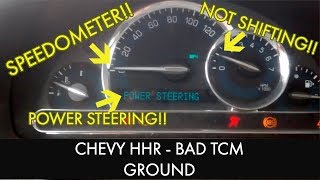
- Instrument cluster gauges behaving erratically (e.g., speedometer dropping to zero)
- "Power Steering" message appearing on the driver information center
- Significant loss of engine power or 'limp mode'
- A large number of other, seemingly unrelated, trouble codes may be present
- Poor fuel economy
- Replacing individual sensors (like O2 or MAP sensors) based on other codes that appear alongside P0602. Often, a flood of conflicting codes is a symptom of the ECM failure itself, not the cause.
- Condemning the ECM without first thoroughly testing the battery, charging system, and all power/ground connections to the module.
Most Likely Causes
- Engine Control Module (ECM) was replaced but not programmed 🔴 High Probability → Shop Engine Control Module (ECM) The ECM is specific to the vehicle's VIN and options. A used or new 'blank' ECM must be programmed to the car before it will function.
How to confirm: This is the immediate diagnosis if the code appears directly after installing a replacement ECM.
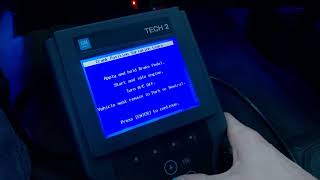
Typical fix: The ECM must be programmed by a dealer or qualified shop using GM's Service Programming System (SPS) software. After installation, an anti-theft and crankshaft variation relearn procedure may also be required. 🎬 See this walkthrough on reprogramming a replacement Cobalt PCM
Est. part cost: $0 (Programming labor only) - Internal ECM Failure 🟡 Medium Probability Electronic modules can fail over time due to heat cycles and component age. Voltage spikes from other failing components can also damage the ECM.
How to confirm: A technician will attempt to re-flash the ECM. If the process fails or the code returns immediately, the module is likely faulty. This is a process of elimination after verifying all power and grounds are stable.
Typical fix: Replace the ECM and program the new unit to the vehicle's VIN.
Est. part cost: $200-$500 - Poor Battery, Alternator, or Ground Connections 🟡 Medium Probability → Shop Alternator GM vehicles of this era are known for having electrical issues stemming from poor grounds. Voltage fluctuations during cranking or driving can corrupt module memory or cause a failed self-test, triggering P0602.
How to confirm: Test the battery and charging system. Perform a voltage drop test on the main power and ground circuits for the ECM. Visually inspect all ground straps for corrosion or looseness, especially the main engine-to-chassis ground. 🎬 Watch: How to fix a bad TCM ground causing power steering and shifting issues
Typical fix: Clean or replace battery terminals, replace a weak battery, or repair/replace corroded ground straps.
Est. part cost: $10-$200 - Failed or Interrupted ECM Reprogramming Attempt ⚪ Low Probability If a software update is interrupted by a power loss (e.g., weak battery) or tool failure, the ECM can be left in an unprogrammed or 'bricked' state.
How to confirm: This will be known if the code appeared immediately following a service procedure involving a re-flash.
Typical fix: Attempt to reprogram the module again. If it fails, the module may be permanently damaged and require replacement.
Est. part cost: $0-$500
Rare But Worth Checking
- Damaged Wiring Harness: A TSB for the related Chevy HHR notes that the engine harness can chafe against a bracket, causing shorts. It's worth inspecting the Cobalt's harness for similar damage near sharp metal edges or where it passes through the firewall.
- Aftermarket Performance Tune: If the vehicle has a non-factory engine tune, the custom software may have become corrupted or was improperly installed, leading to this code. Restoring the stock tune can sometimes resolve the issue.
- Faulty Ignition Switch: A failing ignition switch, a notorious issue on this platform, can cause momentary power interruptions to the ECM. This can corrupt memory and trigger a P0602 code, even if the switch doesn't fail completely.
Diagnosis Steps
- Scan for all diagnostic trouble codes. Note any communication (U-series) or other ECM-related codes (P0601, P0603, etc.).
- Crucially, test the battery and charging system. Ensure battery voltage is above 12.4V with the engine off and between 13.7-14.7V while running. Clean any corrosion from the battery terminals. A weak or unstable power supply is a common cause of module errors.
- Verify recall status. Check the vehicle's VIN for open recalls, especially the ignition switch recall (e.g., GM #14133). A faulty ignition switch can cause intermittent power loss to the ECM, leading to this code.
- Inspect all ECM-related fuses. Check the underhood fuse block for any blown fuses related to the ECM or PCM.
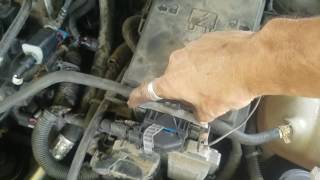
- Inspect ECM power and ground connections. Locate the ECM (typically in the engine bay, near the firewall on the driver's side) and verify its connectors are clean and secure. Perform a voltage drop test on the ground wires to ensure a solid connection to the chassis.
- Inspect the wiring harness. Carefully check the harness leading to the ECM for any signs of chafing, melting, or corrosion, paying close attention to where it might rub against engine brackets.
- Attempt to reprogram the ECM. This step requires a professional scan tool (like a GM Tech 2 or equivalent) and a subscription to GM's programming software. A technician will attempt to re-flash the ECM with the latest factory calibration.
- Replace the ECM. If reprogramming fails, or if the ECM is determined to be internally faulty, it must be replaced. The new ECM must then be programmed to the vehicle's VIN. Post-installation, a Case/Crankshaft Variation Relearn and security/anti-theft relearn will be necessary. 🎬 Watch: How to perform a crankshaft variation learn procedure
Parts You'll Likely Need
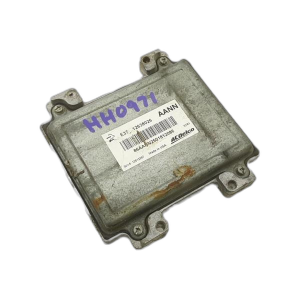
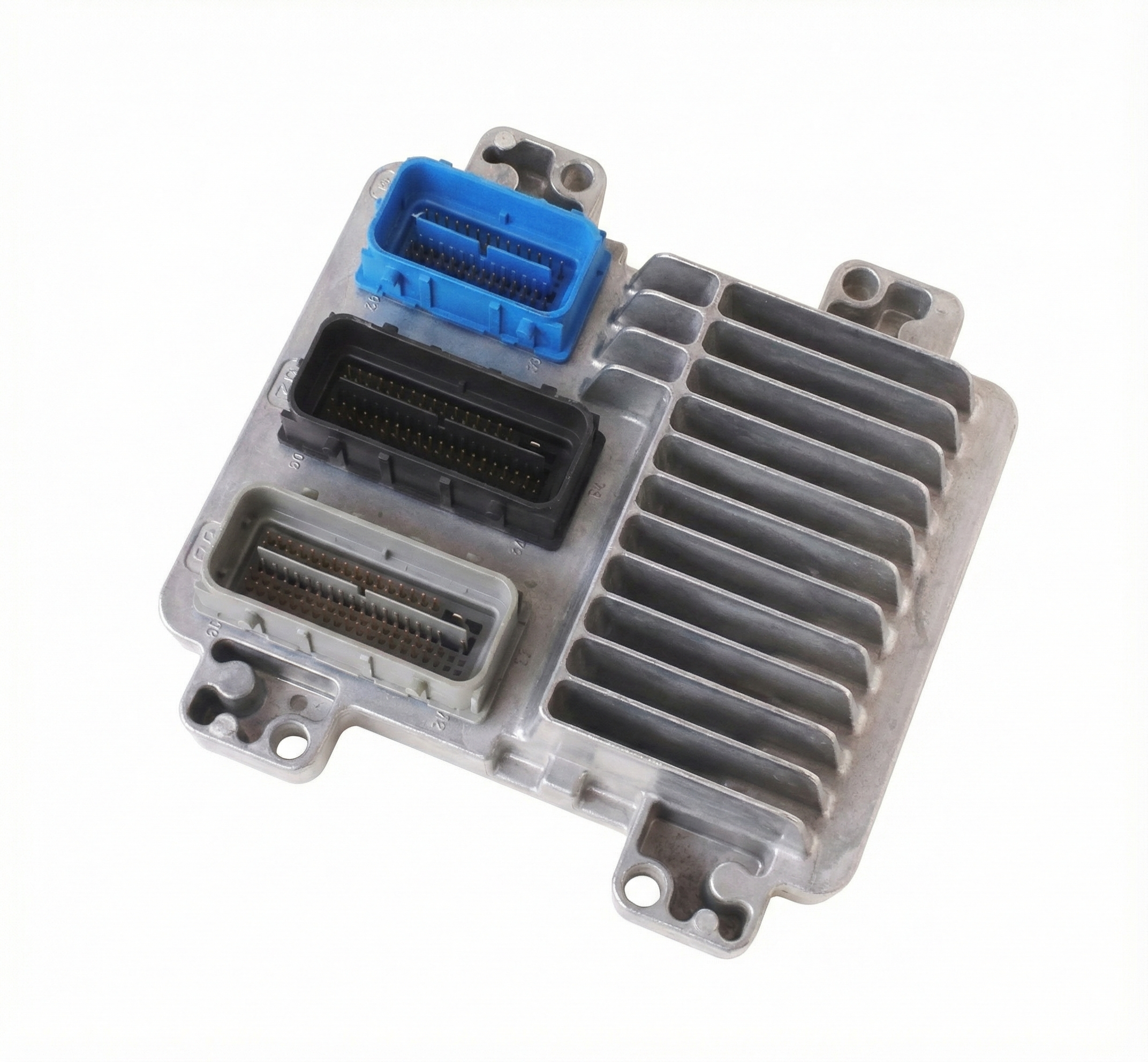
- Engine Control Module (ECM/PCM)
(OEM #Varies by VIN. Examples: 12612397, 12597125 (2007 2.2L), 12624433 (2007 2.2L), 12600884 (2005-06), 12629019, 12611549.)— This is the part that stores the programming. If it fails internally or cannot be reprogrammed, it must be replaced.
Trusted brands: ACDelco (OEM), Cardone (Remanufactured), FS1 (Remanufactured), Flashmasters (Remanufactured/Programmed)
OEM price range: $350-$500
Aftermarket price range: $200-$400
Related Codes That Often Appear With This One
- U-codes (e.g., U0100, U0101) — U-codes indicate a loss of communication between modules. A faulty ECM can't talk to other modules on the vehicle's network, like the Transmission Control Module (TCM) or Body Control Module (BCM), triggering these codes.
- P0603 (Keep Alive Memory Error) — This code often appears after the battery has been disconnected or if there's an intermittent power supply issue to the ECM, which is a direct cause of memory corruption that can also lead to P0602.
Platform-Specific Known Issues
- The 2005-2010 Cobalt was subject to a major safety recall for a faulty ignition switch (GM Recall #14133 and several related campaigns). A failing ignition switch can cause the key to move out of the 'Run' position, causing intermittent power loss to various modules, including the ECM. This power fluctuation can directly cause data corruption within the ECM, leading to codes like P0602. Verifying this recall has been performed is a mandatory diagnostic step.
Technical Service Bulletins (TSBs) & Recalls
- TSB Bulletin #05-06-04-060A: This manufacturer bulletin provides information to technicians regarding control module Diagnostic Trouble Codes (DTCs) including P0601, P0602, P0603, P0604, P0606, P062F, P06F3, and P1621, noting that these codes can be shared across multiple modules within the electrical system.
Mechanic-Grade Diagnostic Values
- ECM/PCM Ground Circuit Voltage Drop — expected: 0.1 Volts or less. Failure: A reading greater than 0.3V indicates high resistance in the ground circuit, often due to corrosion or a loose connection.
- CAN Bus Line Voltage (at DLC, Key On) — expected: CAN High (Pin 6) should be ~2.5-2.6V and CAN Low (Pin 14) should be ~2.2-2.4V.. Failure: Voltages that are stuck high, low, or do not add up to approximately 5V indicate a network problem. A reading of ~60 Ohms between Pin 6 and Pin 14 (battery disconnected) is expected; ~120 Ohms indicates a break in the network or a missing terminating resistor (one is in the ECM).
- Battery Voltage During Programming — expected: Stable voltage above 12.5V, ideally maintained by a dedicated programming power supply.. Failure: Voltage dropping below 12.0V during the flashing process can interrupt the procedure and corrupt the module, causing a P0602 code.
Scan Tool Commands That Help
- GM Tech 2 / GDS2 / Professional Bidirectional Scanner: Crankshaft Position System Variation Learn (CASE Relearn) — This procedure is mandatory after replacing or reprogramming the ECM. Failure to perform it will result in a P0315 code and a persistent Check Engine Light, as the ECM cannot accurately detect engine misfires without learning the minor variations of the specific engine's crankshaft reluctor wheel.
- PC with J2534 Pass-Thru Device: Service Programming System (SPS) - ECM Reprogramming — This is the primary function used to flash a new or used ECM with the correct VIN-specific software from GM's servers. It is used to fix software corruption or to program a replacement module. A stable power supply is critical during this process.
- GM Tech 2 / GDS2: Security Relearn / Immobilizer Setup — After installing a replacement ECM, the vehicle's anti-theft system must be synchronized with the new module. This often involves a specific sequence of key cycles over a period of about 30 minutes. Without this, the vehicle will not start.
Wiring & Ground Locations
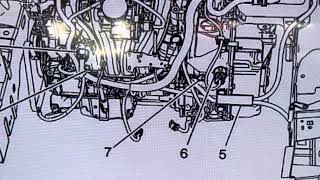
- ECM/PCM Location — In the engine compartment, on the driver's side, typically in front of the underhood fuse block and near the strut tower.. Physical access is required to inspect connectors for corrosion, verify power/ground with a multimeter at the pins, and to replace the module.
- G105 / G107 — On the lower left front of the transmission case. A major ground point for multiple engine components.. This ground point is shared by the ECM/PCM, Transmission Control Module (TCM), and other critical sensors. Corrosion or looseness here is a very common cause of intermittent module behavior and data corruption on the Cobalt platform.
- G101 — On the left side of the engine compartment, under the coolant reservoir.. This ground serves the Engine Control Module and Mass Air Flow sensor. A poor connection can cause erratic sensor readings and contribute to module instability.
- G103 — Located at the left front of the engine compartment, under the driver's side headlamp assembly.. This is a primary chassis ground point. A ground cable often runs from the G105 stud on the transmission to G103, making its integrity critical for the entire ECM ground path.
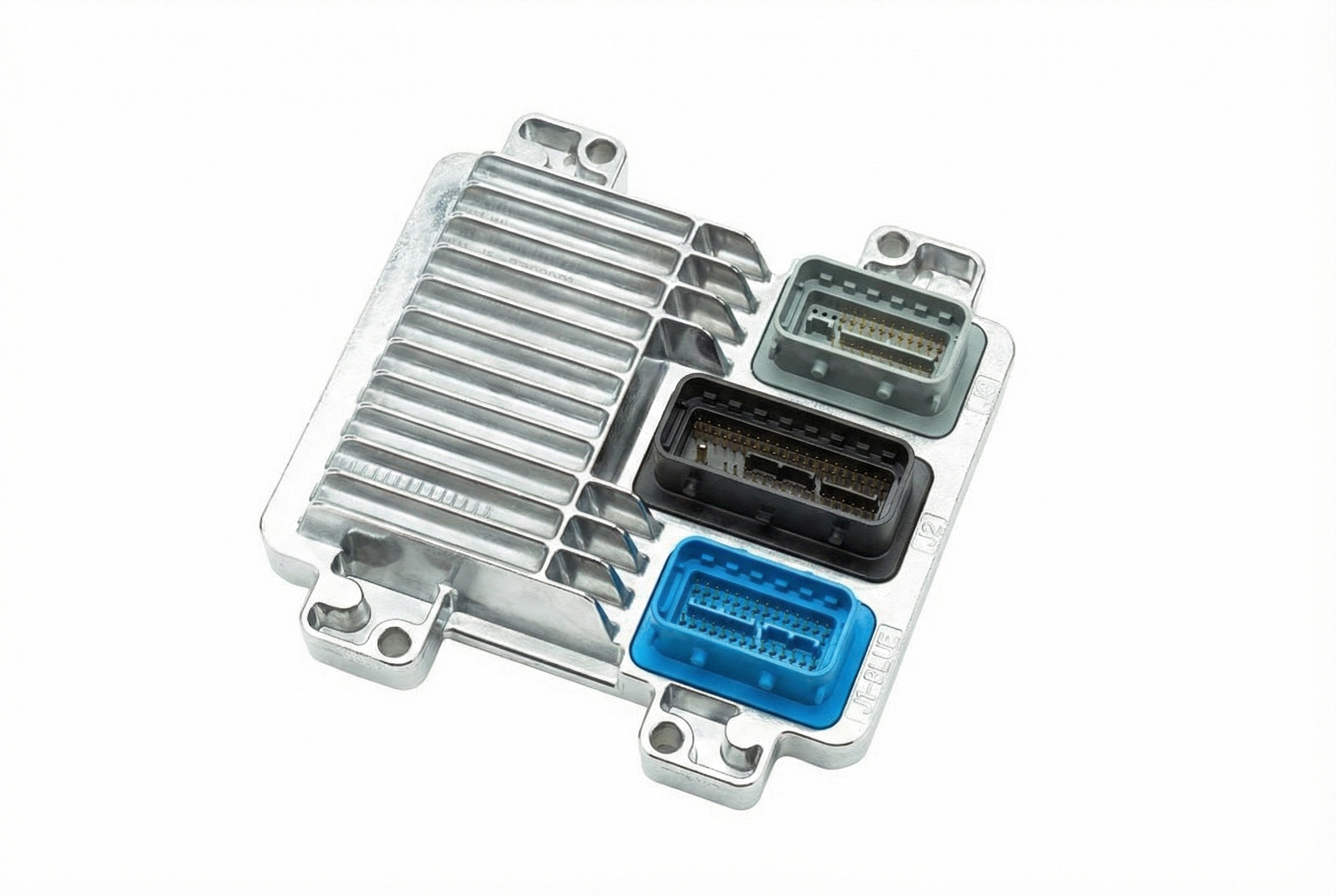
- ECM Connectors (X1/X2/X3) — The main harness connectors plugging into the ECM module.. Verifying power and ground directly at the ECM is the definitive test. For a typical E37 ECM, key pins on the X1 connector include Pin 20 (Battery Positive Voltage, RD/WH wire) and Pin 19 (Ignition Voltage, PK wire). Multiple ground pins (BK/WH wires) exist across the connectors that must be checked for continuity to chassis ground.
OEM Part Supersession History
12594750, 12597125→12612397— Standard part evolution, likely for improved components or manufacturing process.
Heads up: While the newer part number (12612397) replaces the older ones, it must be programmed with the correct software calibration for the specific vehicle's VIN and options. They are not plug-and-play.
Model Year Variations Within This Range
- 2005-2007 vs 2008-2010: The ECM hardware and connectors can vary. Early models (2005-2007) often used a three-connector ECM (C1/C2/C3). Later models, particularly the 2.0L LNF Turbo SS, used different ECMs (like the E67) with different connector configurations (e.g., a 96-way X1 and a 58-way X2). While the P0602 diagnosis is similar, wiring diagrams and pin-out testing procedures must match the specific year and engine.
Diagnostic Flowchart
Other Known Issues on This Vehicle
Issues unrelated to this code that are worth knowing about as an owner of this generation:
- Faulty Ignition Switch 🔴 High — Extremely widespread, affecting millions of vehicles. The switch can move out of the 'Run' position, shutting off the engine and disabling airbags. (Ref: GM Recalls #14133, #14113, #14063, #14092.)
- Electric Power Steering (EPS) Failure 🔴 High — Very common, leading to a sudden loss of power steering assist, making the vehicle difficult to steer at low speeds. (Ref: GM Recalls #10V073000, #14V153000.)
- Cracked Fuel Pump Module 🟠 Medium → Shop Fuel Pump — Common in vehicles from warmer climates, the plastic port on the fuel pump module can crack, causing a fuel leak and potential fire hazard. (Ref: GM Recall #09V419000.)
- Timing Chain Tensioner Failure 🟠 Medium — Owners report a rattling noise on cold starts. If not addressed, the timing chain can skip or break, causing significant engine damage.
- Faulty Shifter Cable 🟡 Low — The shifter cable can fail, preventing the key from being removed from the ignition or causing the vehicle not to shift into the selected gear. (Ref: A recall was issued for some vehicles to install a corrective clamp.)
Used vs. New Parts: Buying Guide for This Vehicle
When a used part is the smart pick: A used ECM from a salvage yard is a very common and cost-effective repair strategy for this vehicle, as the part itself is often not the point of failure (programming or external electrical issues are). A used module can be programmed to the vehicle just like a new one.
Donor-vehicle mileage cap: roughly under 150000 miles for the part to have meaningful remaining life.
What to inspect on the donor part:
- Ensure the part number is an exact match or a documented superseded number for your original ECM.
- Inspect the connectors for any bent, corroded, or pushed-out pins.
- Avoid modules from vehicles with obvious flood or fire damage.
- If possible, get the VIN of the donor car to check its original configuration (engine, transmission).
OEM-only on this vehicle (don't cheap out):
- Engine Control Module (ECM/PCM). While remanufactured units are available, there is no true 'aftermarket' ECM that doesn't start from an OEM core. Avoid no-name, unbranded modules from online marketplaces without a warranty or programming support.
Aftermarket brands forum-validated for this vehicle:
- ACDelco (Remanufactured OEM)
- Cardone (Remanufactured)
- Flashmasters (Often sold pre-programmed to your VIN)
- FS1 (Flagship One)
Brands owners have reported issues with on this vehicle:
- Any seller that cannot or will not program the module to your vehicle's VIN before shipping should be treated with caution. A 'blank' module is useless without the tools to program it.
Real Owner Stories
Aggregated from forums and TSBs cited above. Mileages and costs reflect what owners reported in those sources.
2010 Chevrolet Cobalt
Symptoms: The vehicle exhibited erratic gauges and harsh shifting in the automatic transmission.
What fixed it: Replacement of the ECM with a new unit programmed specifically to the vehicle's VIN.
Source hint: YouTube (Edvancise)
2005-2010 Chevrolet Cobalt
Symptoms: A flood of conflicting and seemingly unrelated trouble codes appeared at once.
What fixed it: Checking and cleaning the electrical grounds, as recommended by dealer diagnostic steps for this platform.
Source hint: cobaltss.net
2005-2010 Chevrolet Cobalt
Symptoms: The ECM triggered a memory-related code (P0603) immediately after the battery was disconnected for exhaust work.
What fixed it: This case illustrated the ECM's extreme sensitivity to power loss and interruptions, which is a known root cause for P0602 memory corruption.
Source hint: cobaltss.net
Related OBD-II Codes
Frequently Asked Questions
Could the major ignition switch recall on my 2005-2010 Chevrolet Cobalt be related to the P0602 code?
I just installed a replacement ECM in my Cobalt and now I have a P0602 code. Did I buy a bad part?
My Cobalt is showing a 'Power Steering' message and erratic gauges along with P0602. Are these related?
Can a weak battery cause a P0602 code on a 2005-2010 Cobalt?
What additional steps are needed after I have the ECM programmed to fix P0602?
Helpful Videos

We Have This Part in Stock

The information in this article is provided for general reference and educational purposes only. Vehicle specifications, procedures, and part compatibility can vary by production date, trim level, and region. Always consult your vehicle's factory service manual and verify part numbers before purchasing or performing repairs. Safety-critical components such as airbags, seat belts, and braking systems should be installed by a qualified professional.
- Chevrolet Cobalt:
- 🧭 Diagnostic Flowchart
- 🎬 Helpful Videos
- 🛍️ Shop This Part
- What's Unique About the 2005-2010 Chevrolet Cobalt
- Symptoms You May Notice
- Most Likely Causes
- Rare But Worth Checking
- Diagnosis Steps
- Parts You'll Likely Need
- Related Codes That Often Appear With This One
- Platform-Specific Known Issues
- Technical Service Bulletins (TSBs) & Recalls
- Mechanic-Grade Diagnostic Values
- Scan Tool Commands That Help
- Wiring & Ground Locations
- OEM Part Supersession History
- Model Year Variations Within This Range
- Other Known Issues on This Vehicle
- Used vs. New Parts: Buying Guide for This Vehicle
- Real Owner Stories
- 2010 Chevrolet Cobalt
- 2005-2010 Chevrolet Cobalt
- 2005-2010 Chevrolet Cobalt
- Related OBD-II Codes
- Frequently Asked Questions
- 🎟️ Get 5% Off