

P0602 on 2007-2014 Chevrolet Tahoe: Control Module Programming Error Explained
P0602 on a 2007-2014 Tahoe means the Engine Control Module (ECM) has a programming or internal software error. This almost always requires professional service to reprogram or replace the ECM. Expect costs to range from $200 for a reflash to over $800 for a replacement. Bad grounds or a faulty Fuel Pump Control Module (FPCM) can be related causes.
- P0602 indicates a software or internal hardware problem with your Tahoe's Engine Control Module (ECM).
- This is not a DIY fix. You will need a professional with GM-specific programming tools to diagnose and repair it.
- Do not drive the vehicle. It is unsafe due to the risk of stalling or not starting.
- Before condemning the ECM, thoroughly check and test the battery, battery cables, and all major power and ground connections, as these are common failure points on the GMT900 platform.
What's Unique About the 2007-2014 Chevrolet TAHOE
For the GMT900 platform Tahoe (2007-2014), the P0602 code is often linked to either a failed reprogramming attempt or an internal failure of the E38 ECM itself. These vehicles are now at an age where electronic components can fail due to heat cycles and time. A common point of failure on this platform is also the battery cables, which can develop internal corrosion, and body/frame ground points, which can become loose or corroded, leading to the unstable voltage that triggers module errors. The issue is rarely a simple wiring problem in the harness itself; it almost always points back to the software inside the control module or the quality of its power and ground supply.
Diagnostic Flowchart
Tap your situation to follow the diagnostic path that matches what you're seeing on this vehicle.
Symptoms You May Notice
- Check Engine Light is on.
- Vehicle will not start (cranks but no fire).
- Intermittent no-crank, no-start condition.
- Engine stalls or idles roughly.
- Reduced engine performance or 'limp mode'.
- Harsh or erratic automatic transmission shifting.
- Decrease in fuel economy.
- Loss of communication with ECM/TCM on scan tool.
- Other warning lights on, like ABS or Stabilitrak, due to network communication faults.
- Replacing other components like fuel injectors or ignition coils before verifying the ECM's integrity. The symptoms of P0602 can mimic other system failures, but the code itself points directly to the control module.
- Replacing the fuel pump for a no-start condition without checking for codes in the ECM and FPCM first. A P0602 can prevent the ECM from commanding the fuel system to operate.
Most Likely Causes
- Failed or Interrupted ECM Programming 🔴 High Probability This often occurs if a previous repair involved an attempt to update or flash the ECM and the process was interrupted, for example, by a drop in battery voltage or loss of connection with the programming tool.
How to confirm: A professional technician must use a J2534 pass-thru device and a GM service subscription (TIS2Web/Techline Connect) to attempt to communicate with and reprogram the ECM. If the module accepts the flash, the problem is solved.
Typical fix: Reprogramming the ECM with the correct, VIN-specific software.
Est. part cost: $0 (if reprogramming is successful) - Defective Engine Control Module (ECM) 🟡 Medium Probability → Shop Engine Control Module (ECM) After years of service, the internal memory or processors of the E38 ECM can fail due to heat and vibration, leading to corrupted data. This is a known failure mode for aging electronics.
How to confirm: If the ECM fails to accept a reprogram, cannot communicate with the scan tool, or the P0602 code returns immediately after a successful flash, the module itself is considered faulty.
Typical fix: Replacement of the ECM, followed by programming the new module to the vehicle's VIN.
Est. part cost: $300-$700 - Poor Power or Ground Connection to ECM 🟡 Medium Probability GMT900s are known for battery cables that corrode internally, causing voltage drops under load even if they look fine. Key ground straps from the engine to the frame and body (G104, G108) can also loosen or corrode, causing unstable voltage to the ECM and triggering programming errors.
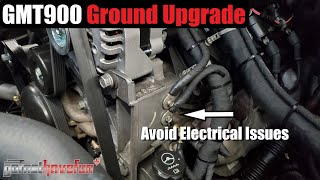
How to confirm: Test the battery and charging system. Perform a voltage drop test on the main positive and negative battery cables; a drop of more than 0.5 volts indicates a problem. Inspect and clean the main ECM ground points on the rear of the driver's side cylinder head (G104) and the strap from the firewall to the engine. 🎬 Watch: How to upgrade and fix common GMT900 ground issues.
Typical fix: Clean or replace corroded terminals, replace faulty battery cables (positive and negative), or repair the faulty ground strap. This is a common fix discussed in owner forums.
Est. part cost: $50-$250 - Aftermarket Performance Tune Issues ⚪ Low Probability Installing a non-OEM performance tune can sometimes corrupt the ECM's software, be written incorrectly, or be incompatible, triggering a P0602 code. This is especially true if the tuner is not experienced with the GM E38 ECM.
How to confirm: Determine if the vehicle has an aftermarket tune. If so, attempting to flash the ECM back to the stock GM software will confirm the issue.
Typical fix: Remove the aftermarket tune and restore the factory ECM programming.
Est. part cost: $0
Rare But Worth Checking
- Faulty Fuel Pump Control Module (FPCM): → Shop Fuel Pump
Diagnosis Steps
- Scan for All Codes: Use a professional scan tool capable of reading all modules (ECM, TCM, BCM, FPCM, etc.). Note any other codes, especially U-codes or codes in other modules.
- Check Battery and Charging System: Ensure the battery voltage is stable and above 12.4V. Test the alternator output. Unstable voltage is a primary cause of module errors.
- Inspect Power and Ground Connections: Visually inspect the ECM connectors for corrosion or damage. Critically, perform a voltage drop test on the main battery cables, as they can corrode internally. Locate and clean the main engine-to-chassis ground strap (G108) and the grounds on the cylinder heads (G103, G104).
- Attempt to Reprogram ECM: This is the primary diagnostic step. A technician will connect a J2534 programming tool and attempt to re-flash the ECM with the latest GM software for your vehicle's VIN. Ensure a stable power supply (battery charger) is connected during this process. 🎬 See a step-by-step guide on programming a GM ECM.
- Evaluate Reprogramming Result: If the reprogramming completes successfully, clear all codes and test drive the vehicle. If the code does not return, the issue is resolved.
- Diagnose ECM Failure: If the ECM will not communicate, the reprogramming fails repeatedly, or the code returns instantly, the ECM itself is defective and must be replaced.
- Replace and Program New ECM: Install a new or remanufactured ECM. The new module must then be programmed with the vehicle's specific information (VIN, mileage, options) and may require a security relearn procedure.
Parts You'll Likely Need
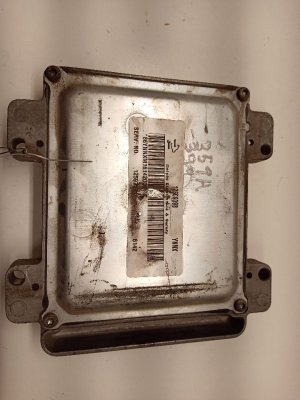
- Engine Control Module (ECM/PCM)
(OEM #12612384, 12633238, 12654074 (Part numbers vary by year and engine; always verify with VIN))— This is the most common part needed when reprogramming fails, as the code indicates an internal fault within the module itself.
Trusted brands: ACDelco (OEM), Cardone (Remanufactured)
OEM price range: $413-$434
Aftermarket price range: $300-$500
Related Codes That Often Appear With This One
- P0601 — This code means 'Internal Control Module Memory Check Sum Error' and is a very similar internal fault within the ECM, often appearing alongside P0602.
- U-codes (e.g., U0100) — U-codes indicate a loss of communication between modules. A faulty ECM can stop communicating on the vehicle's network, triggering these codes alongside P0602. This was seen in a forum thread where a user lost communication with the ECM and TCM.
- P069E — This code indicates 'FPCM Requested MIL Illumination'. It can be set in the ECM when the Fuel Pump Control Module (FPCM) detects a fault, which could be a programming error like P0602 within the FPCM itself.
Technical Service Bulletins (TSBs) & Recalls
- 05-06-04-060A: An informational bulletin from GM noting that P0602 is a control module diagnostic code that can appear in multiple modules, confirming its nature as a programming or internal fault.
Platform-Specific Known Issues
- Intermittent No-Crank/No-Start with Communication Loss: A 2008 Yukon Denali owner on TahoeYukonForum.com reported an intermittent no-crank/no-start condition accompanied by erratic door lock behavior and multiple warning lights. After cleaning battery terminals and the main mega fuse, the problem persisted, and they lost communication with the ECM and TCM. This points to a severe power supply or ground issue affecting the entire CAN network, which can manifest as a P0602 if the ECM loses its programming or cannot initialize due to unstable voltage. The suggested fixes included checking all main ground points and performing voltage drop tests on battery cables.
- Crank-No-Start After PCM Reprogramming: An owner on TahoeYukonForum.com reported a crank-no-start condition immediately after having their PCM returned from an AFM delete service. The initial thought was a fuel pump issue, but forum members suggested the problem was more likely related to the PCM programming or a security relearn procedure that was missed after the flash.
Mechanic-Grade Diagnostic Values
- CAN Bus Network Resistance — expected: Approximately 60 Ohms. Failure: A reading of 120 Ohms indicates a missing terminating resistor. A reading near 40 Ohms suggests an extra resistor is present. A reading of 0 or infinite Ohms indicates a short or open in the wiring.
- CAN Bus Voltage (Key On, Engine Off) — expected: CAN-Hi (Pin 6) to Ground: ~2.5-3.0V. CAN-Lo (Pin 14) to Ground: ~2.5-2.0V.. Failure: Voltages that are stuck at 0V, 5V, or 12V, or both lines showing the exact same voltage (e.g., 2.6V), indicate a wiring short, a failed module pulling the bus down, or a faulty transceiver.
- ECM Power/Ground Voltage Drop — expected: Less than 0.5 Volts. Failure: A voltage reading higher than 0.5V indicates high resistance in the power feed or ground circuit, which can cause module instability.
Scan Tool Commands That Help
- GM MDI/MDI2 with GDS2/Techline Connect: Service Programming System (SPS2) — This is the main function used to fix a P0602. It allows for either updating existing software ('Reprogram Control Module') or installing software on a new module ('Replace and Program Control Module').
- GM Tech2/Tech2Win (for 2007-2013 models): Program ECM / Reprogram PCM — This is the legacy tool function for flashing the E38 ECM. It requires a connection to TIS2Web to download the correct calibration file for the vehicle's VIN.
Wiring & Ground Locations
- G103 — On the front of the passenger side (right) cylinder head.. Provides a primary ground point for various engine components. While not the main ECM ground, poor contact here can introduce electrical noise.
- G104 — On the left rear corner of the engine, mounted to the driver's side (left) cylinder head.. This is a critical ground point for the engine harness and is often shared by the ECM. A loose or corroded G104 is a high-probability cause for intermittent electronic issues, including P0602.
- G108 — A ground strap running from the firewall (cowl) to the back of the driver's side (left) cylinder head, often near G104.. This strap ensures the engine block has a solid ground connection to the vehicle's body/chassis, which is essential for stable ECM operation.
- ECM Connector X1, Pin 20 — The larger of the two main connectors on the E38 ECM.. This is a primary Battery Positive Voltage feed. A voltage drop test should be performed on this pin.
- ECM Connector X1, Pins 27 & 28 — The larger of the two main connectors on the E38 ECM.. These are the High Speed GMLAN (CAN Bus) Serial Data pins (+ and -). This is where the ECM communicates with all other modules. Resistance and voltage checks can be performed here.
Real Owner Repair Stories
- Synthesized from Chevrolet Forum and Reddit user reports (2008 Chevrolet Tahoe 5.3L) — Intermittent crank-no-start. Sometimes it would start fine, other times it would just click. When it failed to start, the check engine light was on with code P0602. Sometimes other warning lights would flash randomly.
❌ Tried (didn't work) Replacing the battery., Replacing the starter relay., Having the ECM reprogrammed at a shop (worked for a week, then the problem returned).
✅ What actually fixed it The ground strap from the firewall to the back of the driver's side cylinder head (G108) was corroded and the bolt was slightly loose. The contact points were removed, cleaned with a wire brush until shiny, and re-secured tightly. This provided a stable ground to the ECM and resolved the intermittent no-start and P0602 code.
OEM Part Supersession History
12597121, 12612384→12633238, 12625455— Standard hardware and software revisions by GM over the production life.
Heads up: While physically interchangeable, E38 ECMs from different model years (e.g., an '08 vs a '10) often have different operating systems and CAN message structures. Flashing an ECM with an incompatible year's OS can cause it to fail or lose communication with other modules like the TCM. Always use an ECM designated for the correct model year.
Model Year Variations Within This Range
- 2007: 2007 was a transition year. 'New Body Style' (NBS) Tahoes use the Gen IV engine with the E38 ECM. The older 'Classic' body style trucks used a Gen III engine with a different Powertrain Control Module (PCM). This diagnosis applies only to the NBS GMT900 platform.
- 2009-2014 vs 2007-2008: The operating systems (OS) and the way variable data is stored in the flash memory changed around 2009. Because of this, an ECM from a 2009+ vehicle cannot be successfully programmed and used in a 2007-2008 vehicle, and vice-versa, even if they are both E38s. The modules on the CAN bus expect year-specific message formats.
- 2014: The official GM diagnostic software transitioned from Tech2Win to GDS2 for the 2014 model year. While a J2534 device can still be used, a technician at a dealership would use GDS2 on a 2014 Tahoe but Tech2Win on a 2013 model.
Helpful Videos

Used OEM Parts in Stock
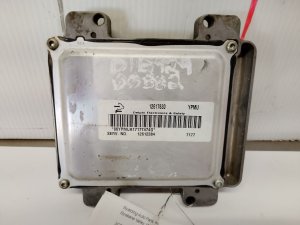
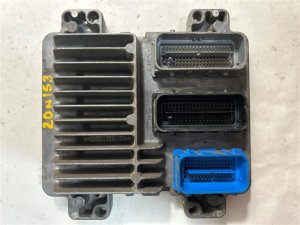
New Aftermarket Parts Available

The information in this article is provided for general reference and educational purposes only. Vehicle specifications, procedures, and part compatibility can vary by production date, trim level, and region. Always consult your vehicle's factory service manual and verify part numbers before purchasing or performing repairs. Safety-critical components such as airbags, seat belts, and braking systems should be installed by a qualified professional.
- Chevrolet TAHOE:
- 🧭 Diagnostic Flowchart
- 🎬 Helpful Videos
- 🛍️ Shop This Part
- What's Unique About the 2007-2014 Chevrolet TAHOE
- Symptoms You May Notice
- Most Likely Causes
- Rare But Worth Checking
- Diagnosis Steps
- Parts You'll Likely Need
- Related Codes That Often Appear With This One
- Technical Service Bulletins (TSBs) & Recalls
- Platform-Specific Known Issues
- Mechanic-Grade Diagnostic Values
- Scan Tool Commands That Help
- Wiring & Ground Locations
- Real Owner Repair Stories
- OEM Part Supersession History
- Model Year Variations Within This Range
- 🎟️ Get 5% Off