

P0602 on 2009-2015 Chevrolet Traverse: Control Module Programming Error Guide
P0602 on a Chevy Traverse means the Engine Control Module (ECM) has a programming error, often because it was replaced and not programmed to the vehicle's VIN. This is not a DIY fix; it requires specialized dealer tools to reprogram or replace the ECM. This issue is also common on its platform mates: the Buick Enclave, GMC Acadia, and Saturn Outlook.
- P0602 means the 'brain' of your Traverse is unprogrammed, which is a serious issue preventing the vehicle from running correctly.
- This is not a DIY repair. It requires dealer-level tools and software subscriptions for programming.
- The most common cause is a recently replaced ECM that was not programmed to the vehicle's VIN.
- Before condemning the ECM, ensure the battery is fully charged and connections are clean, as voltage issues can cause this code or make programming fail.
- This problem is shared across the entire GM Lambda platform, including the Buick Enclave, GMC Acadia, and Saturn Outlook.
What's Unique About the 2009-2015 Chevrolet TRAVERSE
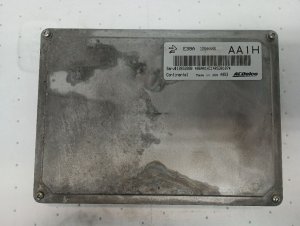
For this generation of Chevrolet Traverse and its GM Lambda platform mates (Buick Enclave, GMC Acadia, Saturn Outlook), the P0602 code is often straightforward. It almost always points to an issue with the ECM's software, not a random sensor failure. These vehicles typically use an ACDelco E39 series ECM which must be programmed with vehicle-specific information. GM issued a technical service bulletin (TSB #05-06-04-060A) that groups P0602 with other internal control module fault codes 🎬 Watch: Troubleshooting a Traverse ECM with no communication issues., acknowledging that these programming and internal errors can occur across various modules. This indicates a known sensitivity in the vehicle's electronic architecture, making proper diagnostic and programming procedures especially critical.
Diagnostic Flowchart
Tap your situation to follow the diagnostic path that matches what you're seeing on this vehicle.
Symptoms You May Notice
- Check Engine Light is on
- Vehicle will not start, but may crank
- Engine stalls or runs very poorly
- Reduced engine power ('limp mode')
- Transmission may not shift correctly or at all
- Harsh shifting if the vehicle does move.
- Other warning lights (like ABS or Traction Control) may illuminate due to lost communication
- Replacing sensors or other components before checking the ECM's programming status. The code P0602 is very specific to the control module itself and is not caused by a faulty sensor.
Most Likely Causes
- Engine Control Module (ECM) was replaced but not programmed 🔴 High Probability → Shop Engine Control Module (ECM) Modules are often replaced to solve other issues, but programming is a required final step that is sometimes missed. The ECM for this platform is not plug-and-play and must be flashed with the specific VIN.
How to confirm: Ask the vehicle owner or check service records for a recent ECM replacement. A professional scan tool can verify if the VIN stored in the ECM is blank, incorrect, or does not match the vehicle's actual VIN.
Typical fix: The ECM must be programmed with the correct software for the vehicle's VIN using a GM-specific programming tool and a subscription to GM's SPS2 service.
Est. part cost: $45 (for programming subscription) + shop labor, $150-$250 for programming service at a shop. - Failed ECM programming attempt 🟡 Medium Probability Programming can be interrupted by low battery voltage, a poor connection to the diagnostic port, or a tool failure. These modules are sensitive to voltage drops during the flashing process.
How to confirm: This is usually known immediately as the code appears right after a programming session. Before re-attempting, ensure the vehicle's battery voltage is stable (above 12.6V) and all connections are secure. Using a battery charger or maintainer is highly recommended.
Typical fix: Re-attempt the programming procedure after stabilizing the vehicle's voltage with a battery charger/maintainer.
Est. part cost: $0 - Internal ECM failure ⚪ Low Probability While less common, the internal memory (EEPROM) of the module can fail, preventing it from storing its programming. This can happen due to age, heat cycles, or voltage spikes.
How to confirm: If multiple, verified programming attempts fail with stable voltage and good connections, the ECM itself is defective. This is a diagnosis of exclusion.
Typical fix: Replace the Engine Control Module and have the new unit professionally programmed to the vehicle.
Est. part cost: $300-$700 - Poor power or ground connection to the ECM ⚪ Low Probability Corrosion or damage to the wiring harness, particularly at the ECM connectors or main chassis ground points, can interrupt power, causing the ECM to lose its memory or fail to operate.
How to confirm: Inspect the ECM connectors for corrosion or backed-out pins. Use a multimeter and a wiring diagram to verify stable battery voltage and solid ground connections at the specific ECM power and ground pins.
Typical fix: Repair the damaged wiring or clean the corroded connectors and ground points.
Est. part cost: $5-$50
Diagnosis Steps
- Connect a professional scan tool capable of reading manufacturer-specific codes.
- Verify that P0602 is the primary code. Note any other codes, especially communication (U-codes) or other module errors.
- Attempt to read the VIN from the Engine Control Module. If it is blank, incorrect, or shows garbage characters, it confirms a programming issue.
- If the ECM was recently replaced, proceed directly to programming.
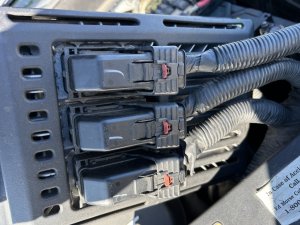
- If the history is unknown, locate and inspect the ECM. On the Traverse, it is typically found in the engine bay, mounted in a bracket next to the vacuum pump. Check its three main connectors for any signs of corrosion, damage, or aftermarket modifications.
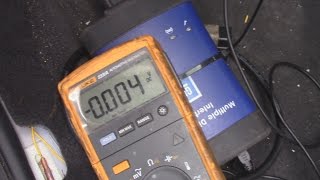
- Check the vehicle's battery and charging system. A stable voltage (12.6V+ engine off, 13.7-14.7V engine on) is critical. Before any programming attempt, connect a battery maintainer to ensure voltage does not drop.
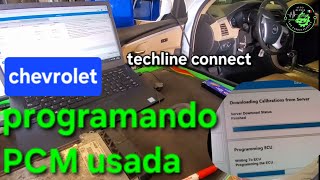
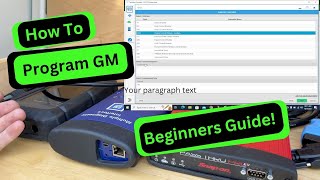
- Using a GM-approved pass-thru device (like a VCX Nano or MDI) and a subscription to their Techline Connect (SPS2) software, attempt to program the ECM with the latest calibration for the vehicle's VIN.
- If programming completes successfully, clear all codes and perform a test drive. The issue should be resolved.
- If programming fails despite stable voltage and good connections, the ECM itself is likely defective and needs to be replaced.
Parts You'll Likely Need
- Engine Control Module (ECM) Programming Service — This is the most common fix. The existing or newly installed ECM needs to be loaded with the correct vehicle software. A single-VIN subscription via GM's official service site costs around $45, with shop labor making up the rest of the cost.
OEM price range: $150-$250 - Engine Control Module (ECM)
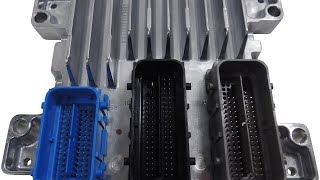
(OEM #Varies by year/VIN. Examples: 12636355, 12651994, 12655478.)— Required if the original ECM has an internal hardware failure that prevents it from accepting or holding a program. This is an ACDelco E39 type module.
Trusted brands: ACDelco
OEM price range: $400-$700
Aftermarket price range: $250-$500
Related Codes That Often Appear With This One
- P0601 — This code means 'Internal Control Module Memory Check Sum Error,' indicating a different type of internal ECM failure.
- U0100 — This code means 'Lost Communication With ECM/PCM.' If the ECM is unprogrammed or has failed, other modules on the vehicle cannot communicate with it.
- P1621 — This is a GM-specific code for 'Control Module Long Term Memory Performance,' which is directly related to the ECM's ability to store data.
Technical Service Bulletins (TSBs) & Recalls
- 05-06-04-060A: An informational bulletin for technicians regarding a group of control module DTCs (P0601, P0602, P0603, P0604, P0606, P062F, P06F3, P1621) that can be set in multiple modules.
Platform-Specific Known Issues
- Per TSB #05-06-04-060A, GM acknowledges that P0602 is part of a family of diagnostic trouble codes related to control module internal faults and programming that can appear in multiple modules on the vehicle.
- This issue is endemic to the GM Lambda platform, affecting the Traverse, Buick Enclave, GMC Acadia, and Saturn Outlook, all of which use a similar ECM and electrical architecture.
Mechanic-Grade Diagnostic Values
- ECM Power Supply Voltage — expected: 9 to 12 volts at the ECM harness connector pins with the key on.. Failure: Voltage below 9V indicates a power supply issue that can prevent proper operation or programming.
- DLC Pin Voltage Check — expected: Pin 16 (Battery Power) to Pin 4 or 5 (Ground) should show full battery voltage (12.6V+).. Failure: Low or no voltage indicates a problem with the power feed to the diagnostic port or a bad ground, which can interrupt programming.
Scan Tool Commands That Help
- GM Techline Connect (SPS2): Replace and Reprogram — This function is used after installing a new or used ECM. It downloads the correct VIN-specific software and calibration files from GM's servers and flashes them to the module.
- GM GDS2 (Global Diagnostic System 2): Module Information / ECU Information — Before attempting any programming, use this function to read the currently stored VIN and software calibration numbers from the module. An incorrect or blank VIN confirms the P0602 diagnosis.
- GM Techline Connect (SPS2): Reprogram — This is used to update the software on an existing, functioning ECM. It can sometimes resolve software corruption issues but will not fix a P0602 on a newly installed, blank module.
Wiring & Ground Locations
- G101 — Located at the front of the engine, lower block. This ground is shared with G106.. This is a primary ground for the Engine Control Module and Transmission Control Module. Corrosion or a loose connection here can cause intermittent power loss to the ECM, leading to memory corruption or programming failures.
- G103 — Located at the left rear of the engine compartment on the cowl, above the brake booster.. This ground serves the Body Control Module (BCM) and the Data Link Connector (DLC). A poor connection at G103 can prevent the scan tool from communicating properly with the vehicle's network during programming.
- G110 — Located on the right rear of the engine, mounted to the back of the cylinder head.. This is another critical engine ground. It is often missed or left disconnected after engine or transmission work, which can lead to various electrical faults, including ECM communication issues.
- G302 — Located at the base of the right-hand B-pillar, under the trim/carpet.. This is a body ground point. In one documented case on a 2015 Traverse, a corroded G302 caused bizarre electrical issues, including problems with the DLC ground circuit, which were resolved by cleaning this ground point.
- ECM Connectors (X1, X2) — On the ECM itself, located in the engine bay near the vacuum pump.. The ECM receives power and ground through specific pins on these connectors. Verifying voltage and ground continuity directly at these pins is the definitive way to rule out a wiring issue before condemning the ECM.
Real Owner Repair Stories
- YouTube user 'Pine Hollow Auto Diagnostics' (2015 Chevrolet Traverse) — Intermittent and bizarre electrical problems, including the dash display changing languages and the rear wiper activating on its own. Problems would disappear when a scan tool was plugged into the DLC.
❌ Tried (didn't work) Initial diagnosis was confusing due to the wide range of seemingly unrelated symptoms.
✅ What actually fixed it The technician diagnosed a bad ground connection. Plugging in the scan tool was completing a ground circuit through the tool itself. The root cause was found to be a corroded ground point, G302, located at the base of the right B-pillar. Cleaning the rust from the ground screw and contact point resolved all issues.
OEM Part Supersession History
Varies by year and engine (LLT vs LFX)→Varies— GM often updates part numbers to reflect software/hardware revisions or changes in manufacturer.
Heads up: It is critical to match the replacement ECM part number to the original or use a verified superseded number. Some services offer 'cloning' where the data from the original module is transferred to a replacement, bypassing the need for VIN matching and programming.
Model Year Variations Within This Range
- 2009-2012 vs 2013-2015: The engine changed from the LLT V6 to the LFX V6 around the 2012-2013 model year. While both are 3.6L, they have different fuel systems and engine management components. This means the ACDelco E39 ECM hardware and, more importantly, the required software calibrations are different. Using an ECM from an LLT engine in an LFX vehicle (or vice-versa) will not work, even if it physically connects.
Helpful Videos
We Have This Part in Stock

The information in this article is provided for general reference and educational purposes only. Vehicle specifications, procedures, and part compatibility can vary by production date, trim level, and region. Always consult your vehicle's factory service manual and verify part numbers before purchasing or performing repairs. Safety-critical components such as airbags, seat belts, and braking systems should be installed by a qualified professional.
- Chevrolet TRAVERSE:
- 🧭 Diagnostic Flowchart
- 🎬 Helpful Videos
- 🛍️ Shop This Part
- What's Unique About the 2009-2015 Chevrolet TRAVERSE
- Symptoms You May Notice
- Most Likely Causes
- Diagnosis Steps
- Parts You'll Likely Need
- Related Codes That Often Appear With This One
- Technical Service Bulletins (TSBs) & Recalls
- Platform-Specific Known Issues
- Mechanic-Grade Diagnostic Values
- Scan Tool Commands That Help
- Wiring & Ground Locations
- Real Owner Repair Stories
- OEM Part Supersession History
- Model Year Variations Within This Range
- 🎟️ Get 5% Off