

P0602 on 2004-2016 Ford F-150: Control Module Programming Error Causes and Fixes
On a 2004-2016 Ford F-150, code P0602 is most often caused by a failed aftermarket performance tune, an unstable power supply (weak battery/bad grounds), or an internal Powertrain Control Module (PCM) failure. The fix is typically to restore the factory tune, fix the underlying power issue, or have a professional re-flash or replace the PCM, which can cost between $80 for a re-flash and over $1,200 for a replacement.
- P0602 is a critical error in your F-150's main computer (PCM); do not continue to drive the vehicle.
- If you have an aftermarket tuner, the first step is to return the truck to its factory tune.
- Before suspecting a bad PCM, always test the battery, alternator, and check for clean, tight ground connections.
- Any repair involving a PCM re-flash or replacement must be done by a professional with the correct equipment.
What's Unique About the 2004-2016 Ford F-150
The Ford F-150 is one of the most popular vehicles for aftermarket performance tuning. Because of this, a significant number of P0602 cases on these trucks are directly related to issues with aftermarket tuners (like SCT, Bully Dog, or 5 Star Tuning) that cause a programming error during or after a custom tune is loaded. While the code can certainly indicate a spontaneously failed PCM, the first question for any F-150 owner seeing this code should be whether the truck has been tuned. Additionally, these trucks can be sensitive to voltage drops, and a weak battery or corroded body ground strap can interrupt programming or normal operation, triggering a P0602 code. A known failure on pre-2010 Triton engines is a shorted coil-on-plug sending a voltage spike back to the PCM, destroying the internal coil driver and often causing this code.
Generation note: This guide covers the 11th (2004-2008), 12th (2009-2014), and the first two years of the 13th (2015-2016) generation F-150. The causes and diagnostic principles for P0602 are consistent across these generations, as they all rely on a programmable PCM. Ford issued a recall (24S37) involving a PCM reprogram for certain 2014 models to prevent an unintended transmission downshift, highlighting the importance of PCM software. TSB 15-0137 also addresses charging system issues on 2009-2014 models that can lead to various electrical faults.
Symptoms You May Notice
- Check Engine Light is on
- Engine will not start (cranks but no fire)
- Engine stalls or idles roughly
- Harsh or erratic automatic transmission shifting
- Reduced engine performance or 'limp mode'
- Decrease in fuel economy
- Battery or charging system warning light may be on
- Multiple other seemingly unrelated trouble codes may appear simultaneously
- Blaming an aftermarket tuner for causing a P0602 code when the actual root cause was a weak battery that failed during the programming process.
- Replacing the PCM without first thoroughly testing the battery, alternator, and all power/ground connections to the module. A corroded ground strap is a much cheaper fix.
Most Likely Causes
- Aftermarket Tune/Programmer Issue 🔴 High Probability F-150s are extremely popular to modify with handheld tuners. An interruption during the flashing process (like low battery voltage) or a bug in the tune file can corrupt the PCM's software.
How to confirm: Check if the vehicle has an aftermarket tuner (e.g., SCT, Bully Dog). If so, use the device to return the vehicle to its stock factory tune. If the code disappears after clearing, the custom tune was the cause.
Typical fix: Reload the stock tune. Contact the tuning company (e.g., 5 Star Tuning, MPT) for a revised file or support. In some cases, the PCM may need to be re-flashed by a dealer to fully restore it if the tuner cannot.
Est. part cost: $0 - Unstable Power Supply (Battery/Alternator/Grounds) 🟡 Medium Probability A weak battery, failing alternator, or corroded ground strap can cause voltage to drop or spike, especially during startup or a programming event, which corrupts the software. Ford specifically warns about maintaining stable voltage (12.6V-13.5V) during PCM programming in its recall documentation.
How to confirm: Test the battery and charging system. A healthy battery should be >12.4V engine off and 13.5-14.8V when running. Visually inspect the main body-to-frame ground straps for corrosion, which are a known failure point. One key ground is located on the firewall, often connecting to the back of the passenger side cylinder head.
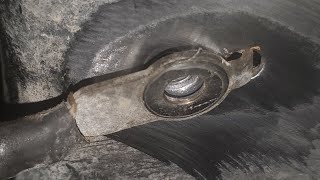
Typical fix: Replace the weak battery, failing alternator, or clean/replace faulty ground straps. A common problematic ground is located on the frame rail under the passenger side. 🎬 Watch: How to fix notorious F-150 body and frame ground issues. Ensure all connections are clean and tight.
Est. part cost: $150-$500 - Failed Powertrain Control Module (PCM) 🟡 Medium Probability → Shop Engine Control Module (ECM) Internal components of the PCM, such as memory chips or drivers, can fail over time due to heat cycles and age, leading to an inability to read its own programming.
How to confirm: This is diagnosed by exclusion. If all power/ground circuits are good, the battery is strong, and a professional re-flash attempt fails to resolve the code, the PCM itself is condemned.
Typical fix: Replace the PCM. The new module must be programmed with the truck's specific VIN and configuration data by a professional using dealer-level software.
Est. part cost: $600-$1200 - Improperly Installed Replacement PCM ⚪ Low Probability If the PCM was recently replaced, this code will appear if the new module was not programmed to the truck's VIN and options, or if a used module was installed without proper flashing.
How to confirm: Use a professional scan tool to check the VIN stored in the PCM. If it is blank, incorrect, or mismatched with the vehicle's actual VIN, the module is not programmed correctly.
Typical fix: The PCM must be professionally programmed using dealer-level software like Ford IDS. This service typically costs $80-$150.
Est. part cost: $0 (labor cost for programming applies)
Rare But Worth Checking
- Wiring Harness or Connector Issue: While less common than PCM or tuning issues, damage to the CAN bus wiring harness or corrosion in the PCM connectors can interrupt communication and trigger programming errors. A visual inspection and wiggle test of the harness near the PCM is worth performing.
Diagnosis Steps
- Scan for all diagnostic trouble codes. Note any other codes that are present, especially communication (U-codes) or other module errors.
- Determine if the vehicle has an aftermarket performance tune. If yes, use the tuning device to return the PCM to the stock program. Clear codes and see if P0602 returns.
- If the vehicle is stock or the code persists, thoroughly test the battery and charging system. Voltage should be stable at >12.4V (engine off) and 13.5-14.8V (engine running). A low or fluctuating voltage can cause this code.
- Inspect all power and ground connections to the PCM. Pay close attention to the main body-to-frame ground straps, as they are known to corrode. One is located on the firewall near the passenger side (G102/G103), and another is on the frame rail. Clean or replace as needed.
- If all wiring and power sources are confirmed to be good, the next step is to attempt a PCM re-flash using a professional scan tool (like Ford IDS). This will update the PCM with the latest factory software and can fix corruption issues. A dealer or qualified shop will charge around $80-$150 for this.
- If the re-flash process fails or the code returns immediately after a successful re-flash, the PCM is faulty and needs to be replaced.
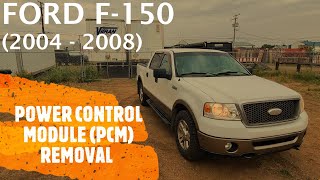
- After installing a new PCM, it MUST be programmed to the vehicle's VIN and specific configuration. This is not a plug-and-play part. 🎬 See this walkthrough on how to remove and replace the PCM. This includes performing a 'Parameter Reset' to sync with the PATS anti-theft system. 🎬 Watch: Professional guide to Ford PCM replacement and software cloning.
Parts You'll Likely Need
- Powertrain Control Module (PCM)
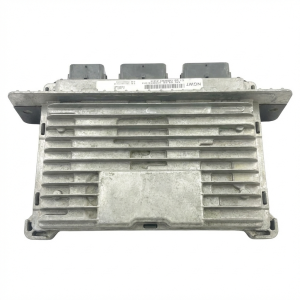
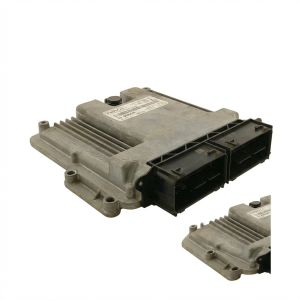
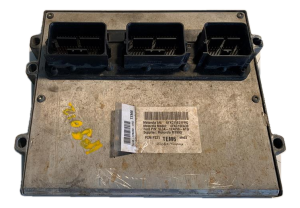
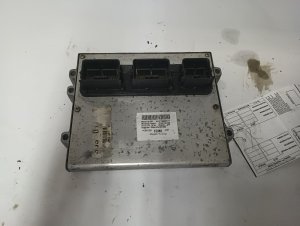
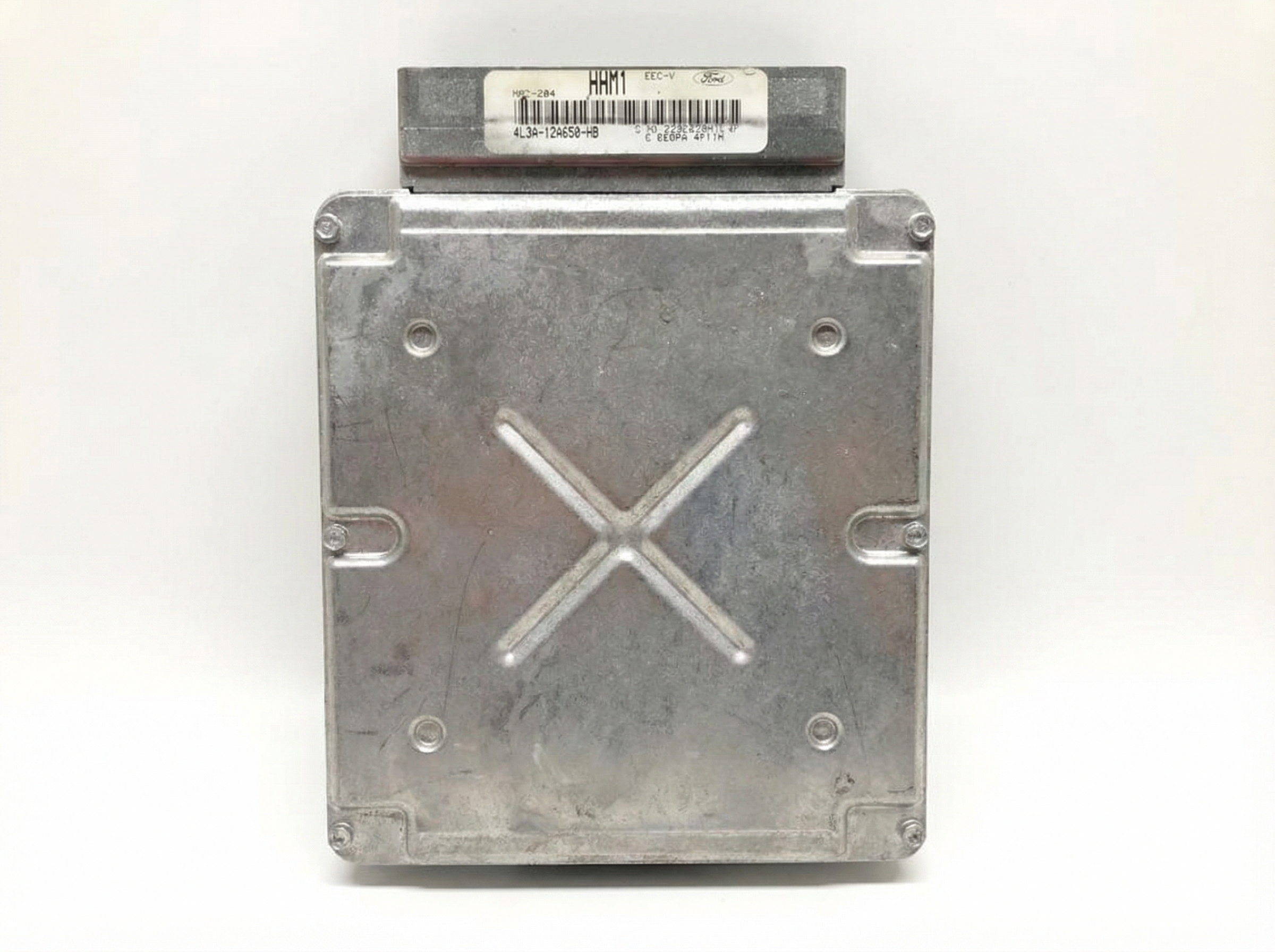
(OEM #DL3A-12A650-PB (Example for 2014 F-150 6.2L), CL3A-12B684-CAA (Example for 2012-13 F-150 5.0L))— This is the part that fails when the code is caused by an internal hardware fault. If a re-flash doesn't work, replacement is the only solution.
Trusted brands: Motorcraft, Cardone (Remanufactured), Flagship One (Remanufactured)
OEM price range: $800-$1200
Aftermarket price range: $400-$800
Related Codes That Often Appear With This One
- P1000 — This is a Ford-specific code indicating that the OBD-II readiness monitors have not yet completed their self-checks. It commonly appears after clearing codes or reprogramming the PCM and will usually clear on its own after a normal drive cycle.
- U0100 — This code means 'Lost Communication With ECM/PCM.' It can appear alongside P0602 if the PCM's internal error is so severe that it stops communicating on the vehicle's network (CAN bus).
- P0605 — Stands for 'Internal Control Module Read Only Memory (ROM) Error.' This is a related but more specific code indicating a failure of the PCM's permanent memory, often seen with P0602.
Technical Service Bulletins (TSBs) & Recalls
- Recall 24S37: For certain 2014 F-150s, addresses an unintended transmission downshift by reprogramming the PCM. The document notably warns technicians about potential PCM programming failures due to unstable battery voltage, reinforcing the link between power supply and PCM health.
- TSB 15-0137: Addresses charging system problems on 2009-2014 F-150s that can cause low voltage conditions (P0562) and other electrical faults that could potentially lead to a P0602 code.
Platform-Specific Known Issues
- Ford has issued multiple recalls and TSBs across its vehicle lines that require PCM reprogramming. Recall 24S37 for the 2014 F-150 is one such example, where the fix for a potential transmission downshift is a PCM software update. The recall notice explicitly warns technicians that PCM programming can fail due to unstable battery voltage.
- TSB 15-0003 for 2011-2014 F-150s with the 3.5L GTDI engine involves reprogramming the PCM and ABS module to address other issues, showing how common software updates are for these trucks.
- Corroded ground straps, particularly the body-to-frame ground on the passenger side, are a recurring problem that can cause a host of electrical issues, including P0602.
Mechanic-Grade Diagnostic Values
- CAN Bus Network Resistance — expected: ~60 Ohms. Failure: A reading of ~120 Ohms indicates one of the two terminating resistors (usually in the PCM or Instrument Cluster) is not seen by the network. A reading near 0 Ohms indicates a short between the CAN High and CAN Low wires.
- CAN Bus Live Voltage (Key On, Engine Off) — expected: CAN High (Pin 6 to ground): ~2.7V. CAN Low (Pin 14 to ground): ~2.3V.. Failure: Voltages that are stuck high, low, or do not fluctuate indicate a bus communication problem, short to power, or short to ground.
- PCM Ground Circuit Voltage Drop — expected: Less than 0.1 Volts (100 millivolts). Failure: A reading higher than 0.1V indicates excessive resistance in the ground circuit, which can cause module instability.
- Battery Voltage During Programming — expected: Stable voltage above 12.4V, ideally maintained with a dedicated power supply.. Failure: Voltage dropping below 12.4V during a re-flash can interrupt the process and corrupt the PCM's memory, causing P0602.
Hidden / Shadow Codes Worth Checking
- P0602-C: A variation of the P0602 code observed on Ford Powerstroke diesel trucks. The '-C' suffix likely indicates a specific condition or subsystem related to the programming error, though its exact meaning is not universally documented. It can be triggered by making changes with diagnostic tools like FORScan. (see via Advanced scan tools like FORScan may display this suffix.)
Scan Tool Commands That Help
- Ford IDS (or FORScan): Parameter Reset — This is a mandatory security function required when replacing the PCM or another PATS-related module (like the instrument cluster or BCM). It 'divorces' the old module and allows the new module to be 'married' to the vehicle's security system and keys. Failure to perform this reset will result in a no-start condition with a flashing theft light, even if the new PCM is installed.
- Ford IDS (or FORScan): PCM Keep Alive Memory (KAM) Reset — This function should be performed after a Parameter Reset or after resolving an underlying electrical issue. It clears the adaptive learning tables stored in the PCM's volatile memory, forcing the module to relearn parameters for idle, fuel trims, and transmission shifts.
- Ford IDS (or FORScan): BMS Reset (Battery Management System) — After replacing a PCM or BCM, and especially after installing a new battery, this function should be used. It tells the charging system the battery's age and state of health, ensuring proper charging strategy and preventing premature battery failure or electrical issues.
Wiring & Ground Locations
- G102 / G103 — On the firewall in the engine bay, to the right (passenger side) of the PCM. (Applies to 2004-2008 models).. These are primary grounds for components in the engine bay. A poor connection here can cause unstable voltage to the PCM.
- G104 — On the passenger side fender apron, behind the battery. (Applies to 2004-2008 models).. This is a critical chassis ground. Corrosion here is common and can cause a wide range of electrical faults, including PCM errors.
- G202 / G203 — Behind the passenger side plastic kick panel, near the Central Junction Box (interior fuse box). (Applies to 2004-2008 models).. These grounds are essential for interior modules. A fault here could disrupt CAN bus communication, indirectly affecting the PCM.
- Engine-to-Firewall Ground Strap — Connects from the back of the passenger side cylinder head to the firewall, often near the PCM.. This is a main engine ground strap. If it's broken or corroded, the PCM and other engine electronics can lose their ground reference, leading to codes like P0602.
- PCM Connector Pins (2010 F-150 Example) — Pin 59 (CAN-H) and Pin 43 (CAN-L) on the PCM harness-side connector.. These are the direct communication lines to the PCM. A break in these wires between the PCM and the OBD-II port will cause a loss of communication and can trigger programming-related faults.
Real Owner Repair Stories
- Ford F150 Forum user 'DeeJayTJ' (2003 Ford F-150 FX4) — No start condition with a flashing theft light after replacing a fried PCM.
❌ Tried (didn't work) Installing a new PCM with the exact same part number., Attempting to erase and program two new keys using Ford IDS.
✅ What actually fixed it The user discovered the correct procedure required performing a 'Parameter Reset' within the Ford IDS software (Body > Security > PCM > Parameter Reset) *before* programming the keys. This security handshake allowed the new PCM to be accepted by the vehicle's anti-theft system, which then allowed the keys to be programmed successfully. - CarKiller forum user 'hunterjr81' (2010 Ford F-150 FX4 5.4L) — No crank, no start, rapidly flashing anti-theft light, and multiple communication codes (U0100).
❌ Tried (didn't work) A mechanic replaced the PCM and programmed two new keys, but the issue remained., Replacing the instrument cluster with a used unit.
✅ What actually fixed it The owner diagnosed the issue himself. He found the CAN bus resistance was 120 ohms instead of the correct 60 ohms, indicating a break in the network. He then tested continuity from the OBD-II port to the PCM connector and found an open circuit on the CAN-L wire (OBD-II Pin 14 to PCM Pin 43). The fix was repairing the broken wire in the harness.
OEM Part Supersession History
Varies Widely→Varies Widely— Ford PCMs are identified not just by the base part number (e.g., 12A650) but by a prefix and suffix that denote the vehicle application and software calibration (e.g., YL3F-12A650-AUC).
Heads up: Crucially, Ford uses a 4-digit alphanumeric 'Tear Tag' or calibration code on the PCM's sticker (e.g., YXN1, TEA2). When sourcing a used PCM, this tear tag MUST match the original unit. A PCM from an otherwise identical truck (year, engine, drivetrain) may not be compatible if the calibration code is different, leading to running issues or other codes.
Model Year Variations Within This Range
- 2004-2010: Models with 4.6L and 5.4L Triton V8 engines are susceptible to PCM failure caused by shorted Coil-On-Plug (COP) ignition coils sending a voltage spike back to the module.
- 2009-2016: These models, with the PCM located near the firewall/cowl area, are more prone to water damage if the cowl drains become clogged with debris, leading to PCM failure.
- 2004-2016: The Passive Anti-Theft System (PATS) type varies across the years and trim levels. The procedure to sync a replacement PCM can range from a simple key cycle to a mandatory 'Parameter Reset' using a dealer-level scan tool, which involves a 10-minute security wait.
Diagnostic Flowchart
Used vs. New Parts: Buying Guide for This Vehicle
When a used part is the smart pick: A used PCM is a high-risk purchase and only makes sense as a last resort if a new or remanufactured unit is unavailable. The risk of incompatibility or prior damage is very high. If you proceed, you MUST match the full part number and, most importantly, the 4-digit 'Tear Tag' calibration code from the original PCM's sticker.
Donor-vehicle mileage cap: roughly under 100000 miles for the part to have meaningful remaining life.
What to inspect on the donor part:
- Verify the donor vehicle was not in a flood.
- Inspect the PCM case for any signs of being opened, pry marks, or physical damage.
- Examine the connector pins carefully for any corrosion, moisture residue, or bent pins.
- Obtain the VIN of the donor vehicle to cross-reference its original configuration.
OEM-only on this vehicle (don't cheap out):
- Powertrain Control Module (PCM) - Due to the absolute necessity of correct software, calibration, and PATS anti-theft integration, a new OEM (Motorcraft) or a professionally VIN-programmed remanufactured unit from a specialist (like Flagship One, Cardone) is strongly recommended. A junkyard part often leads to a no-start condition that requires advanced dealer tools to resolve, negating any initial cost savings.
Aftermarket brands forum-validated for this vehicle:
- Cardone (Remanufactured)
- Flagship One (Remanufactured and Programmed)
Brands owners have reported issues with on this vehicle:
- Unbranded, non-programmed eBay or Amazon modules without a warranty or programming service.
Real Owner Stories
Aggregated from forums and TSBs cited above. Mileages and costs reflect what owners reported in those sources.
Ford F-150 (modified)
Symptoms: P0602 code appeared and would not go away after returning the vehicle to the stock tune using a handheld programmer.
What fixed it: The code finally cleared after the owner installed a modified stock tune with idle adjustments, which allowed the Keep Alive Memory (KAM) to properly reset through operation.
Source hint: Diablosport Forums: A thread titled 'P0602 won't go away after stock tune'
2020 Ford F-150
Symptoms: Vehicle was experiencing communication issues.
What fixed it: A technician found a corroded body ground. The issue was resolved by cleaning the ground point and applying dielectric grease.
Source hint: repair_story from 'Unstable Power Supply (Battery/Alternator/Grounds)' cause, citing a tech on YouTube
Ford F-150
Symptoms: Harsh transmission shifting.
What fixed it: A dealer attributed the issue to a weak battery that was causing the transmission to constantly have to re-learn shift points. Replacing the weak battery resolved the shifting problem.
Source hint: F150forum.com: A user in one thread describes how a dealer attributed harsh shifting to a weak battery...
Related OBD-II Codes
Frequently Asked Questions
I used an aftermarket tuner on my F-150 and now I have a P0602 code. What should I do first?
My 2014 F-150 has a P0602. Are there any recalls I should know about?
Can a bad battery or alternator really cause a major computer code like P0602 on my truck?
I suspect a bad ground is causing my P0602. Where are the common problem spots on an F-150?
I just had the PCM replaced in my F-150 and now it shows a P0602 code. What went wrong?
My truck won't start and is showing P0602 along with other weird codes. Is the PCM definitely bad?
Helpful Videos
We Have This Part in Stock

The information in this article is provided for general reference and educational purposes only. Vehicle specifications, procedures, and part compatibility can vary by production date, trim level, and region. Always consult your vehicle's factory service manual and verify part numbers before purchasing or performing repairs. Safety-critical components such as airbags, seat belts, and braking systems should be installed by a qualified professional.
- Ford F-150:
- 🧭 Diagnostic Flowchart
- 🎬 Helpful Videos
- 🛍️ Shop This Part
- What's Unique About the 2004-2016 Ford F-150
- Symptoms You May Notice
- Most Likely Causes
- Rare But Worth Checking
- Diagnosis Steps
- Parts You'll Likely Need
- Related Codes That Often Appear With This One
- Technical Service Bulletins (TSBs) & Recalls
- Platform-Specific Known Issues
- Mechanic-Grade Diagnostic Values
- Hidden / Shadow Codes Worth Checking
- Scan Tool Commands That Help
- Wiring & Ground Locations
- Real Owner Repair Stories
- OEM Part Supersession History
- Model Year Variations Within This Range
- Used vs. New Parts: Buying Guide for This Vehicle
- Real Owner Stories
- Ford F-150 (modified)
- 2020 Ford F-150
- Ford F-150
- Related OBD-II Codes
- Frequently Asked Questions
- 🎟️ Get 5% Off