

P0602 on 2017-2020 Ford F-150: Control Module Programming Error Causes and Fixes
P0602 on a 2017-2020 F-150 indicates a critical error with the main engine computer's (PCM) software. The most common causes are a failed aftermarket tune, a weak battery interrupting programming, or PCM failure. This is not a DIY fix; professional reprogramming or PCM replacement is required.
- P0602 is a critical error in your F-150's main computer (PCM) that makes the vehicle unsafe or impossible to drive.
- Do not immediately assume the PCM is bad. First, check for aftermarket tunes and thoroughly test the battery, alternator, and all related ground wires.
- This is not a DIY repair. Fixing P0602 requires expensive, specialized tools to reprogram or replace the PCM.
- If you have an aftermarket tuner, the first step is to try and flash the truck back to its stock program.
- Always use a battery tender or charger when programming a vehicle's computer to prevent voltage drops that can cause this error.
What's Unique About the 2017-2020 Ford F-150
The Ford F-150 is one of the most popular vehicles for aftermarket performance tuning. Consequently, a significant number of P0602 cases on these trucks are directly related to problems with aftermarket programmers (like SCT, Bully Dog, etc.) that cause a programming error or 'brick' the PCM. Before assuming the expensive PCM has failed, the first question should always be whether the truck has a custom tune. Additionally, these trucks can be sensitive to low voltage, so a failing battery or a bad ground connection can interrupt a programming sequence or module self-check and trigger this code. In some cases, users on forums have triggered this code simply by using diagnostic tools like FORScan to alter vehicle settings without a stable power supply.
Symptoms You May Notice
- Check Engine Light is on
- Engine will not start
- Engine stalls or idles roughly
- Harsh or erratic automatic transmission shifting
- Significant loss of engine power (limp mode)
- Reduced fuel economy
- Flashing theft light on the dashboard
- Multiple unrelated warning lights on the instrument cluster
- Replacing the PCM without first testing the battery, alternator, and all power/ground connections. A simple bad ground or weak battery can mimic a failed PCM.
- Blaming an aftermarket tuner for causing a P0602 code when the actual root cause was a weak battery that failed during the programming process.
Most Likely Causes
- Aftermarket Tune / Programmer Issue 🔴 High Probability The F-150 is extremely popular for performance modifications, and improper use of tuning devices is a frequent cause of PCM programming errors. An interruption during the flashing process or a corrupted tune file can 'brick' the PCM.
How to confirm: Determine if the vehicle has an aftermarket tune. Attempt to use the tuner to return the vehicle to the stock factory program. If this fails, it's a strong indicator the tune is the cause.
Typical fix: Successfully return the PCM to the factory tune using the programming device. If the device fails, the PCM may need to be professionally re-flashed by a dealer or specialist using Ford's IDS/FDRS software. In severe cases, the PCM is unrecoverable and must be replaced.
Est. part cost: $0-$250 - Low or Unstable System Voltage 🟡 Medium Probability Modern vehicle electronics are highly sensitive to voltage. A weak battery, failing alternator, or poor ground connection can interrupt a module's self-check or a programming process (either from a tuner or a diagnostic tool like FORScan), corrupting the software.
How to confirm: Test the battery voltage (should be >12.4V at rest). Perform a load test on the battery. Check the alternator output while running (should be 13.5V-14.8V). Inspect and clean all PCM power and ground connections, including the main body-to-frame ground strap, for corrosion or looseness.
Typical fix: Replace the weak battery, failing alternator, or repair the faulty ground connection. After fixing the power issue, the PCM may still need to be re-flashed to clear the corrupted data.
Est. part cost: $20-$600 - Failed PCM Re-flash or Replacement 🟡 Medium Probability
How to confirm: This code appears immediately after a failed attempt to update the PCM software or after installing a replacement PCM that was not programmed.
Typical fix: The PCM must be correctly programmed using a Ford-specific diagnostic tool (IDS/FDRS) by a qualified technician or dealer. This process pairs the module to the vehicle's VIN and security system (PATS - Passive Anti-Theft System).
Est. part cost: $150-$400 for labor/programming - Internal PCM Failure ⚪ Low Probability
How to confirm: This is a diagnosis of exclusion. If all power/ground connections are good, the battery and alternator are healthy, and there is no aftermarket tune, the PCM itself is likely faulty.
Typical fix: Replace the Powertrain Control Module. The new module must be programmed to the vehicle's specific VIN and configuration.
Est. part cost: $800-$1500
Rare But Worth Checking
- CAN Bus Communication Failure:
Diagnosis Steps
- Check for other stored DTCs. Codes like U0100 or P1639 can provide more context.
- If an aftermarket tuner has been used, attempt to return the vehicle to the stock tune. Contact the tuning company for support if it fails.
- Thoroughly test the battery and charging system. Ensure battery voltage is stable and above 12.4 volts at rest and between 13.5-14.8V when running. Always connect a battery charger when attempting any module programming.
- Inspect all battery cables and PCM power and ground connections. Clean any corrosion and ensure all connections are tight. Check the main body-to-frame ground strap and firewall grounds.
- If the power supply is stable and the code persists, the next step is to attempt to re-flash the PCM with the latest Ford calibration. This requires professional equipment (Ford IDS/FDRS).
- If the PCM fails to re-flash or the code returns immediately, the PCM is likely defective and needs to be replaced and programmed.
Parts You'll Likely Need
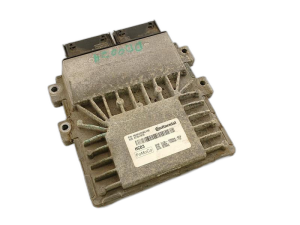
- Powertrain Control Module (PCM) Reprogramming — If the PCM hardware is functional but the software is corrupt, a dealer or qualified shop can often fix the issue by re-flashing the module with the correct factory software.
Trusted brands: Ford Dealer Service
OEM price range: $150-$400
Aftermarket price range: N/A - Powertrain Control Module (PCM)
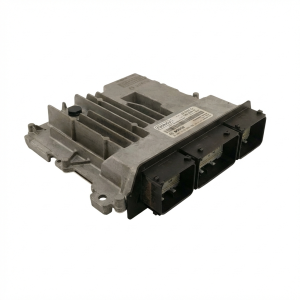
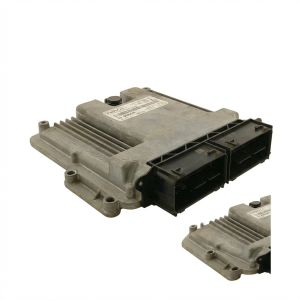
(OEM #Varies by VIN, e.g., JL3A-12A650-xxx, KL3A-12A650-xxx. Must be matched to vehicle.)— If the PCM is internally damaged and cannot be reprogrammed, it must be replaced. The replacement part must be programmed to the truck's VIN.
Trusted brands: Motorcraft
OEM price range: $800-$1500
Aftermarket price range: $500-$1000
Related Codes That Often Appear With This One
- U0100 — This code means 'Lost Communication With ECM/PCM'. It often appears with P0602 because if the PCM's software is corrupt, it cannot communicate with other modules on the vehicle's network.
- P1639 — For Ford, this code is 'Vehicle ID Block Corrupted or Not Programmed'. It can appear with P0602 after a PCM replacement if the programming procedure (Programmable Module Installation or PMI) was not performed correctly.
- P060A — This code for 'Internal Control Module Monitoring Processor Performance' is another internal PCM self-check fault that can accompany a general programming error.
Mechanic-Grade Diagnostic Values
- Battery Voltage (at rest) — expected: >12.4 Volts. Failure: A reading below 12.4V indicates a weak battery that can cause programming glitches.
- Charging System Voltage (engine running) — expected: 13.5V - 14.8V. Failure: Voltage outside this range indicates a faulty alternator or Battery Management System (BMS) issue, which can corrupt module memory.
- CAN Bus Voltage — expected: ~2.5V (idle on each line, CAN_H and CAN_L). Failure: Significant deviation or no voltage indicates a network wiring problem, not necessarily a PCM fault.
Scan Tool Commands That Help
- Ford IDS/FDRS: Programmable Module Installation (PMI) — This is the mandatory Ford service function required when installing a new or used PCM. It downloads the vehicle's 'As-Built' data from Ford's servers (or the old module) and programs the VIN, security keys (PATS), and other vehicle-specific parameters into the replacement module.
- Ford IDS/FDRS: Relearn Vehicle Data — This function can sometimes be used to write the correct VIN and other configuration data from the Body Control Module (BCM) to a used PCM if a full PMI procedure fails or is not applicable, potentially resolving a P160A mismatch code that can accompany P0602.
- Ford IDS/FDRS: Module Memory Test / Checksum Test — This is a diagnostic step to directly query the PCM's memory integrity. A failure on this test confirms internal memory corruption and points towards PCM replacement rather than just a reflash.
Wiring & Ground Locations
- G101 — On the firewall, typically behind or near the PCM on the passenger side of the engine compartment.. This is a primary ground point for the PCM. A loose or corroded connection here can cause unstable voltage, leading to memory corruption and a P0602 code.
- G102 / G103 — On the firewall, near the right (passenger) side fender area.. These are additional engine bay grounds. While not always direct PCM grounds, poor connections can introduce electrical noise and voltage instability into the system.
- G104 — On the right (passenger) fender apron, often behind the battery.. A critical chassis ground point. Corrosion here is common due to proximity to the battery and elements. A bad G104 can cause a wide range of electrical issues that mimic module failure.
- C175B, C175E, C175T — These are the three main multi-pin connectors that plug into the PCM itself, located on the passenger side firewall.. Physical inspection of these connectors for corrosion, moisture damage (from clogged cowl drains), or bent pins is a crucial step. C175B is the body/cowl harness, C175E is the engine harness, and C175T is the transmission harness.
Real Owner Repair Stories
- f150online Forums (2006 F-150 FX4) — No spark, engine cranks but won't start. After starting once for 5 seconds with a new PCM, it shut down and would not restart.
❌ Tried (didn't work) Installing a remanufactured PCM that was supposed to be 'plug and play' after key syncing.
✅ What actually fixed it The issue was identified as a faulty remanufactured PCM. The unit failed to accept the vehicle's VIN, resulting in a P1639 (Vehicle ID Block Corrupted or Not Programmed) code alongside the initial problem. The resolution required contacting the seller for a properly programmed or functional replacement PCM.
OEM Part Supersession History
JL3A-12A650-xxx→JL3Z-12A650-CANP (for 5.0L 2018-2020)— Part number consolidation and software/hardware updates by Ford.
Heads up: Part numbers are extremely specific to VIN, engine, transmission, and emissions calibration. A part number for a 3.5L EcoBoost (e.g., H2GA-12A650-SC) is not interchangeable with one for a 5.0L. Always verify compatibility via VIN.
Model Year Variations Within This Range
- 2017 vs 2018-2020: The introduction of the 10-speed (10R80) automatic transmission on more models and engine updates (like dual injection on the 5.0L V8 in 2018) led to different PCM hardware and software calibrations. A PCM from a 2017 6-speed truck is not compatible with a 2018+ 10-speed truck, even with the same engine.
Diagnostic Flowchart
Other Known Issues on This Vehicle
Issues unrelated to this code that are worth knowing about as an owner of this generation:
- 10R80 10-Speed Transmission Harsh/Erratic Shifting 🔴 High → Shop Transmission Assembly — Widespread on 2017-2019 models, can occur at low mileage. Less frequent but still present on 2020 models. (Ref: Multiple TSBs issued, including 21-2315, 23-2123, and 24-2046, which involve software updates and potential main control valve body overhaul.)
- Excessive Oil Consumption (5.0L V8) 🔴 High — Common on 2018-2020 models with the 5.0L 'Coyote' V8. Ford defines excessive as more than 1 quart per 3,000 miles. (Ref: TSB 19-2365 outlines a fix involving a PCM reprogram to reduce engine vacuum, a new oil dipstick, and an oil change. An earlier TSB (19-2058) for 2018 models even listed long block replacement as a potential fix.)
- Warped Dashboard (XL/XLT Trims) 🟠 Medium — Common issue on 2015-2019 XL and XLT trim levels, where the dash deforms and lifts near the windshield defrost vents. (Ref: TSB 19-2041 provides a procedure for replacing the upper instrument panel.)
- Frozen Door Latches 🟠 Medium — Affects 2015-2017 models, where doors may not latch or may open while driving in freezing temperatures. (Ref: Recall 17S33 was issued to install water shields and repair cables. A class-action lawsuit was also settled.)
- 3.5L EcoBoost Cam Phaser Rattle 🔴 High — A very common issue on 2017-2020 models with the 3.5L EcoBoost, causing a loud rattle on cold starts. Can lead to timing chain issues if ignored. (Ref: Ford Customer Satisfaction Program 21N03 (now expired) provided a PCM reflash and phaser replacement. The updated phasers are the permanent fix.)
Used vs. New Parts: Buying Guide for This Vehicle
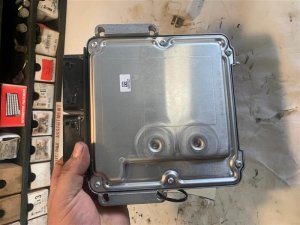
When a used part is the smart pick: A used PCM from a salvage yard is a viable, cost-effective option ONLY if you use a specialized service to either clone your original PCM's data onto the used one, or have the used PCM professionally reprogrammed to your truck's VIN and security information. It is not a 'plug and play' part.
Donor-vehicle mileage cap: roughly under 150000 miles for the part to have meaningful remaining life.
What to inspect on the donor part:
- Ensure the part number AND the 4-digit 'Tear Tag' calibration code match your original PCM if possible.
- Inspect the connectors for any bent, broken, or corroded pins.
- Check the aluminum case for any signs of physical damage, pry marks, or extreme heat discoloration.
- Source the part from a donor vehicle in a dry climate to minimize the risk of water intrusion damage.
OEM-only on this vehicle (don't cheap out):
- Powertrain Control Module (PCM) - While used OEM units are an option, new aftermarket 'blank' PCMs are generally not recommended as they can have compatibility issues with Ford's programming software (IDS/FDRS). Stick with new Motorcraft or a properly programmed used OEM unit.
Aftermarket brands forum-validated for this vehicle:
- Flagship One (FS1)
- UpFix
Brands owners have reported issues with on this vehicle:
- Unbranded, non-programmed PCMs from online marketplaces that do not offer VIN programming as part of the sale.
Real Owner Stories
Aggregated from forums and TSBs cited above. Mileages and costs reflect what owners reported in those sources.
2020 Ford F-150
Symptoms: Vehicle was experiencing communication issues.
What fixed it: A technician found a corroded body ground and resolved the issue by cleaning it.
Source hint: fordsix.com
2015 Ford F-250
Symptoms: Triggered P0602 while using FORScan; conflict caused by altering PCM data on a vehicle that had a 'deleted' custom tune.
What fixed it: The discussion highlights that returning to factory 'as-built' data overwrites custom tunes, and the fix requires the original tuning device or a professional re-flash to resolve the data conflict.
Source hint: ford-trucks.com/forums/1672321-p0602-pcm-programming-error.html
2007 Ford F-150
Symptoms: Owner received a P0602 code.
What fixed it: Using a scan tool to reprogram the VID block or reflash the PCM.
Source hint: f150forum.com/f38/p0602-engine-error-119890/
Related OBD-II Codes
Frequently Asked Questions
Can using FORScan on my F-150 trigger a P0602 code?
I have a 3.5L EcoBoost with a cold start rattle; is the PCM reflash for that related to P0602?
Could a bad ground near my spare tire cause symptoms similar to a PCM failure?
Will my 5.0L V8 oil consumption fix involve the PCM?
Does the 10-speed transmission harsh shifting issue require PCM programming?
What voltage should my F-150 battery maintain to avoid PCM corruption during a flash?
Helpful Videos
We Have This Part in Stock

The information in this article is provided for general reference and educational purposes only. Vehicle specifications, procedures, and part compatibility can vary by production date, trim level, and region. Always consult your vehicle's factory service manual and verify part numbers before purchasing or performing repairs. Safety-critical components such as airbags, seat belts, and braking systems should be installed by a qualified professional.
- Ford F-150:
- 🧭 Diagnostic Flowchart
- 🎬 Helpful Videos
- 🛍️ Shop This Part
- What's Unique About the 2017-2020 Ford F-150
- Symptoms You May Notice
- Most Likely Causes
- Rare But Worth Checking
- Diagnosis Steps
- Parts You'll Likely Need
- Related Codes That Often Appear With This One
- Mechanic-Grade Diagnostic Values
- Scan Tool Commands That Help
- Wiring & Ground Locations
- Real Owner Repair Stories
- OEM Part Supersession History
- Model Year Variations Within This Range
- Other Known Issues on This Vehicle
- Used vs. New Parts: Buying Guide for This Vehicle
- Real Owner Stories
- 2020 Ford F-150
- 2015 Ford F-250
- 2007 Ford F-150
- Related OBD-II Codes
- Frequently Asked Questions
- 🎟️ Get 5% Off