

P0602 on 1998-2004 Ford Focus: Control Module Programming Error Causes and Fixes
On a 1998-2004 Ford Focus, code P0602 indicates a programming error within the main engine computer (PCM). This is a critical fault often causing a no-start or stalling. The most common fix is to have a professional reprogram (re-flash) the PCM, but the module itself may need replacement if it has failed internally. This issue is often triggered by low battery voltage or a failed programming attempt.
- P0602 is a critical code indicating a software or hardware fault in the engine's main computer (PCM).
- Do not drive the vehicle, as it may stall at any time.
- The first and most important diagnostic step is to check the battery and charging system for stable voltage.
- This is not a DIY-friendly repair. The fix requires expensive, specialized tools to reprogram the PCM.
- Before replacing the expensive PCM, ensure a professional has attempted to re-flash the existing module and has ruled out all power, ground, and wiring issues.
What's Unique About the 1998-2004 Ford Focus
The 1998-2004 Ford Focus (Mk1) uses a standard Ford EEC-V PCM that is sensitive to voltage fluctuations. While P0602 is not exceptionally common on the Focus ST170 specifically, owner experiences show that when it does occur, it can be puzzling for general repair shops without Ford-specific diagnostic tools. The core issue isn't unique to the Focus, but the solution almost always requires a dealership or a specialist with Ford's Integrated Diagnostic System (IDS) to properly reprogram or replace the PCM. A simple battery disconnect will not clear this fault permanently.
Symptoms You May Notice
- Check Engine Light is on
- Engine will not start (cranks but does not fire)
- Engine may stall unexpectedly while driving
- Rough or erratic idling
- Noticeable decrease in fuel economy
- Poor acceleration or performance (limp mode)
- Harsh or erratic automatic transmission shifting
- Odometer display shows dashes ('- - - - -') instead of mileage 🎬 Watch: How to troubleshoot instrument cluster communication and dash issues.
- Replacing sensors like the crankshaft position sensor or oxygen sensors. This code is almost always related to the PCM itself, its programming, or its power supply, not external engine sensors.
Most Likely Causes
- PCM Programming Error / Corrupted Software 🔴 High Probability Can be triggered by voltage drops during startup, a failed software update attempt, or an aftermarket tuning device that did not properly restore the stock file.
How to confirm: A professional scan tool (like Ford IDS) is needed to check the software calibration and attempt a re-flash.
Typical fix: Reprogramming (re-flashing) the PCM with the correct factory 'as-built' data.
Est. part cost: $0 (if only labor) - Weak or Failing Battery / Alternator 🟡 Medium Probability → Shop Alternator Low or unstable voltage is a common trigger for memory corruption in control modules, especially during engine cranking or if a programming session is attempted without a stable power supply.
How to confirm: Load test the battery and check the alternator output. Voltage should be stable and above 12.4V with the engine off, and around 13.7-14.7V when running. On the ST170, flickering dash and headlights can be a symptom of a failing alternator.
Typical fix: Replace the battery and/or alternator. A battery maintainer must be used during any re-flash procedure.
Est. part cost: $100-$400 - Faulty Powertrain Control Module (PCM) 🟡 Medium Probability → Shop Engine Control Module (ECM) Internal hardware failure of the PCM, such as from water damage or an internal short, can manifest as a software error.
How to confirm: If the PCM will not accept a re-flash, fails to communicate, or if the code returns immediately after a successful re-flash, the module itself is likely defective.
Typical fix: Replace the PCM and program the new unit to the vehicle's VIN and PATS (Passive Anti-Theft System) keys.
Est. part cost: $300-$800 - Poor PCM Power or Ground Connections ⚪ Low Probability
How to confirm: Inspect the PCM connectors for corrosion, damage, or loose pins. Perform a voltage drop test on the PCM's main power and ground wires. On a Mk1 Focus, key ground points are located under the battery tray, on the inner wings, and on the cylinder head. These are known to corrode or snap if overtightened.
Typical fix: Clean or repair the PCM connectors and wiring harnesses. A Reddit user with a 2005 Focus fixed a no-start and dashed odometer display by finding and repairing a broken ground wire to the PCM.
Est. part cost: $5-$50
Diagnosis Steps
- Verify the battery is fully charged and in good health. Perform a load test. A healthy battery should read above 12.4V engine off and 13.7-14.7V when running.
- Check the charging system to ensure the alternator is providing stable voltage. Flickering lights are a known symptom of alternator failure on this platform.
- Scan for any other DTCs, paying close attention to Ford-specific codes like P1639 (VID Block) and P1260 (PATS), or communication (U-codes).
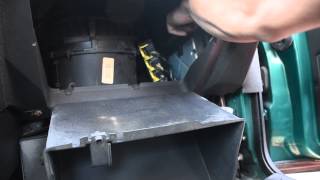
- Visually inspect the PCM connectors and its wiring harness for any signs of damage, corrosion, or looseness. The PCM is located behind the glove box on the 🎬 See this walkthrough on how to access and replace the PCM. passenger side.
- Check the main PCM ground points. Key locations on a Mk1 Focus include the inner wings near the headlights and a strap to the cylinder head. 🎬 Watch: Locate all the critical ground points on your Focus. These are known to corrode.
- Using a Ford-specific diagnostic tool (IDS) and a stable battery maintainer, attempt to communicate with the PCM. Check the current software/calibration level.
- Attempt to reprogram (re-flash) the PCM to the latest factory calibration using the 'as-built' data for the specific VIN. This step requires a professional tool and subscription.
- If the re-flash is successful, clear all codes and perform a drive cycle to see if the code returns. A P1000 code will be present until the drive cycle monitors are complete.
- If the PCM cannot be reprogrammed or the code immediately returns, the PCM is likely faulty and requires replacement. The new module must be programmed with the VIN and synced with the PATS keys.
Parts You'll Likely Need
- Powertrain Control Module (PCM)
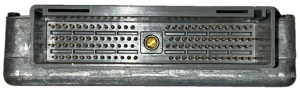
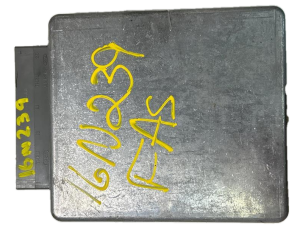
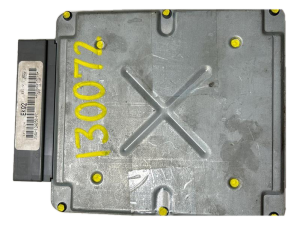
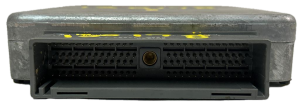
(OEM #Varies by VIN and calibration (e.g., 1M5F-12A650-xx, 2M5A-12A650-xx))— This is the part that stores the programming. If it cannot be reprogrammed or has failed internally, it must be replaced. A replacement, even a new one, will be blank and must be programmed to the car.
Trusted brands: Motorcraft, Bosch (remanufactured), Flagship One (pre-programmed)
OEM price range: $500-$1100
Aftermarket price range: $300-$600
Related Codes That Often Appear With This One
- P1639 — This Ford-specific code for 'Vehicle ID Block Corrupted or Not Programmed' often appears with P0602 after a PCM replacement or failed tuning attempt if the programming procedure was not completed correctly.
- U0100 — This code means 'Lost Communication With ECM/PCM.' It can be logged by other modules on the vehicle if the PCM has an internal software crash or hardware failure that is also causing the P0602.
- P1260 — Stands for 'Theft Detected, Vehicle Immobilized.' This code is common when a replacement PCM is installed but not programmed to the vehicle's PATS keys, which is a necessary step along with VIN programming.
Technical Service Bulletins (TSBs) & Recalls
- TSB 24/2004: While not related to P0602, this TSB addresses a common ST170 issue of accelerator pedal vibration, fixed by replacing the accelerator cable (FINIS code 4573474) and clips (6793327).
Platform-Specific Known Issues
- A user on Reddit with a 2005 Focus experienced a no-start and dashed odometer display, which was traced back to a broken PCM ground wire. Manually providing a ground to the correct pins allowed the car to start, confirming the wiring fault.
- On PassionFord forums, a user with an ST170 reported a P0602 code that their local garage could not diagnose, highlighting the need for specialist knowledge for this particular fault.
Mechanic-Grade Diagnostic Values
- PCM Power/Ground Voltage Drop — expected: Less than 0.2 Volts (200mV) on the power side (between battery positive and PCM power pins) and less than 0.1 Volts (100mV) on the ground side (between battery negative and PCM ground pins).. Failure: A voltage drop reading higher than the specified values indicates excessive resistance in the wiring or at a connection point, which can cause the PCM to malfunction.
Scan Tool Commands That Help
- Ford IDS (Integrated Diagnostic System): Programmable Module Installation (PMI) — This is a mandatory procedure when installing a new or used replacement PCM. It copies the 'As-Built' data (VIN, axle ratio, tire size, etc.) from the old module to the new one. If the old module is unreadable, this data must be retrieved from Ford's database using the vehicle's VIN.
- Ford IDS (Integrated Diagnostic System): Module Reprogramming (Re-flash) — This is used to update the PCM's software to the latest calibration or to attempt to fix a corrupted software issue (the cause of P0602). A stable power supply (battery maintainer) is critical during this process.
- Ford IDS (Integrated Diagnostic System): PATS (Passive Anti-Theft System) Parameter Reset — After a PCM is replaced and programmed via PMI, the security system must be initialized. This function syncs the new PCM with the vehicle's existing keys, allowing the engine to start. At least two keys are required for this procedure.
Wiring & Ground Locations
- Engine Bay Main Grounds — On the inner wings, near the headlights. On a Mk1 Focus, there are typically two earth points under the airbox that are critical for various engine and chassis systems.. These ground points are notorious for corroding or snapping if overtightened. A poor ground here can cause unstable voltage to the PCM and other modules, leading to a wide range of electrical faults, including memory corruption that triggers P0602.
- Engine-to-Chassis Ground Strap — A strap connecting the engine block or cylinder head to the vehicle's chassis.. This provides the main ground path for the engine's electrical system. If it's broken or corroded, the PCM and other sensors can lose their ground reference, causing unpredictable behavior and codes.
- Interior Ground Points — Under the plastic trim panels in the driver and passenger footwells, and behind the carpet in the boot/trunk area.. While less likely to directly cause a P0602, poor interior grounds can affect other modules on the CAN bus, potentially causing communication errors that could, in rare cases, contribute to PCM issues.
Model Year Variations Within This Range
- 2002-2004: The ST170 uses a unique PCM that, while housed in an EEC-V case, has different internal circuitry and a much larger software file (approx. 1472kb vs 225kb for a standard EEC-V). This makes it incompatible with many aftermarket tuners and programmers designed for the standard Ford EEC-V.
Diagnostic Flowchart
Other Known Issues on This Vehicle
Issues unrelated to this code that are worth knowing about as an owner of this generation:
- Intake Manifold Runner Control (IMRC) Failure 🔴 High — Very common. The control module fails electronically or the plastic cable linkage on the manifold breaks, causing poor low-end torque and a P1518 DTC.
- Cracked Plastic Thermostat Housing 🔴 High — Extremely common. The plastic housing develops cracks or the seals degrade, leading to persistent coolant leaks. Many owners replace it multiple times.
- Alternator Failure 🟠 Medium → Shop Alternator — Common. Leads to battery charging issues, flickering lights, and can trigger various electrical faults, potentially including module corruption.
- Catalytic Converter Heat Shield Rattle 🟡 Low — Common. The brackets on the heat shield for the catalytic converter break, causing a metallic rattle, typically around 2,000 RPM.
- Faulty Instrument Cluster 🟠 Medium — Known issue on Mk1 Focus models. Can cause erratic gauge behavior (especially fuel gauge), flickering lights, or intermittent non-start conditions with dashes on the odometer.
- Water Ingress from Pollen Filter Seal 🟠 Medium — A known design flaw where the seal around the cowl panel grille fails, allowing water into the passenger footwell, potentially damaging wiring or modules.
Used vs. New Parts: Buying Guide for This Vehicle
When a used part is the smart pick: A used PCM is a viable, cost-effective option if your original PCM has a confirmed internal hardware failure and cannot be re-flashed. It is critical that the used part comes from an identical vehicle (ST170 with the same transmission) to ensure hardware compatibility. A 'kit' including the PCM, instrument cluster, and key from a single donor car can simplify the PATS anti-theft programming.
Donor-vehicle mileage cap: roughly under 150000 miles for the part to have meaningful remaining life.
What to inspect on the donor part:
- Verify the part number on the PCM sticker matches your original or is a known compatible replacement.
- Inspect the connectors for any signs of corrosion, water damage, or bent pins.
- Purchase from a reputable seller who guarantees the part is functional and provides a warranty.
- Avoid PCMs from vehicles with flood or fire damage.
OEM-only on this vehicle (don't cheap out):
- Powertrain Control Module (PCM): While remanufactured units from specialists like Flagship One exist, a used OEM unit is often preferred over a generic aftermarket 'rebuilt' one due to the specific programming needs of the ST170.
Aftermarket brands forum-validated for this vehicle:
- Flagship One (Pre-programmed PCMs)
- ECU Testing (Testing and repair service)
Brands owners have reported issues with on this vehicle:
- Generic, unbranded PCMs from online marketplaces without a warranty or programming service should be avoided.
Real Owner Stories
Aggregated from forums and TSBs cited above. Mileages and costs reflect what owners reported in those sources.
2005 Ford Focus 2.0L
Symptoms: The vehicle experienced a no-start condition and the odometer display showed only dashes ('- - - - -').
What fixed it: The owner traced the fault to a broken PCM ground wire. Manually providing a ground to the correct pins allowed the car to start, confirming the wiring fault.
Source hint: Reddit.com/r/MechanicAdvice thread titled '2005 Ford Focus 2.0 no ground to PCM'
2003 Ford Focus ST170
Symptoms: The car threw a P0602 code which the local garage was unable to diagnose.
What fixed it: The owner sought specialist knowledge as the fault was noted to be difficult for general garages to handle.
Source hint: PassionFord.com thread titled 'Focus ST170 P0602'
Related OBD-II Codes
Frequently Asked Questions
My ST170 has a P0602 and my local garage is stumped. Is this common?
Does TSB 24/2004 address the P0602 code on my Focus ST170?
Why does my odometer show dashes ('- - - - -') along with the P0602 code?
Can a weak battery cause a P0602 error on a 1998-2004 Focus?
Where are the main ground points I should check on my Mk1 Focus to fix this?
What tool is needed to fix the PCM programming error?
Helpful Videos


We Have This Part in Stock

The information in this article is provided for general reference and educational purposes only. Vehicle specifications, procedures, and part compatibility can vary by production date, trim level, and region. Always consult your vehicle's factory service manual and verify part numbers before purchasing or performing repairs. Safety-critical components such as airbags, seat belts, and braking systems should be installed by a qualified professional.
- Ford Focus:
- 🧭 Diagnostic Flowchart
- 🎬 Helpful Videos
- 🛍️ Shop This Part
- What's Unique About the 1998-2004 Ford Focus
- Symptoms You May Notice
- Most Likely Causes
- Diagnosis Steps
- Parts You'll Likely Need
- Related Codes That Often Appear With This One
- Technical Service Bulletins (TSBs) & Recalls
- Platform-Specific Known Issues
- Mechanic-Grade Diagnostic Values
- Scan Tool Commands That Help
- Wiring & Ground Locations
- Model Year Variations Within This Range
- Other Known Issues on This Vehicle
- Used vs. New Parts: Buying Guide for This Vehicle
- Real Owner Stories
- 2005 Ford Focus 2.0L
- 2003 Ford Focus ST170
- Related OBD-II Codes
- Frequently Asked Questions
- 🎟️ Get 5% Off