

P0602 on 2001-2011 Ford Ranger 2.3L: Control Module Programming Error Causes and Fixes
This code means the engine computer (PCM) has an internal software error. The most common fix is to replace the PCM and have it professionally programmed, which can cost $400-$800. Before replacing, always check for a weak battery, bad alternator, or poor wiring connections to the PCM, as unstable voltage is a leading cause of this code.
- P0602 is a critical code indicating a failure in the engine's main computer (PCM).
- Do not continue to drive the vehicle, as it can stall or behave unpredictably at any time.
- Always check the battery, alternator, and PCM wiring for issues before condemning the PCM.
- The most common fix is replacing the PCM, which must be professionally programmed to your truck's VIN and anti-theft system.
- This is not a DIY-friendly repair for most home mechanics due to the need for specialized programming tools.
What's Unique About the 2001-2011 Ford Ranger
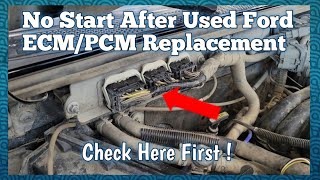
For the 2001-2011 Ranger, this code is not tied to a common, unique platform flaw but rather to the general failure modes of automotive electronics of this era. The issue is almost always isolated to the PCM itself or its direct power supply. Unlike some vehicles where other failing components (like ignition coils) are known to damage the PCM, the Ranger with the 2.3L Duratec does not have a widely documented pattern of this. The diagnostic path is straightforward and focuses on confirming the PCM is faulty before replacement. The PCM is located on the passenger-side firewall in the engine bay 🎬 Watch: See exactly where the PCM is located on your Ranger., which can expose it to heat and potential moisture over time.
Symptoms You May Notice
- Complete no-start or intermittent starting issues. 🎬 See this step-by-step diagnosis for a Ranger no-start condition.
- Engine stalling unexpectedly, either while driving or at idle.
- Rough running, misfiring, or poor engine performance.
- Illuminated Check Engine Light.
- Erratic or harsh automatic transmission shifting.
- Reduced fuel economy.
- Other warning lights may appear as communication with other modules is lost.
- Failure to pass an emissions test due to increased emissions.
- Replacing individual sensors (like O2 sensors or MAF sensors) when multiple unrelated codes are present with P0602. The root cause is often the PCM itself, not the components it's monitoring.
Most Likely Causes
- Faulty Powertrain Control Module (PCM) 🔴 High Probability → Shop Engine Control Module (ECM) Internal components of the PCM can fail due to age, heat cycles, and vibration, leading to memory and processing errors. If a reflash fails or the code returns immediately, the hardware is likely bad.
How to confirm: After confirming all power/ground inputs and wiring to the PCM are good, a failure to reflash the module or the immediate return of the P0602 code after a reflash points to a bad PCM.
Typical fix: Replace the PCM and have the new unit professionally programmed to the vehicle's VIN and specific options, including the PATS keys.
Est. part cost: $250-$500 - Low or Unstable System Voltage 🟡 Medium Probability A weak battery or failing alternator can cause voltage drops or spikes during startup or operation, which can corrupt the PCM's memory or interrupt its self-check, triggering a P0602. This is a very common trigger for memory-related PCM codes.
How to confirm: Test the battery's state of charge and load capacity. With the engine running, check the alternator's output voltage at the battery terminals; it should be stable and typically between 13.5 and 14.8 volts.
Typical fix: Replace the weak battery and/or failing alternator.
Est. part cost: $150-$400 - Corrupted PCM Software 🟡 Medium Probability
How to confirm: This is often a diagnosis of exclusion. If the PCM hardware, wiring, and voltage are all good, a software glitch is likely. This can sometimes occur after a battery has been disconnected or replaced, or after a failed attempt at programming.
Typical fix: Have a Ford dealership or a qualified shop with a J2534 pass-thru device attempt to 'reflash' the PCM with the latest factory software.
Est. part cost: $0 (if software is the only issue, labor is the main cost) - Poor PCM Power or Ground Connection ⚪ Low Probability
How to confirm: Visually inspect the PCM connectors for corrosion, moisture, or bent pins. The PCM is located on the passenger-side firewall and can be susceptible to moisture. Use a multimeter to perform a voltage drop test on the PCM's main power and ground wires to ensure there is minimal resistance.
Typical fix: Clean the PCM connectors and ground points. Repair any damaged wires in the harness.
Est. part cost: $5-$50
Rare But Worth Checking
- Aftermarket Tuner/Programmer Issues: If an aftermarket performance tune was installed, it may have been installed incorrectly or the file itself could be corrupt. Attempting to return the truck to the stock tune can sometimes resolve the issue.
Diagnosis Steps
- Check Battery and Charging System: Start with the basics. Ensure the battery is fully charged and healthy by performing a load test. Test the alternator output to rule out voltage issues that can corrupt PCM memory.
- Scan for All Codes: Use a quality OBD-II scanner to read all codes from all modules, not just the engine. Note any other codes that are present, especially other P06xx or U-series codes.
- Inspect PCM Wiring and Connectors: Visually inspect the PCM, which is located in the engine bay on the passenger side firewall. Look for any signs of corrosion, moisture, or damage to the wiring harness and connectors. Ensure connectors are seated securely. Water intrusion is a possibility due to its location.
- Check Power and Grounds at the PCM: Using a digital multimeter and a wiring diagram, verify that the PCM is receiving proper battery voltage and has a solid ground connection. Perform a voltage drop test on the main power and ground circuits.
- Attempt a PCM Reflash: If all wiring and power sources are good, the next step is to attempt to reprogram or 'reflash' the PCM with the latest Ford software. This requires professional equipment (like a J2534 device) and should be done by a qualified technician or dealership.
- Replace the PCM: If the reflash fails or the code immediately returns, the PCM itself has an internal hardware failure and must be replaced. The new PCM will need to be programmed to your Ranger's VIN and PATS (Passive Anti-Theft System) keys.
Parts You'll Likely Need
- Powertrain Control Module (PCM)
(OEM #Examples include 1L5A-12A650-xxx, 3L5A-12A650-xxx, 6L5A-12A650-xxx (Note: The last letters are critical and must match the vehicle's specific calibration code found on the PCM label).)— This code indicates an internal, unrecoverable error within the PCM itself. In most cases, after ruling out external factors, the module is the point of failure.
Trusted brands: Motorcraft, Cardone, Flagship One
OEM price range: $400-$600
Aftermarket price range: $250-$450
Related Codes That Often Appear With This One
- P0601 — Indicates 'Internal Control Module Memory Check Sum Error,' another critical internal PCM fault.
- P0603 — This code indicates a 'Keep Alive Memory (KAM) Error,' which is another type of PCM memory fault often seen with general programming errors.
- P0605 — This code for 'Internal Control Module Read Only Memory (ROM) Error' points to a specific type of memory failure within the PCM, directly related to the P0602 error.
- U0100 — This code means 'Lost Communication With ECM/PCM.' If the PCM has an internal software crash due to P0602, it may stop communicating with other modules on the vehicle's network.
Platform-Specific Known Issues
- source — A user on Ranger-Forums with a 2002 2.3L reported multiple intermittent issues including a P1537 (IMRC fault), engine bogging, hard shifting, and a non-functional temp gauge. While their initial focus was on the other codes, the combination of multiple, seemingly unrelated electronic failures pointed towards a potential underlying PCM issue, which is a common scenario when P0602 is present.
- PCM Location and Water Damage Potential: The PCM on 2001-2011 Rangers is located on the passenger-side firewall in the engine compartment. This location, while common, can be susceptible to water running down from the cowl area or from high-pressure washing, potentially leading to connector corrosion or internal water damage over time, which can trigger codes like P0602.
Mechanic-Grade Diagnostic Values
- Alternator Output Voltage — expected: 13.5V - 14.8V at the battery terminals with the engine running.. Failure: Voltage below 13.2V or spiking above 15.0V can indicate a faulty alternator, which can corrupt PCM memory.
- PCM Keep Alive Power (KAPWR) — expected: Constant 12V+ (Battery Voltage) at all times, even with key off.. Failure: Loss of constant voltage on this pin will trigger memory-related codes like P0603 and can contribute to P0602 on power-up.
Hidden / Shadow Codes Worth Checking
- P1639: Vehicle ID Block Corrupted or Not Programmed. This Ford-specific code often appears alongside P0602 after a PCM has been replaced but the 'Programmable Module Installation' (PMI) procedure was not completed correctly. It confirms the new PCM does not have the correct VIN and configuration data written to it. (see via Ford IDS or equivalent professional scan tool like ForScan.)
- P1000: OBD II System Readiness Test Not Complete. This code will be present after clearing codes, disconnecting the battery, or reflashing the PCM. It is not a fault code but an indicator that the vehicle has not completed a full drive cycle to test all its emissions monitors. It is expected to see this code during the repair process. (see via Any standard OBD-II scanner.)
Scan Tool Commands That Help
- Ford IDS / ForScan: Parameter Reset — This is a mandatory step when replacing only the PCM on a PATS-equipped vehicle. It re-links the existing keys (stored in the instrument cluster or a separate module) to the new PCM without requiring key erasure. Failure to perform this step will result in a no-start condition.
- Ford IDS / ForScan: Programmable Module Installation (PMI) — Used to copy configuration data from an old PCM to a new one. If the old PCM is non-communicative, this function allows for manual entry of vehicle data into the new module. This process writes the VIN and other critical data, preventing code P1639.
- Ford IDS / ForScan: Ignition Key Code Erase — Used when both the PCM and another PATS module are replaced, or when all keys are lost. This function erases all stored keys, requiring at least two keys to be programmed back into the system to start the vehicle.
- Ford IDS / ForScan: Keep Alive Memory (KAM) Reset — After performing a Parameter Reset or programming keys, a KAM reset clears the PCM's adaptive learning memory. This forces the module to relearn fuel trims and idle strategies. An alternative is to disconnect the battery for at least 5 minutes.
Wiring & Ground Locations
- PCM Keep Alive Power (KAPWR) Fuse — In the passenger compartment fuse panel, this is often fuse #26 (10A).. This fuse supplies the constant power needed to maintain the PCM's memory. If this fuse is blown, it will cause memory-related fault codes like P0603 and can contribute to programming errors like P0602.
- Engine to Firewall Ground Strap — Typically found on the back of the driver's side cylinder head, connecting the engine block to the vehicle's firewall/cowl.. This is the primary ground path for the cab and its electronics, including modules that communicate with the PCM. A corroded or broken strap can cause intermittent electronic issues and communication codes.
- Battery to Engine Ground Cable — A large cable running from the battery's negative terminal to a major point on the engine block, often a starter motor bolt or a motor mount bolt.. This is the main ground for high-amperage components like the starter and alternator. A poor connection here can cause massive voltage fluctuations during cranking, which is a known trigger for PCM memory corruption and the P0602 code.
- G100 — Located on the driver's side front of the engine compartment, on the frame rail, often below the battery area.. This is a primary chassis/frame ground point. Poor integrity at this point can cause unstable voltage for numerous systems, including the PCM.
Real Owner Repair Stories
- Reddit user in r/MechanicAdvice (Ford vehicle, year/model not specified, but behavior is relevant.) — Check Engine Light and Traction Control light on, with code P0602 present.
❌ Tried (didn't work) The user had enabled cruise control using ForScan on a previously replaced PCM.
✅ What actually fixed it The recommended fix was to use ForScan to reload the factory 'As Built' configuration data for the PCM. The P0602 was triggered because modifying a single parameter without going through the proper programming procedure created a mismatch in the PCM's internal configuration check.
Model Year Variations Within This Range
- 1999-2000 (and relevant to early 2001): Rangers from 1999-2000 used a Type B PATS system, which features a separate PATS module located above the glove box. This module is 'married' to the PCM. Later models integrated PATS functions into the instrument cluster (HEC). This distinction is critical when diagnosing no-start issues or replacing a PCM, as the 'Parameter Reset' procedure communicates with different modules depending on the PATS type.
Diagnostic Flowchart
Other Known Issues on This Vehicle
Issues unrelated to this code that are worth knowing about as an owner of this generation:
- Cracked Plastic Thermostat Housing 🔴 High — Very common across all model years. The plastic becomes brittle and cracks, causing coolant leaks.
- Intake Manifold Runner Control (IMRC) Failure 🟠 Medium — Common on 2001-2003 models, which used this system. Issues include broken plastic linkage arms, vacuum leaks, or a faulty control solenoid, leading to codes like P1537 or P2004.
- Frame Rust 🔴 High — Significant rust, especially in the rear section near the leaf spring shackles and spare tire carrier, is a well-documented problem, particularly in regions that use road salt. (Ref: No official recall, but widespread owner complaints and repair documentation exist.)
- Degraded PCV Hose 🟠 Medium — The rubber elbow hose for the PCV system can soften, collapse, or crack, causing vacuum leaks that result in a rough idle, stalling, and lean codes (P0171).
Used vs. New Parts: Buying Guide for This Vehicle
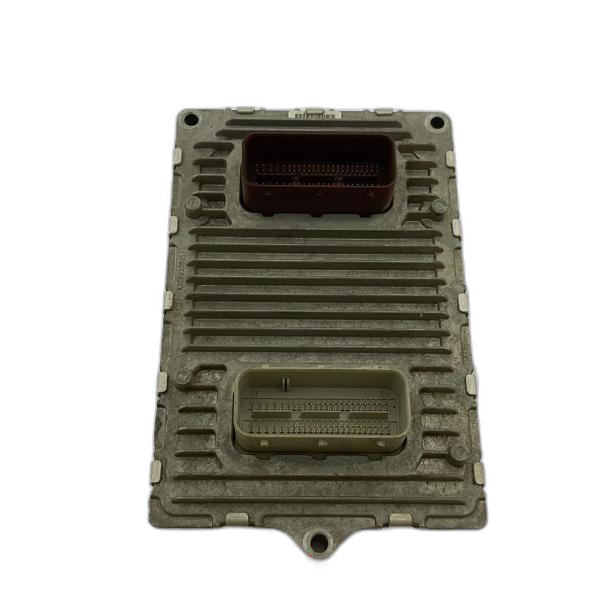
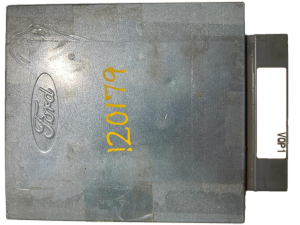
When a used part is the smart pick: A used PCM from a junkyard can be a cost-effective option ONLY if you have access to a Ford-specific scan tool (like Ford IDS or ForScan) and understand the PATS relearn process. It is not a simple plug-and-play swap.
Donor-vehicle mileage cap: roughly under 150000 miles for the part to have meaningful remaining life.
What to inspect on the donor part:
- CRITICAL: The calibration code on the sticker of the donor PCM must EXACTLY match the code on your original PCM.
- Ensure the donor vehicle has the same engine, transmission (manual/auto), and drivetrain (2WD/4WD).
- Inspect the connector pins for any signs of corrosion, water damage, or being bent.
- Try to get the ignition key(s) from the donor vehicle, although they are not strictly necessary if you perform the PATS relearn correctly.
OEM-only on this vehicle (don't cheap out):
- Powertrain Control Module (PCM) - While aftermarket (remanufactured) units from brands like Cardone or Flagship One exist, using a used OEM unit with the correct calibration is often more reliable than a remanufactured one with a generic program that needs flashing from scratch. New OEM units are best but often unavailable or prohibitively expensive.
Aftermarket brands forum-validated for this vehicle:
- ForScan (Software) - Essential tool for DIY programming of used Ford PCMs.
- Motorcraft (OEM) - The original and most reliable option if a new part can be sourced.
Brands owners have reported issues with on this vehicle:
- Unspecified/No-Name Programmers - Avoid generic handheld tuners that promise to fix the issue, as an improper flash is a common cause of P0602.
Real Owner Stories
Aggregated from forums and TSBs cited above. Mileages and costs reflect what owners reported in those sources.
2002 Ford Ranger 2.3L
Symptoms: The vehicle experienced multiple intermittent issues including an IMRC fault (P1537), engine bogging, harsh automatic transmission shifting, and a non-functional temperature gauge.
What fixed it: The combination of unrelated electronic failures pointed to a PCM-related issue, requiring diagnosis of the control module's integrity.
Source hint: ranger-forums.com thread titled '2002 2.3L Multiple Issues'
Related OBD-II Codes
Frequently Asked Questions
Where is the PCM located on my 2001-2011 Ford Ranger, and why does it matter for code P0602?
Can I just swap in a used PCM from a junkyard to fix this programming error?
Could a weak battery really be the cause of a PCM programming error code?
My Ranger is also showing a P1537 code and the temp gauge stopped working; are these related to P0602?
Does the Mazda B2300 suffer from this same P0602 issue?
What is the first step I should take before replacing the expensive PCM hardware?
Helpful Videos
Used OEM Parts in Stock
New Aftermarket Parts Available

The information in this article is provided for general reference and educational purposes only. Vehicle specifications, procedures, and part compatibility can vary by production date, trim level, and region. Always consult your vehicle's factory service manual and verify part numbers before purchasing or performing repairs. Safety-critical components such as airbags, seat belts, and braking systems should be installed by a qualified professional.
- Ford Ranger:
- 🧭 Diagnostic Flowchart
- 🎬 Helpful Videos
- 🛍️ Shop This Part
- What's Unique About the 2001-2011 Ford Ranger
- Symptoms You May Notice
- Most Likely Causes
- Rare But Worth Checking
- Diagnosis Steps
- Parts You'll Likely Need
- Related Codes That Often Appear With This One
- Platform-Specific Known Issues
- Mechanic-Grade Diagnostic Values
- Hidden / Shadow Codes Worth Checking
- Scan Tool Commands That Help
- Wiring & Ground Locations
- Real Owner Repair Stories
- Model Year Variations Within This Range
- Other Known Issues on This Vehicle
- Used vs. New Parts: Buying Guide for This Vehicle
- Real Owner Stories
- 2002 Ford Ranger 2.3L
- Related OBD-II Codes
- Frequently Asked Questions
- 🎟️ Get 5% Off