

P0602 on 2003-2014 GMC Sierra: Control Module Programming Error Causes and Fixes
P0602 on a GMC Sierra means a control module, usually the Engine Control Module (ECM), has a software error. Before replacing the expensive ECM, check for a weak battery or bad ground connections, as voltage issues are a very common cause. For 2014 models without a factory trailer brake controller, a specific TSB points to a simple fuse removal fix.
- P0602 is a serious code indicating a module programming error; do not drive the vehicle.
- Before assuming the ECM is bad, ALWAYS test the battery, alternator, and inspect all main power and ground connections for corrosion or damage. This is the most common cause.
- If you have a 2014 Sierra without a factory trailer brake controller, check TSB #PIT5518 first for a simple fuse-removal fix.
- This repair is not DIY-friendly. Reprogramming or replacing a module requires expensive, professional-grade tools and software.
What's Unique About the 2003-2014 GMC Sierra
On the GMT800 (2003-2007) and especially the GMT900 (2007-2014) platforms, the various control modules are highly sensitive to voltage stability. The GMT900 trucks use the E38 ECM, which is known to be particularly vulnerable to heat and voltage fluctuations. A P0602 code is frequently triggered not by a primary module failure, but by an underlying electrical issue like a weak battery, failing alternator, or corroded ground straps, which can corrupt the ECM's memory during startup. Additionally, a specific manufacturing error on some 2014 models can cause this code, but has a very simple and free fix outlined in Technical Service Bulletin #PIT5518.
Generation note: This range covers the GMT800 (2003-2007 Classic) and GMT900 (2007-2014) generations. While the causes are largely the same, the GMT900 trucks are known to be more sensitive to electrical system faults due to more complex electronics like the E38 ECM. A specific TSB #PIT5518 applies only to 2014 models without the factory trailer brake controller (RPO JL1).
Symptoms You May Notice
- Check Engine Light is on
- Vehicle will not start (crank-no-start condition)
- Engine stalling or idling roughly
- Reduced engine power ('limp mode')
- Harsh or erratic automatic transmission shifting
- Decreased fuel economy
- Multiple other warning lights may appear
- Replacing the Engine Control Module (ECM) without first verifying the battery, alternator, and all ground connections are in perfect condition. Many expensive ECMs are replaced needlessly when the root cause was a simple, cheap electrical fault.
Most Likely Causes
- Weak Battery or Faulty Charging System 🔴 High Probability → Shop Vehicle Battery GM trucks of this era are notoriously sensitive to low voltage. A voltage drop during engine cranking is a primary cause of memory corruption in the ECM. These trucks are also known for frequent battery failure.
How to confirm: Test the battery voltage at rest (should be above 12.4V). Check the alternator output while running (should be 13.7-14.7V). A parts store can perform a load test on the battery for free, which is the most reliable test.
Typical fix: Replace the weak battery and/or faulty alternator.
Est. part cost: $150-$500 - Poor Power or Ground Connections 🔴 High Probability Over time, main ground straps (especially the engine-to-chassis and battery-to-frame) can corrode or break, causing unstable voltage to the vehicle's modules. The braided ground strap on the back of the passenger side cylinder head to the firewall is a common culprit. 🎬 Watch: How to fix GM truck electrical and ground issues
How to confirm: Visually inspect all battery terminals, the main engine-to-frame ground strap, and smaller ground points on the cylinder heads for corrosion or damage. Perform a voltage drop test on the main power and ground cables; a drop of more than 0.2V under load indicates high resistance.
Typical fix: Clean the connection points with a wire brush until they are shiny. Replace any corroded battery terminals or frayed/broken ground straps.
Est. part cost: $20-$100 - Replaced Module Was Not Programmed 🟡 Medium Probability Replacement ECMs are sold 'blank' and must be programmed with the vehicle's specific VIN and software. This is a common oversight in DIY or non-specialist repairs. A salvage yard ECM will not work without being professionally reprogrammed. 🎬 Watch: How to program a GM module with SPS2
How to confirm: This code will appear immediately after installing a new, unprogrammed ECM. The vehicle will likely not start.
Typical fix: The module must be programmed using a GM-compliant J2534 tool and a Service Programming System (SPS) software subscription. This is typically done at a dealership or a well-equipped independent shop.
Est. part cost: $100-$250 for labor - Faulty Engine Control Module (ECM) ⚪ Low Probability → Shop Engine Control Module (ECM) While not as common as other causes, the ECM can fail internally due to heat, vibration, or age. The E38 ECM used in GMT900s is mounted near the driver-side cylinder head and can be susceptible to heat-soak issues.
How to confirm: This is diagnosed by exclusion. If the battery, charging system, and all connections are perfect, and the module fails to accept reprogramming from a professional tool, the module itself is condemned.
Typical fix: Replace the ECM and have the new unit professionally programmed to the vehicle.
Est. part cost: $300-$800
Rare But Worth Checking
- Incorrect Chassis Control Module Installed (2014 Models Only): Per TSB #PIT5518, some 2014 trucks without the factory integrated trailer brake controller (RPO JL1) were misbuilt with a Chassis Control Module (CCM). This unnecessary module will set a P0602. The fix is simply to remove fuse F19UA from the underhood fuse block.
- Aftermarket Performance Tune: A poorly written or incompatible aftermarket engine tune can corrupt the ECM's programming and cause a P0602 code. Reverting to the stock factory tune is a necessary diagnostic step if the vehicle has been modified.
Diagnosis Steps
- Check Battery and Charging System Health: Use a multimeter to verify battery voltage is above 12.4V with the engine off. Start the engine and confirm charging voltage is between 13.7V and 14.7V. Have the battery load tested.
- Inspect All Power and Ground Connections: Thoroughly inspect battery terminals, cables, and the main chassis/engine ground straps for any signs of corrosion, looseness, or damage. Pay close attention to the braided ground strap from the passenger-side cylinder head to the firewall. Clean or replace as necessary.
- Perform a Voltage Drop Test: Check for high resistance 🎬 See this quick guide on testing for ground faults in the main power and ground circuits. Any reading over 0.1V-0.3V drop on a ground cable indicates a problem that needs to be fixed.
- (2014 Models Only) Check for TSB #PIT5518: If you have a 2014 model without the factory trailer brake controller (RPO JL1), check if the P0602 is being set by the Chassis Control Module (CCM). If so, remove fuse F19UA from the underhood fuse block and discard it.
- Scan for Other Codes: Check if other codes like P0601, P0603, or U-codes are present, as they can help confirm an electrical or communication issue.
- Check for Aftermarket Tuner: If the vehicle has an aftermarket performance tune, flash it back to the stock GM program and see if the code clears.
- Attempt Reprogramming: If all electrical systems are sound, the vehicle must be taken to a professional to attempt to reprogram the ECM using a J2534 pass-thru device and GM's SPS software.
- Replace ECM: If reprogramming fails repeatedly with a known good power supply, the ECM is defective and must be replaced and programmed.
Parts You'll Likely Need
- Engine Control Module (ECM/PCM)
(OEM #12597121, 12613888 (GMT900, E38 Type). Part numbers vary significantly by year and engine. Always verify with VIN.)— This part is only needed if the original module is internally faulty and cannot be successfully reprogrammed. In many cases, the original module is fine and only needs reprogramming.
Trusted brands: ACDelco (GM Genuine), Cardone (Remanufactured), FS1 (Remanufactured, Pre-programmed)
OEM price range: $400-$800
Aftermarket price range: $250-$500 - Battery — A weak or failing battery is a leading cause of voltage instability that can corrupt the ECM's memory and trigger a P0602 code.
Trusted brands: ACDelco, DieHard, Interstate
OEM price range: $200-$300
Aftermarket price range: $150-$250 - Battery/Ground Cables — Corroded or broken main power and ground cables cause high resistance and voltage drops, a primary trigger for P0602.
Trusted brands: ACDelco, Standard Motor Products
OEM price range: $50-$150
Aftermarket price range: $20-$80
Related Codes That Often Appear With This One
- P0601 — This code for 'Internal Control Module Memory Check Sum Error' is a related internal module fault that often appears with P0602, sometimes indicating a more severe internal hardware failure of the ECM.
- P0603 — This code for 'Internal Control Module Keep Alive Memory (KAM) Error' often points directly to power interruptions from a weak battery or bad connection, which is a primary cause of P0602.
- U0100 — This code means 'Lost Communication With ECM/PCM.' If the ECM's software is corrupt (P0602), it may stop communicating on the vehicle's data network, triggering communication codes in other modules.
Technical Service Bulletins (TSBs) & Recalls
- TSB #PIT5518: Pertains to 2014 models without the integrated trailer brake controller (RPO JL1) that were mistakenly built with a Chassis Control Module. The fix is to remove fuse F19UA.
- TSB #15-06-01-002E: While not directly for P0602, this TSB addresses AFM lifter failure, a major known issue for this platform that can cause other engine-related electrical problems and codes.
- TSB Bulletin #05-06-04-060A: This informational bulletin provides guidance to technicians regarding control module DTCs including P0601, P0602, P0603, P0604, P0606, P062F, P06F3, and P1621, which can be shared across multiple modules.
Platform-Specific Known Issues
- Owner Experience: P0602 after Battery Replacement: → Shop Vehicle Battery A common story on forums is a P0602 code appearing immediately after replacing a dead or weak battery. This happens because the voltage spike or interruption during the swap can corrupt the ECM's memory, especially if the new battery isn't fully charged. The fix is often to have the ECM reprogrammed, not to replace it again.
Mechanic-Grade Diagnostic Values
- Battery Voltage (Engine Off) — expected: Greater than 12.4V. Failure: Below 12.4V indicates a discharged or weak battery that can cause module memory corruption during startup.
- Charging System Voltage (Engine Running) — expected: 13.7V - 14.7V. Failure: Voltage outside this range indicates a faulty alternator or voltage regulator, leading to unstable power supply for modules.
- Voltage Drop on Main Ground Cable (Engine Cranking) — expected: Less than 0.2V - 0.3V. Failure: A voltage drop greater than this signifies high resistance in the ground circuit, a primary cause of module communication and programming errors.
Hidden / Shadow Codes Worth Checking
- P069E:00: FPCM (Fuel Pump Control Module) Requested MIL Illumination. This is a 'shadow code' set in the ECM, indicating that the actual fault lies within the FPCM, which has requested the ECM to turn on the Check Engine Light. The FPCM itself may have a P0602 or other internal fault. (see via A professional scan tool capable of reading codes from all vehicle modules (ECM, FPCM, TCM, etc.), such as a GM Tech2 or a tool with GDS2 software.)
Scan Tool Commands That Help
- GM GDS2 / Techline Connect (SPS2): Service Programming System (SPS) — This is the primary function used to fix a P0602. It is used to flash the correct GM software and VIN onto a new or corrupted module. A stable power supply (programming support tool) is critical during this process.
- GM GDS2 / Techline Connect (SPS2): Module Recovery — If a programming event is interrupted (e.g., by power loss), the module may become unresponsive ('bricked'). The recovery function within SPS can sometimes restore communication and allow a new programming attempt.
Wiring & Ground Locations
- G103 — On the front of the passenger side cylinder head. Two ground wires are typically held by a nut on a stud.. This is a primary engine and sensor ground. Corrosion or looseness here can cause erratic sensor readings and unstable power to the ECM, which can lead to memory corruption and a P0602 code.
- G104 — On the rear of the driver's side cylinder head (firewall side).. This ground is crucial for various systems, including the Vehicle Control Module (VCM/ECM) and fuel pump relay trigger. A bad G104 ground is a well-documented cause of no-start and various electrical issues that can mimic or lead to ECM failure.
- ECM Connector X1 (E38 ECM) — The large, 73-pin black connector on the Engine Control Module, typically mounted on the driver's side of the engine.. This is the main data and power connector for the ECM. Key pins to test are Pin 20 (Battery Positive Voltage) and Pin 19 (Ignition 1 Voltage) for proper power supply. Poor connection or corrosion here can directly cause a P0602.
- G218 (Later Models) — Under the driver's side dash, behind the kick panel. While more commonly referenced on newer K2XX trucks, poor interior grounds can cause network communication issues that may be related.. A poor ground at G218 on later models has been linked by GM TSBs to other module communication faults (like P0606), demonstrating the importance of checking all major grounds, not just those in the engine bay.
Real Owner Repair Stories
- Best Car Fixes YouTube Channel (2008 Chevrolet Silverado) — Crank no-start, Check Engine Light on.
❌ Tried (didn't work) Initial diagnosis pointed to the ECM, but further investigation was needed.
✅ What actually fixed it The Fuel Pump Control Module (FPCM) had failed and was not programmed. It was setting a P069E code, which in turn caused the ECM to log a P0602. Replacing the FPCM with a new, genuine ACDelco part and programming it with GM's SPS software resolved the no-start condition and cleared all codes.
OEM Part Supersession History
12597121→12613888— This is a common hardware and service number update for the E38 ECM used in many 2007-era GM vehicles.
Heads up: While these part numbers are often interchangeable for the same application, the replacement module MUST be programmed with the specific vehicle's VIN and software. A used module from a different vehicle type (e.g., an Equinox) will not work in a Sierra without complete reprogramming, even if the part number matches.
Model Year Variations Within This Range
- 2007-2014 (GMT900): These models use the E38 ECM, which is more sensitive to voltage fluctuations and has specific, well-documented ground points (G103, G104) that are critical to check. The earlier GMT800 (2003-2007 Classic) trucks have a different electrical architecture and ECM, though they are also sensitive to battery and ground issues.
- 2014 only: A specific manufacturing issue addressed by TSB #PIT5518 can cause P0602 on trucks without the factory trailer brake controller. This issue and its unique fuse-removal fix do not apply to other years in this range.
Diagnostic Flowchart
Other Known Issues on This Vehicle
Issues unrelated to this code that are worth knowing about as an owner of this generation:
- Active Fuel Management (AFM) Lifter Failure 🔴 High — Common on 5.3L and 6.2L engines, especially in the 50,000-100,000 mile range. Can lead to misfires (P0300), engine noise, and eventual camshaft damage. (Ref: Multiple TSBs exist, including #15-06-01-002E, which addresses collapsed/stuck AFM lifter failure.)
- Cracked Dashboard 🟠 Medium — Extremely common on GMT900 (2007-2014) models, often cracking above the passenger airbag and around the instrument cluster surround regardless of sun exposure. (Ref: No recall was ever issued, but it was the subject of class-action lawsuits.)
- Instrument Cluster Stepper Motor Failure 🟠 Medium — Prevalent on GMT800 (2003-2007) models, causing gauges (speedometer, tachometer, etc.) to stick, read incorrectly, or fail completely. (Ref: A special coverage adjustment was offered by GM for some model years, but many failures occurred outside the mileage limit.)
- Excessive Oil Consumption 🟠 Medium — Often linked to the AFM system on GMT900 trucks, where oil can be forced past piston rings. Owners report needing to add a quart of oil every 1,000-3,000 miles. (Ref: GM released TSBs addressing the issue, sometimes involving a redesigned valve cover or piston ring replacement in severe cases.)
- Intermediate Steering Shaft (ISS) Clunk 🟡 Low — A common annoyance on GMT800 trucks, causing a clunking or popping sound/feel in the steering wheel during low-speed turns. It's caused by a lack of grease in the splined shaft. (Ref: Dealers often re-greased the shaft as a temporary fix, but updated replacement parts are available.)
Used vs. New Parts: Buying Guide for This Vehicle
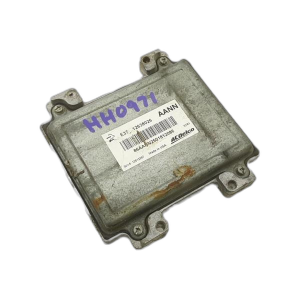
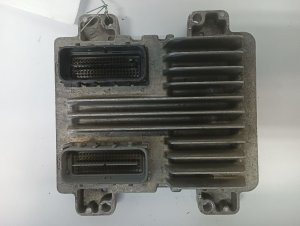
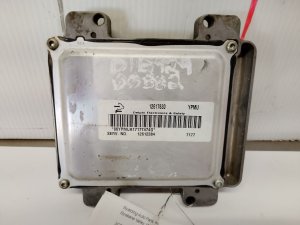
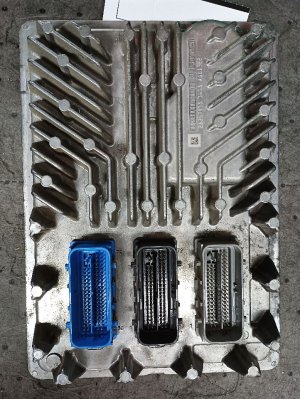
When a used part is the smart pick: A used ECM from a junkyard is almost NEVER a smart choice for this repair. The module is electronically 'married' to the donor vehicle's VIN and options. While a specialist can 'virginize' and reprogram a used module, the cost and complexity often approach that of a professionally pre-programmed remanufactured unit. It only makes sense if you have access to advanced programming tools and accept the risk of the used part being faulty.
Donor-vehicle mileage cap: roughly under 100000 miles for the part to have meaningful remaining life.
What to inspect on the donor part:
- Verify the exact part number (e.g., 12613888).
- Ensure the donor vehicle is the same model, year, engine, and transmission type.
- Inspect the connector pins for any corrosion or physical damage.
- Ask for a warranty, even if it's only 30 days, to protect against a dead-on-arrival unit.
OEM-only on this vehicle (don't cheap out):
- Engine Control Module (ECM). While remanufactured units from reputable suppliers are acceptable, cheap, unverified aftermarket clones should be avoided. The complexity of GM's software and anti-theft systems makes using a genuine ACDelco or a high-quality remanufactured unit critical for success.
Aftermarket brands forum-validated for this vehicle:
- FS1 (Flagship One) - Sells pre-programmed ECMs that are plug-and-play.
- Cardone - A major remanufacturer of automotive electronics.
Brands owners have reported issues with on this vehicle:
- No-name sellers on platforms like eBay or Amazon that offer 'unlocked' or 'plug-and-play' modules without requiring a VIN. These are often problematic and may not program correctly.
Real Owner Stories
Aggregated from forums and TSBs cited above. Mileages and costs reflect what owners reported in those sources.
2007-2014 GMC Sierra
Symptoms: The P0602 code appeared immediately after replacing a dead or weak battery.
What fixed it: The ECM had to be reprogrammed because the voltage interruption during the battery swap corrupted the module's memory.
Source hint: vehicle_specific_issues: Owner Experience: P0602 after Battery Replacement
2014 GMC Sierra
Symptoms: P0602 code being set in the Chassis Control Module (CCM) on a vehicle without the factory trailer brake controller (RPO JL1).
What fixed it: Removed fuse F19UA from the underhood fuse block and discarded it as per TSB #PIT5518.
Source hint: TSB #PIT5518
Related OBD-II Codes
Frequently Asked Questions
I have a 2014 GMC Sierra without the factory trailer brake controller and I'm seeing P0602. Is there a specific fix?
Why did P0602 appear on my Sierra right after I changed the battery?
Can I use a used ECM from a salvage yard to fix the P0602 code on my GMC Sierra?
Could a bad ground strap cause a P0602 code on my truck?
Is the P0602 code related to the AFM lifter issues common on the 5.3L Sierra engines?
How can I confirm if my Sierra's battery is causing this code?
Helpful Videos
Used OEM Parts in Stock
New Aftermarket Parts Available


The information in this article is provided for general reference and educational purposes only. Vehicle specifications, procedures, and part compatibility can vary by production date, trim level, and region. Always consult your vehicle's factory service manual and verify part numbers before purchasing or performing repairs. Safety-critical components such as airbags, seat belts, and braking systems should be installed by a qualified professional.
- GMC Sierra:
- 🧭 Diagnostic Flowchart
- 🎬 Helpful Videos
- 🛍️ Shop This Part
- What's Unique About the 2003-2014 GMC Sierra
- Symptoms You May Notice
- Most Likely Causes
- Rare But Worth Checking
- Diagnosis Steps
- Parts You'll Likely Need
- Related Codes That Often Appear With This One
- Technical Service Bulletins (TSBs) & Recalls
- Platform-Specific Known Issues
- Mechanic-Grade Diagnostic Values
- Hidden / Shadow Codes Worth Checking
- Scan Tool Commands That Help
- Wiring & Ground Locations
- Real Owner Repair Stories
- OEM Part Supersession History
- Model Year Variations Within This Range
- Other Known Issues on This Vehicle
- Used vs. New Parts: Buying Guide for This Vehicle
- Real Owner Stories
- 2007-2014 GMC Sierra
- 2014 GMC Sierra
- Related OBD-II Codes
- Frequently Asked Questions
- 🎟️ Get 5% Off