

P0602 on 2011-2020 Kia Optima: Control Module Programming Error Causes and Fixes
P0602 on a Kia Optima means the engine's computer (ECM/PCM) has a software error. This is often caused by a failed software update or an internal module failure. The fix requires professional reprogramming at a dealer or qualified shop, which can cost $150-$300. If the module has failed, replacement is necessary and can cost over $1000.
- P0602 is a critical error in your Optima's main computer; do not continue to drive the vehicle.
- The most likely cause is either a failed software update or a complete internal failure of the Engine Control Module (ECM).
- This is not a DIY repair. The fix requires professional-level diagnostic tools to reprogram or replace and program the ECM.
- Before condemning the ECM, a professional should always verify the battery and charging system are working perfectly, as voltage instability can trigger this code.
What's Unique About the 2011-2020 Kia Optima
For the 2011-2020 Optima, particularly those with the Theta II engine, this code is highly relevant due to multiple large-scale service campaigns and TSBs requiring ECU software updates (e.g., for the Knock Sensor Detection System - KSDS). A common trigger for P0602 is an interrupted or failed software flash, a specific risk during these service procedures if not performed correctly. On some 2010-2016 models, this code is also a strong indicator of a complete internal hardware failure of the ECM, necessitating replacement, a pattern also seen on its platform-mate, the Hyundai Sonata.
Generation note: This guide covers the TF (2011-2015) and JF (2016-2020) generations of the Kia Optima. Both generations were subject to ECU updates and potential engine issues that make this code relevant across the entire year range. The TF generation, in particular, was part of major engine-related recalls and the initial KSDS software rollouts.
Symptoms You May Notice
- Check Engine Light is on
- Engine will not start, but may still crank
- Engine stalls intermittently or unexpectedly
- Reduced engine power or entering 'limp mode', often limiting RPMs to 1800-2000
- Harsh or erratic automatic transmission shifting
- Reduced fuel economy
- Other communication codes (U-codes) or internal fault codes (P0601, P0605) may be present
- Replacing other sensors like crankshaft or camshaft sensors. A failing ECM can cause other codes to appear, but P0602 points directly to an internal module fault that should be addressed first.
Most Likely Causes
- Internal ECM/PCM Failure 🔴 High Probability On 2011-2016 Optima models, P0602 is frequently a direct result of the ECM hardware failing internally, making it unable to read or write to its own memory. This is often due to age, heat cycles, or manufacturing defects in the processor or memory chips.
How to confirm: A technician will attempt to re-flash the ECM. If the procedure fails repeatedly despite stable voltage and good connections, the module itself is condemned. This is the most common outcome for this code on this platform.
Typical fix: Replace the Engine Control Module (ECM) and have the new unit professionally programmed to the vehicle's VIN and immobilizer system.
Est. part cost: $400-$1400 - Corrupted or Failed Software Update 🟡 Medium Probability Kia has issued several Technical Service Bulletins (TSBs), like PI1802 for the Knock Sensor Detection System (KSDS), that require an ECU software update. If this update is interrupted by power loss, a tool error, or an unstable battery, it can corrupt the software and trigger P0602. The KSDS update was specifically designed to protect the engine from bearing damage.
How to confirm: This is typically known from the vehicle's history (e.g., the code appeared immediately after a service attempt). A professional scan tool is needed to verify the software version and attempt a re-flash. The TSB documentation includes explicit warnings about this risk.
Typical fix: A successful reprogramming (re-flashing) of the ECM with the latest manufacturer software.
Est. part cost: $0 (software only) - Unstable Power Supply 🟡 Medium Probability Control modules are highly sensitive to voltage. A weak or failing battery, faulty alternator, or corroded ground connections can cause voltage drops during operation or programming, corrupting the ECM's memory. This is a common cause of module programming errors across all modern vehicles.
How to confirm: Test the battery under load (should be above 12.4V at rest) and check the alternator's output voltage (should be ~13.5-14.5V when running). Perform a voltage drop test on the ECM's main power and ground wires.
Typical fix: Replace the failing battery or alternator. Clean or replace corroded battery terminals or ground straps.
Est. part cost: $150-$600
Rare But Worth Checking
- Aftermarket Tuner/Programmer: If an aftermarket performance tune was installed, a failure during the writing process or a bug in the tune itself can cause a P0602 code. Reverting to the stock OEM program is a necessary diagnostic step.
Diagnosis Steps
- Check Battery and Charging System: Ensure the battery voltage is stable and above 12.4V. Test the battery under load and verify the alternator is charging correctly (~13.5-14.5V). Unstable voltage is a primary cause of module corruption and can cause a re-flash to fail.
- Scan for All Codes: Use a professional-grade scan tool to read all codes from all modules, not just the engine. Note any communication codes (U-codes) or other internal processor faults (P060x).
- Attempt ECM Re-flash: Using a Kia-specific diagnostic tool (GDS), attempt to reprogram the ECM with the latest factory software. TSBs like PI1802 provide specific instructions for this. This step is critical and must be done by a professional with a stable power supply connected to the vehicle.
- Verify Success: If the re-flash is successful, clear all codes and perform a drive cycle. If P0602 does not return, the issue is resolved.
- Diagnose ECM Circuits: If the re-flash fails, inspect the ECM's power and ground connections for corrosion or damage. Perform a voltage drop test to ensure the module is receiving proper power. Check main ground points on the chassis and engine block.
- Replace ECM: If the battery, charging system, and wiring are all confirmed to be good, and the ECM repeatedly fails to accept programming, the ECM has an internal hardware failure and must be replaced.
- Program New ECM: The new ECM must be programmed with the vehicle's specific VIN and immobilizer key information to function. This requires dealer-level tools.
Parts You'll Likely Need
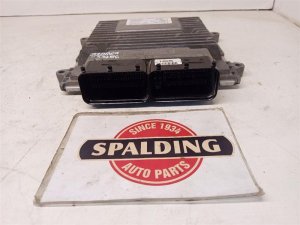
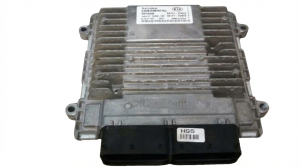
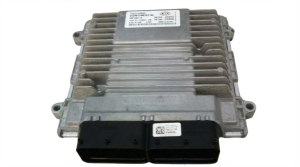
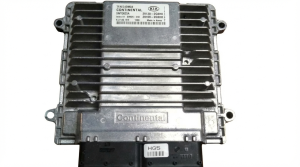
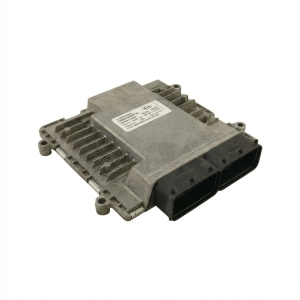
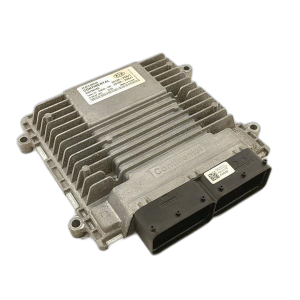
- Engine Control Module (ECM/PCM)
(OEM #39112-2G870 (2011-2012 2.4L M/T example), 39111-2G890 (2011-2013 2.0T A/T example))— This is the most common fix when a software re-flash fails, indicating the module's internal hardware has failed.
Trusted brands: Kia (OEM), Flagship One (FS1), CARDONE (Remanufactured)
OEM price range: $800-$1440
Aftermarket price range: $400-$700 (Remanufactured/Programmed)
Related Codes That Often Appear With This One
- U0100 — A failing ECM can stop communicating with other modules on the CAN bus, resulting in a 'Lost Communication With ECM/PCM' code.
- P0601 — This code indicates 'Internal Control Module Memory Check Sum Error,' which is another type of internal ECM/PCM fault very similar to P0602. P0601 more often points to a fatal hardware chip failure, whereas P0602 can sometimes be resolved with a re-flash.
- P1326 — This code is specific to the Knock Sensor Detection System (KSDS). A P0602 might appear after a failed attempt to apply the KSDS software update (TSB PI1802), or if the ECM fails in a way that affects the KSDS logic.
Technical Service Bulletins (TSBs) & Recalls
- PI1802 (and revisions): 'PRODUCT IMPROVEMENT CAMPAIGN - KNOCK SENSOR DETECTION SYSTEM - ECU LOGIC IMPROVEMENT'. This TSB involves reprogramming the ECU and contains explicit warnings about the risks of interrupting the process, which can cause this code.
- SC147: 'ENGINE RECALL'. This recall addresses premature bearing wear from manufacturing errors, the root problem the KSDS software update (PI1802) was designed to monitor. An ECM failure could complicate diagnosis of these engine issues.
Platform-Specific Known Issues
- Many 2011-2018 Optimas were subject to TSB PI1802 (and its revisions) for a Knock Sensor Detection System (KSDS) ECU update. A failure during this update process is a specific scenario that could lead to a P0602 code.
- The KSDS update was a 'Product Improvement Campaign' designed to detect engine bearing wear and put the car in limp mode (with code P1326) to prevent catastrophic engine failure, a widespread issue on Theta II engines.
Mechanic-Grade Diagnostic Values
- ECM Power Supply (Open Circuit Voltage) — expected: 12.6V (Battery Voltage). Failure: 0V indicates an open circuit. Less than 12.6V indicates high resistance elsewhere.
- ECM Ground Circuit Voltage Drop — expected: < 0.1V. Failure: A reading greater than 0.3V indicates excessive resistance in the ground strap or wiring, requiring cleaning or replacement.
- ECM Power Circuit Voltage Drop — expected: < 0.5V. Failure: A reading greater than 0.5V between the ECM power pin and the battery positive terminal indicates excessive resistance in the power feed wiring or fuse.
- CAN Bus Resistance (at OBD-II port, battery disconnected) — expected: ~60 Ω. Failure: A reading of ~120 Ω indicates one of the two terminating resistors (often in the ECM or instrument cluster) is offline. A reading other than 60 or 120 Ω suggests a wiring short or open.
Scan Tool Commands That Help
- Kia GDS (Global Diagnostic System): ECU Upgrade — This is the primary function used to re-flash or reprogram the ECM. It is used as both a diagnostic step (to see if software corruption is the cause) and the final fix. The GDS tool will automatically check for the latest software version for the vehicle's VIN.
- Kia GDS (Global Diagnostic System): VIN Auto Detect / VIN Input — When initiating any diagnostic or programming session, the GDS must correctly identify the vehicle. If a replacement ECM has been installed, this function may fail or show a mismatch, indicating the need for programming.
Wiring & Ground Locations
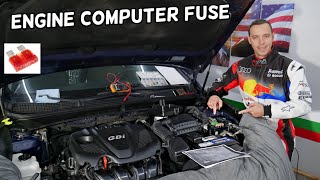
- ECM Fuses (Engine Bay) — In the main fuse and relay box in the engine compartment, near the battery.. For the 2011-2015 (TF) generation, multiple fuses power the ECM. These include fuses labeled 'ECU 1' (30A), 'ECU 3' (15A), 'ECU 4' (10A), and 'EMOD' (fuse). A blown fuse will cut power and can cause programming errors or a no-start condition.
- ECM Fuse (Interior) — In the interior fuse panel, located behind a cover on the driver's side of the dashboard.. For the 2011-2015 (TF) generation, a fuse labeled 'IG1' (20A) provides a key power signal to the engine computer and must be checked.
- ECM Main Ground — Typically bolted directly to the chassis near the ECM's location in the engine bay, or via a ground strap from the engine block to the chassis.. A corroded or loose ground is a primary cause of unstable voltage to the ECM, which can corrupt memory and trigger a P0602 code. A voltage drop test is required to confirm its integrity.
OEM Part Supersession History
39108-2GBE0→39108-2GBE1— Internal hardware or software revision by the manufacturer.
Heads up: While the newer part number is a valid replacement for the older one, it is critical that the part number on the replacement module EXACTLY matches the original or is a confirmed supersession for that specific VIN. Using a module from a different engine or emissions type will fail.
Model Year Variations Within This Range
- 2011-2015 (TF Generation): This generation uses specific ECMs and was the primary target for the early KSDS software updates and engine recalls (SC147). The fuse layout and specific ECM part numbers are unique to this generation.
- 2016-2020 (JF Generation): This generation introduced a revised electrical architecture and different ECMs (e.g., SIM2K-250). While still subject to KSDS updates, the part numbers and specific programming procedures may differ from the earlier TF models.
Diagnostic Flowchart
Other Known Issues on This Vehicle
Issues unrelated to this code that are worth knowing about as an owner of this generation:
- Catastrophic Theta II Engine Failure 🔴 High — Widespread across 2011-2019 models with 2.0L Turbo and 2.4L GDI engines. Can occur at any mileage, but often cited under 100,000 miles. (Ref: Recall SC147, NHTSA Campaign 17V224000, and multiple class-action lawsuits.)
- Worn MDPS Steering Coupler 🟠 Medium — Very common on 2011-2014 models, causing a clicking or knocking noise in the steering column when turning. (Ref: Customer Satisfaction Program CS1604 / TSB CHA084 extended the warranty to 10 years/unlimited miles for this part.)
- HECU Fire Risk 🔴 High — Affects many 2011-2015 Optima models. A short circuit in the Hydraulic Electronic Control Unit (HECU) can cause an engine compartment fire while parked or driving. (Ref: Recall 23V-652, advises owners to park outside until the recall repair (replacing the ABS module fuse) is performed.)
- Cracked Low-Pressure Fuel Hose 🔴 High — Affects 2013-2014 models with GDI engines. The hose can deteriorate from engine heat, crack, and leak fuel, creating a fire risk. (Ref: NHTSA Recall 20V100000.)
Used vs. New Parts: Buying Guide for This Vehicle
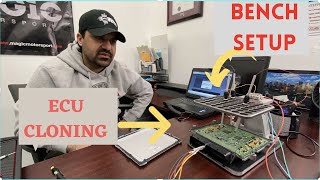
When a used part is the smart pick: A used ECM from a junkyard is a viable option ONLY if you use a specialized service to 'clone' it. Cloning involves transferring all data, including the VIN and immobilizer keys, from your original failed ECM to the donor unit. This makes the donor ECM a plug-and-play replacement without needing dealer programming.
Donor-vehicle mileage cap: roughly under 120000 miles for the part to have meaningful remaining life.
What to inspect on the donor part:
- Part number MUST be an exact match to the original module.
- Inspect the case for any physical damage, cracks, or pry marks.
- Check connectors for bent, corroded, or missing pins.
- Ensure the donor vehicle was not in a flood; look for signs of water intrusion or corrosion on the casing.
OEM-only on this vehicle (don't cheap out):
- Engine Control Module (ECM/PCM)
Aftermarket brands forum-validated for this vehicle:
- Kia (OEM - New or Remanufactured)
- Reputable Cloning Services (requires sending in original and donor units)
Brands owners have reported issues with on this vehicle:
- CARDONE: User reviews are mixed, with some technicians reporting multiple failures before receiving a good unit.
- Flagship One (FS1): Reviews are highly polarized. While many customers report success with their pre-programmed modules, a significant number report long delays, poor customer service, and receiving incorrect or faulty parts.
Real Owner Stories
Aggregated from forums and TSBs cited above. Mileages and costs reflect what owners reported in those sources.
2011-2020 Kia Sportage 2.0L CRDI
Symptoms: The vehicle experienced intermittent no-start conditions and unexpected engine stalling accompanied by code P0602.
What fixed it: After verifying the wiring and power supply were intact, the issue was resolved by replacing the ECU module.
Source hint: MHH Auto Forum
2011-2018 Kia Optima
Symptoms: The vehicle entered limp mode with the Check Engine Light on following a service attempt for a mandatory software update.
What fixed it: A successful reprogramming (re-flashing) of the ECM with the latest manufacturer software using a Kia-specific diagnostic tool (GDS).
Source hint: TSB PI1802 (and revisions)
Related OBD-II Codes
Frequently Asked Questions
Could the KSDS software update mentioned in TSB PI1802 cause my 2011-2018 Kia Optima to throw a P0602 code?
My Optima is in 'limp mode' and won't go over 2000 RPM; is this related to P0602?
Is there a recall for the engine issues that the KSDS update was supposed to monitor?
Can I just use a used ECM from a junkyard to fix P0602 on my Optima?
Will a weak battery cause a P0602 code on a 2011-2020 Kia Optima?
Helpful Videos
We Have This Part in Stock

The information in this article is provided for general reference and educational purposes only. Vehicle specifications, procedures, and part compatibility can vary by production date, trim level, and region. Always consult your vehicle's factory service manual and verify part numbers before purchasing or performing repairs. Safety-critical components such as airbags, seat belts, and braking systems should be installed by a qualified professional.
- Kia Optima:
- 🧭 Diagnostic Flowchart
- 🎬 Helpful Videos
- 🛍️ Shop This Part
- What's Unique About the 2011-2020 Kia Optima
- Symptoms You May Notice
- Most Likely Causes
- Rare But Worth Checking
- Diagnosis Steps
- Parts You'll Likely Need
- Related Codes That Often Appear With This One
- Technical Service Bulletins (TSBs) & Recalls
- Platform-Specific Known Issues
- Mechanic-Grade Diagnostic Values
- Scan Tool Commands That Help
- Wiring & Ground Locations
- OEM Part Supersession History
- Model Year Variations Within This Range
- Other Known Issues on This Vehicle
- Used vs. New Parts: Buying Guide for This Vehicle
- Real Owner Stories
- 2011-2020 Kia Sportage 2.0L CRDI
- 2011-2018 Kia Optima
- Related OBD-II Codes
- Frequently Asked Questions
- 🎟️ Get 5% Off