

P0602 on 1999-2004 Oldsmobile Alero V6: Control Module Programming Error Guide
P0602 means the main engine computer (PCM) has a software error. On this Alero, this is often caused by a weak battery, bad alternator, or poor ground connections. Before replacing the PCM, fully test the entire electrical system. If the PCM is replaced, it requires professional programming to work.
- P0602 is a serious code indicating a software problem in your Alero's main computer (PCM).
- DO NOT immediately replace the PCM. The most common cause on this car is an electrical issue like a weak battery, failing alternator, or bad ground wire.
- Thoroughly test the battery and charging system first. This is the most likely and cheapest fix.
- If the PCM must be replaced, it is NOT a plug-and-play part. It requires professional programming and a security relearn procedure to function.
- Driving with this code is unsafe, as the engine could stall at any time.
What's Unique About the 1999-2004 Oldsmobile Alero
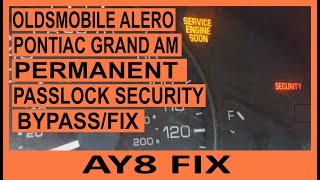
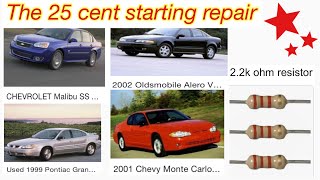
The Oldsmobile Alero, built on GM's N-body platform, is known to be sensitive to voltage fluctuations. While P0602 is a generic code, on this specific vehicle it is frequently a symptom of an underlying electrical problem, such as a failing alternator or bad battery connections, rather than an outright PCM failure. The vehicle's Passlock II security system also complicates diagnosis and repair, as its frequent failures can cause identical no-start symptoms. 🎬 See how to permanently bypass the Passlock system A PCM replacement requires a specific 30-minute security relearn procedure to make the new computer work with your existing keys.
Symptoms You May Notice
- Check Engine Light is on
- Vehicle will not start (cranks but won't fire)
- Engine stalls intermittently or immediately after starting
- Security light is illuminated or flashing on the dashboard
- Rough or erratic idling
- Reduced engine performance and poor acceleration
- Harsh or incorrect transmission shifting
- May need to wait 10 minutes with key on before car will restart (Passlock issue)
- Replacing the PCM without first testing the battery, alternator, and all power/ground connections. The new PCM will likely show the same code if the underlying voltage issue is not fixed.
- Replacing fuel pump or ignition components to address stalling or no-start symptoms before confirming the issue isn't a Passlock security lockout, which presents with identical symptoms.
Most Likely Causes
- Weak Battery or Failing Alternator 🔴 High Probability → Shop Alternator GM N-body vehicles are notoriously sensitive to low or unstable voltage. A voltage drop during cranking can corrupt the PCM's volatile memory, triggering a P0602 code even if the PCM is not faulty.
How to confirm: Test the battery voltage with a multimeter (should be ~12.6V with engine off). With the engine running, test the alternator output (should be ~13.7-14.7V). Have both components load-tested at an auto parts store, as a battery can show good voltage but fail under load.
Typical fix: Replace the weak battery or 🎬 Watch: How to replace the battery on an Alero failing alternator.
Est. part cost: $100-$250 - Poor Power or Ground Connections 🟡 Medium Probability Corrosion on battery terminals, main engine grounds, or PCM connectors can create voltage drops that trigger this code. The main engine-to-chassis ground strap is a common point of failure.
How to confirm: Visually inspect all battery cables and major ground straps for corrosion, looseness, or damage. Perform a voltage drop test on the main power and ground circuits to the PCM. A common ground point is from the engine block to the firewall or chassis.
Typical fix: Clean battery terminals and cable ends with a wire brush. Clean, tighten, or replace corroded ground straps.
Est. part cost: $5-$50 - PCM Was Replaced But Not Programmed 🟡 Medium Probability
How to confirm: If the PCM was just replaced, this is the most likely cause. A professional scan tool can check if the VIN in the PCM matches the vehicle.
Typical fix: The PCM must be programmed with the correct VIN and software using a GM-specific tool (like SPS). A Vehicle Theft Deterrent (VTD) relearn procedure must also be performed.
Est. part cost: $0 (labor cost for programming, typically $100-$250) - Failed Powertrain Control Module (PCM) ⚪ Low Probability → Shop Engine Control Module (ECM)
How to confirm: This should be the last resort after all other causes (especially electrical) have been definitively ruled out. Diagnosis requires a professional scan tool to confirm the PCM is unresponsive or has failed its internal self-tests after attempting a reflash.
Typical fix: Replace the PCM and have the new unit professionally programmed to the vehicle's VIN.
Est. part cost: $150-$400
Rare But Worth Checking
- Faulty Ignition Switch or Passlock Sensor: A known issue on the Alero and its platform mates, a faulty ignition switch or the embedded Passlock sensor can cause intermittent power loss to the PCM and other modules, or send erratic security signals, potentially triggering memory or programming-related codes like P0602.
Diagnosis Steps
- Check Battery and Charging System: Use a multimeter to verify battery voltage is above 12.4V with the engine off. Start the engine and confirm alternator output is between 13.7V and 14.7V. Have the battery load-tested, even if it seems good.
- Inspect All Power and Ground Connections: Thoroughly inspect the battery terminals and cables for corrosion or looseness. Locate and check the main engine-to-chassis and battery-to-chassis ground straps. Ensure they are clean, tight, and free of damage.
- Scan for Other Codes: Use an OBD-II scanner to check for any other codes. Internal PCM faults (P0601, P0604), communication codes (U-series), or security codes (B-series) can provide more context.
- Observe Security Light Behavior: Pay close attention to the 'SECURITY' light. If it's flashing during a crank/no-start event, the problem is almost certainly related to the Passlock system, not the PCM itself.
- Verify PCM Programming (If Recently Replaced): If the PCM was recently swapped, it almost certainly needs to be programmed. This is not a DIY task and requires a shop with GM programming capabilities.
- Attempt Security Relearn Procedure: If you suspect a security system conflict (e.g., after a dead battery), perform the 30-minute VTD/Passlock relearn. This involves turning the key to 'ON' for 10-11 minutes until the security light stops flashing, then 'OFF' for 30 seconds, and repeating this cycle three times. 🎬 Watch: Step-by-step security system reset walkthrough
- Professional Diagnosis: If the steps above do not resolve the issue, the vehicle must be taken to a qualified technician. They can perform advanced diagnostics, such as checking for power/ground at the PCM connector and attempting to re-flash the existing module before condemning it.
Parts You'll Likely Need
- Powertrain Control Module (PCM)
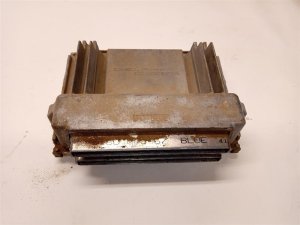
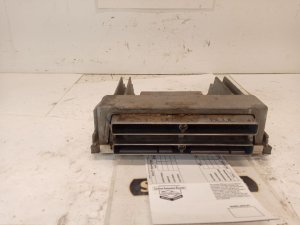
(OEM #Varies by year. Examples: 16236757 or 09356741 (1999), 12211454 (2001), 12209614 (2002), 12583827 (2003-2004). Always verify by VIN.)— This is the part that stores the programming. It is only replaced after all external electrical issues are ruled out. A replacement MUST be programmed to the car's VIN.
Trusted brands: ACDelco
OEM price range: $250-$400
Aftermarket price range: $150-$300 - Battery — A weak or failing battery is a very common cause of voltage instability that can trigger a P0602 code on this vehicle.
Trusted brands: ACDelco, DieHard
OEM price range: $150-$250
Aftermarket price range: $100-$200
Related Codes That Often Appear With This One
- P0601, P0604, P0606 — These are all internal control module error codes. They often appear together as they all point to a problem within the PCM itself. GM TSB #05-06-04-060A groups these codes as related internal module faults.
- U-series codes (e.g., U0100) — A PCM with a programming error may not be able to communicate with other modules on the vehicle's data network, resulting in communication loss codes.
- B2960 — This is a Body Control Module (BCM) code for a Passlock sensor data error. It often appears when the root cause is a faulty ignition switch/Passlock sensor, which can be confused with a PCM problem.
Technical Service Bulletins (TSBs) & Recalls
- GM TSB #05-06-04-060A: An informational bulletin covering P0601, P0602, P0603, and other internal module fault codes. It advises technicians to investigate and verify the module's programming status and software before replacing any hardware, reinforcing a software-first diagnostic approach.
Platform-Specific Known Issues
- Owner Experience with Passlock vs. PCM: On the Edmunds forums, an owner describes a classic Alero no-start problem. After towing the car multiple times, they discovered the issue was interference with the Passlock key from other keys on the keychain. The car would always start for the mechanic, who was only given the single car key. This highlights how sensitive the security system is and how it can be easily misdiagnosed as a major component failure like the PCM.
Mechanic-Grade Diagnostic Values
- PCM Ground Circuit Voltage Drop — expected: Less than 0.1 Volts (100 millivolts). Failure: A reading higher than 0.1V between the PCM ground pin and the negative battery terminal indicates high resistance in the ground circuit, a common hidden cause for module errors.
- Class 2 Serial Data Line Voltage (at DLC Pin 2) — expected: Fluctuating voltage with key on, engine off.. Failure: A steady 0V indicates a short to ground. A steady high voltage (e.g., 5V or 12V) indicates a short to a power source. No fluctuation means no communication is occurring, which can prevent programming.
- Alternator Output Voltage — expected: ~13.7 - 14.7 Volts with engine running.. Failure: Voltage below 13.7V or fluctuating wildly can indicate a failing alternator, which causes voltage instability that can corrupt PCM memory and trigger a P0602.
Scan Tool Commands That Help
- GM Tech 2 / MDI with SPS: Service Programming System (SPS) - Reprogram ECU — This is the primary function used to fix a P0602 code. It re-flashes the PCM with the correct, VIN-matched software from GM's servers. It can fix software corruption on the existing module or program a new/used replacement module.
- GM Tech 2: Crankshaft Position Variation Relearn — This procedure is often required after reprogramming or replacing the PCM. If not performed, the vehicle may run but will set a P1336 or P0315 code, and the check engine light will remain on.
- GM Tech 2: Module Identification / ECU Information — Before attempting any programming, use this function to check the VIN stored in the PCM. If the VIN is blank, incorrect, or shows garbage characters, it confirms a programming error is the cause of the P0602.
Wiring & Ground Locations
- G103 — On a transmission stud on the left side of the engine (for the 3.4L V6).. This is a critical ground splice pack for the Powertrain Control Module (PCM). Internal corrosion in this splice is a notorious failure point on N-body cars and can cause intermittent loss of ground to the PCM, leading to communication and programming-related codes like P0602 and U0100.
- G102 — On the left side of the engine, in front of the starter (for the 3.4L V6).. This serves as a primary ground for the computer data lines system and ignition control module. A poor connection here can disrupt communication and cause erratic engine behavior that might be misdiagnosed as a PCM failure.
- G101 — On the left (driver's side) engine compartment, near the strut tower.. This is a major chassis ground point. While not a direct PCM ground, corrosion here can cause widespread electrical issues that affect module stability.
- PCM Location — Below the left (driver's) side of the dashboard.. This is the physical location of the module itself, necessary for inspection, testing connector pins, and replacement.
- PCM ACC Fuse (Fuse I) — In the instrument panel fuse block on the driver's side edge of the dashboard.. This fuse provides accessory power to the PCM. If it's blown, the PCM will not power on correctly, which can lead to programming errors or no-start conditions.
Real Owner Repair Stories
- iATN (International Automotive Technicians Network) (2003 Oldsmobile Alero GL 3.4L) — No crank, no start. No radio function. Instrument cluster gauges do not cycle at key-on, and the theft light does not illuminate when trying to crank.
❌ Tried (didn't work) Initial diagnosis focused on a potential Passlock or ignition switch failure due to the no-crank and theft light symptoms.
✅ What actually fixed it The technician found that the Class 2 serial data bus line was shorted. This communication line is essential for the PCM, BCM, and instrument cluster to talk to each other. The lack of communication prevented the security handshake, causing the no-start and mimicking a component failure. The root cause was a wiring issue on the data bus, not a faulty PCM.
OEM Part Supersession History
09360210, 12202600→12209614— Part consolidation and minor revisions by the manufacturer.
Heads up: Part number 12209614 is a common service replacement for several earlier GM 3.4L V6 applications, including the Alero. While physically compatible, it absolutely requires VIN-specific programming to function.12582720 (Hardware Code)→12585082 (Software/Service Number)— Represents the software calibration loaded onto a specific hardware module.
Heads up: For 2003-2004 models, it's common to see a hardware number on the unit and a different service number on the sticker. Both must be compatible, but the key is programming the service number that matches the vehicle's VIN and options.
Model Year Variations Within This Range
- 1999-2002 vs 2003-2004: The PCM part numbers and internal hardware changed during the Alero's production run. For example, a PCM for a 2001 model (e.g., 12211454) is not interchangeable with a PCM for a 2004 model (e.g., 12583827) even with reprogramming, due to hardware and pinout differences. Always verify the correct part number for the specific model year and VIN.
Diagnostic Flowchart
Other Known Issues on This Vehicle
Issues unrelated to this code that are worth knowing about as an owner of this generation:
- Lower Intake Manifold (LIM) Gasket Failure 🔴 High — Extremely common on the 3.4L LA1 V6, often occurring between 80,000 and 120,000 miles. The original plastic/silicone gaskets degrade from Dex-Cool coolant, causing coolant to leak externally or internally into the engine oil.
- Passlock Anti-Theft System Failure 🟠 Medium — Very common across all model years. The Hall effect sensor or magnet in the ignition lock cylinder fails, causing an intermittent no-start condition where the engine fires for a second then dies, accompanied by a flashing 'SECURITY' light.
- Wheel Bearing / Hub Assembly Failure 🟠 Medium — Frequently reported by owners. The front wheel bearings wear out prematurely, causing a roaring or grinding noise that changes with turning. Failure of the integrated ABS sensor will also trigger ABS and Traction Control warning lights.
- Power Window Regulator Failure 🟡 Low — Common problem where the plastic clips holding the window to the regulator break, or the cable snaps, causing the window to fall into the door.
- Ignition Switch Failure (Recall) 🔴 High — Subject to a major GM recall. The weight of a heavy key ring could cause the ignition switch to move out of the 'Run' position while driving, shutting off the engine and disabling airbags. (Ref: GM Recall #14299)
Used vs. New Parts: Buying Guide for This Vehicle
When a used part is the smart pick: A used PCM from a salvage yard is a very cost-effective option for this repair, provided you use a service that can program it with your car's VIN before shipping it to you. Since the part itself is generally reliable (the code is often caused by external issues), a tested, used OEM unit is often a better choice than a new, unproven aftermarket module.
Donor-vehicle mileage cap: roughly under 150000 miles for the part to have meaningful remaining life.
What to inspect on the donor part:
- Ensure the seller guarantees the part is tested and functional.
- Inspect the PCM connectors for any signs of corrosion, bent pins, or water intrusion.
- Avoid units with physical damage to the case, such as cracks or severe dents.
- Confirm the seller offers VIN programming as part of the sale; a blank used PCM is useless without access to professional programming tools.
OEM-only on this vehicle (don't cheap out):
- Powertrain Control Module (PCM): While used OEM is fine, avoid generic aftermarket PCMs that are not specifically programmed for your VIN. An ACDelco remanufactured unit or a pre-programmed used OEM unit are the most reliable choices.
Aftermarket brands forum-validated for this vehicle:
- For replacement batteries: ACDelco, DieHard, Interstate.
- For remanufactured PCMs: ACDelco (reman), services like Flashmasters or Module Mechanics that program used OEM units.
Brands owners have reported issues with on this vehicle:
- Unbranded, 'plug-and-play' PCM modules sold on auction sites that do not require VIN programming. These often do not work or fail quickly.
Real Owner Stories
Aggregated from forums and TSBs cited above. Mileages and costs reflect what owners reported in those sources.
1999-2004 Oldsmobile Alero V6-3.4L
Symptoms: Classic no-start problem where the car had to be towed multiple times, but would always start for the mechanic.
What fixed it: Removing other keys from the keychain to prevent interference with the Passlock key.
Source hint: Edmunds forums owner experience described in 'Owner Experience with Passlock vs. PCM' section
2002 Oldsmobile Alero
Symptoms: No-start condition related to the Passlock system.
What fixed it: Debated Passlock bypass methods to resolve the intermittent security lockout.
Source hint: Car Talk Community thread 'passlock-problem/25392'
2003 Oldsmobile Alero
Symptoms: Passlock security issue causing the vehicle not to start.
What fixed it: Performed the 10-minute relearn procedure (turning key to ON for 10-11 minutes until light stops flashing, repeated three times).
Source hint: Bob Is The Oil Guy forum discussion on a 2003 Alero Passlock issue
Related OBD-II Codes
Frequently Asked Questions
Does GM TSB #05-06-04-060A apply to my Alero's P0602 code?
My Alero won't start and the security light is flashing; is my PCM bad?
Can a weak battery cause a P0602 code on a 3.4L Alero?
I just replaced my PCM and now I have a P0602 code. What did I do wrong?
Is there a specific ground point I should check for this code on my Alero?
Why does my Alero start for my mechanic but not for me?
Helpful Videos
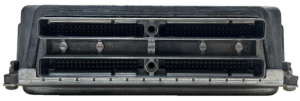
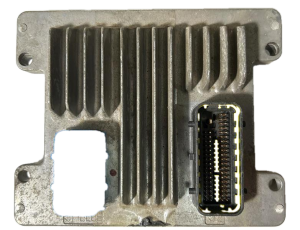
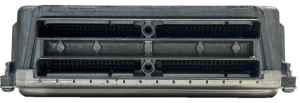
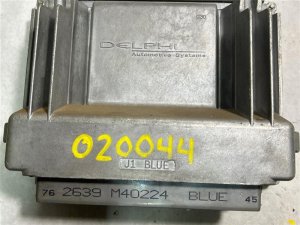
Used OEM Parts in Stock
New Aftermarket Parts Available



The information in this article is provided for general reference and educational purposes only. Vehicle specifications, procedures, and part compatibility can vary by production date, trim level, and region. Always consult your vehicle's factory service manual and verify part numbers before purchasing or performing repairs. Safety-critical components such as airbags, seat belts, and braking systems should be installed by a qualified professional.
- Oldsmobile Alero:
- 🧭 Diagnostic Flowchart
- 🎬 Helpful Videos
- 🛍️ Shop This Part
- What's Unique About the 1999-2004 Oldsmobile Alero
- Symptoms You May Notice
- Most Likely Causes
- Rare But Worth Checking
- Diagnosis Steps
- Parts You'll Likely Need
- Related Codes That Often Appear With This One
- Technical Service Bulletins (TSBs) & Recalls
- Platform-Specific Known Issues
- Mechanic-Grade Diagnostic Values
- Scan Tool Commands That Help
- Wiring & Ground Locations
- Real Owner Repair Stories
- OEM Part Supersession History
- Model Year Variations Within This Range
- Other Known Issues on This Vehicle
- Used vs. New Parts: Buying Guide for This Vehicle
- Real Owner Stories
- 1999-2004 Oldsmobile Alero V6-3.4L
- 2002 Oldsmobile Alero
- 2003 Oldsmobile Alero
- Related OBD-II Codes
- Frequently Asked Questions
- 🎟️ Get 5% Off