

P0602 on 2008-2009 Pontiac G8: Control Module Programming Error Explained
P0602 on a Pontiac G8 signifies a programming or software error within a control module, most commonly the Engine Control Module (ECM) or Transmission Control Module (TCM). This is not a DIY fix; it requires professional reprogramming. Before reprogramming, check the battery and ground connections, as voltage issues are a common trigger for this code on the G8's sensitive electronics.
- P0602 is a software error, not a mechanical part failure.
- This is not a DIY repair. You will need a professional with GM-specific tools to reprogram the vehicle's computer.
- Before paying for expensive diagnostics, ensure your battery is fully charged and healthy, and check that all battery and ground connections are clean and tight.
- Do not continue driving with this code, as you risk the vehicle stalling or not starting at all.
- If reprogramming a module does not fix the issue, the module itself has likely failed and needs to be replaced.
What's Unique About the 2008-2009 Pontiac G8
The Pontiac G8, built on the GM Zeta platform shared with the Holden Commodore, has a complex network of electronic modules that are highly sensitive to voltage fluctuations. A P0602 code can often be triggered by an underlying electrical issue, such as a weak battery, failing alternator, or poor ground connections, which can corrupt a module's memory during startup or operation. The G8's trunk-mounted battery design, while good for weight distribution, involves long cable runs that can exacerbate voltage drop issues, making clean power and ground connections especially critical. GM has issued informational bulletins for technicians acknowledging that low voltage can be a cause for various control module programming error codes, including P0602.
Symptoms You May Notice
- Check Engine Light is on
- Vehicle may not start or is hard to start
- Engine may stall or idle roughly
- Harsh or erratic automatic transmission shifting
- Reduced engine power or poor acceleration ('limp mode')
- Decreased fuel economy
- Failure to communicate with the scan tool
- Replacing ignition coils or fuel injectors. While symptoms like rough idle might suggest these parts, P0602 is specifically a module programming error, not a component failure.
Most Likely Causes
- Control Module Reprogramming Required 🔴 High Probability Software glitches, corruption from voltage instability, or failed aftermarket tuning attempts can lead to this code. Modules may require a re-flash to the latest GM calibration to fix bugs or restore stock programming.
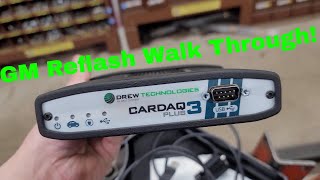
How to confirm: A professional technician will use a GM-specific scan tool (like a Tech 2 or MDI) to check the software calibration version and attempt to reprogram the affected module using the Service Programming System (SPS). 🎬 Watch: Step-by-step walkthrough for reprogramming GM control modules.
Typical fix: Reprogramming (re-flashing) the affected module (ECM, TCM, etc.) with the latest software from the manufacturer. If a failed aftermarket tune caused the issue, a bench flash might be required to recover a 'bricked' ECM.
Est. part cost: $0 (if only labor) - Weak or Failing Battery 🟡 Medium Probability → Shop Vehicle Battery The G8's electronic modules are sensitive to low voltage during startup, which can corrupt memory and trigger programming-related codes. The trunk-mounted battery can sometimes hide early signs of failure or corrosion.
How to confirm: Test the battery voltage with a multimeter. It should be above 12.4V with the engine off and 13.7-14.7V while running. A load test is the definitive way to check its health.
Typical fix: Replace the vehicle's battery.
Est. part cost: $150-$250 - Poor Power or Ground Connections 🟡 Medium Probability Corroded or loose ground straps and battery terminals are a known issue that can cause intermittent voltage drops, leading to module memory corruption. Key grounds are located on the cylinder heads and front chassis rails. 🎬 Watch: How a bad ground can cause security and starting issues.
How to confirm: Visually inspect all battery terminals (in the trunk), the under-hood jump post, and major chassis/engine ground straps for corrosion, damage, or looseness. A forum user on GRRRR8.net identified key ground locations including the RH front chassis rail (G101/G102) and cylinder heads (G103, G110, G112). Perform a voltage drop test on the ground circuit.
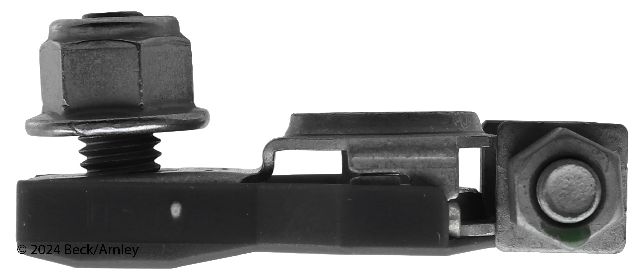
Typical fix: Clean all corrosion from terminals and grounding points with a wire brush and ensure all connections are tight. 🎬 See how replacing battery terminals can fix G8 electrical issues. Some owners add supplementary ground wires from the cylinder head to the chassis as a preventative measure.
Est. part cost: $5-$20 (for cleaning supplies) - Faulty Control Module (ECM/TCM) ⚪ Low Probability Internal hardware failure of the module's memory or processor can prevent it from being reprogrammed successfully. This is a diagnosis of exclusion after other causes are ruled out.
How to confirm: This is typically confirmed after a reprogramming attempt fails repeatedly. If the module will not accept or retain the new software, it is considered faulty.
Typical fix: Replace the faulty control module and program the new unit to the vehicle's VIN.
Est. part cost: $400-$800
Rare But Worth Checking
- Aftermarket Engine Tuning: If a non-factory performance tune (e.g., from HP Tuners) has been loaded onto the ECM, a failed flash or data corruption can cause a P0602 code and potentially 'brick' the ECM, rendering the car unable to start. Returning the ECM to the stock GM tune is a necessary diagnostic step. GM TSB 09-06-04-026X discusses GM's policy on failures due to non-GM calibrations.
Diagnosis Steps
- Scan for all stored trouble codes to identify which module is setting the P0602 code (e.g., ECM, TCM, BCM).
- Fully charge and load test the battery to ensure it is healthy. A weak battery is a common cause.
- Inspect all battery cables, terminals (in the trunk), and main engine/chassis ground straps for corrosion or looseness. Key G8 ground points are on the RH front chassis rail and cylinder heads. Clean and tighten as needed.
- With the battery and grounds confirmed good, clear the codes and see if P0602 returns. If it does, professional reprogramming is the next step.
- Take the vehicle to a qualified shop or dealership with GM-specific programming tools (Tech 2/MDI and SPS subscription).
- The technician will attempt to reprogram the affected module with the latest factory software.
- If the reprogramming fails, the control module itself is likely defective and will need to be replaced and programmed.
Parts You'll Likely Need
- Engine Control Module (ECM/PCM)
(OEM #12612384, 12625455, 12636006 (V8 models); 12614423, 12623327 (V6 models) - Part numbers are year/engine specific, always verify with VIN.)— This is the most common module to fail and require replacement if reprogramming does not work.
Trusted brands: ACDelco
OEM price range: $400-$800
Aftermarket price range: $300-$600 - Transmission Control Module (TCM)
(OEM #Part of 6L80E valve body assembly. See interchange part numbers like 24275873, 24276124. Requires VIN programming.)— The TCM can also set this code, leading to shifting problems. It is located inside the transmission oil pan and typically replaced with the valve body.
Trusted brands: ACDelco
OEM price range: $350-$700
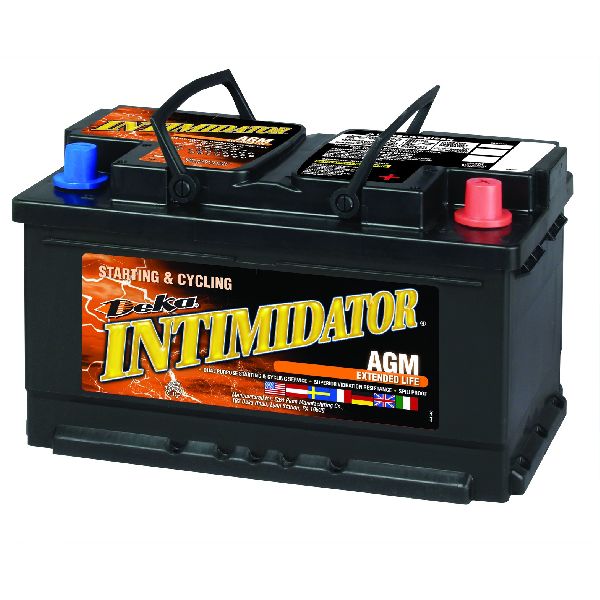
Aftermarket price range: $250-$500 - Automotive Battery — A weak battery is a frequent underlying cause of this code due to voltage instability.
Trusted brands: ACDelco, DieHard, Interstate
OEM price range: $200-$300
Aftermarket price range: $150-$250
Related Codes That Often Appear With This One
- P0601 — P0601 indicates an 'Internal Control Module Memory Check Sum Error,' a more specific internal validation failure that can accompany the general programming error of P0602.
- U0100 — This code means 'Lost Communication With ECM/PCM.' If the ECM's software is corrupt (P0602), it may fail to communicate properly on the vehicle's CAN bus network, triggering communication codes with other modules.
- P0603 — Indicates a 'Keep Alive Memory (KAM) Error,' often caused by the same power supply interruptions (weak battery, bad grounds) that can trigger P0602.
Technical Service Bulletins (TSBs) & Recalls
- 05-06-04-060A: An informational bulletin for technicians regarding various control module DTCs (including P0601, P0602, P0603, P0604), noting that low voltage can be a potential cause and to check this before replacing modules.
- 09-06-04-026W (and later revisions): Details GM's policy regarding powertrain component failures due to non-GM ECM calibrations (aftermarket tunes), which can be a source of the P0602 code.
Platform-Specific Known Issues
- Trunk-Mounted Battery: The long distance from the battery in the trunk to the engine compartment can lead to greater voltage drop. This makes the condition of the battery, cables, and under-hood jump-start post connections extremely important to prevent module programming errors.
- Grounding Points: Owners on forums frequently discuss the importance of checking and cleaning main ground points to solve a variety of electrical gremlins. Key locations cited include the passenger side (RH) front chassis rail and straps from the cylinder heads to the chassis.
Mechanic-Grade Diagnostic Values
- CAN Bus Voltage — expected: Approximately 2.5V on both CAN High and CAN Low lines when the bus is idle (key on, engine off).. Failure: Voltages that are stuck high (5V), low (0V), or do not mirror each other during communication can indicate a bus wiring problem or a faulty module.
- CAN Bus Terminating Resistance — expected: Approximately 60 Ohms when measured between CAN High and CAN Low pins at the DLC with the battery disconnected. The G8 has two 120 Ohm terminating resistors in parallel (one in the ECM, one in the BCM).. Failure: A reading of 120 Ohms indicates one of the terminating resistors (or its module) is not communicating. A reading near 0 Ohms indicates a short between the CAN lines.
- ECM Power Supply Voltage (at ECM connector) — expected: 12V+ (Battery Voltage) at all times.. Failure: Voltage below 12V indicates a power supply issue from the fuse block or wiring.
- ECM Ignition 1 Voltage (at ECM connector) — expected: 12V+ (Battery Voltage) only when the key is in the ON or RUN position.. Failure: No voltage when the key is on indicates a problem with the ignition switch signal or related wiring/fuses.
Scan Tool Commands That Help
- Tech 2 / MDI with GM SPS (Service Programming System): Replace and Reprogram — This function is used after installing a new or used control module. It downloads the correct VIN-specific calibration file from GM's servers and flashes it to the module, which is the required fix for a P0602 on a new module.
- Tech 2 / MDI with GM SPS (Service Programming System): Reprogram ECU — This function is used on the existing module to attempt to fix a corrupted file. It re-flashes the module with the latest available software version, which can resolve P0602 if it was caused by a software glitch rather than a hardware failure.
Wiring & Ground Locations
- G101 / G102 — On the right-hand (passenger side) front chassis rail in the engine compartment.. These are main chassis grounds for the vehicle's electrical system. G101 specifically provides a ground path for the Engine Control Module (ECM) and Transmission Control Module (TCM). A poor connection here can directly cause module communication and programming errors.
- G103 — From the right-hand (passenger side) front cylinder head to the ABS bracket.. This is considered the primary engine block ground. A clean, tight connection is critical for stable sensor readings and module operation.
- G110 / G112 — G110 is from the right-hand front cylinder head to the engine harness; G112 is from the left-hand rear cylinder head to the engine harness.. These provide dedicated grounds for the engine harness itself, ensuring all sensors and actuators connected to the ECM have a stable reference.
- ECM Connector X1, Pin 20 (RD/WH wire) — The main connector block on the Engine Control Module.. This is the main Battery Positive Voltage feed to the ECM. It should have 12V+ at all times. Verifying voltage here confirms the ECM has constant power.
- ECM Connector X1, Pin 19 (PK wire) — The main connector block on the Engine Control Module.. This is the Ignition 1 Voltage feed to the ECM. It should have 12V+ when the key is on. Verifying voltage here confirms the ECM is receiving the signal to 'wake up'.
Real Owner Repair Stories
- GRRRR8.net user post (Pontiac G8 (model year not specified, but within 2008-2009 range)) — Implied ECM failure leading to replacement.
❌ Tried (didn't work) The user's post is preemptive, indicating they are replacing the ECM and want to avoid future issues.
✅ What actually fixed it The user was preparing to install a new ECM and have it flashed by the dealer. As a critical preparatory step to ensure the new module would work correctly, they proactively sought out the locations of all major engine and chassis grounds to inspect and clean them, understanding that poor grounds could have caused the original failure or could damage the new module. The final fix was a combination of module replacement, professional programming, and ensuring a solid electrical foundation by verifying all grounds.
OEM Part Supersession History
12612384 (Common for 2008 V8)→Interchangeable with 12617568, 12619077. Always verify the correct service number for your specific VIN and calibration.— Part revisions and updates by the manufacturer.
Heads up: While many E38 ECMs are physically identical, they must be programmed with the correct software and calibration for the specific vehicle (engine, transmission, options). Using an ECM from a different model without reprogramming will not work.12625455 (Common for 2009 V8 GXP)→Interchangeable with 12628989, 12630500, 12636006.— Part revisions and updates by the manufacturer.
Heads up: The GXP (LS3) ECM has different calibrations than the GT (L76) model. You cannot use a GT ECM on a GXP or vice-versa without correct reprogramming.24041874, 24257213 (TCM/Valve Body Assembly)→24275873— Updated part design, likely to improve reliability or address known issues.
Heads up: This is a direct replacement, but the new module must be programmed to the vehicle's VIN after installation using GM's Service Programming System (SPS).
Model Year Variations Within This Range
- 2009: The high-performance GXP model was introduced, featuring the 6.2L LS3 V8 and an optional Tremec TR-6060 manual transmission. This requires a different ECM and calibration compared to the V6 and GT models.
- 2009.5 (mid-year update): Bluetooth connectivity became standard. While this doesn't directly affect the P0602 code, it represents a change in the vehicle's overall electronic configuration. Some late 2009 models also received updated transmission components to address a 2-3 shift flare issue.
Diagnostic Flowchart
Used vs. New Parts: Buying Guide for This Vehicle
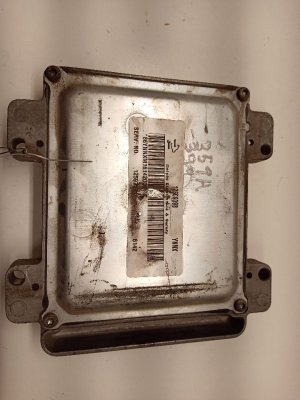
When a used part is the smart pick: A used OEM (ACDelco) Engine Control Module (ECM) is a very sensible and cost-effective choice, provided it is from a reputable seller who guarantees it is a functional, reprogrammable unit. Since even a new module requires programming, the key step is the software flash, not the physical state of the part.
Donor-vehicle mileage cap: roughly under 150000 miles for the part to have meaningful remaining life.
What to inspect on the donor part:
- Guaranteed to be reprogrammable.
- No signs of fire, flood, or major physical case damage (cracks, broken connectors).
- Sourced from a vehicle with a known history, if possible.
- Seller has a good reputation for providing VIN-programming services.
OEM-only on this vehicle (don't cheap out):
- Engine Control Module (ECM)
- Transmission Control Module (TCM)
Aftermarket brands forum-validated for this vehicle:
- For this repair, 'known good' refers to reputable refurbishers that supply VIN-programmed OEM units, such as Flagship One or PCM of NC.
Brands owners have reported issues with on this vehicle:
- Avoid any 'new' non-OEM, cloned, or unbranded control modules from major online marketplaces. The risk of incompatibility or programming failure is extremely high.
Real Owner Stories
Aggregated from forums and TSBs cited above. Mileages and costs reflect what owners reported in those sources.
2009 Pontiac G8
Symptoms: Owner was troubleshooting various electrical gremlins, which can manifest as symptoms associated with P0602 like stalling, hard starting, or erratic shifting.
What fixed it: The issue was resolved by locating, cleaning, and tightening the primary engine and chassis ground points, specifically those identified as G101, G102, G103, G110, and G112.
Cost: $5-$20
Source hint: GRRRR8.net - Thread: 'Grounds??' (04-14-2011)
Related OBD-II Codes
Frequently Asked Questions
Where are the most important ground locations I should check on my Pontiac G8 for a P0602 code?
My G8 has an aftermarket tune. Could this be the reason I'm seeing a P0602 code?
Does the trunk-mounted battery on the G8 make it more prone to this code?
My mechanic wants to replace the ECM immediately. Is there anything else I should check first?
Can I just buy a used ECM from another G8 and install it to fix P0602?
Do other cars built on the same platform, like the Chevy SS or 5th Gen Camaro, also have this P0602 issue?
Helpful Videos



Used OEM Parts in Stock
New Aftermarket Parts Available


The information in this article is provided for general reference and educational purposes only. Vehicle specifications, procedures, and part compatibility can vary by production date, trim level, and region. Always consult your vehicle's factory service manual and verify part numbers before purchasing or performing repairs. Safety-critical components such as airbags, seat belts, and braking systems should be installed by a qualified professional.
- Pontiac G8:
- 🧭 Diagnostic Flowchart
- 🎬 Helpful Videos
- 🛍️ Shop This Part
- What's Unique About the 2008-2009 Pontiac G8
- Symptoms You May Notice
- Most Likely Causes
- Rare But Worth Checking
- Diagnosis Steps
- Parts You'll Likely Need
- Related Codes That Often Appear With This One
- Technical Service Bulletins (TSBs) & Recalls
- Platform-Specific Known Issues
- Mechanic-Grade Diagnostic Values
- Scan Tool Commands That Help
- Wiring & Ground Locations
- Real Owner Repair Stories
- OEM Part Supersession History
- Model Year Variations Within This Range
- Used vs. New Parts: Buying Guide for This Vehicle
- Real Owner Stories
- 2009 Pontiac G8
- Related OBD-II Codes
- Frequently Asked Questions
- 🎟️ Get 5% Off