

P0602 on 2010-2016 Porsche Panamera: Control Module Programming Error Explained
P0602 on a 2010-2016 Porsche Panamera indicates a programming error within the main engine computer (DME). This is a serious fault that almost always requires a trip to a dealer or specialist for reprogramming with Porsche-specific tools. Expect a diagnostic and reprogramming fee of several hundred dollars, but a full DME replacement can cost thousands.
- P0602 is a critical error indicating a software problem in your Panamera's main engine computer (DME).
- This is not a DIY-friendly repair. You must take the vehicle to a Porsche dealer or a qualified independent specialist with a PIWIS Tester.
- The most common fix is reprogramming the DME, which is less expensive than replacing it.
- Before any other work, ensure your vehicle's battery is in excellent health, as low voltage is a frequent cause of this code.
- Do not continue to drive the vehicle. A car with a P0602 code can stall or enter limp mode at any time, creating a safety hazard.
What's Unique About the 2010-2016 Porsche Panamera
The 2010-2016 Porsche Panamera (970 generation) uses a highly integrated and complex network of control modules, with the DME (often a Bosch ME17 or similar variant) at its core. A P0602 code is particularly critical because the DME is not a simple plug-and-play component. Any replacement or reprogramming requires a Porsche-specific diagnostic tool (PIWIS Tester) to code the module to the car's unique VIN, immobilizer system (KESSY), and other control units. An interruption or voltage fluctuation during a programming sequence is a common cause for this code. Porsche technical documents, like recall campaign AMC2, heavily emphasize the need for a stable power supply of 13.5-14.5 volts during any flashing process to prevent bricking the module.
Symptoms You May Notice
- Check Engine Light is on
- Vehicle will not start, but may crank
- Engine stalls unexpectedly
- Reduced engine power and activation of 'limp mode'
- Erratic or harsh shifting from the automatic transmission (PDK)
- Reduced fuel efficiency
- Multiple, seemingly unrelated warning lights on the dashboard (e.g., PSM Failure, Chassis System Fault) due to communication loss.
- Inability to communicate with the DME using a standard OBD-II scanner.
- Replacing other engine components like sensors or fuel injectors. The problem is almost always related to the software or hardware of the control module itself, not the parts it controls.
- Condemning the DME without first performing a thorough battery and charging system load test. Many electronic issues on these cars stem from unstable voltage.
Most Likely Causes
- Interrupted or Failed DME Reprogramming 🔴 High Probability This can happen during a software update at a workshop if the connection is lost or if voltage is unstable. It's also a known risk after a failed attempt at aftermarket tuning with tools like Cobb Accessport or Dimsport, which can 'brick' the ECU if the process is interrupted. Porsche TSBs repeatedly warn that failure to maintain 13.5-14.5V during programming can damage the control unit.
How to confirm: This is confirmed if the code appeared immediately after a programming attempt. A Porsche dealer or specialist must use a PIWIS tester to check the software version and communication status. In some cases, the DME may become completely unresponsive.
Typical fix: The DME must be correctly reprogrammed using a PIWIS tester with a stable, high-amperage power supply connected to the vehicle. 🎬 See how to flash a stock tune using PIWIS. If bricked, a specialist may be able to recover it via bench flashing.
Est. part cost: $0 - $500 - Unstable Battery Voltage or Failing Battery 🟡 Medium Probability → Shop Vehicle Battery Modern Porsches are extremely sensitive to battery voltage. A weak or failing battery can cause voltage drops below 12V during startup or operation, which can corrupt module memory or cause a cascade of electronic faults. A user on 6SpeedOnline described numerous electronic failures, including chassis faults, when their battery voltage read 11.9V at rest.
How to confirm: Test the battery's voltage and load capacity. A healthy AGM battery should show ~12.6V at rest and maintain voltage above 10V during cranking. Check alternator output (13.5-14.5V) when the engine is running. Even a battery that passes a simple voltage test may fail a load test.
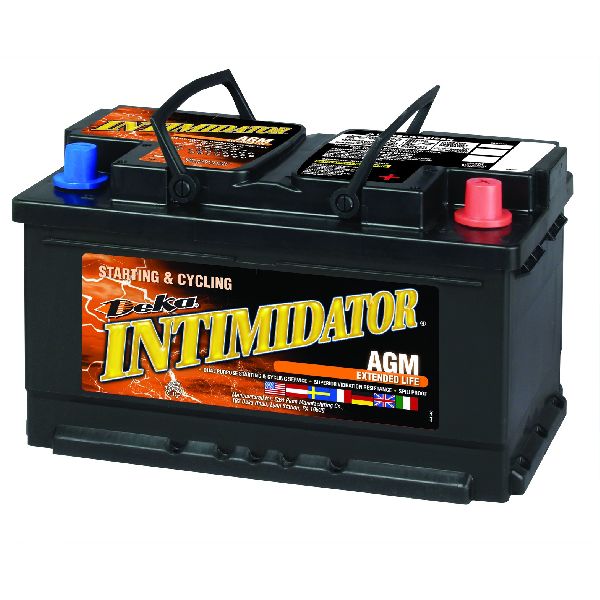
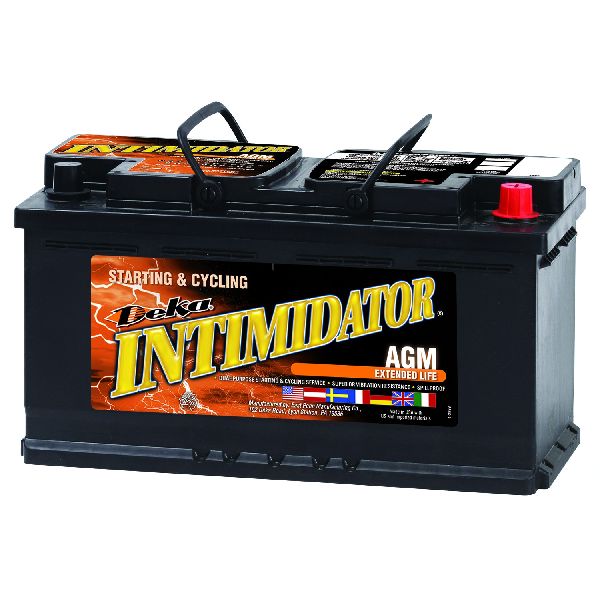
Typical fix: Replace the vehicle battery with a high-quality AGM equivalent (e.g., Moll, Banner, Interstate) and register the new battery with the vehicle's computer system using a PIWIS or advanced aftermarket scanner. This registration is critical for the vehicle's charging strategy.
Est. part cost: $250-$500 - Faulty DME (Engine Control Module) ⚪ Low Probability While rare, internal hardware failure of the DME's memory chips or circuit board can occur due to heat, vibration, or age. Water ingress from clogged plenum drains under the windshield cowl is a known cause of DME failure on some Porsche platforms.
How to confirm: This is a diagnosis of last resort after all other possibilities (programming, voltage, wiring) have been eliminated by a qualified technician. If the DME cannot be communicated with or reprogrammed even on a bench setup, it is likely faulty.
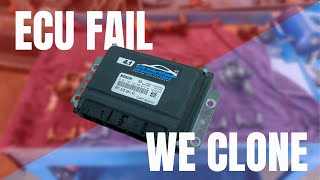
Typical fix: The DME must be replaced. A new DME from Porsche costs over $2,000 and must be programmed to the vehicle's VIN and immobilizer. A more cost-effective option is to use a specialized service like ECU Doctors or Protomotive to clone the original DME's data onto a compatible used unit, making it plug-and-play.
Est. part cost: $1500-$3000
Rare But Worth Checking
- CAN Bus Harness or Connector Issue: A damaged wire or corroded connector in the Controller Area Network (CAN) bus can interrupt communication during a self-check, leading the DME to believe its programming is faulty. A Porsche Workshop Campaign for 2010-2011 Panameras (SB-10044604-5206) addressed potential moisture in ground splice connections in the engine wire harness, which could cause similar communication issues.
Diagnosis Steps
- Connect a professional-grade scanner (ideally a Porsche PIWIS Tester) and read all fault codes from all vehicle modules. Note any 'No Communication' errors.
- Check the freeze frame data to see the conditions under which the P0602 code was set.
- Perform a comprehensive test of the vehicle's battery and charging system. This must include a load test, not just a voltage check. Ensure voltage is stable and within the 13.5V-14.5V range when running. A weak battery or faulty alternator is a common root cause for module corruption.
- Attempt to communicate with the DME. If communication is possible, check the current software version and hardware/software numbers.
- Using a PIWIS Tester and a high-amperage power supply (rated for at least 90A as per Porsche TSBs), attempt to reprogram (re-flash) the DME with the latest factory software. This is the most common fix.
- If reprogramming fails, inspect the wiring and connectors at the DME for any signs of damage, corrosion, or loose connections. Check for water ingress in the plenum chamber where the DME is located.
- Verify power and ground signals directly at the DME connector using a multimeter. A Rennlist user on a Cayenne with a no-response DME found only 9V at a key power pin, indicating a harness issue.
- If the DME cannot be reprogrammed and the wiring is confirmed to be good, the DME itself is likely faulty and will need to be replaced or sent to a specialist for cloning/repair. 🎬 Learn how specialists clone a failed Porsche ECU.
Parts You'll Likely Need
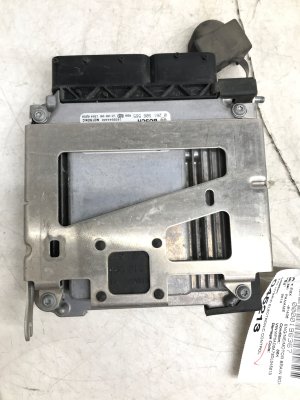
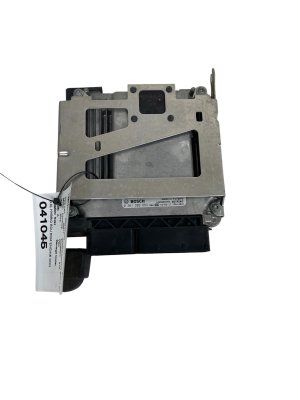
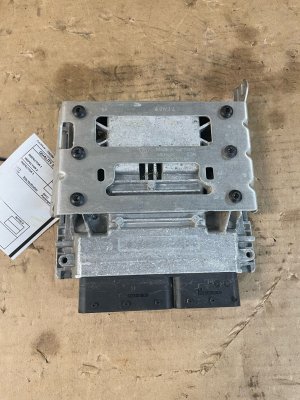
- Digital Motor Electronics (DME) / Engine Control Module (ECM)
(OEM #970.618.601.03 (V8 models, may vary/supersede))— This is the part that stores the programming. If it cannot be reprogrammed or has an internal hardware fault, it must be replaced.
Trusted brands: Bosch (OEM Manufacturer), Porsche (Genuine)
OEM price range: $2000-$3000
Aftermarket price range: $500-$1500 (Used/Cloned/Repaired) - Vehicle Battery — A weak or failing battery can cause voltage instability that leads to module programming corruption. Ensuring a healthy battery is a critical first step.
Trusted brands: Moll, Banner, Interstate, Varta
OEM price range: $400-$600
Aftermarket price range: $250-$400
Related Codes That Often Appear With This One
- P0601 — This code means 'Internal Control Module Memory Check Sum Error,' which is another type of internal software/hardware fault within the DME.
- P0603 — This code means 'Internal Control Module Keep Alive Memory (KAM) Error,' often related to power supply issues to the DME, such as a failing battery or disconnected power.
- Various U-codes — Communication codes (U-codes) will almost certainly appear if the DME is not communicating properly with other modules on the CAN network, like the transmission controller (PDK), gateway, or ABS/PSM module.
Technical Service Bulletins (TSBs) & Recalls
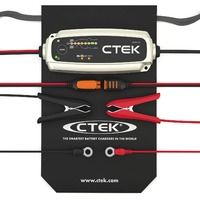
- AMC2 - Re-Programming DME and Transmission Control Unit (Recall Campaign) - This TSB for 2014-2018 Panamera and Cayenne models details the official Porsche procedure for reprogramming the DME. It critically warns that vehicle voltage *must* be maintained between 13.5 and 14.5 volts with a 90A+ charger, stating 'Failure to maintain this voltage could result in damaged control unit(s). Damage caused by inadequate voltage during programming is not a warrantable defect.'
- WF86 - Re-programming DME Control Unit (Workshop Campaign) - This document also details the critical importance of maintaining voltage during programming to prevent control unit damage.
- SB-10044604-5206 (Workshop Campaign WC-26) - For 2010-2011 Panamera models, this campaign was initiated to address potential moisture ingress into ground splice connections in the engine wire harness, which could cause communication faults with the DME.
Platform-Specific Known Issues
- Aftermarket Tuning Risk: Owners attempting to apply aftermarket ECU tunes (e.g., Cobb, VR Tuned) are at a higher risk of encountering P0602. If the flashing process is interrupted by voltage drops, a loose cable, or software glitches, the DME can be 'bricked,' rendering it inoperable and setting this code. Reverting to a stock tune requires a PIWIS tester and a VIN-specific programming code from a Porsche dealer.
- Water Ingress in Plenum Chamber: The DME is located in the plenum area under the windshield cowl, which is susceptible to flooding if its drains become clogged with leaves and debris. This water intrusion is a primary cause of DME hardware failure, leading to P0602 and other communication faults. A Porsche recall for the A/C blower in the same area (NHTSA ID: 19V401000) highlights the platform's vulnerability to water damage in this location.
Mechanic-Grade Diagnostic Values
- Vehicle Voltage During Programming — expected: 13.5 - 14.5 Volts. Failure: Voltage outside this range can cause the programming to fail and potentially damage the control unit.
- Power Supply Amperage Rating — expected: Minimum 40A, with 90A recommended for newer models.. Failure: An inadequate power supply cannot maintain the stable voltage required, leading to programming failure.
- Fuel High-Pressure Adaptation Values (Post-Adaptation Drive) — expected: Between 0.75 and 1.25. Failure: Values less than 0.75 or greater than 1.25 will cause a fault to be stored in the DME.
Hidden / Shadow Codes Worth Checking
- P060C00 with data error code (e.g., 0078D5): This is an example from a newer Panamera showing how Porsche pairs a generic P-code with a manufacturer-specific data error code for more detailed diagnosis. While P060C relates to main processor performance, the principle applies. A PIWIS tester is required to see these extended codes, which provide deeper insight than a standard OBD-II reader. (see via Porsche PIWIS Tester 3.)
Scan Tool Commands That Help
- Porsche PIWIS Tester: Automatic programming — This is the primary function used to re-flash or reprogram the DME and associated modules like the PDK. It is found under the 'DME' -> 'Coding/programming' menu and is the standard fix for a P0602 code.
- Porsche PIWIS Tester: Control unit replacement — This function is used when physically replacing the DME. It has sub-functions to 'Read out values (vehicle data)' from the old module before removal and then to program the new module to the car.
- Porsche PIWIS Tester: Read all fault memories and erase — This is a preliminary step before programming. It's crucial to identify and correct any other existing faults that are not related to the programming issue itself, as they can interfere with the process.
- Porsche PIWIS Tester: Adaptations — After a successful DME programming or replacement, specific adaptations for systems like the fuel high-pressure control must be run to re-learn operating parameters.
Wiring & Ground Locations
- DME Control Unit — Located in the plenum panel (water box) under the cowl cover, near the right (passenger side in LHD) wing.. This location is prone to water ingress from clogged drains, which can submerge the DME and its connectors, causing corrosion and hardware failure that leads to programming errors.
- Engine Wire Harness Ground Splices — Within the main engine wire harness near the DME connector. There are two specific ground splice connections addressed by a workshop campaign.. Moisture can enter these splices, causing corrosion and a poor ground for the DME. This can lead to a variety of electrical faults, including communication and programming errors. Porsche issued campaign WC05 (SB-10044604-5206) to rework these splices on 2010-2011 models.
- DME Ground Pins — On the DME's main electrical connector. While specific Panamera pinouts are scarce, similar Bosch DMEs on other Porsches use multiple dedicated ground pins (e.g., 5 separate pins) that terminate at a common ground post on the engine's intake runner.. A failure of any of these ground paths due to corrosion or looseness can cause intermittent and unpredictable DME behavior, potentially triggering a P0602 code.
Real Owner Repair Stories
- Specialized ECU Repair Customer Reviews (2005 Porsche 911 Carrera S (water damaged)) — Vehicle had water damage and needed a replacement rear control module.
❌ Tried (didn't work) Implicitly, direct replacement of the module without proper programming/cloning would not work.
✅ What actually fixed it Sending the damaged module to a specialist service. They provided a plug-and-play replacement module that resolved the issue. This cloning service is a common solution for failed Panamera DMEs as well. - Rennlist Forum User Experience (2018 Panamera 4E-Hybrid) — A cascade of electrical failures including a 'control unit internal fault on the DME', CAN bus faults, and power steering failure.
❌ Tried (didn't work) The owner had previously spent $13,000 at a Porsche dealer for repairs.
✅ What actually fixed it The history of the vehicle pointed to previous repairs for broken ground cables, faulty wire harnesses, and a short-circuited charging port from water damage. This indicates that for complex electrical issues including DME faults, the root cause is often in the vehicle's core electrical infrastructure (grounds, harnesses, water intrusion) rather than just the module itself.
OEM Part Supersession History
970.618.601.02→970.618.601.03— Likely an internal hardware or software revision for improved reliability or to address a known issue.
Heads up: While the new part number supersedes the old one, it is critical to match the part to the specific engine (V8 vs V6) and model year range.
Model Year Variations Within This Range
- 2014-2016 (970.2 Facelift): The Panamera S and 4S models switched from a 4.8L naturally aspirated V8 to a 3.0L twin-turbo V6. This is a major change requiring a completely different DME. The part number 970.618.601.xx is for the earlier V8 models. Care must be taken to source the correct DME for the specific engine type.
- 2014-2016 (970.2 Facelift): The facelifted 970.2 models received updated infotainment (PCM), revised exterior styling (bumpers, lights), and minor software updates. While the principle of a P0602 error remains the same, diagnostic paths involving communication with other modules may differ slightly from the 970.1.
Diagnostic Flowchart
Used vs. New Parts: Buying Guide for This Vehicle
When a used part is the smart pick: A used DME is a cost-effective choice only when paired with a cloning service. A specialist service transfers all the critical data (VIN, immobilizer, software) from your original DME to the used donor unit, making it plug-and-play. This avoids the expensive dealer programming of a new module.
Donor-vehicle mileage cap: roughly under 120000 miles for the part to have meaningful remaining life.
What to inspect on the donor part:
- Part numbers MUST match your original DME or be a confirmed superseded part number for your specific model and engine.
- Purchase from a reputable dismantler who guarantees the part is readable and not from a flood-damaged vehicle.
- Inspect the connectors for any bent or corroded pins.
- Confirm with your chosen cloning service that they can work with the specific Bosch model/part number before purchasing the donor unit.
OEM-only on this vehicle (don't cheap out):
- A NEW Digital Motor Electronics (DME) unit must be a genuine Porsche part, as it requires online programming via the PIWIS tester connected to Porsche's servers in Germany.
Aftermarket brands forum-validated for this vehicle:
- Specialized ECU Repair (Service)
- ECU Doctors (Service)
- Protomotive (Service)
- Karman Auto (Service)
Brands owners have reported issues with on this vehicle:
- Avoid any used DME sold with the promise of being 'plug-and-play' without a cloning service. It will not work due to the immobilizer system.
Real Owner Stories
Aggregated from forums and TSBs cited above. Mileages and costs reflect what owners reported in those sources.
2012 Panamera Turbo
Symptoms: The owner experienced 'Chassis Failure' warnings and other electronic gremlins on the dashboard, which were traced back to an unstable power supply.
What fixed it: Replacing the weak AGM battery and registering the new one with the vehicle's computer system resolved the electronic faults.
Cost: $250-$500
Source hint: 6SpeedOnline.com - 'PTT battery issues' (2020)
2014 Panamera
Symptoms: After a failed aftermarket tune, the car became completely undrivable and was 'bricked'.
What fixed it: The issue was not easily resolved. The tuner, an independent shop, and the Porsche dealer struggled to fix it, leading to a 'blame game and significant downtime.' The ultimate fix requires specialist intervention to re-flash the DME on a bench or correctly with a PIWIS tester.
Source hint: Rennlist.com - 'Bricked my ECU' (2020)
2011 Panamera
Symptoms: The DME was 'fried' after an electrical short, causing a no-start condition.
What fixed it: The owner explored options, with the most viable being sending the damaged DME to a specialist repair service like ECU Doctors for repair or cloning onto a used unit.
Cost: $900-$1500
Source hint: Rennlist.com - 'Fried My DME... What to do?' (2021)
Related OBD-II Codes
Frequently Asked Questions
I tried to install an aftermarket tune on my Panamera and now it won't start and shows P0602. Is this a known problem?
My mechanic quoted over $2,000 for a new DME. Are there any cheaper options for my Panamera?
The dealer is reprogramming my DME and mentioned needing a special high-amperage charger. Why is this so important?
Along with P0602, I'm seeing 'Chassis System Fault' and other weird warnings. Could my battery really be the cause?
My mechanic found water under the windshield cowl near the DME. Could this cause a P0602 code?
Can I just buy a used DME from a salvage yard and install it myself to fix P0602?
Helpful Videos
Used OEM Parts in Stock
New Aftermarket Parts Available


The information in this article is provided for general reference and educational purposes only. Vehicle specifications, procedures, and part compatibility can vary by production date, trim level, and region. Always consult your vehicle's factory service manual and verify part numbers before purchasing or performing repairs. Safety-critical components such as airbags, seat belts, and braking systems should be installed by a qualified professional.
- Porsche Panamera:
- 🧭 Diagnostic Flowchart
- 🎬 Helpful Videos
- 🛍️ Shop This Part
- What's Unique About the 2010-2016 Porsche Panamera
- Symptoms You May Notice
- Most Likely Causes
- Rare But Worth Checking
- Diagnosis Steps
- Parts You'll Likely Need
- Related Codes That Often Appear With This One
- Technical Service Bulletins (TSBs) & Recalls
- Platform-Specific Known Issues
- Mechanic-Grade Diagnostic Values
- Hidden / Shadow Codes Worth Checking
- Scan Tool Commands That Help
- Wiring & Ground Locations
- Real Owner Repair Stories
- OEM Part Supersession History
- Model Year Variations Within This Range
- Used vs. New Parts: Buying Guide for This Vehicle
- Real Owner Stories
- 2012 Panamera Turbo
- 2014 Panamera
- 2011 Panamera
- Related OBD-II Codes
- Frequently Asked Questions
- 🎟️ Get 5% Off