

P0603 on 2013-2015 Buick Encore: Keep Alive Memory (KAM) Error Causes and Fixes
P0603 on a Buick Encore almost always indicates a power supply problem, not a failed computer. The most likely cause is a weak or dying battery, or loose/corroded battery terminals. Before replacing any expensive modules, fully test the battery and clean all power and ground connections. This code is a direct result of the module losing its constant power source required for adaptive memory.
- P0603 is a power supply-related code. Do not assume the computer is bad.
- Always start your diagnosis with the simplest and most likely cause: the battery and its connections.
- This code can appear after a battery has been replaced or disconnected. Clear the code and drive the car before performing further diagnostics.
- On the Buick Encore, be aware that this code could be coming from the Transmission Control Module (TCM), which would explain any erratic shifting behavior.
- If the battery and alternator test good, carefully inspect all main power and ground wires for corrosion or damage before considering module replacement.
What's Unique About the 2013-2015 Buick ENCORE
For this generation of Buick Encore and its platform mates, General Motors issued Technical Service Bulletins (TSBs) acknowledging that code P0603 can appear in multiple modules. Specifically, TSB #PIP4653E focuses on this code (and others like P0601, P0604) appearing in the Transmission Control Module (TCM). The bulletin advises technicians to confirm which module set the code; if it's only the TCM, the recommended fix is to reprogram the TCM rather than replace it, after ensuring stable battery voltage. This is significant because it directs diagnosis away from an immediate PCM failure and towards either a simple power supply issue or a TCM software update.
Diagnostic Flowchart
Tap your situation to follow the diagnostic path that matches what you're seeing on this vehicle.
Symptoms You May Notice
- Check Engine Light is on.
- Illuminated ABS or traction control light.
- Rough or unstable idle.
- Engine hesitation or stumbling during acceleration.
- Erratic or harsh transmission shifting.
- Engine is hard to start or stalls intermittently.
- Reduced fuel economy.
- Vehicle may revert to default settings after every shutdown.
- Replacing the PCM or TCM without first performing a load test on the battery and checking all power and ground connections. This code is most often a symptom of a power supply problem, not a module failure.
Most Likely Causes
- Weak or Failing Battery 🔴 High Probability → Shop Vehicle Battery Modern vehicles like the Encore have a high constant power draw for various modules. An aging battery may not maintain the stable voltage required (typically >12.4V) for Keep Alive Memory, especially during the high-amperage draw of engine cranking. This is the most common fix reported by owners.
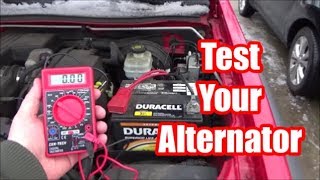
How to confirm: Test the battery with a multimeter or a digital battery tester. 🎬 See how to test your battery and alternator with a multimeter. A healthy, fully charged battery should read above 12.4 volts (ideally 12.6V) with the engine off and between 13.7-14.7 volts when the engine is running. A load test at an auto parts store is the most definitive confirmation.
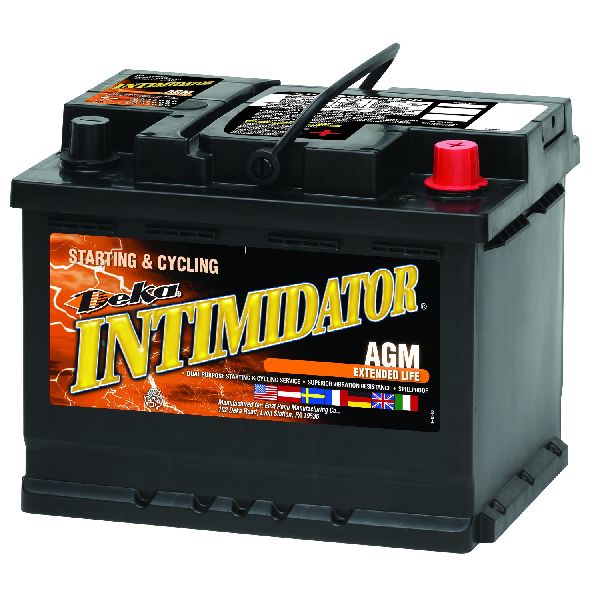
Typical fix: Replace the vehicle's battery. The Buick Encore typically uses a Group Size H5 (also called L2 or 47) battery. 🎬 Watch this step-by-step guide to replacing your Encore's battery.
Est. part cost: $170-$280 - Recent Battery Disconnection or Replacement 🔴 High Probability → Shop Vehicle Battery
How to confirm: If the code appeared immediately after the battery was disconnected for service, jump-started, or replaced, this is the likely cause. The power interruption itself is designed to trigger the code as the KAM is cleared.
Typical fix: Clear the code with an OBD-II scanner. Drive the vehicle for several drive cycles (a mix of city and highway driving) to allow the modules to relearn adaptive values. If the code does not return, no further action is needed.
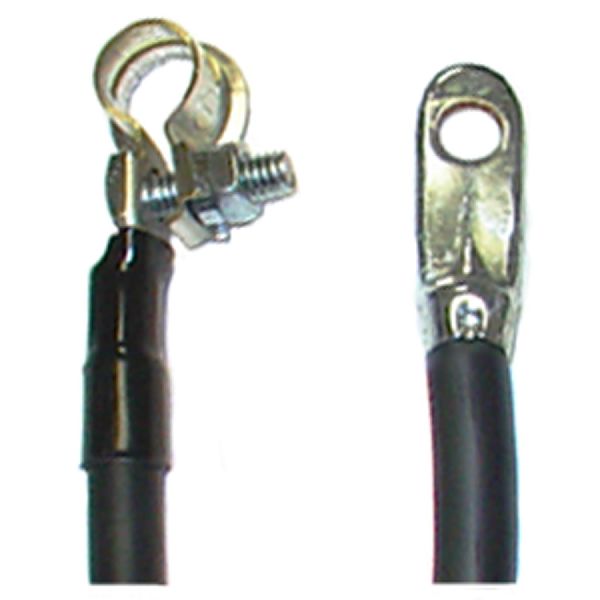
Est. part cost: $0 - Loose or Corroded Battery Terminals/Cables 🟡 Medium Probability → Shop Vehicle Battery
How to confirm: Visually inspect the battery terminals for white or blueish corrosion. Wiggle the battery cable connections to ensure they are tight and make solid contact. Follow the main negative cable to its chassis ground point and ensure it is clean and tight.
Typical fix: Disconnect the battery (negative terminal first). Clean the terminals and cable ends with a wire brush and a baking soda/water solution. Reconnect securely (positive terminal first). Apply dielectric grease to prevent future corrosion.
Est. part cost: $1-$10 - Faulty Alternator ⚪ Low Probability → Shop Alternator
How to confirm: With the engine running, check the battery voltage. If the voltage is below 13.5V, above 15V, or fluctuating wildly, the alternator is likely not charging the battery properly, causing voltage instability.
Typical fix: Replace the alternator.
Est. part cost: $200-$450 - Poor Powertrain Control Module (PCM) or Transmission Control Module (TCM) Ground Connection ⚪ Low Probability → Shop Engine Control Module (ECM)
How to confirm: Locate the main ground straps for the engine and control modules. Key locations on GM vehicles include G101 (lower front of engine, grounds ECM/TCM), G103 (cowl, near brake booster), and G105 (front of engine compartment). Inspect them for corrosion, looseness, or damage. A voltage drop test on the ground circuit can confirm high resistance.
Typical fix: Clean the ground connection point to bare metal and tighten the connection securely.
Est. part cost: $0-$5
Rare But Worth Checking
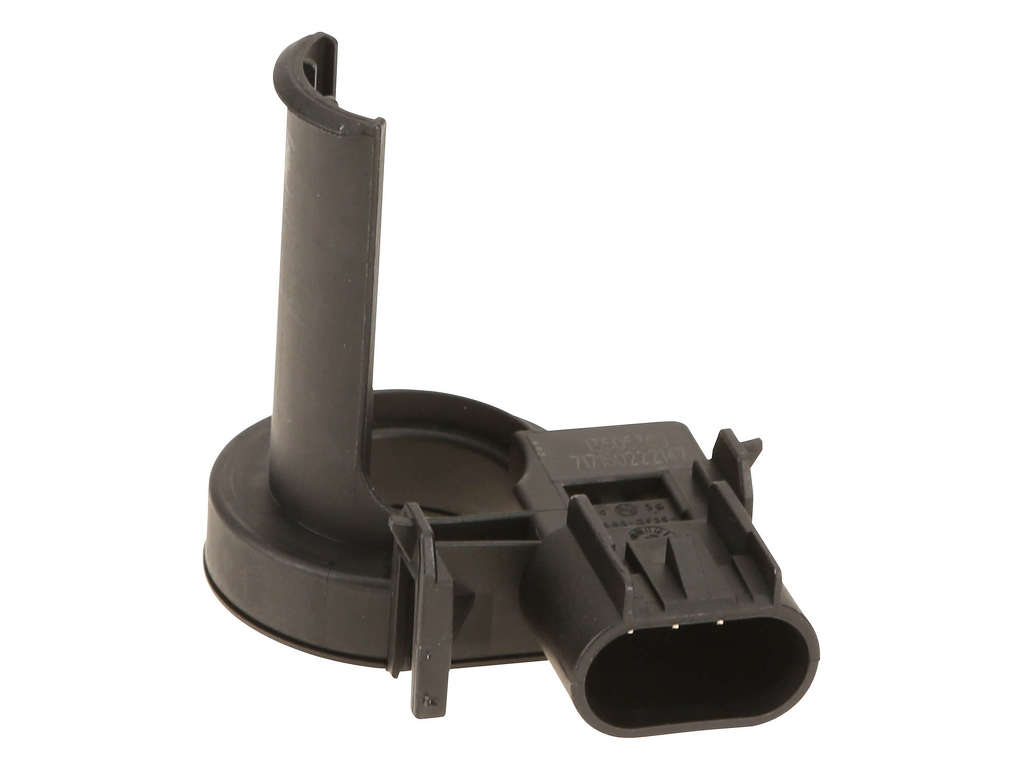
- Defective Battery Current Sensor: → Shop Vehicle Battery The Buick Encore is equipped with a Battery Current Sensor (also called an Intelligent Battery Sensor or IBS) on the negative battery terminal. This sensor monitors the battery's state of charge and health. If it malfunctions, it can cause the charging system to behave erratically, leading to under or over-charging, which can trigger a P0603. If the battery and alternator test good but electrical issues persist, this sensor is a strong suspect.
- Faulty Powertrain Control Module (PCM) or Transmission Control Module (TCM): → Shop Engine Control Module (ECM) This is the least likely cause and should only be considered after all power and ground supply issues are definitively ruled out. The TSBs (#05-06-04-060A, #PIP4653E) indicate that internal module faults are possible, but diagnosis should always start with power supply. Sometimes a software glitch can be resolved by reprogramming the module before replacement is deemed necessary.
Diagnosis Steps
- Read the codes: Use an OBD-II scanner to confirm P0603 is present. Note which module stored the code (ECM/PCM or TCM) and record any other codes.
- Check the battery: Perform a comprehensive test. Voltage should be >12.4V with the engine off. A load test is the most definitive way to confirm battery health. Many auto parts stores do this for free.
- Inspect battery connections: Check for and clean any corrosion from the battery terminals and ensure the cable clamps are tight. Inspect the negative cable's connection to the chassis.
- Check charging system: Start the engine and measure the voltage at the battery terminals. It should be stable, between 13.7V and 14.7V. If it's outside this range, suspect the alternator or battery current sensor.
- Inspect main grounds: Locate and inspect the main engine-to-chassis and battery-to-chassis ground straps. Key GM grounds are often labeled (e.g., G101, G103, G105). Ensure they are clean, tight, and free of corrosion.
- Check for Parasitic Draw: If the battery seems to drain overnight, perform a parasitic draw test with a multimeter to check for a component that is not shutting down. A draw over 50mA after the vehicle has gone to sleep (can take up to an hour) is excessive.
- Clear and monitor: If a bad battery was replaced or any of the above issues were found and fixed, clear the codes and perform several drive cycles. If the code does not return, the issue is resolved.
- Advanced Diagnosis: If the code returns, consult TSB #PIP4653E. If the code is isolated to the TCM, a TCM reprogram by a dealer or qualified shop may be the solution. If all power and grounds are perfect, the module itself may be faulty.
Parts You'll Likely Need
- Car Battery (Group H5/L2/47) — This is the most common cause of a P0603 code. An old or weak battery cannot maintain the stable voltage required for the Keep Alive Memory.
Trusted brands: ACDelco Gold/Professional, DieHard, Interstate
OEM price range: $200-$300
Aftermarket price range: $170-$280 - Battery Current Sensor
(OEM #ACDelco 22976696 (Verify by VIN))— This sensor, located on the negative terminal, can fail and cause improper battery charging or create a parasitic draw, leading to voltage instability and KAM errors.
Trusted brands: ACDelco (OEM), Standard Motor Products (SBC111)
OEM price range: $40-$70
Aftermarket price range: $25-$50 - Powertrain Control Module (PCM/ECM)
(OEM #ACDelco 12692200 (Supersedes earlier numbers like 12668866, 12658390, verify by VIN))— In the rare event that all power and ground circuits are confirmed to be good, the PCM itself may have an internal fault preventing it from retaining memory. Requires programming to the vehicle's VIN.
Trusted brands: ACDelco (OEM/Remanufactured)
OEM price range: $200-$400
Aftermarket price range: $180-$350
Related Codes That Often Appear With This One
- P0601 — Internal Control Module Memory Check Sum Error. This code, along with P0603, is mentioned in GM TSB #05-06-04-060A and #PIP4653E as a related control module self-test diagnostic code.
- P0604 — Internal Control Module Random Access Memory (RAM) Error. This is another related memory-check code mentioned in the same GM TSBs.
- P1621 — Control Module Long Term Memory Performance. This GM-specific code is also listed alongside P0603 in TSB #PIP4653E, pointing to a memory retention issue, often in the TCM.
Technical Service Bulletins (TSBs) & Recalls
- 05-06-04-060A: Information on multiple control module self-test DTCs (P0601, P0602, P0603, etc.) being shared across different modules. Emphasizes identifying which module set the code.
- PIP4653E: Specifically addresses codes like P0603 when stored in the Transmission Control Module (TCM). Recommends reprogramming the TCM if it's the only module with the code, after verifying power supply.
Platform-Specific Known Issues
- GM Technical Service Bulletin #05-06-04-060A notes that P0603 can be set in multiple modules and is part of a group of control module self-test codes. It stresses the importance of identifying which module set the DTC before diagnosis.
- GM TSB #PIP4653E specifically highlights that P0603 (among others) can be stored in the Transmission Control Module (TCM) and may be resolved with a simple TCM reprogram after ensuring battery voltage is stable.
- The 1.4L Turbo engine has other known issues, like PCV failures in the valve cover, that can cause various codes. While not directly causing P0603, it highlights the sensitivity of the engine's control systems to any faults.
Mechanic-Grade Diagnostic Values
- Parasitic Current Draw — expected: Should drop to below 30-50mA after all modules enter sleep mode (may take up to 60 minutes).. Failure: A sustained draw above 50mA indicates a component is not shutting down, draining the battery and causing a P0603 on startup.
- ECM Keep Alive Power Pin Voltage — expected: Constant 12V+ (should match battery voltage) at Pin 20 (RD/WH wire) of the ECM X1 connector with key off.. Failure: Any voltage drop or a reading of 0V indicates a problem with the constant power feed wiring or its associated fuse, which is a direct cause for P0603.
- ECM Ground Circuit Voltage Drop — expected: Less than 0.1V (100mV) between Pin 73 (BK/WH wire) of the ECM X1 connector and the negative battery terminal.. Failure: A reading higher than 0.1V indicates high resistance in the ground circuit, which can cause erratic module behavior and trigger memory codes.
Scan Tool Commands That Help
- GM GDS2 / Tech2Win: Module Reprogramming (SPS) — Used to update the software on the TCM or PCM. TSB #PIP4653E specifically suggests this as a potential fix if P0603 is isolated to the Transmission Control Module, after verifying power and grounds are good.
- GM GDS2 / Tech2Win: Clear DTCs — Standard procedure after any repair (like battery replacement) to erase the history code and verify the fix. It's also the first step if the code is suspected to be from a one-time power interruption.
- GM GDS2 / Tech2Win: Crankshaft Position System Variation Learn — This procedure is often required after the KAM has been cleared or a PCM/ECM has been replaced. While not a direct fix for P0603, failing to perform it after resolving the P0603 can leave the engine running poorly.
Wiring & Ground Locations
- G101 — Located at the front of the engine, on the lower block.. This is a primary ground point for both the Engine Control Module (ECM) and Transmission Control Module (TCM). Corrosion or looseness here can directly interrupt the ground supply to the modules, causing memory loss codes like P0603.
- G103 — Located on the cowl in the left rear of the engine compartment, often above the brake booster.. This is a major body and module ground point. While it primarily grounds interior electronics like the BCM and instrument panel, poor contact can contribute to system-wide electrical instability.
- G105 — Located at the left front of the engine compartment, often behind the cooling fan relays.. This ground serves front-end components. Ensuring all major chassis grounds are clean and tight is a key step in diagnosing elusive electrical faults.
- ECM Connector X1, Pin 20 — On the main (X1) connector of the Engine Control Module. The wire is typically Red with a White stripe (RD/WH).. This is the dedicated 'Battery Positive Voltage' pin that supplies constant power for the Keep Alive Memory. Testing for 12V+ at this pin is the most direct way to confirm the ECM is receiving the power it needs to retain memory.
"I Checked Everything" — The Actual Cause
- In cases where the battery and alternator test as 'good' using standard procedures, the P0603 code may still reappear due to a faulty Battery Current Sensor (IBS). A malfunctioning IBS can fail to correctly report the battery's state of charge, leading to an undercharged condition, or it can create a parasitic draw itself. One documented case on a similar GM platform showed a faulty sensor pulling 300mA after shutdown, draining an otherwise healthy battery and triggering the KAM error on every startup.
OEM Part Supersession History
12643636, 12663405, 12668866, 12668991, 12670335→12692200— Standard part evolution for hardware and software compatibility updates by the manufacturer.
Heads up: The replacement module (12692200) is not plug-and-play. It MUST be programmed (flashed) with the vehicle's specific VIN and the latest GM software using a tool like GDS2. Failure to program the module will result in a no-start condition or other system malfunctions.
Model Year Variations Within This Range
- 2013-2015: There are no significant variations in the powertrain, electrical system, or common causes for P0603 within this specific model year range. All models use the 1.4L A14NET engine and associated E78 ECM. A major vehicle refresh occurred in 2017, which is outside this range.
Helpful Videos


Used OEM Parts in Stock
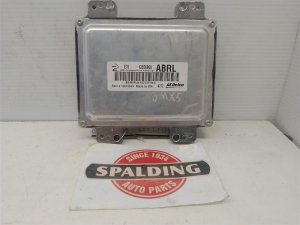
New Aftermarket Parts Available


The information in this article is provided for general reference and educational purposes only. Vehicle specifications, procedures, and part compatibility can vary by production date, trim level, and region. Always consult your vehicle's factory service manual and verify part numbers before purchasing or performing repairs. Safety-critical components such as airbags, seat belts, and braking systems should be installed by a qualified professional.
- Buick ENCORE:
- 🧭 Diagnostic Flowchart
- 🎬 Helpful Videos
- 🛍️ Shop This Part
- What's Unique About the 2013-2015 Buick ENCORE
- Symptoms You May Notice
- Most Likely Causes
- Rare But Worth Checking
- Diagnosis Steps
- Parts You'll Likely Need
- Related Codes That Often Appear With This One
- Technical Service Bulletins (TSBs) & Recalls
- Platform-Specific Known Issues
- Mechanic-Grade Diagnostic Values
- Scan Tool Commands That Help
- Wiring & Ground Locations
- "I Checked Everything" — The Actual Cause
- OEM Part Supersession History
- Model Year Variations Within This Range
- 🎟️ Get 5% Off