

P0603 on 2013-2015 Cadillac ATS: Keep Alive Memory (KAM) Error Causes and Fixes
On a 2013-2015 Cadillac ATS, P0603 almost always indicates a power supply interruption to a control module, not a failed computer. The most likely cause is a weak or failing AGM battery, loose terminals, or a recent battery disconnect. Check and test the battery and its connections before replacing any parts. Clearing the code with a scanner is the first step after any power interruption.
- P0603 on a Cadillac ATS is almost always a power supply issue, not a bad computer.
- Always start your diagnosis by inspecting and testing the battery, its connections, and the alternator.
- If you recently disconnected the battery, this code is normal. Clear it and see if it returns.
- Be aware of GM TSBs that state this code can affect the Transmission Control Module, causing shifting problems.
What's Unique About the 2013-2015 Cadillac ATS
For the Cadillac ATS and its GM Alpha platform mates, this code is not just a generic PCM error. General Motors has issued specific Technical Service Bulletins (TSBs) that are relevant. TSB #05-06-04-060A notes that P0603 is an informational code that can be shared across multiple modules, instructing technicians to identify which module set the code before proceeding. TSB #PIP4653E specifically points to this code being stored in the Transmission Control Module (TCM), which can directly cause noticeable shifting issues as the transmission's adaptive learn data is lost. This highlights that the root cause is often a vehicle-wide electrical issue rather than an isolated computer failure.
Diagnostic Flowchart
Tap your situation to follow the diagnostic path that matches what you're seeing on this vehicle.
Symptoms You May Notice
- Check Engine Light is on
- Harsh or erratic transmission shifting, particularly a hard 1-2 or 2-3 shift as the TCM relearns.
- Rough or unstable idle
- Reduced fuel economy
- Engine may be hard to start or stall intermittently
- Code appears after battery replacement or disconnection
- ABS or Traction Control light may also illuminate in some cases
- Replacing the Powertrain Control Module (PCM) or Transmission Control Module (TCM) without first exhaustively testing the battery, connections, and charging system. This is an expensive and usually unnecessary repair for a P0603 code.
Most Likely Causes
- Weak or Failing Battery 🔴 High Probability → Shop Vehicle Battery Modern vehicles like the ATS use an Absorbed Glass Mat (AGM) battery to support high electrical demands and start-stop technology. An AGM battery that drops significant voltage during startup can cause modules to lose their Keep Alive Memory, triggering P0603.
How to confirm: Test the battery with a digital multimeter. A healthy AGM battery should show ~12.6V or slightly higher with the engine off and 13.7-14.7V while running. For a definitive test, use a professional electronic battery load tester designed for AGM batteries.
Typical fix: Replace the battery with a new one of the correct type (AGM, Group Size H6/48 or H7/94R). 🎬 Watch: Step-by-step guide to replacing the trunk-mounted AGM battery.
Est. part cost: $200-$400 - Recent Battery Disconnection 🔴 High Probability → Shop Vehicle Battery Anytime the battery is disconnected for service (e.g., replacement, alternator repair), the KAM will be lost, setting this code as an expected outcome.
How to confirm: Ask if the battery has been recently disconnected or replaced. If so, this is the expected cause.
Typical fix: Clear the code with an OBD-II scanner. The code should not return if the electrical system is healthy. The vehicle will relearn adaptive values as you drive.
Est. part cost: $0 - Loose or Corroded Battery Terminals/Cables 🟡 Medium Probability → Shop Vehicle Battery The battery in the ATS is located in the trunk, and the terminals can sometimes be overlooked. Corrosion or loose connections interrupt the constant power supply to the modules, mimicking a failed battery.
How to confirm: Visually inspect the battery terminals in the trunk for white/blue corrosion or looseness. Also, check the main power and ground connections under the hood, including the main engine-to-chassis ground strap.
Typical fix: Disconnect the battery, thoroughly clean the terminals and cable ends with a wire brush and corrosion inhibitor, and re-tighten securely.
Est. part cost: $5-$20 - Failing Alternator / Charging System Issue ⚪ Low Probability → Shop Alternator An alternator providing unstable or insufficient voltage (outside 13.7-14.7V) will fail to keep the AGM battery properly charged, leading to low voltage conditions that trigger P0603.
How to confirm: With the engine running, check the voltage at the battery terminals. A reading outside the 13.7-14.7V range indicates a charging system problem.
Typical fix: Replace the alternator.
Est. part cost: $300-$600
Rare But Worth Checking
- Faulty Powertrain Control Module (PCM): → Shop Engine Control Module (ECM) This is the least likely cause. The code indicates a problem with the memory *function*, which is most often caused by an external power supply issue. The module itself is rarely the point of failure.
- Poor PCM Power or Ground Connections: A corroded or loose ground strap for the engine or PCM can cause intermittent voltage drops, triggering a KAM error. On the ATS, key grounds are located on the frame rail, firewall, and radiator support. A voltage drop test on the ground circuit is more effective than a simple visual inspection. 🎬 See how to perform a simple voltage drop test yourself.
- Aftermarket Engine Tuning: Improperly flashing the PCM with an aftermarket tune can sometimes corrupt memory areas or cause checksum errors, leading to a P0603 or related codes. This was noted in a forum discussion for a platform-mate, the Chevy Camaro.
Diagnosis Steps
- Check Vehicle History: Determine if the battery was recently disconnected or replaced. If so, clear the code, drive the vehicle for 15-20 minutes to allow for some relearning, and see if it returns.
- Inspect Battery and Cables: Visually inspect the battery terminals in the trunk for corrosion and ensure the cable clamps are tight. Clean and tighten as necessary.
- Test the Battery: Use a multimeter to check the battery's state of charge (~12.6V off). Perform a load test specifically for AGM batteries to confirm its health. Many auto parts stores do this for free.
- Test the Charging System: With the engine running, measure the voltage at the battery terminals. It should be stable and between 13.7 and 14.7 volts.
- Inspect Main Grounds: Check the main engine-to-chassis ground strap for tightness and corrosion. A video for a similar Cadillac shows a broken block ground causing widespread electrical issues. Perform a voltage drop test on the ground side (less than 0.2V is ideal) for a more accurate diagnosis.
- Check Fuses: Inspect fuses related to the PCM and TCM, often labeled 'PCM BAT' or similar in the underhood fuse block.
- Inspect Module Connections: Check the main electrical connectors at the PCM for corrosion or pushed-out pins. On the ATS, oil leaks from cam sensors can sometimes travel down the harness to the PCM connectors.
- Check for Parasitic Draw: If the battery repeatedly dies, perform a parasitic draw test to see if a component is draining the battery while the car is off. A draw over 50mA after all modules have gone to sleep (approx. 30 mins) is problematic.
- Consider PCM/TCM Failure: If all power and ground circuits are confirmed to be good and the code immediately returns after clearing without any power interruption, a faulty module is possible, but this should be the last resort.
Parts You'll Likely Need
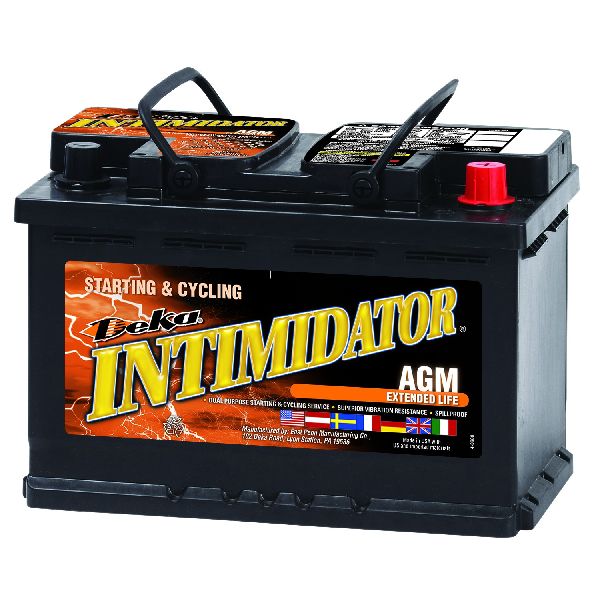
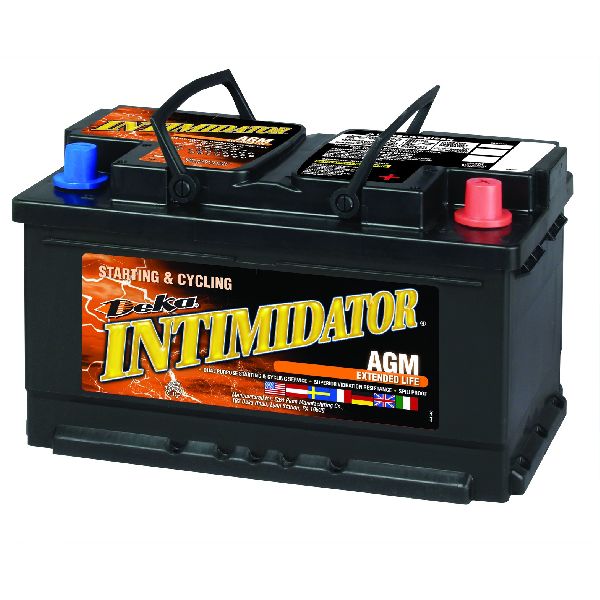
- Automotive Battery (AGM)
(OEM #88864542 (ACDelco Gold 48AGM))— A weak or failing AGM battery is the number one cause of P0603, as low voltage during cranking erases the Keep Alive Memory. The ATS requires an AGM battery.
Trusted brands: ACDelco, DieHard, Odyssey
OEM price range: $220-$350
Aftermarket price range: $200-$300 - Battery Terminal Cleaner Kit — Ensures a clean, solid electrical connection at the battery, which is a common and inexpensive fix for power-related codes like P0603.
Trusted brands: CRC, NOCO
OEM price range: $10-$20
Aftermarket price range: $5-$15
Related Codes That Often Appear With This One
- P0601 — This is an 'Internal Control Module Memory Check Sum Error'. Both codes relate to module memory and are often triggered by the same power supply issues or software glitches, as noted in TSB #05-06-04-060A.
- P0604 — This is an 'Internal Control Module Random Access Memory (RAM) Error'. Like P0603, it points to a memory problem within a control module and is listed in the same TSBs.
- P062F — This is an 'Internal Control Module EEPROM Error'. TSB #PIP4653E specifically lists this code alongside P0603 as potentially being set in the Transmission Control Module (TCM) due to the same root causes.
Technical Service Bulletins (TSBs) & Recalls
- 05-06-04-060A: Information on Control Module DTCs P0601, P0602, P0603, P0604, P0606, P062F, P06F3, P1621 which can be shared in multiple modules.
- PIP4653E: Malfunction Indicator Lamp on, DTCs P0601, P0603, P0604, P062F or P1621 stored in the Transmission Control Module.
Platform-Specific Known Issues
- Per TSB #05-06-04-060A, this code is informational and can be shared among multiple control modules, indicating a potential systemic electrical issue rather than a single component failure.
- TSB #PIP4653E specifically notes that P0603 may be found in the Transmission Control Module (TCM), which can lead to a Malfunction Indicator Lamp and noticeable shift quality problems as the TCM has lost its adaptive learn data.
- The harsh shifting symptom can be pronounced on the ATS. Owners on forums describe very hard shifts, sometimes enough to screech the tires, as the transmission operates on base settings before it relearns. This is often confused with a mechanical transmission failure.
Mechanic-Grade Diagnostic Values
- Voltage Drop on Battery/Chassis Ground Cables — expected: Less than 200mV (0.2V). Failure: A reading higher than 200mV while cranking the engine indicates high resistance in the cable or connection.
- Voltage Drop on PCM Power/Ground Circuits — expected: Less than 50mV (0.05V). Failure: A reading higher than 50mV with the key on (or engine running) points to excessive resistance in the specific circuit being tested.
- Parasitic Current Draw — expected: Less than 50mA (0.05A). Failure: A sustained draw above 50mA after all modules have entered sleep mode (approx. 20-30 minutes after shutting off) indicates a component is draining the battery.
Hidden / Shadow Codes Worth Checking
- Battery Sensor Module Reset Occurred: → Shop Vehicle Battery This is not a DTC but a status parameter in the scan tool data. It shows 'Yes/No' to indicate if the Battery Monitoring System has lost power and is now using an estimated state of charge. This confirms a power interruption event relevant to P0603. (see via GM GDS2 software, under Engine Control Module -> Start/Stop System Data.)
Scan Tool Commands That Help
- GM GDS2: Transmission Adaptive Values Learn — Used to reset and relearn transmission shift points in the service bay after a P0603 code is triggered, especially if accompanied by harsh shifting. This is the GM-recommended method to correct shift quality issues after a memory loss event.
- Professional Scan Tool (e.g., Autel, Foxwell): BMS Reset / Battery Registration — This function should be used immediately after replacing the AGM battery. It informs the Battery Control Module (BCM) and PCM that a new battery is installed, resetting the charging strategy to avoid overcharging the new battery and ensuring the start-stop system functions correctly.
Wiring & Ground Locations
- G104 — On 2013 models, this engine ground is a key inspection point. Its location changed mid-production year for 4-cylinder engines from the front to the rear of the engine.. A TSB specifically calls for inspecting this ground for tightness and to ensure no adhesive or shrink wrap is interfering with the connection, which can cause intermittent power issues.
- G218 — Located inside the cabin, often behind the dash insulator mat near the driver's side kick panel.. This is a primary ground for the Body Control Module (BCM). A poor connection here is cited in a GM TSB as a cause for a wide range of intermittent electrical problems and communication DTCs that can mimic a KAM error.
- G110 — On or near the left rear of the engine, above the exhaust manifold (3.6L) or near the ABS module.. This is a major engine and body harness ground point. A loose connection here can cause intermittent power loss to multiple modules, including the PCM/TCM.
- G401 — In the trunk, near the battery well.. As the main chassis ground point for the battery located in the trunk, corrosion or looseness at G401 can cause vehicle-wide low voltage issues and directly trigger a P0603.
"I Checked Everything" — The Actual Cause
- In cases where the battery and alternator test perfectly fine, the root cause can be high resistance in the main power or ground cables that isn't visible. A GM TSB (PIT5405A) directs technicians to perform a loaded voltage drop test on the battery cables. If the drop exceeds 200mV while cranking, the cable itself has failed internally and must be replaced, even if it looks fine externally.
Model Year Variations Within This Range
- 2013 (early production): On 4-cylinder (LCV, LTG) models with automatic transmissions built before mid-December 2012, the main engine ground was located at the front of the engine. After this date, it was moved to the rear of the engine. This is critical when looking for the correct ground point to inspect.
- 2013-2015 (vs. 2017+): The 2013-2015 models require a Battery Management System (BMS) reset procedure with a scan tool after battery replacement. Starting in 2017, GM introduced a 'Power on Reset' feature that made this manual learn procedure no longer necessary, as the system would self-calibrate.
Helpful Videos


We Have This Part in Stock



The information in this article is provided for general reference and educational purposes only. Vehicle specifications, procedures, and part compatibility can vary by production date, trim level, and region. Always consult your vehicle's factory service manual and verify part numbers before purchasing or performing repairs. Safety-critical components such as airbags, seat belts, and braking systems should be installed by a qualified professional.
- Cadillac ATS:
- 🧭 Diagnostic Flowchart
- 🎬 Helpful Videos
- 🛍️ Shop This Part
- What's Unique About the 2013-2015 Cadillac ATS
- Symptoms You May Notice
- Most Likely Causes
- Rare But Worth Checking
- Diagnosis Steps
- Parts You'll Likely Need
- Related Codes That Often Appear With This One
- Technical Service Bulletins (TSBs) & Recalls
- Platform-Specific Known Issues
- Mechanic-Grade Diagnostic Values
- Hidden / Shadow Codes Worth Checking
- Scan Tool Commands That Help
- Wiring & Ground Locations
- "I Checked Everything" — The Actual Cause
- Model Year Variations Within This Range
- 🎟️ Get 5% Off