

P0603 on 2007-2011 Cadillac STS: Keep Alive Memory (KAM) Error Causes and Fixes
P0603 on a Cadillac STS almost always points to a weak battery, loose connections, or a recent battery disconnect. Before suspecting the computer, fully charge and test the battery and inspect the terminals for corrosion. This is a very common and usually minor code that indicates a loss of adaptive memory, not necessarily a failed part.
- P0603 is most often a minor issue caused by a weak battery or loose connections.
- Always check, clean, and test the battery and its terminals before considering more complex repairs.
- If you recently disconnected the battery for service, simply clearing the code will likely resolve the issue.
- On the STS, this code can be set by the Transmission Control Module (TCM), so be aware of potential shifting irregularities.
- Only suspect a faulty control module if the code returns instantly after clearing and all power/ground connections are perfect.
What's Unique About the 2007-2011 Cadillac STS
On the Cadillac STS, P0603 is not just a generic engine computer code. Manufacturer Technical Service Bulletins (TSBs) confirm that this code can specifically appear in the Transmission Control Module (TCM). This means that in addition to the usual check engine light, you might experience transmission-related symptoms. The TSBs also group P0603 with other internal module fault codes (P0601, P0604, etc.), indicating that while a battery issue is the most common cause, a module-level fault is a documented possibility that technicians are advised to investigate before replacing modules without proper diagnosis.
Diagnostic Flowchart
Tap your situation to follow the diagnostic path that matches what you're seeing on this vehicle.
Symptoms You May Notice
- Check Engine Light is on.
- Transmission may shift erratically or harshly (if code is in the TCM).
- Engine may be slow to crank or hard to start.
- Rough idle or engine stumbling.
- Dimming headlights or flickering interior lights, indicating a battery or charging issue.
- No noticeable symptoms other than the Check Engine Light.
- Illuminated ABS or traction control light in some cases.
- Replacing the PCM or TCM without first thoroughly testing the battery, connections, and charging system. A power supply issue is far more common and cheaper to fix than a failed module.
- Ignoring the code because the car starts. While often benign, it can mask an underlying electrical issue that could leave you stranded.
Most Likely Causes
- Weak or Failing Battery 🔴 High Probability → Shop Vehicle Battery Modern vehicles like the STS have a significant constant power draw for various modules. An aging battery, especially one over 4-5 years old, may not maintain sufficient voltage (dropping below 10V during cranking) to keep the KAM powered, causing the memory to be lost.
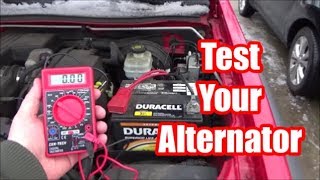
How to confirm: Test the battery voltage with a multimeter. It should be ~12.6V with the engine off and 13.5-14.5V while running. Most auto parts stores offer free, comprehensive load testing, which is more reliable than a simple voltage check.
Typical fix: Replace the vehicle's battery. An AGM (Absorbed Glass Mat) battery is often recommended for these vehicles.
Est. part cost: $180-$350 - Loose or Corroded Battery Terminals/Cables 🟡 Medium Probability → Shop Vehicle Battery Battery corrosion is a common issue on all vehicles and creates resistance that can interrupt the constant power supply to the control modules, even if the battery itself is healthy.
How to confirm: Visually inspect the battery terminals for a white or blue-green powdery substance. Ensure the cable clamps are tight and cannot be moved by hand. Also check the ground connection to the chassis.
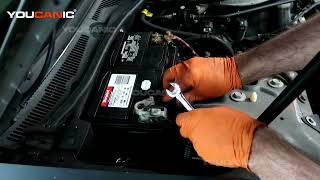
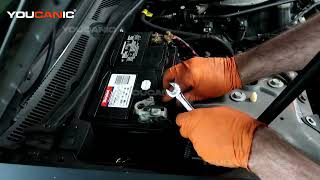
Typical fix: Disconnect the battery (negative first), clean the terminals and clamps with a wire brush and a baking soda/water solution, then reconnect securely (positive first) and apply a dielectric grease or anti-corrosion spray.
Est. part cost: $5-$15 - Recent Battery Disconnect or Alternator Replacement 🟡 Medium Probability → Shop Alternator Any service that requires disconnecting the battery, like replacing it or the alternator, will intentionally cut power and cause the P0603 code to set. This is expected behavior.
How to confirm: If the battery was recently disconnected for any reason, this is the likely cause. The code appears immediately after the service.
Typical fix: Clear the code with an OBD-II scanner. If there are no underlying issues, the code will not return after a few drive cycles.
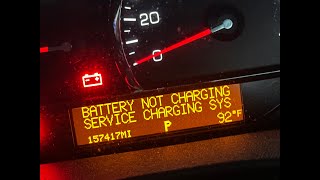
Est. part cost: $0 - Faulty Charging System (Alternator) ⚪ Low Probability A failing alternator can provide inconsistent or low voltage, failing to properly charge the battery and causing voltage drops that trigger the KAM error.
How to confirm: With the engine running, check the battery voltage. If it's below 13.2V or fluctuating wildly, the alternator is likely failing.
Typical fix: Replace the alternator.
Est. part cost: $250-$500
Rare But Worth Checking
- Faulty Powertrain or Transmission Control Module (PCM/TCM): → Shop Transmission Assembly While rare, this is a possibility documented in GM's own service bulletins (PIP4653E, 05-06-04-060A). If the code returns immediately after clearing and all power/ground circuits are confirmed good, the module itself may have an internal fault. One owner on CadillacForums confirmed a faulty TCM was the ultimate cause after extensive troubleshooting.
- Parasitic Electrical Draw: A module or component that does not 'go to sleep' properly can drain the battery overnight, causing a low voltage condition that triggers P0603 upon the next startup. On the STS, a faulty radio/OnStar module has been identified by owners as a source of significant parasitic draw. 🎬 Watch: How to check if your radio is draining the battery.
Diagnosis Steps
- Read the codes with an OBD-II scanner to confirm P0603 and note any other codes present. Use a scanner that can identify which module set the code (ECM or TCM).
- Ask yourself: Was the battery recently disconnected or replaced? If yes, clear the code, ensure the new battery is fully charged, and drive the vehicle to see if it returns.
- Visually inspect the battery terminals, posts, and main ground straps for corrosion, damage, or looseness. Clean and tighten as needed.
- With the engine off, use a multimeter to test battery voltage. A healthy AGM battery should read approximately 12.6-12.8 volts.
- Start the engine and measure the voltage again. It should be between 13.5 and 14.5 volts, indicating a healthy charging system.
- If the battery is over 4 years old or fails voltage tests, have it professionally load-tested at an auto parts store. Replace if it fails.
- If the battery and charging system are good but the code returns, perform a parasitic draw test. With the vehicle off for at least 30 minutes, the draw should be under 50 milliamps (0.05A). If it's higher, pull fuses one by one to isolate the draining circuit. The radio/OnStar fuse is a known suspect on the STS.
- If all wiring, power, grounds, and parasitic draw tests are confirmed good and the code persists, the issue may be an internal fault in the control module (PCM/TCM), as noted in GM TSBs. This step likely requires professional diagnosis with a tool like a GM Tech 2.
Parts You'll Likely Need
- Car Battery
(OEM #ACDelco Gold 94RAGM (GM Part #88864542) or 48AGM (GM Part #88864541))— This is the most frequent cause. The original battery may be too weak to hold a charge and maintain the Keep Alive Memory for the vehicle's modules. An AGM battery is recommended.
Trusted brands: ACDelco, DieHard, Duralast Platinum
OEM price range: $200-$300
Aftermarket price range: $180-$250 - Battery Terminals — If the original terminals are heavily corroded or damaged, they can't provide a clean, consistent connection, leading to power interruptions.
Trusted brands: Dorman, Standard Motor Products
OEM price range: $20-$40
Aftermarket price range: $10-$25
Related Codes That Often Appear With This One
- P0601 — This is an 'Internal Control Module Memory Check Sum Error', another internal module fault. Its presence alongside P0603 strengthens the case for a potential module issue, as noted in GM bulletins. [Bulletin #PIP4653E, Bulletin #05-06-04-060A]
- P0604 — This indicates an 'Internal Control Module Random Access Memory (RAM) Error'. Like P0603, it points to a memory-related problem within the control module. [Bulletin #PIP4653E, Bulletin #05-06-04-060A]
- P0700 — This is a generic 'Transmission Control System Malfunction' code. It will appear if the P0603 code is specifically stored in the Transmission Control Module (TCM), signaling that the TCM has requested the check engine light.
Technical Service Bulletins (TSBs) & Recalls
- PIP4653E: Mentions that DTCs P0601, P0603, P0604, P062F or P1621 can be stored in the Transmission Control Module and directs diagnosis accordingly.
- 05-06-04-060A: Informs technicians that several control module DTCs, including P0603, can be shared in multiple modules and emphasizes checking for low voltage conditions first.
Platform-Specific Known Issues
- According to GM Technical Service Bulletin #PIP4653E, DTCs P0601, P0603, P0604, P062F or P1621 can be stored in the Transmission Control Module (TCM). The bulletin advises technicians to verify which module set the code before proceeding with diagnostics, as a TCM fault could be the cause.
- TSB #05-06-04-060A notes that P0603 is one of several internal control module DTCs that can be shared across multiple modules. It explicitly warns that a low voltage condition can set these codes and should be repaired before any module is suspected of being faulty.
Mechanic-Grade Diagnostic Values
- Parasitic Current Draw — expected: Less than 50 milliamps (0.05A) after the vehicle has been off with doors closed for at least 20-30 minutes.. Failure: A sustained reading above 50mA indicates a module or component is not entering sleep mode and is draining the battery, which can cause a P0603 on startup.
- Engine Block to Chassis Ground Voltage Drop — expected: Less than 0.2 volts (200mV) while cranking the engine.. Failure: A high voltage reading (e.g., several volts) between the engine block and the chassis ground point (like a strut tower bolt) indicates a poor or broken main engine ground strap. This forces starter current through smaller ground paths, causing massive voltage drops and module memory loss.
Scan Tool Commands That Help
- GM Tech 2 / GDS2 or High-End Aftermarket Scanner: Keep Alive Memory (KAM) Reset — This function is used after a repair that could affect learned values, such as replacing a throttle body or transmission component. It forces the module to clear its adaptive memory. However, for a P0603 caused by simple power loss, disconnecting the battery for 30-60 minutes achieves the same result by allowing all capacitors to discharge fully.
Wiring & Ground Locations
- G107 (4.6L & 4.4L V8) — On the rear side of the right cylinder head.. This is a primary ground point for the Transmission Control Module (TCM) and Engine Control Module (ECM). A loose or corroded connection here can directly interrupt the ground path for the modules, causing memory loss and communication issues.
- Main Engine-to-Frame Ground Strap — A large, braided cable running from the engine block to the vehicle's frame, often located low on the passenger side of the engine compartment.. This is the main path for starter motor current to return to the battery. If this strap is broken or has high resistance, the starter will try to ground through other smaller circuits, causing extreme voltage drops across the entire electrical system during cranking, which is a classic cause of P0603.
- X1 Transmission Connector — Large, round, black, twist-lock connector on the driver's side of the transmission housing.. This is the main electrical interface for the TCM. While more commonly associated with communication codes like U0100 or U2106, any corrosion or loose pins affecting the power and ground terminals within this connector can trigger a P0603 in the TCM.
- Underhood Fuse Block — Located in the engine compartment, on the driver's or passenger's side depending on the year.. This block contains the primary fuses for the ECM and TCM. Corrosion within the fuse block itself (a known GM issue) can create high resistance and intermittent power loss to the modules, even if the fuses appear intact.
Real Owner Repair Stories
- CadillacForums.com user 'Pearsos' (2008 Cadillac STS) — Battery dies overnight, causing a 2-amp parasitic draw.
❌ Tried (didn't work) Pulling fuses one-by-one from all three fuse panels did not locate the source of the draw., Disconnecting a faulty, intermittently firing throttle body did not reduce the 2-amp draw.
✅ What actually fixed it The source of the parasitic draw was the main positive battery cable going to the alternator. The cable's insulation had worn through from rubbing against a metal tube, creating a short to ground. Adjusting the cable and repairing the insulation resolved the drain.
When the Usual Fixes Don't Work
- While the vast majority of P0603 codes are resolved by addressing battery, alternator, or connection issues, there are documented cases where the code persists. In one instance on CadillacForums involving a 2008 STS, after a new battery and terminal cleaning failed to resolve a recurring P0603, the ultimate cause was found to be a shorted positive alternator cable creating a significant parasitic draw. This highlights the need to perform a parasitic draw test if the code returns after addressing the most common causes.
Model Year Variations Within This Range
- 2008-2011: The Cadillac STS received a mid-cycle refresh for the 2008 model year, which included exterior styling changes and interior updates. While the core electrical architecture and common causes for P0603 remained similar, some connector and module locations may vary slightly from the 2007 models. Always verify wiring diagrams specific to the vehicle's year.
Helpful Videos


We Have This Part in Stock
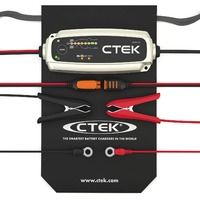




The information in this article is provided for general reference and educational purposes only. Vehicle specifications, procedures, and part compatibility can vary by production date, trim level, and region. Always consult your vehicle's factory service manual and verify part numbers before purchasing or performing repairs. Safety-critical components such as airbags, seat belts, and braking systems should be installed by a qualified professional.
- Cadillac STS:
- 🧭 Diagnostic Flowchart
- 🎬 Helpful Videos
- 🛍️ Shop This Part
- What's Unique About the 2007-2011 Cadillac STS
- Symptoms You May Notice
- Most Likely Causes
- Rare But Worth Checking
- Diagnosis Steps
- Parts You'll Likely Need
- Related Codes That Often Appear With This One
- Technical Service Bulletins (TSBs) & Recalls
- Platform-Specific Known Issues
- Mechanic-Grade Diagnostic Values
- Scan Tool Commands That Help
- Wiring & Ground Locations
- Real Owner Repair Stories
- When the Usual Fixes Don't Work
- Model Year Variations Within This Range
- 🎟️ Get 5% Off