

P0603 on 2007-2009 Cadillac XLR: Keep Alive Memory (KAM) Error Causes and Fixes
On a 2007-2009 Cadillac XLR, code P0603 almost always indicates a power supply interruption to a control module, not a failed computer. The most common cause is a weak battery, loose terminals, or a recent battery replacement. Before buying parts, fully charge and test the battery, clean all connections, and check for parasitic draws. This code is very common on the XLR and its platform-mate, the C6 Corvette, due to their sensitive electronics.
- Do not immediately assume the computer is bad; P0603 is almost always a power supply problem.
- Your first and most important diagnostic step is to fully test the battery and inspect its connections.
- If you recently disconnected the battery, simply clearing the code with a scanner will likely fix the problem.
- On an XLR, this code can be set by the Transmission Control Module (TCM), which can cause noticeable shifting problems until it relearns.
What's Unique About the 2007-2009 Cadillac XLR
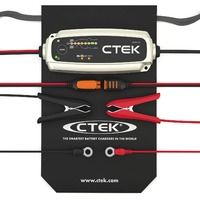
For the Cadillac XLR, this code is not just a generic PCM error. Manufacturer Technical Service Bulletins (TSBs) specifically mention that P0603 can be stored in the Transmission Control Module (TCM). This is significant because it can directly correlate to owner complaints of erratic shifting or clunking noises, as the transmission has lost its learned shift adapts. 🎬 Learn how to reset transmission adaptive data on GM vehicles. Given the XLR's complex electronics and known sensitivity to battery voltage, this code is a very common and often benign result of a battery issue rather than a true component failure. Forum members frequently advise that a battery tender is essential if the car is not driven weekly.
Diagnostic Flowchart
Tap your situation to follow the diagnostic path that matches what you're seeing on this vehicle.
Symptoms You May Notice
- Check Engine Light is on
- Erratic or harsh transmission shifting
- Rough or unstable idle
- Hesitation during acceleration
- Poor fuel economy
- ABS or Traction Control light may be illuminated
- In some cases, no noticeable symptoms other than the Check Engine Light
- Engine may stall intermittently or be hard to start.
- Replacing the Powertrain Control Module (PCM) or Transmission Control Module (TCM) without first verifying the battery's health and the integrity of its connections. This code is overwhelmingly caused by a power supply issue, not a module failure.
Most Likely Causes
- Weak or failing battery 🔴 High Probability → Shop Vehicle Battery The XLR has a significant continuous electrical draw to power its various modules, making it sensitive to battery health. A battery that sits for several days can discharge enough to trigger this code on startup. Owners on forums confirm this is the most common cause and recommend using a battery tender if the car isn't a daily driver.
How to confirm: Test the battery voltage with a multimeter. A healthy battery should read approximately 12.6 volts with the engine off and 13.7-14.7 volts when running. A simple voltage test may not be sufficient; a professional load test is recommended to confirm the battery's ability to hold a charge under load.
Typical fix: Replace the vehicle's battery with a high-quality AGM (Absorbed Glass Mat) battery, as these are better suited for vehicles with high electronic demands.
Est. part cost: $180-$350 - Recent battery disconnection or replacement 🔴 High Probability → Shop Vehicle Battery Intentionally disconnecting the battery for service (like an alternator replacement) will cut power to the modules and cause them to lose their Keep Alive Memory, setting this code. This is expected behavior.
How to confirm: If the code appeared immediately after the battery was disconnected for any reason, this is the cause. A forum member noted that even after a 1-2 hour disconnect, the car may act funny on the first start, requiring the fob to be placed in the glove box slot.
Typical fix: Clear the code with an OBD-II scanner. The code should not return, and the modules will relearn adaptive data as you drive. No parts are needed.
Est. part cost: $0 - Loose or corroded battery terminals/cables 🟡 Medium Probability → Shop Vehicle Battery Corrosion or loose connections can cause intermittent power interruptions, especially during engine start-up, triggering the KAM reset. The connections must be perfectly clean and tight.
How to confirm: Visually inspect the battery terminals for any white or greenish corrosion. Physically attempt to twist the terminals; they should not move at all.
Typical fix: Disconnect, clean the battery posts and terminals with a wire brush and baking soda solution, and securely retighten them. Apply a terminal protector spray.
Est. part cost: $5-$20 - Failing alternator or charging system issue ⚪ Low Probability → Shop Alternator An alternator that provides insufficient or unstable voltage can fail to properly charge the battery, leading to a low voltage condition that triggers P0603. A forum user reported the code appeared after an alternator failure and subsequent replacement.
How to confirm: With the engine running, check the battery voltage. If it's below 13.5 volts or fluctuating wildly, the alternator is likely failing.
Typical fix: Replace the alternator.
Est. part cost: $250-$500
Rare But Worth Checking
- Parasitic electrical draw: A module or component that fails to 'sleep' can drain the battery overnight, causing a low voltage condition that sets P0603 on the next startup. A normal draw for an XLR at rest should be under 50mA (ideally around 30mA). Owners on XLR-Forum.com have identified culprits like a stuck center console light switch or a faulty rearview mirror map light that fails to time out. A parasitic draw test can isolate the faulty circuit. 🎬 Watch: The easiest way to test for parasitic battery draw.
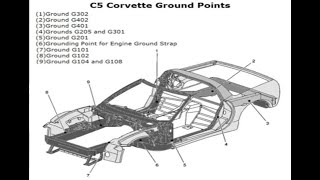
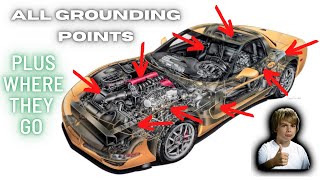
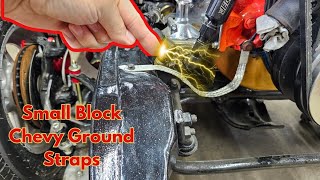
- Poor module or chassis grounds: Corroded or loose ground straps can cause intermittent voltage drops to control modules, mimicking a battery issue. On CadillacForums.com, a user provided a detailed guide to the XLR's main ground points, which are similar to the C6 Corvette. Key locations to inspect include G101/G102 near the front lamps, G104/G106 near the battery, and G401/G402 on the rear frame rails, which are exposed to weather. 🎬 See this guide on locating and cleaning common ground points.
- Faulty Powertrain or Transmission Control Module (PCM/TCM): → Shop Transmission Assembly This is the least likely cause and should only be considered after all power and ground circuits have been exhaustively tested and confirmed to be good. The TSBs provided by GM acknowledge that module failure is a possibility, but it is rare. Before replacing a module, GM's diagnostic procedure often involves reprogramming it first.
Diagnosis Steps
- Read the code with an OBD-II scanner and note any other codes present.
- Ask if the battery has been recently replaced or disconnected. If so, clear the code and test drive the vehicle. If it doesn't return, the issue is resolved.
- Visually inspect the battery terminals for corrosion and ensure they are tight. Clean and tighten as necessary.
- With the engine off, use a multimeter to test battery voltage. It should be at least 12.5 volts. A reading below this indicates a discharged or failing battery.
- Start the engine and test the battery voltage again. It should be between 13.7 and 14.7 volts, indicating a healthy charging system.
- If the battery is over 4 years old or fails voltage tests, have it professionally load-tested and replace it if necessary. The battery is located on the passenger side of the engine bay, near the firewall.
- If the battery and charging system are good, perform a parasitic draw test. Let the car sit for at least 20 minutes for modules to go to sleep. The draw should be below 50mA. If it's higher, pull fuses one by one to isolate the draining circuit.
- If the code persists, inspect the main power and ground connections. Check the main engine-to-chassis ground straps and the specific ground packs (G104, G106, G401, G402) mentioned in forum posts for corrosion or looseness.
- If all wiring and power sources are confirmed to be good and the code immediately returns after being cleared, the final step is to consider a faulty control module (PCM or TCM), which may require reprogramming or replacement by a professional.
Parts You'll Likely Need
- Automotive Battery (AGM Recommended)
(OEM #ACDelco Gold 94RAGM (GM P/N 88864542) or 49AGMHR (GM P/N 88864539) are common high-performance fits.)— The most common cause of P0603 is a weak or failing battery that can no longer provide stable voltage to the vehicle's control modules. An AGM battery is recommended for the XLR's high electrical load.
Trusted brands: ACDelco, Optima, Odyssey, DieHard
OEM price range: $220-$350
Aftermarket price range: $180-$280 - Battery Terminal Cleaner and Protector Kit — A cheap and effective fix if the cause is corrosion on the battery terminals interrupting the electrical connection.
Trusted brands: CRC, NOCO
OEM price range: $10
Related Codes That Often Appear With This One
- P0601 — This is an 'Internal Control Module Memory Check Sum Error', indicating a more serious internal module fault. TSB #05-06-04-060A groups these codes together as they can be set for similar reasons.
- P0604 — This code indicates an 'Internal Control Module Random Access Memory (RAM) Error'. Like P0603, it points to a memory issue within the control module and is often caused by power supply problems.
- P1621 — This GM-specific code relates to 'Control Module Long Term Memory Performance'. It is often set in conjunction with P0603, as documented in TSB #PIP4653E.
- P062F — This is an 'Internal Control Module EEPROM Error'. TSB #PIP4653E specifically lists this code alongside P0603, P0601, and P0604 as a group of DTCs that may be stored in the TCM.
Technical Service Bulletins (TSBs) & Recalls
- PIP4653E: Mentions that DTCs P0601, P0603, P0604, P062F or P1621 may be stored in the Transmission Control Module (TCM) and lists the 2008-2009 XLR as an affected vehicle.
- 05-06-04-060A: An informational bulletin about various control module DTCs (including P0603) being shared across multiple modules, often without a direct fault, typically after a power loss.
Platform-Specific Known Issues
- TSB #PIP4653E notes that on some GM vehicles, including the 2008-2009 XLR, DTCs P0601, P0603, P0604, P062F or P1621 may be stored in the Transmission Control Module (TCM), leading to potential shifting issues. The bulletin advises confirming which module set the code before attempting repairs.
- TSB #05-06-04-060A is an informational bulletin confirming that codes like P0603 can be set in multiple modules and do not necessarily indicate a component failure, often occurring after a power interruption.
- The XLR is known for having a constant parasitic draw that can drain a healthy battery in a few weeks if not driven or kept on a battery tender. This makes it exceptionally prone to setting P0603.
Mechanic-Grade Diagnostic Values
- Battery voltage during engine cranking — expected: Should remain above 9.6 Volts. Failure: A drop below 9.6V indicates a weak battery that cannot maintain voltage under load, a primary trigger for P0603.
- Module ground connection voltage — expected: Near 0 Volts (e.g., < 50 millivolts). Failure: A reading significantly higher than 0V indicates a poor ground connection, which can cause intermittent module resets.
- TCM power supply pin voltage (engine off) — expected: Should match battery voltage (approx. 12.6V). Failure: Low or no voltage indicates a problem with the power supply wiring or a fuse between the battery and the module.
Scan Tool Commands That Help
- GDS2 (Tech 2 successor): Transmission Adaptive Values Learn — Use this function after a battery replacement or any event that caused a P0603, especially if experiencing harsh or erratic shifting. It forces the TCM to relearn shift points without needing a long drive cycle. The function is located under: Module Diagnostics -> Transmission Control Module -> Configuration / Reset Function.
- Tech2 / GDS2: Clear Codes from all modules — After resolving the power supply issue (e.g., replacing the battery), a P0603 may be stored in history in multiple modules (ECM, TCM, BCM). A comprehensive clear ensures all related historical faults are erased.
- Tech2 / GDS2: Module Setup / Programming — This is only required if the PCM or TCM is replaced. The new module must be programmed with the vehicle's VIN and correct software calibration, followed by security and crankshaft position relearn procedures.
Wiring & Ground Locations
- G401 / G402 — Bolted to the side of the rear left-hand (LH) and right-hand (RH) frame rails. These are exposed to weather and road spray, making them susceptible to corrosion.. These are major chassis grounds. Corrosion here can create high resistance, causing intermittent voltage drops to various modules, including the TCM, which is located in the rear of the vehicle.
- G104 / G106 — Located near the battery in the engine compartment. G104 is specifically on the left rear corner of the engine, mounted to the cylinder head.. These are primary engine and front-end module grounds. A poor connection here can affect the PCM and charging system reference, leading to voltage instability that triggers P0603.
- G101 / G102 — Located on the lower left and right of the radiator core support, primarily for front lighting.. While primarily for lighting, poor grounds in this area can introduce electrical noise and instability into the system, contributing to intermittent issues.
Real Owner Repair Stories
- Cadillac XLR Forums user discussion (Cadillac XLR (year not specified, but within model range)) — No power, multiple dead batteries within a year, even with a battery tender connected.
❌ Tried (didn't work) Replacing the battery multiple times (third Optima Red Top).
✅ What actually fixed it The confirmed diagnosis was a significant parasitic electrical draw. The battery tender would switch from green (charged) to yellow (charging) overnight without the car being started, indicating something was continuously draining the battery and causing it to fail prematurely, which in turn sets the P0603 code.
When the Usual Fixes Don't Work
- The overwhelming consensus from technical service bulletins, forum discussions, and repair articles is that P0603 on the Cadillac XLR is a power-related problem, not a primary component failure. There is no significant evidence to counter this. Cases where a new battery and clean terminals do not fix the issue are almost always traced back to a more complex power supply problem, such as a parasitic draw from another module or a corroded chassis ground. Therefore, the 'counter-evidence' to a simple battery fix is simply a more in-depth electrical diagnosis, reinforcing the core principle that the power supply is the root cause.
OEM Part Supersession History
15270941, 25826221→15934200— Updated part for the Communication Interface Module (VCIM), which handles OnStar and Bluetooth.
Heads up: While not the PCM/TCM, a faulty VCIM can be a source of parasitic draw. This supersession is relevant for diagnosing electrical issues on the vehicle.
Model Year Variations Within This Range
- 2007-2009: All models in this range (base and V-series) use the 6-speed 6L80-E automatic transmission, an upgrade from the 5-speed (5L50-E) used in 2004-2006 base models. This change is significant as TSB #PIP4653E specifically mentions P0603 can be stored in the Transmission Control Module (TCM), and the 6L80-E has a different TCM and adaptive learning strategy than the earlier 5-speed.
- 2009: The 2009 model year received a significant cosmetic refresh, including new front/rear fascias and front fender vents. While primarily aesthetic, these changes involved wiring for fog lamps and side markers, introducing different potential chafe points or ground locations compared to 2007-2008 models.
Helpful Videos


We Have This Part in Stock

The information in this article is provided for general reference and educational purposes only. Vehicle specifications, procedures, and part compatibility can vary by production date, trim level, and region. Always consult your vehicle's factory service manual and verify part numbers before purchasing or performing repairs. Safety-critical components such as airbags, seat belts, and braking systems should be installed by a qualified professional.
- Cadillac XLR:
- 🧭 Diagnostic Flowchart
- 🎬 Helpful Videos
- 🛍️ Shop This Part
- What's Unique About the 2007-2009 Cadillac XLR
- Symptoms You May Notice
- Most Likely Causes
- Rare But Worth Checking
- Diagnosis Steps
- Parts You'll Likely Need
- Related Codes That Often Appear With This One
- Technical Service Bulletins (TSBs) & Recalls
- Platform-Specific Known Issues
- Mechanic-Grade Diagnostic Values
- Scan Tool Commands That Help
- Wiring & Ground Locations
- Real Owner Repair Stories
- When the Usual Fixes Don't Work
- OEM Part Supersession History
- Model Year Variations Within This Range
- 🎟️ Get 5% Off