

P0603 on 2005-2010 Chevrolet Cobalt: Keep Alive Memory (KAM) Error Causes and Fixes
P0603 on a 2005-2010 Cobalt almost always indicates a power supply problem, not a failed computer. The most likely cause is a weak or dying battery, or loose/corroded battery terminals. Before suspecting the PCM, fully test the battery and clean all connections. This code is also expected after a battery disconnect.
- P0603 is a power-related memory code. Do not assume the PCM is bad.
- The first and most important diagnostic step is to fully test the battery's health with a load tester.
- Thoroughly clean the battery terminals and cable ends, even if they look clean.
- If you recently disconnected the battery or it died, the code is normal. Clear it and drive.
- Only after confirming the battery, alternator, and all related connections are perfect should you consider a PCM issue.
What's Unique About the 2005-2010 Chevrolet Cobalt
For the 2005-2010 Cobalt and its platform mates like the Pontiac G5, the P0603 code is overwhelmingly tied to basic electrical system health rather than a specific component flaw. The code frequently and normally appears simply from disconnecting the battery or if the battery runs completely dead. While the Cobalt was infamous for major recalls on its ignition switch (NHTSA 14V047000) and electric power steering (NHTSA 10V073000), P0603 is more directly a symptom of an unstable power supply to the PCM, which can sometimes be an indirect consequence of these other systemic electrical issues.
Symptoms You May Notice
- Check Engine Light is on
- Engine stalling or intermittent stumbling
- Rough or unstable idle
- Difficulty starting the engine
- Hesitation during acceleration
- Reduced fuel economy
- Transmission may shift erratically
- ABS or Traction Control light may also illuminate
- Replacing the PCM without thoroughly testing the battery, alternator, and all related power/ground cables first. This is an expensive and usually unnecessary repair for this specific code.
Most Likely Causes
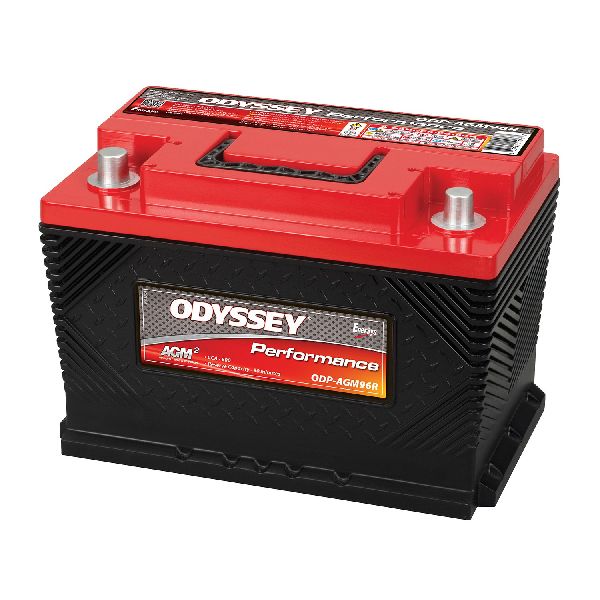
- Weak or Failing Battery 🔴 High Probability → Shop Vehicle Battery A battery at the end of its life may not provide the stable voltage required to maintain the PCM's Keep Alive Memory, especially during engine cranking when voltage drops significantly. This is the most common trigger for P0603.
How to confirm: Test the battery voltage with a multimeter. It should be ~12.6V with the engine off and 13.7-14.7V while running. A reading below 12.4V engine-off suggests a weak charge. For a definitive diagnosis, have the battery load-tested at an auto parts store.
Typical fix: Replace the vehicle's battery.
Est. part cost: $150-$250 - Loose or Corroded Battery Terminals/Cables 🔴 High Probability → Shop Vehicle Battery Corrosion or looseness at the battery terminals creates high resistance, causing intermittent power loss to the vehicle's modules, which is a direct trigger for a KAM error. This includes the main chassis and engine block ground connections.
How to confirm: Visually inspect the battery terminals for white or greenish corrosion. Physically attempt to twist the terminal clamps; they should not move. Follow the negative cable to its chassis ground point and check for corrosion and tightness.
Typical fix: Disconnect the battery (negative first), clean the terminals and cable clamps with a wire brush and baking soda solution, and reconnect securely (positive first). Apply a dielectric grease or anti-corrosion spray.
Est. part cost: $5-$15 - Failing Alternator 🟡 Medium Probability → Shop Alternator An alternator that produces unstable or insufficient voltage (too high or too low) can disrupt the PCM's power supply and fail to properly charge the battery, leading to a P0603 code.
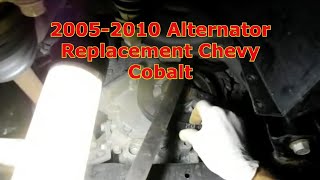
How to confirm: With the engine running, use a multimeter to check the voltage at the battery terminals. A healthy alternator should produce a steady voltage between 13.7 and 14.7 volts. A reading outside this range or one that fluctuates wildly points to a faulty alternator. 🎬 See this step-by-step guide to replacing your Cobalt alternator
Typical fix: Replace the alternator.
Est. part cost: $150-$300 - Poor PCM Ground Connection ⚪ Low Probability Body and engine ground straps can corrode or break over time, causing intermittent electrical issues for various modules, including the PCM. The main engine-to-chassis ground 🎬 Watch: How to find and fix common Cobalt electrical grounds is a known point of failure.
How to confirm: Locate the main engine-to-chassis and battery-to-chassis ground straps. Inspect them for corrosion, fraying, or looseness. Perform a voltage drop test across the ground circuit to check for high resistance.
Typical fix: Clean the ground connection points with a wire brush or replace the damaged ground strap.
Est. part cost: $15-$40
Rare But Worth Checking
- Faulty Powertrain Control Module (PCM): → Shop Engine Control Module (ECM) This is the least likely cause. The PCM is a robust component. It should only be considered after all power and ground supply issues have been completely ruled out. A faulty PCM will often set other internal error codes as well (e.g., P0601, P0604, P0606).
- Aftermarket Performance Tuner: If an aftermarket programmer was used to flash the PCM, it can sometimes trigger this code during the process or if the tune is unstable. Reverting to the stock tune may resolve the issue. This is a common scenario discussed on forums like CobaltSS.net.
- Recent Battery Disconnect or Dead Battery: → Shop Vehicle Battery If the battery was recently disconnected for service, jump-started, or went completely dead, a P0603 code is normal and expected. In this case, the code can simply be cleared with a scan tool and should not return after a few drive cycles.
- Blown Fuse: A blown fuse in a circuit related to the PCM's power supply can cause a P0603. For example, on the related HHR platform, fuse #25 in the interior fuse panel is for the ECM/TCM and should be checked.
Diagnosis Steps
- Check for other stored DTCs. Address any other codes first, especially those related to the charging system or specific sensors.
- Ask if the battery was recently disconnected, jump-started, or went dead. If so, clear the code, drive the vehicle for 15-20 minutes over a couple of trips, and see if it returns.
- Visually inspect the battery terminals for corrosion and ensure the cable clamps are tight. Clean and tighten as needed.
- Follow the negative battery cable to the chassis and the engine block ground strap. Inspect these connections for corrosion, damage, or looseness.
- With the engine off, measure battery voltage using a multimeter. A reading below 12.4V suggests a weak or discharged battery.
- Start the engine and measure the charging system voltage at the battery terminals. It should be stable, between 13.7V and 14.7V. If it's too low, too high, or fluctuating, the alternator is suspect.
- Have the battery professionally load-tested. This is often a free service at auto parts stores and is the most reliable way to confirm battery health.
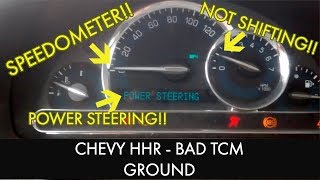
- Inspect fuses related to the PCM/ECM. On the related Chevy HHR, this includes fuse #25 in the interior fuse panel. 🎬 Watch: Fixing TCM ground issues that cause shifting and power problems
- If all power and ground circuits are confirmed to be good and the code persists after being cleared, the PCM may be faulty, but this is rare.
Parts You'll Likely Need
- Car Battery
(OEM #ACDelco Gold 47PS (GM Part #88865266) - for BCI Group 47 size)— A weak or failing battery is the most common cause of P0603, as it cannot provide the stable voltage needed to maintain the PCM's memory.
Trusted brands: ACDelco, DieHard, Interstate
OEM price range: $200-$275
Aftermarket price range: $150-$225 - Battery Terminal Cleaner — Often, the only issue is a poor connection due to corrosion on the battery posts and terminals, which this tool resolves cheaply and effectively.
Trusted brands: CRC, Permatex, NOCO
Aftermarket price range: $5-$15
Related Codes That Often Appear With This One
- P0107 — Forum discussions show P0107 (Manifold Absolute Pressure/BARO Circuit Low Input) can sometimes appear with P0603, possibly due to the underlying electrical issue affecting multiple sensors or the PCM's ability to read them correctly.
- P0601, P0604, P0606 — These are also internal module memory errors. Seeing them alongside P0603 strengthens the possibility of a true PCM fault, though power supply issues should still be checked first as per GM TSB 05-06-04-060A.
Technical Service Bulletins (TSBs) & Recalls
- 05-06-04-060A: This is a general informational bulletin from GM covering multiple vehicles. It advises technicians that internal module DTCs like P0601, P0602, P0603, P0604, etc., often instruct to replace the module. However, it serves as a reminder to perform all standard electrical system diagnostics first, as external issues (like power/ground problems) are common causes. Manufacturer TSB Bulletin #05-06-04-060A specifically notes that this information on control module DTCs can be shared across multiple modules.
- PIP4653E: While more focused on the Transmission Control Module (TCM), this TSB discusses memory-related codes like P0603 and advises checking for external electrical problems before replacing modules. It highlights that low battery voltage or power interruptions can set these codes in various modules.
Platform-Specific Known Issues
- The 2005-2010 Cobalt was subject to a major recall for a faulty ignition switch (NHTSA 14V047000). This switch could unexpectedly move from 'Run' to 'Accessory', stalling the engine and causing a sudden loss of all electrical power. This power interruption is a direct cause for a P0603 code to be logged. A related recall (NHTSA 14V171000) for the key being removable when not in the 'Off' position could lead to the battery draining, which would then also cause a P0603 code.
Mechanic-Grade Diagnostic Values
- Voltage Drop at Battery Terminals/Posts — expected: Less than 0.2V. Failure: A voltage drop of 0.2V or more across a connection indicates high resistance from corrosion or looseness, which is enough to trigger a KAM error.
- Parasitic Draw (Key-Off Current Draw) — expected: Less than 50mA. Failure: A draw exceeding 50mA after all modules have entered sleep mode (approx. 20-40 minutes) indicates a component is not shutting down, draining the battery and causing P0603 on startup.
- PCM Keep Alive Power (KAPWR) Pin Voltage — expected: Constant Battery Voltage (12.0V+). Failure: Any voltage loss or intermittent drops on the dedicated KAM power feed pin at the PCM connector points to a wiring or fuse issue between the battery and the PCM.
- Resistance from PCM Ground Pin to Chassis Ground — expected: Less than 1.0 Ohm. Failure: Resistance higher than 1.0 Ohm indicates a poor ground connection at a location like G103 or G107, which can cause floating voltages and module communication errors.
Scan Tool Commands That Help
- GM Tech 2 / High-End Scan Tool: Clear KAM / Reset Keep Alive Memory — This function forces the PCM to erase its learned adaptive values. It should be used after a repair that affects sensor inputs (e.g., new O2 sensor, throttle body cleaning) or after resolving the root cause of the P0603 to start the learning process fresh. Disconnecting the battery for over 5 minutes achieves the same result.
- GM Tech 2 / GDS2: SPS (Service Programming System) — Used to reflash the PCM with the latest GM calibration files. This is a potential fix if the P0603 is caused by a known software bug, but should only be attempted after all hardware (battery, wiring, grounds) has been proven to be good.
Wiring & Ground Locations
- ECM (Engine Control Module) — Located on the left side of the engine compartment, near the strut tower.. This is the module logging the code. Its power and ground connections are critical. The main connectors are X1 and X2.
- G103 — Located on the left rear of the engine compartment on the cowl, often above the brake booster.. This is a primary ground point for the Body Control Module (BCM), Instrument Panel Cluster (IPC), and Data Link Connector (DLC). A poor connection here can cause a wide range of electrical issues that may indirectly lead to P0603.
- G105 / G107 — Located on the lower left front of the transmission case.. These are the primary engine block grounds for the PCM/ECM. Corrosion or looseness at these points is a direct cause of unstable power and ground reference for the engine computer, frequently triggering P0603.
- Underhood Fuse Block — Located on the driver's side of the engine bay, near the battery.. Contains the primary fuses for the ECM/PCM and other modules. Specifically, the 'ECM/TCM' fuse provides the Keep Alive power that is central to this code.
- BCM (Body Control Module) — Located under the center of the dashboard.. The BCM controls the vehicle's sleep/wake cycle. A faulty BCM that fails to put the car to sleep can cause a parasitic draw, draining the battery and triggering a P0603 on the next startup.
Real Owner Repair Stories
- CobaltSS.net forum user (2009 Chevrolet Cobalt SS (LNF Turbo)) — P0603 code present, but no noticeable drivability issues. Battery and alternator tested good.
❌ Tried (didn't work) Replacing the battery, Checking all fuses, Cleaning battery terminals and main ground straps
✅ What actually fixed it The Body Control Module (BCM) was faulty and causing a parasitic draw that would drain the battery just enough overnight to trigger the P0603 in the PCM, without being low enough to prevent starting. Replacing the BCM and having it programmed by the dealer resolved the parasitic draw and the P0603 code did not return.
OEM Part Supersession History
12594750, 12612397→12629020, 12597125— GM frequently updates part numbers to consolidate inventory and incorporate minor hardware or software revisions.
Heads up: When replacing a PCM, it is critical to ensure the replacement is programmed with the vehicle's specific VIN. While many part numbers are physically interchangeable, the software must match the engine, transmission, and options of the vehicle.12613958 (for 2.4L)→12616189— Software and hardware updates for the 2.4L engine variant.
Heads up: Using a PCM from a different engine size (e.g., a 2.2L PCM in a 2.4L car) will result in a no-start condition or severe running issues. The hardware code (e.g., 12605843) is often shared, but the software is different.
Model Year Variations Within This Range
- 2005-2006 vs 2007-2010: The interior and some electronics were updated in 2007. The radio design changed, and the BCM logic was updated. For P0603, this is important as wiring diagrams for the BCM and related power distribution may differ slightly. The 2009-2010 models also made side-curtain airbags and stability control standard, adding complexity to the electrical system.
- 2005-2007 vs 2008-2010 (SS Models): The high-performance Cobalt SS model switched from a 2.0L supercharged (LSJ) engine to a 2.0L turbocharged (LNF) engine in 2008. This involved a completely different PCM (E67 for LNF vs P12 for LSJ) and engine wiring harness, making diagnostics and parts entirely different between these two SS variants.
Diagnostic Flowchart
Other Known Issues on This Vehicle
Issues unrelated to this code that are worth knowing about as an owner of this generation:
- Faulty Ignition Switch 🔴 High — Extremely widespread, affecting all 2005-2010 models. The switch can move out of the 'Run' position due to weight on the keychain or jarring, causing the engine to stall and disabling airbags. (Ref: NHTSA Recall 14V047000)
- Electric Power Steering (EPS) Failure 🔴 High — Very common across all 2005-2010 models. Results in a sudden loss of power steering assist, making the vehicle difficult to steer at low speeds. (Ref: NHTSA Recalls 10V073000, 14V153000)
- Corroding Fuel Lines 🟠 Medium — Common on 2008-2010 models, especially in 'salt belt' regions. Lines corrode near the left rear wheel well, causing fuel leaks and strong fuel odors. (Ref: NHTSA Investigation PE20-009 (closed without recall))
- Key Stuck in Ignition 🟡 Low — Frequently reported by owners, often occurring around 84,000 miles. Caused by issues with the shifter cable or ignition lock cylinder. (Ref: NHTSA Recall 14V171000 (related to key being removable when not in 'Off'))
- Timing Chain Tensioner/Guide Failure 🟠 Medium — Reported on engines around 108,000 miles, causing rattling noises and potentially leading to chain failure and severe engine damage if ignored.
- Faulty Fuel Pump Module (Cracked Port) 🟠 Medium — Affected 2006-2007 models, primarily in warm weather states. The plastic port on the fuel pump module can crack, leading to fuel leaks. (Ref: NHTSA Recall 09V419000)
Used vs. New Parts: Buying Guide for This Vehicle
When a used part is the smart pick: A used alternator from a low-mileage donor vehicle is a very cost-effective repair. A used PCM can also be a good option, but ONLY if purchased from a reputable seller who can program it to your car's VIN before shipping.
Donor-vehicle mileage cap: roughly under 80000 miles for the part to have meaningful remaining life.
What to inspect on the donor part:
- For an alternator, check for smooth bearing rotation with no grinding, and ensure the pulley is not damaged.
- For a PCM, inspect the connector pins to ensure none are bent or corroded. Look for any signs of water damage or case tampering.
- Check the donor vehicle's history if possible to avoid parts from flood-damaged or high-impact collision cars.
OEM-only on this vehicle (don't cheap out):
- No parts for this specific repair are strictly 'OEM-only', but using a quality, VIN-programmed PCM is critical. Avoid unprogrammed PCMs unless you have access to GM's SPS programming tools.
Aftermarket brands forum-validated for this vehicle:
- Alternators: ACDelco (OEM Reman), Denso, TYC, Bosch
- Batteries: ACDelco, Interstate, DieHard
Brands owners have reported issues with on this vehicle:
- No-name, unbranded alternators from online marketplaces often have high failure rates.
- Avoid 'plug-and-play' performance chips that promise fuel savings; they can often interfere with PCM operation and cause codes like P0603.
Real Owner Stories
Aggregated from forums and TSBs cited above. Mileages and costs reflect what owners reported in those sources.
2009 Chevrolet Cobalt SS 2.0L LNF
Symptoms: P0603 code appeared after the battery had been disconnected or had died.
What fixed it: Restoring power and clearing the code resolved the issue permanently.
Source hint: CobaltSS.net thread titled 'p0603 code'
2005-2010 Chevrolet Cobalt
Symptoms: Persistent P0603 along with engine stalling issues.
What fixed it: Replacing a corroded main ground wire after battery and alternator replacements failed to fix the problem.
Source hint: yourcobalt.com forum discussion
Related OBD-II Codes
Frequently Asked Questions
Could the major ignition switch recall on my 2005-2010 Chevrolet Cobalt cause a P0603 code?
I just jump-started my Cobalt and now the Check Engine Light is on with P0603. What should I do?
Does GM TSB 05-06-04-060A mean I have to replace my PCM for a P0603 code?
Where is the battery located on my Cobalt's platform mate, the Chevy HHR, if I'm checking for P0603 causes?
Is there a specific fuse I should check on the Cobalt or HHR for PCM memory issues?
Can a bad alternator trigger a P0603 on a 2005-2010 Cobalt?
Helpful Videos
We Have This Part in Stock


The information in this article is provided for general reference and educational purposes only. Vehicle specifications, procedures, and part compatibility can vary by production date, trim level, and region. Always consult your vehicle's factory service manual and verify part numbers before purchasing or performing repairs. Safety-critical components such as airbags, seat belts, and braking systems should be installed by a qualified professional.
- Chevrolet Cobalt:
- 🧭 Diagnostic Flowchart
- 🎬 Helpful Videos
- 🛍️ Shop This Part
- What's Unique About the 2005-2010 Chevrolet Cobalt
- Symptoms You May Notice
- Most Likely Causes
- Rare But Worth Checking
- Diagnosis Steps
- Parts You'll Likely Need
- Related Codes That Often Appear With This One
- Technical Service Bulletins (TSBs) & Recalls
- Platform-Specific Known Issues
- Mechanic-Grade Diagnostic Values
- Scan Tool Commands That Help
- Wiring & Ground Locations
- Real Owner Repair Stories
- OEM Part Supersession History
- Model Year Variations Within This Range
- Other Known Issues on This Vehicle
- Used vs. New Parts: Buying Guide for This Vehicle
- Real Owner Stories
- 2009 Chevrolet Cobalt SS 2.0L LNF
- 2005-2010 Chevrolet Cobalt
- Related OBD-II Codes
- Frequently Asked Questions
- 🎟️ Get 5% Off