

P0603 on 2015-2022 Chevrolet Colorado 2.8L Duramax: KAM Error Causes and Fixes
On a 2.8L Duramax Colorado, P0603 almost always means there was a power interruption to the engine's computer. The most likely cause is a weak or failing battery. Before replacing any expensive parts, fully test the battery, clean the terminals, and check all major power and ground connections. This code is often a symptom of an electrical system issue, not a faulty ECM.
- P0603 on your Colorado Duramax is a strong indicator of a battery or charging system problem, not a bad computer.
- Always start diagnosis by having your battery properly load-tested, not just checked for voltage.
- Clean and tighten your battery terminals and check the main ground connections before buying any parts.
- If the battery was recently disconnected or went dead, this code is normal. Clear it and see if it returns before proceeding with further diagnosis.
- Do not replace the ECM unless a professional has confirmed all power and ground circuits are perfect.
What's Unique About the 2015-2022 Chevrolet Colorado
The 2.8L Duramax diesel engine places a high demand on its battery for starting, especially for the glow plugs and high-compression cranking. This can expose a weak battery that might otherwise seem fine, making battery-related issues the number one cause of P0603 on this truck. While the code is generic, its frequent appearance on this platform is almost always tied to the health of the single-battery electrical system rather than a computer failure. 🎬 Watch: Understanding the P0603 code and how to fix it. The E98 ECM used in these trucks is also known to be sensitive to voltage fluctuations.
Symptoms You May Notice
- Check Engine Light is on
- Engine may crank slower than usual or be hard to start
- Slightly rougher idle than normal
- Reduced fuel economy
- Transmission shifting may feel different or harsher as it's using base settings
- Illumination of other warning lights like ABS or Traction Control if system voltage is low
- The code may appear after the battery has been disconnected for service, which is normal. Clear the code and see if it returns.
- Replacing the Engine Control Module (ECM) without first load-testing the battery and checking all power/ground connections. A new ECM will have the same problem if the power supply is unstable.
- Replacing the battery without cleaning the cable terminals and checking the main ground straps, leading to a recurring code.
Most Likely Causes
- Weak or Failing Battery 🔴 High Probability → Shop Vehicle Battery Diesel engines require high cranking amps, which can cause a momentary voltage drop on a weak battery, sufficient to reset the ECM's memory. This can happen even if the battery seems to start the truck okay. The original AGM batteries in these trucks have a typical lifespan of 3-5 years, after which they are prime suspects for any electrical issue.
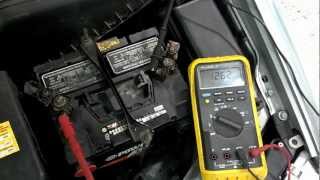
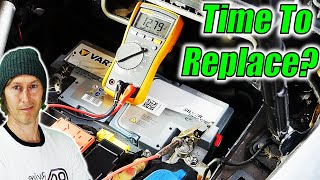
How to confirm: Have the battery load tested at an auto parts store or with a proper digital battery tester. A simple voltage check with a multimeter is not enough; a battery can show 🎬 See how to perform a battery load test with a multimeter. 12.6V at rest but fail under load. The test must be performed correctly to be valid.
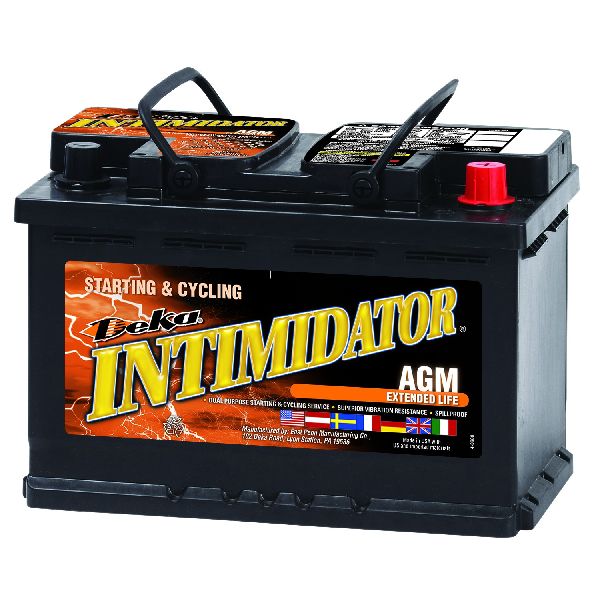
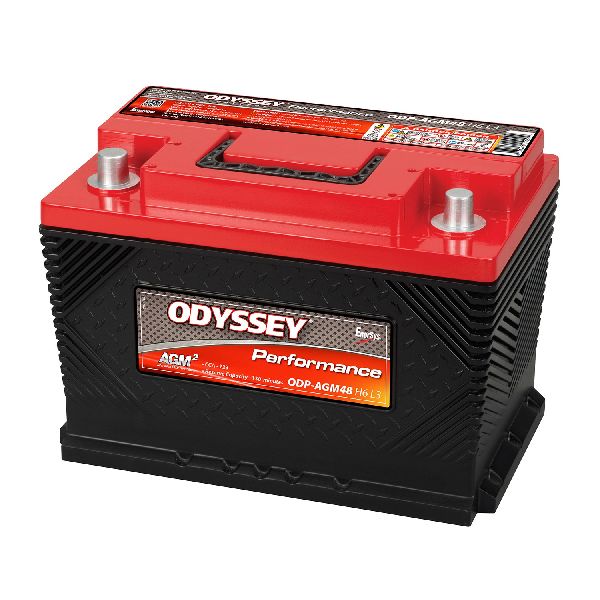
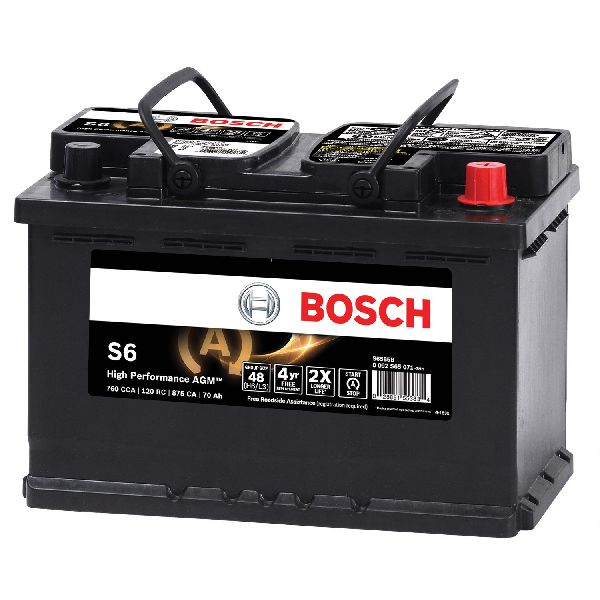
Typical fix: Replace the battery. Ensure the new battery is an AGM (Absorbent Glass Mat) type and meets or exceeds the OEM's Cold Cranking Amps (CCA) specification of 850 CCA for the diesel engine.
Est. part cost: $150-$300 - Loose or Corroded Battery Terminals/Grounds 🟡 Medium Probability → Shop Vehicle Battery Vibrations and exposure to the elements can lead to loose connections or corrosion, causing intermittent power loss to the vehicle's modules. GM trucks of this era are known for having issues with ground splice packs and key grounding points.
How to confirm: Visually inspect the battery terminals for white or blue/green corrosion. Physically try to twist the terminals; they should not move. Inspect the main engine and body ground straps for tightness and corrosion. Key locations include the battery-to-frame ground under the radiator, the body-to-engine-block strap at the rear of the driver's side head, and the main ECM ground.
Typical fix: Disconnect the battery (negative first), clean the terminals and posts with a wire brush, and re-secure them tightly. Disassemble, clean, and re-secure any corroded ground connection points, ensuring a clean metal-to-metal contact.
Est. part cost: $5-$20 - Failing Alternator ⚪ Low Probability → Shop Alternator If the alternator isn't recharging the battery properly, the system voltage will eventually drop low enough to trigger the P0603 code. An alternator with failing diodes can also introduce AC ripple (dirty power) into the electrical system, which can upset sensitive modules like the ECM.
How to confirm: With the engine running, use a multimeter to check the voltage at the battery terminals. A healthy alternator should produce between 13.7 and 14.7 volts. Most auto parts stores can also test the alternator's output and check for AC ripple for free.
Typical fix: Replace the alternator.
Est. part cost: $200-$450 - Aftermarket Engine Tuner/Programmer ⚪ Low Probability Tuning is common in the diesel community. Some aftermarket tunes can cause conflicts with the ECM's self-check processes, or the process of flashing a tune can cause a temporary power cycle that logs the code.
How to confirm: If you have an aftermarket tuner installed, use it to return the truck's ECM to the factory/stock tune. Clear the codes and drive to see if P0603 returns. Often, the code is set during the flash and will not return once cleared.
Typical fix: Remove the tune or contact the tuning company for an updated file that resolves the issue. If the code only appears after flashing and doesn't return, it can usually be ignored.
Est. part cost: $0
Rare But Worth Checking
- Blown Fuse for ECM/TCM Power: A specific fuse provides constant power to the control modules. On some Colorados, a large 'mega fuse' in the under-hood fuse block is critical for the charging system; if it blows, the battery won't charge, leading to this code. Check the fuses labeled ECM, PCM, or similar in the owner's manual.
- Faulty Engine Control Module (ECM): → Shop Engine Control Module (ECM) This is extremely rare for a P0603 code alone. Before condemning the expensive ECM, every other possibility related to power and grounds must be exhaustively checked. GM has a TSB (PIP5428) for ECM failures on this platform, but it's primarily associated with other codes like P0606 (Processor Fault). The TSB does list P0603 as a code to check for during diagnosis, but it is not the primary indicator of a failed ECM.
Diagnosis Steps
- Check for other DTCs. Address any other codes, especially those related to voltage or other modules, first.
- Ask the driver: Was the battery recently replaced, disconnected, or jump-started? If yes, clear the code and drive the vehicle. It may have been a one-time event and may not return.
- Visually inspect the battery terminals and cables for looseness, damage, or corrosion. Clean and tighten as necessary.
- Using a quality multimeter, check the battery voltage with the engine off. It should be ~12.6V. Then, start the engine and check the charging voltage. It should be stable between 13.7V and 14.7V.
- Regardless of voltage readings, have the battery professionally load-tested. This is the most critical step for this specific code on this truck.
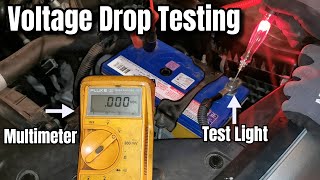
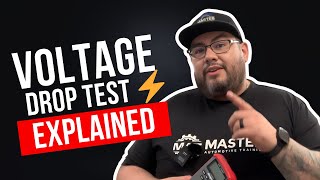
- If the battery and charging system test good, perform a voltage drop test on the main power and ground cables. Inspect the main ground connections: from the battery negative terminal to the chassis/frame, and the ground strap from the chassis to the engine block (often on the rear of the driver's side cylinder head).
- If an aftermarket tuner is installed, return the vehicle to its stock programming and see if the code clears.
- If all of the above checks pass and the code still returns immediately after being cleared, investigate the specific ECM power supply fuses in the under-hood fuse block. Only after confirming all power and ground circuits are perfect should a faulty ECM be considered.
Parts You'll Likely Need
- AGM Battery
(OEM #ACDelco 49AGMHR or 88865934 (Group 94R))— This is the most frequent cause. The original battery may be weak and unable to hold a stable voltage during cranking, causing the ECM to lose its keep-alive memory. An AGM battery is required.
Trusted brands: ACDelco, Interstate, DieHard, Duralast Platinum
OEM price range: $200-$300
Aftermarket price range: $150-$250 - Battery Terminal Cleaners and Protectant — Corroded terminals are a common source of intermittent power, which directly causes a P0603 code.
Trusted brands: CRC, NOCO
OEM price range: $10-$20
Aftermarket price range: $5-$15
Technical Service Bulletins (TSBs) & Recalls
- PIP5428C: While this TSB is primarily for other ECM codes like P0606, it acknowledges a history of ECM issues on the 2.8L Duramax and notes that P0603 can be part of the diagnostic path, confirming that ECM failure is a (rare) possibility. The TSB puts a restriction on ordering the ECM (Part No. 55487860) to gather data, and requires technicians to rule out other causes, including checking battery voltage, before replacement is authorized.
- Bulletin #05-06-04-060A: This informational bulletin provides guidance to technicians regarding control module Diagnostic Trouble Codes, specifically noting that P0603 can be shared across multiple modules within the electrical system.
Platform-Specific Known Issues
- On the ColoradoFans forum, multiple owners report that the P0603 code appeared when their original factory battery was nearing the end of its life (typically 3-4 years). In nearly all cases, replacing the weak battery with a new, quality AGM battery permanently resolved the code.
- A user on the ZR2zone forum noted that low voltage from a failing battery can cause a cascade of seemingly unrelated error messages and codes, with P0603 being one of the first to appear. This highlights the importance of checking the battery first.
Mechanic-Grade Diagnostic Values
- Voltage Drop: Positive Battery Cable (During Cranking) — expected: < 0.5V (< 0.8V for Diesel is acceptable). Failure: A reading higher than 0.8V indicates excessive resistance in the positive cable or its connections.
- Voltage Drop: Negative Battery Cable (During Cranking) — expected: < 0.5V (< 0.8V for Diesel is acceptable). Failure: A reading higher than 0.8V indicates excessive resistance in the ground cable or its connections to the engine block and frame.
- Voltage Drop: Alternator Output Cable (Engine Running Under Load) — expected: < 0.5V. Failure: A reading higher than 0.5V indicates high resistance in the charging cable between the alternator and the battery/fuse block.
- ECM Power/Ground Circuit Voltage Drop (Key On) — expected: < 0.2V (200mV). Failure: A reading higher than 0.2V indicates high resistance in the specific power feed or ground circuit being tested for the ECM.
Hidden / Shadow Codes Worth Checking
- P0603 in TCM: The P0603 code can be set independently in the Transmission Control Module (TCM), indicating a memory loss event specific to transmission adaptive data. This may not be visible with basic scanners and can cause harsh or erratic shifting. (see via A professional scan tool like the GM GDS2 is required to view DTCs stored in specific modules beyond the ECM.)
- Shadow Password (Seed Key): This is not a trouble code, but a unique password for each individual E98 ECM. It is required to access the ECM's 'boot mode' to recover it from a failed programming attempt ('bricked' state) or if it's locked by a tuner. The password must be read and saved from the ECM while it is still functional. (see via Specialized tools like I/O Terminal, OBDSTAR DC706, or M&D Flasher can read and save the shadow password from a functional ECM via a bench harness or OBD-II connection.)
Scan Tool Commands That Help
- GM GDS2: Vehicle DTC Information — Use this function first to see a complete list of codes stored in ALL vehicle modules (ECM, TCM, BCM, etc.). This helps determine if the P0603 is isolated or part of a wider electrical issue.
- GM GDS2: Clear DTCs — Used to clear the P0603 code after a repair (like a battery replacement) to see if the fault returns. This is a necessary step after any power interruption.
- GM GDS2: Output Controls (Bidirectional Tests) — While not directly for P0603, if other electrical symptoms are present, GDS2 can command relays, lights, and motors to function, helping to isolate circuit problems without manual testing.
- Any Vehicle: Clear Flood Mode — To perform a voltage drop test on the starter circuit, the engine must crank without starting. On most modern GM vehicles, this can be achieved by pressing the accelerator pedal fully to the floor before and during cranking.
Wiring & Ground Locations
- Engine Harness Chafe Points (TSB PIP5416) — Multiple locations around the engine bay. Key areas to inspect are: harness contact with A/C compressor lines, the power steering pump pulley, the serpentine belt, a stud on the transmission bell housing, and sharp edges on coolant pipe clamps between the engine and cowl.. A chafed wire can cause an intermittent short to ground or an open in a critical power supply or ground circuit for the ECM. This unstable power can directly cause a P0603 KAM error, even if the battery and alternator are perfectly fine.
- ECM Power Relay — Located in the under-hood fuse block (also called the Underhood Bussed Electrical Center or UBEC).. This relay supplies main power to the ECM when the ignition is on. A failing relay could cause intermittent power loss. A relay that is stuck closed could cause a battery drain, eventually leading to low voltage and a P0603 code.
- Main Engine/Body Grounds — Primary grounds include the negative battery cable to the chassis/frame, a large ground strap from the frame to the engine block, and smaller ground points on the inner fenders and firewall.. The ECM relies on these main grounds to complete its circuits. High resistance at any of these points can cause voltage instability for the entire vehicle, triggering the P0603 code.
OEM Part Supersession History
N/A→Edge Products 98108— Repair kit for ECM connector slides.
Heads up: The plastic sliders on the main engine harness connectors for the E98 ECM are known to become brittle and break upon removal. This kit provides replacement sliders, preventing the need to replace the entire engine harness.
Model Year Variations Within This Range
- 2016+: The 2.8L LWN Duramax engine was introduced to the North American Chevrolet Colorado for the 2016 model year, not 2015. Any diagnosis specific to this engine applies from 2016-2022.
Diagnostic Flowchart
Other Known Issues on This Vehicle
Issues unrelated to this code that are worth knowing about as an owner of this generation:
- Torque Converter Shudder 🟠 Medium — Very common on both 8-speed (V6) and 6-speed (Diesel) transmissions. Often described as driving over rumble strips between 25-80 MPH. (Ref: TSB 18-NA-355. The fix involves a specific multi-flush procedure with a new formulation of transmission fluid.)
- Emissions System Faults (DEF/DPF/EGR) 🟠 Medium — Common, especially in cold climates or with frequent short trips. Issues include failed DEF heaters, clogged DPF filters, and faulty NOx sensors, often leading to 'Reduced Engine Power' mode. (Ref: Multiple TSBs exist, such as #17-NA-194, addressing various emissions-related DTCs.)
- Cracked Turbocharger Resonator / Boost Leaks 🟠 Medium — The plastic charge air cooler pipe (resonator) on the hot side of the turbo is a well-documented failure point, frequently cracking and causing a P0299 (Turbo Underboost) code and loss of power.
- Timing Belt Maintenance 🔴 High — This is not a failure, but a critical maintenance item. The LWN engine uses a timing belt, not a chain, which requires replacement at a scheduled interval (GM recommends 150,000 miles). Failure to replace it will result in catastrophic engine damage.
- Cracked Flexplate 🟡 Low — While more common on the larger Duramax engines, the LWN can also suffer from cracked flexplates, especially on tuned or hard-worked trucks. Symptoms include a rhythmic knocking or ticking sound at idle.
Used vs. New Parts: Buying Guide for This Vehicle
When a used part is the smart pick: A used alternator from a low-mileage donor vehicle is a reasonable choice. A used engine wiring harness can be considered if it is thoroughly inspected for any signs of chafing or previous repairs, especially at the known problem areas outlined in TSB PIP5416.
Donor-vehicle mileage cap: roughly under 60000 miles for the part to have meaningful remaining life.
What to inspect on the donor part:
- For an alternator, check for smooth bearing rotation with no noise or roughness. Ensure the pulley is in good condition.
- For a wiring harness, inspect all connectors for broken tabs or corrosion. Meticulously check the entire length for any signs of abrasion, melting, or improper repairs (e.g., wires joined with tape instead of proper splices).
- For an ECM, visually inspect for any signs of physical damage or water intrusion. Ensure the service number on the used module matches the original.
OEM-only on this vehicle (don't cheap out):
- Battery: Never buy a used battery. A new, high-quality AGM battery is critical for resolving voltage-related codes like P0603.
- Engine Control Module (ECM): While a used ECM can be installed, it is essentially a paperweight until it is professionally programmed to the truck's VIN and security system using dealer-level tools (GDS2). The cost of programming can sometimes make a pre-programmed aftermarket unit or a new OEM unit a more straightforward option.
Aftermarket brands forum-validated for this vehicle:
- Battery: ACDelco (OEM), Interstate, DieHard, Duralast Platinum (AGM models).
- Alternator: Denso, Bosch (if available as OEM equivalent).
Brands owners have reported issues with on this vehicle:
- Avoid non-AGM or budget-tier batteries with lower CCA ratings than the OEM 850 CCA specification. The electrical demands of the diesel engine will cause premature failure.
Real Owner Stories
Aggregated from forums and TSBs cited above. Mileages and costs reflect what owners reported in those sources.
2016 Chevrolet Colorado 2.8L Duramax — ~60000 miles
Symptoms: The P0603 code appeared when the original factory battery was nearing the end of its life after about 4 years of use.
What fixed it: Replacing the weak battery with a new, quality AGM battery permanently resolved the code.
Source hint: ColoradoFans forum
Chevrolet Colorado ZR2 2.8L Duramax
Symptoms: Low voltage from a failing battery caused a cascade of seemingly unrelated error messages and codes, with P0603 being one of the first to appear.
What fixed it: Replacing the failing battery.
Source hint: ZR2zone forum
Related OBD-II Codes
Frequently Asked Questions
Can a weak battery really cause a P0603 on my 2.8L Duramax even if the truck still starts?
What are the specific battery requirements for the Chevrolet Colorado diesel to prevent this code?
Does TSB PIP5428C mean I need a new ECM for my Colorado?
I just installed a tuner on my Colorado and got a P0603; should I be worried?
Where are the main ground points I should check on my Colorado to fix this?
Why is my transmission shifting harshly while the P0603 code is active?
Helpful Videos


We Have This Part in Stock


The information in this article is provided for general reference and educational purposes only. Vehicle specifications, procedures, and part compatibility can vary by production date, trim level, and region. Always consult your vehicle's factory service manual and verify part numbers before purchasing or performing repairs. Safety-critical components such as airbags, seat belts, and braking systems should be installed by a qualified professional.
- Chevrolet Colorado:
- 🧭 Diagnostic Flowchart
- 🎬 Helpful Videos
- 🛍️ Shop This Part
- What's Unique About the 2015-2022 Chevrolet Colorado
- Symptoms You May Notice
- Most Likely Causes
- Rare But Worth Checking
- Diagnosis Steps
- Parts You'll Likely Need
- Technical Service Bulletins (TSBs) & Recalls
- Platform-Specific Known Issues
- Mechanic-Grade Diagnostic Values
- Hidden / Shadow Codes Worth Checking
- Scan Tool Commands That Help
- Wiring & Ground Locations
- OEM Part Supersession History
- Model Year Variations Within This Range
- Other Known Issues on This Vehicle
- Used vs. New Parts: Buying Guide for This Vehicle
- Real Owner Stories
- 2016 Chevrolet Colorado 2.8L Duramax — ~60000 miles
- Chevrolet Colorado ZR2 2.8L Duramax
- Related OBD-II Codes
- Frequently Asked Questions
- 🎟️ Get 5% Off