

P0603 on 2011-2015 Chevrolet Cruze: Keep Alive Memory (KAM) Error Causes and Fixes
On a 2011-2015 Chevy Cruze, code P0603 almost always indicates a power supply problem, not a failed computer. The most common causes are a weak battery or a faulty negative battery cable, which is a known issue on this vehicle. Before buying any parts, test the battery, clean its terminals, and inspect the negative cable; these simple checks often resolve the issue.
- P0603 on a Chevy Cruze is almost always a power supply issue, not a bad computer.
- The most likely cause is the faulty negative battery cable, a known defect covered by GM Special Coverage #14311.
- Always start by testing your battery and inspecting the negative battery cable and its ground connection before considering any other repairs.
- This code is a normal and expected occurrence after disconnecting or replacing the battery; it will often clear on its own after driving.
- If you experience harsh shifting along with this code, it's likely because the Transmission Control Module (TCM) lost its adaptive memory, as noted in GM service bulletins.
- Do not replace the ECM or PCM for this code alone unless all battery, charging, and especially the negative battery cable issue have been completely ruled out.
What's Unique About the 2011-2015 Chevrolet CRUZE
On the first-generation Chevrolet Cruze, the P0603 code is frequently triggered by the vehicle's sensitivity to battery voltage fluctuations. A primary culprit is a known defect with the negative battery cable, where an insufficient crimp at the terminal causes high resistance and inadequate power delivery to the vehicle's electrical systems. General Motors acknowledged this with Special Coverage #14311, extending the warranty for this specific part. The code can appear in multiple modules, including the Transmission Control Module (TCM), not just the main engine computer. It's often a side effect of a weak battery, a bad negative cable, or a battery replacement rather than a sign of a failing component.
Diagnostic Flowchart
Tap your situation to follow the diagnostic path that matches what you're seeing on this vehicle.
Symptoms You May Notice
- Check Engine Light is on
- Rough or unstable idle, especially right after starting
- Hesitation during acceleration
- Harsh or poorly-timed transmission shifts
- Difficulty starting the engine or slow cranking
- Factory remote start may be disabled
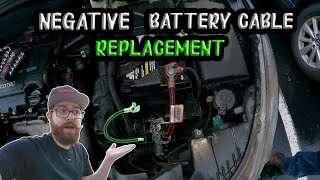
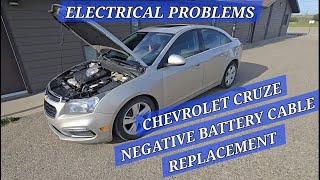
- Radio/HVAC display turning on and off. 🎬 Watch: How to replace the cable and fix radio flickering.
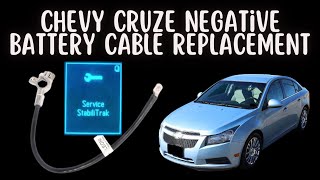
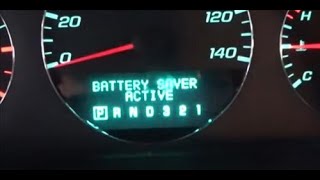
- "Battery Saver Active" or "Service Steering" messages in the Driver Information Center (DIC). 🎬 See how to clear the Battery Saver Active message.
- Flickering interior and exterior lights.
- Loss of power steering assist at low speeds.
- Replacing the Engine Control Module (ECM) or Transmission Control Module (TCM) without first testing the battery and replacing the known-faulty negative battery cable. This is an expensive and usually unnecessary repair for this specific code on a Cruze.
Most Likely Causes
- Faulty Negative Battery Cable Very High Probability → Shop Vehicle Battery GM issued Special Coverage #14311 for an insufficient crimp on the negative battery cable terminal. This defect causes high internal resistance, leading to intermittent power loss for various modules, which triggers the P0603 code and other electrical symptoms.
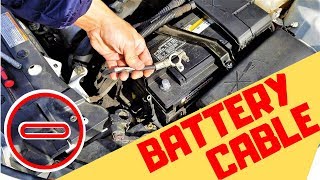
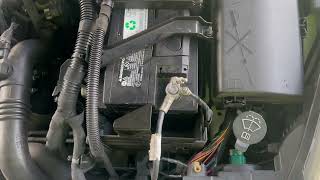
How to confirm: Visually inspect the negative battery cable and its connection points. While a visual check may not reveal the internal crimp issue, this is the most likely cause if multiple electrical symptoms are present. The definitive fix is replacing the cable. 🎬 Watch: This easy DIY cable replacement takes only minutes.
Typical fix: Replace the negative battery cable. The updated GM design requires a separate bolt to fasten the small regulated voltage cable. The repair is covered by GM if the vehicle is within 10 years or 120,000 miles of its service date.
Est. part cost: $25-$60 - Weak, failing, or recently disconnected battery 🔴 High Probability → Shop Vehicle Battery The Keep Alive Memory requires constant, stable voltage. A battery that is old, weak, or has been disconnected for service is the most common reason for power interruption, triggering the code.
How to confirm: Test the battery voltage with a multimeter. It should read at least 12.4V with the engine off and 13.5-14.5V while running. If the battery was just replaced, the code is expected.
Typical fix: Charge or replace the battery. If the battery was recently serviced, simply clearing the code and driving may be all that's needed.
Est. part cost: $150-$250 - Loose or corroded battery terminals and/or ground connections 🟡 Medium Probability → Shop Vehicle Battery Corrosion or loose connections create resistance, which can cause a voltage drop sufficient to reset the module's memory, especially during engine cranking.
How to confirm: Visually inspect the battery terminals, cable ends, and the main chassis/engine ground straps for corrosion, looseness, or damage.
Typical fix: Clean the battery terminals and cable ends with a wire brush. Ensure all connections are tight and secure.
Est. part cost: $5-$20 - Failing Alternator / Charging System Issue ⚪ Low Probability → Shop Alternator If the alternator isn't adequately recharging the battery, the overall system voltage will drop, eventually triggering the KAM error.
How to confirm: With the engine running, use a multimeter to check the voltage at the battery terminals. A healthy alternator should produce between 13.5 and 14.5 volts.
Typical fix: Replace the alternator.
Est. part cost: $200-$450
Rare But Worth Checking
- Faulty Engine Control Module (ECM): → Shop Engine Control Module (ECM) This is the least likely cause. Before condemning the ECM, all power and ground-related issues must be exhaustively ruled out. The module itself can fail, but it's rare compared to a simple battery issue.
- Improperly installed aftermarket accessories: Accessories like remote starters or high-power stereos can cause parasitic battery drain or voltage drops if not wired correctly, leading to a P0603 code.
Diagnosis Steps
- Check for other DTCs: Use an OBD-II scanner to see if any other codes are present that could point to a root cause.
- Inspect the Negative Battery Cable: This is a primary suspect on the Cruze. Check for looseness at the terminal and the chassis ground. Even if it looks fine, it may be internally faulty as described in GM Special Coverage #14311.
- Inspect the battery: Check the battery's state of charge with a multimeter. Voltage should be ~12.6V with the engine off.
- Test the charging system: Start the engine and measure the voltage at the battery. It should be between 13.5V and 14.5V.
- Inspect all connections: Check the positive battery terminal for corrosion and tightness. Follow the main ground cable from the battery to the chassis and ensure it's clean and secure.
- Clear the code and drive: If the battery was recently disconnected or is in good health, clear the code with a scanner and perform a drive cycle to see if it returns. Often, it will not.
- Check for parasitic draw: If the battery keeps dying, perform a parasitic draw test to find if a component is draining power when the car is off.
- Seek professional diagnosis: If all the above steps fail to resolve the issue, the ECM may be faulty, which requires professional testing and potential replacement/reprogramming.
Parts You'll Likely Need
- Negative Battery Cable
(OEM #22754271)— A known manufacturing defect with an insufficient crimp makes this the most common point of failure causing P0603 and other electrical issues on the 2011-2015 Cruze.
Trusted brands: ACDelco (Genuine GM), Standard Motor Products
OEM price range: $30-$50
Aftermarket price range: $20-$40 - Car Battery
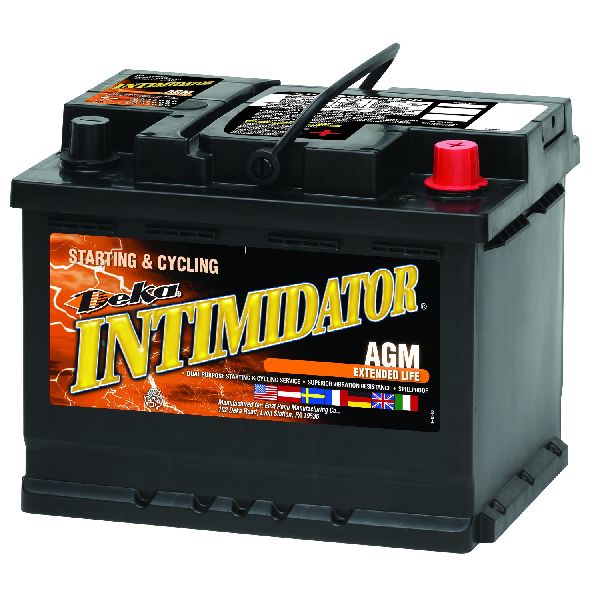
(OEM #ACDelco 47G or 48AGMHR)— A weak or old battery is a primary cause of a P0603 code by failing to provide stable voltage to the control modules.
Trusted brands: ACDelco, DieHard, Duralast
OEM price range: $200-$280
Aftermarket price range: $150-$250 - Battery Terminals/Cable Ends — Corroded or damaged terminals prevent a solid electrical connection, causing voltage drops that trigger the code. Note: For the negative side, replacing the entire cable is recommended.
Trusted brands: Dorman, Standard Motor Products
OEM price range: $20-$50
Aftermarket price range: $5-$25
Related Codes That Often Appear With This One
- P0601, P0602, P0604, P062F — These are all internal control module memory or processing errors. GM TSB #05-06-04-060A groups these codes together as related informational codes that can be shared across multiple modules. TSB #PIP4653E and service documents note they can appear in the TCM along with P0603.
- C0800, B1325, B1517 — These codes related to system voltage and various body control modules are often set along with the negative battery cable issue, as noted in GM documents related to Special Coverage #14311.
Technical Service Bulletins (TSBs) & Recalls
- 14311B: Special Coverage Adjustment - Negative Battery Cable Loose. Details the known faulty negative battery cable and the extended warranty coverage.
- 05-06-04-060A: Information on Control Module DTCs P0601, P0602, P0603, P0604, P0606, P062F, P06F3, P1621.
- PIP4653E: Information regarding Malfunction Indicator Lamp with DTCs P0601, P0603, P0604, P062F or P1621 stored in the Transmission Control Module.
Platform-Specific Known Issues
- GM Special Coverage #14311 (Supersedes 14311A, 14311B): This is the most critical document for this issue. It details the insufficient crimp on the negative battery cable, lists the many resulting electrical symptoms (flickering lights, warning messages, loss of power steering), and provides a 10-year/120,000-mile extended warranty for the repair.
- GM Technical Service Bulletin #05-06-04-060A notes that P0603 is an informational code that can appear alongside other module errors (P0601, P0602, etc.) and may be set in various control modules.
- GM Technical Service Bulletin #PIP4653E specifically mentions that P0603 can be stored in the Transmission Control Module (TCM), which can lead to symptoms like harsh shifting.
Mechanic-Grade Diagnostic Values
- Battery Voltage (Engine Off) — expected: Approximately 12.6 Volts. Failure: A reading below 12.4V indicates a weak or discharged battery that can trigger a KAM error.
- Charging System Voltage (Engine Running) — expected: 13.5 - 14.5 Volts. Failure: Voltage below 13.5V or above 14.5V indicates a faulty alternator or charging system issue.
- ECM Ground Pin Integrity (1.8L Engine) — expected: Continuity to ground (near 0 Ohms) or 0 Volts. Failure: High resistance or any voltage reading indicates a bad ground connection.
- ECM Power Pin Voltage (1.8L Engine) — expected: 12V+ (Battery Voltage). Failure: Low or no voltage indicates a power supply issue to the ECM, possibly from a fuse or wiring.
- Negative Battery Cable Voltage Drop — expected: Less than 200 millivolts (0.2V). Failure: A reading higher than 200mV between the negative battery post and the chassis ground point (G100) while the engine is cranking indicates high resistance in the cable, confirming the known crimp failure.
Hidden / Shadow Codes Worth Checking
- P0603 set in TCM: The P0603 code is not exclusive to the Engine Control Module (ECM). It can also be stored in the Transmission Control Module (TCM), indicating a memory loss event specific to transmission adaptive learning. This often manifests as harsh or erratic shifting. (see via A professional scan tool like the GM GDS2 is required to view DTCs stored in specific modules like the TCM.)
Scan Tool Commands That Help
- GM GDS2: Vehicle DTC Information / Clear DTCs — Used to confirm which module(s) have stored the P0603 code and to clear the code after a repair (like a battery or cable replacement) has been performed.
- GM GDS2: Control Solenoid Valve and Transmission Control Module Assembly Programming and Setup — This function is required if the Transmission Control Module (TCM) is replaced. It is also used if DTC P0602 (TCM Not Programmed) is present, which can occur alongside P0603.
- N/A - Manual Procedure: ECU Idle Relearn Procedure — After disconnecting the battery or clearing codes, the Keep Alive Memory is wiped. To help the ECM relearn idle strategy, start the car and let it idle for at least 10 minutes without touching the throttle.
Wiring & Ground Locations
- G100 — The main chassis ground stud for the negative battery cable, located on the driver's side frame rail/shock tower area.. This is the termination point for the known-faulty negative battery cable. Special Coverage #14311B details inspection and proper nut usage for this specific ground, making it the most critical ground point for this issue.
- G101 — Located at the left front of the engine, on the lower block.. This ground point serves both the Engine Control Module (ECM) and Transmission Control Module (TCM). A poor connection here can cause power interruptions and KAM errors in both modules.
- G103 — Located on the left front shock tower or on the cowl above the brake booster.. This ground serves the Body Control Module (BCM) and the Data Link Connector (DLC). A fault here can cause a wide range of electrical issues and communication problems that can accompany a P0603.
- ECM Connector Pins (1.8L) — On the Engine Control Module (ECM) itself.. For advanced diagnosis, specific pins can be tested. On the 1.8L, grounds are at Connector 1 (pins 20, 35) and Connector 2 (pins 1, 3, 5). 12V power is at Connector 2 (pins 2, 4, 6). This allows a technician to confirm if power/ground is reaching the module.
Real Owner Repair Stories
- YouTube user @Chad Williams and others (2012 & 2013 Chevrolet Cruze) — Radio turning on and off, 'Service Stabilitrak' and 'Service Traction Control' messages, rough idle, slow start.
❌ Tried (didn't work) Many owners first suspect or replace the battery, only for the issues to return.
✅ What actually fixed it Replacing the OEM negative battery cable with the updated part (GM P/N 22754271). The issue was confirmed to be a bad factory crimp on the original cable, causing a poor connection.
"I Checked Everything" — The Actual Cause
- A common diagnostic dead-end for P0603 occurs when the battery passes a standard load test and the alternator shows correct charging voltage (13.5-14.5V). In these cases, the root cause is often high internal resistance in the negative battery cable's crimp. This fault isn't a dead short and won't be caught by a simple continuity test, and may not show up in static voltage tests. The definitive way to identify it is a voltage drop test performed while the engine is cranking, which will reveal the excessive resistance under load that causes the module's memory to reset.
OEM Part Supersession History
95281536, 95460238, 95995010→22754271— The original negative battery cables had an insufficient crimp at the terminal, leading to high resistance and intermittent power loss. The new part has a revised design.
Heads up: The updated cable (22754271) requires a separate M6x1.0 bolt to fasten the small regulated voltage control cable, whereas the original design may have used a nut on an integrated stud.
Model Year Variations Within This Range
- 2011-2015: According to GM Special Coverage #14311B, the G100 chassis ground stud where the negative battery cable attaches can be one of two lengths: 17mm or 23mm. The shorter 17mm stud will NOT accept the original nut and requires a shorter nut (GM P/N 11561645) for proper installation of the new cable.
Helpful Videos

We Have This Part in Stock



The information in this article is provided for general reference and educational purposes only. Vehicle specifications, procedures, and part compatibility can vary by production date, trim level, and region. Always consult your vehicle's factory service manual and verify part numbers before purchasing or performing repairs. Safety-critical components such as airbags, seat belts, and braking systems should be installed by a qualified professional.
- Chevrolet CRUZE:
- 🧭 Diagnostic Flowchart
- 🎬 Helpful Videos
- 🛍️ Shop This Part
- What's Unique About the 2011-2015 Chevrolet CRUZE
- Symptoms You May Notice
- Most Likely Causes
- Rare But Worth Checking
- Diagnosis Steps
- Parts You'll Likely Need
- Related Codes That Often Appear With This One
- Technical Service Bulletins (TSBs) & Recalls
- Platform-Specific Known Issues
- Mechanic-Grade Diagnostic Values
- Hidden / Shadow Codes Worth Checking
- Scan Tool Commands That Help
- Wiring & Ground Locations
- Real Owner Repair Stories
- "I Checked Everything" — The Actual Cause
- OEM Part Supersession History
- Model Year Variations Within This Range
- 🎟️ Get 5% Off