

P0603 on 2007-2014 Chevrolet Equinox: Keep Alive Memory (KAM) Error Causes and Fixes
P0603 on a Chevy Equinox almost always points to an electrical power supply issue. The most common fix is replacing a weak or old battery, or cleaning corroded battery terminals and checking ground connections. This is a simple DIY fix, typically costing between $150 and $250 for a new battery.
- P0603 is a memory error code, almost always caused by an interruption in power.
- Before suspecting expensive computers, test your battery. It is the number one cause.
- Check and clean your battery terminals and cables; this is a free and effective diagnostic step.
- On 2010-2014 models, this code can be related to the transmission's computer (TCM) and may cause shifting problems.
- The code can appear after a battery replacement or jump-start and may clear on its own after several drive cycles.
What's Unique About the 2007-2014 Chevrolet EQUINOX
For the 2007-2014 Equinox, P0603 is not just a generic engine code. GM Technical Service Bulletins (TSBs) specifically mention it can appear in multiple modules, including the Transmission Control Module (TCM), especially on later models in this range. This is significant because owners of second-generation Equinoxes (2010-2014), which are known for transmission shifting complaints, sometimes report harsh shifting or hesitation that can be linked to this code. A P0603 could be an early indicator of a power supply problem to the TCM or a software issue, rather than a major internal transmission failure.
Diagnostic Flowchart
Tap your situation to follow the diagnostic path that matches what you're seeing on this vehicle.
Generation note: This range covers two Equinox generations. The first generation runs from 2007-2009 and the second from 2010-2014. While the root cause is typically electrical for both, TSB #PIP4653E specifically calls out the Transmission Control Module (TCM) for 2010-2014 models with 6-speed automatic transmissions, linking P0603 to potential transmission-related symptoms. Second-gen models are also known for various transmission programming and shifting complaints, which could be exacerbated by this code.
Symptoms You May Notice
- Check Engine Light is on
- Engine may be hard to start or stalls intermittently
- Rough or unstable idle
- Harsh, erratic, or delayed automatic transmission shifting
- Reduced fuel economy
- ABS or Traction Control light may also illuminate
- Vehicle may feel sluggish or hesitate on acceleration
- Replacing the ECM or TCM without first thoroughly testing the battery, connections, grounds, and charging system.
- Replacing transmission components like solenoids when the issue is simply a power supply problem to the TCM or a software glitch fixed by reprogramming.
Most Likely Causes
- Weak or Failing Battery 🔴 High Probability → Shop Vehicle Battery This is the most common cause for any vehicle with a P0603. The Keep Alive Memory requires a constant, stable voltage to retain its data. An old or weak battery that drops voltage significantly, especially during startup, will trigger this code.
How to confirm: Test the battery voltage with a multimeter. A healthy battery should read above 12.4 volts with the engine off and 13.7-14.7 volts with the engine running. Most auto parts stores offer free battery testing.
Typical fix: Replace the vehicle's battery.
Est. part cost: $150-$250 - Loose or Corroded Battery Terminals/Cables and Grounds 🟡 Medium Probability → Shop Vehicle Battery Corrosion or loose connections at the battery terminals, or at chassis/engine ground points, interrupt the power supply to the vehicle's modules, causing the same effect as a weak battery. Owners have reported that simply moving the battery cover and cable assembly can temporarily resolve electrical issues, pointing to a poor connection.
How to confirm: Visually inspect the battery terminals for white or greenish corrosion. Wiggle the cable clamps to ensure they are tight. Trace the main negative cable to its connection point on the chassis and engine block to check for tightness and corrosion.
Typical fix: Disconnect the battery (negative first), clean the terminals, cable ends, and chassis ground points with a wire brush and a baking soda/water solution, and reconnect securely (positive first).
Est. part cost: $5-$15 - Recent Battery Disconnection or Jump-Start 🟡 Medium Probability → Shop Vehicle Battery If the battery was recently replaced, disconnected for service, or the vehicle was jump-started, the KAM will be cleared. The code may set and then clear on its own after a few drive cycles as the module relearns.
How to confirm: Ask if the battery has been disconnected recently. Clear the code with a scanner and see if it returns after several trips.
Typical fix: No parts needed. Clear the code and drive the vehicle to allow the systems to relearn.
Est. part cost: $0 - Faulty Charging System (Alternator) ⚪ Low Probability A failing alternator can provide inconsistent, low, or high voltage, which can disrupt the KAM and trigger the code.
How to confirm: With the engine running, check the battery voltage. If it's below 13.2V or above 15V, the alternator is likely faulty.
Typical fix: Replace the alternator.
Est. part cost: $200-$400
Rare But Worth Checking
- Faulty Control Module (ECM or TCM): This is the least likely cause. Before condemning a module, all power and ground circuits must be thoroughly tested. For 2nd-gen Equinox models (2010-2017), the TCM is located near the engine bay fuse box, while on 1st-gen models (2005-2009) it is mounted on the transmission body. If reprogramming doesn't work, replacement may be necessary.
- Blown Fuse or Wiring Issue: A blown fuse for a control module's memory circuit or a damaged wire providing power or ground can also cause this code. For 2010-2017 models, the TCM fuse is a 15A fuse in position 44 of the under-hood fuse box. Aftermarket accessories like remote starters are also a known cause of wiring issues that can trigger P0603.
Diagnosis Steps
- Check for other DTCs. If other codes are present, diagnose them first, especially if P0700 is present.
- Ask if the battery has been recently disconnected, replaced, or jump-started. If so, clear the code and see if it returns after a few drive cycles.
- Visually inspect the battery terminals and cables for corrosion or looseness. Clean and tighten as needed.
- Inspect the main chassis and engine ground straps for corrosion and tightness. On a 2011 Equinox, a key ground point is located in the left rear of the engine compartment. For 2.4L engines, check ground G112 on the lower left front of the engine block and G107 on the driver's side of the cylinder head.
- Test the battery. With the engine off, voltage should be >12.4V. With the engine running, it should be 13.7V-14.7V. Replace the battery if it fails testing.
- If the battery and connections are good, inspect the fuses related to the ECM and TCM. For 2010-2017 models, check the 15A TCM fuse in slot 44 of the under-hood fuse box.
- Consider a parasitic draw test if the battery repeatedly dies. Aftermarket accessories are a common cause. A normal draw after all modules go to sleep should be under 50mA. A known issue on some Equinox models is the HVAC control module intermittently waking up, causing a 70mA draw.
- If the code persists, especially with transmission symptoms on a 2010-2014 model, use a capable scan tool to verify if the code is set in the TCM, as suggested by TSB #PIP4653E. This may require a TCM reprogram by a dealer or qualified shop.
Parts You'll Likely Need
- Automotive Battery
(OEM #ACDelco Gold 47HPS (Group 47) or 48HPS (Group 48), depending on engine.)— This is the most frequent cause of a P0603 code, as a weak battery cannot maintain the stable voltage required for the Keep Alive Memory.
Trusted brands: ACDelco, DieHard, Duralast, Interstate
OEM price range: $200-$300
Aftermarket price range: $150-$250 - Battery Terminal Cleaners/Protectors — Corroded terminals are a common point of failure for the electrical system, interrupting power to modules and causing a P0603.
Trusted brands: NOCO, CRC
OEM price range: $10-$20
Aftermarket price range: $5-$15
Related Codes That Often Appear With This One
- P0601, P0604, P062F, P1621 — These are other internal control module error codes. GM TSB #PIP4653E and #05-06-04-060A specifically group these codes together as related module faults, often appearing in the TCM and indicating a potential need for reprogramming.
- P0700 — This is a general Transmission Control System Malfunction code. It often appears alongside more specific transmission codes (like P0603 set in the TCM) to indicate the TCM has requested the Check Engine Light to be turned on.
Technical Service Bulletins (TSBs) & Recalls
- PIP4653E: Mentions DTCs P0601, P0603, P0604, P062F, or P1621 may be stored in the Transmission Control Module (TCM) and may require reprogramming.
- 05-06-04-060A: Informs that control module DTCs like P0603 can be shared in multiple modules.
Platform-Specific Known Issues
- TSB #PIP4653E notes that for 2008-2014 Equinox models, DTCs P0601, P0603, P0604, P062F, or P1621 may be stored in the Transmission Control Module (TCM). The recommended procedure is to verify the code is in the TCM and then reprogram it with the latest software before considering TCM replacement.
- TSB #05-06-04-060A is an informational bulletin confirming that P0603 can be shared among multiple control modules, reinforcing that it's a system-wide power/memory issue rather than a specific component failure.
- Owners of 2010-2014 Equinox models frequently report harsh shifting and transmission hesitation, which can be related to software issues or power interruptions to the TCM indicated by P0603.
Mechanic-Grade Diagnostic Values
- Parasitic Current Draw — expected: Under 50 milliamperes (mA) after all modules enter sleep mode (can take up to 30 minutes).. Failure: A reading consistently above 50-70mA indicates a parasitic draw. A known issue on some GM vehicles is an intermittent 70mA draw caused by the HVAC module waking up.
- ECM/TCM Ground Circuit Resistance — expected: Less than 1.0 ohm.. Failure: Resistance greater than 1.0 ohm between the module's ground pin and the negative battery terminal indicates a poor ground connection.
Scan Tool Commands That Help
- GDS2 (Global Diagnostic System 2) / Tech2: TCM Reprogramming / Service Programming System (SPS) — As per TSB #PIP4653E, if P0603 is found stored in the Transmission Control Module (TCM), a reprogram with the latest calibration should be performed before replacing the TCM. This is especially relevant if accompanied by harsh shifting or other transmission complaints.
- GDS2 (Global Diagnostic System 2) / Tech2: Module Status / KAM Status — A dealer-level scan tool can be used to view the status of the Keep Alive Memory self-test. This can help confirm if the module is actively failing its self-check, as opposed to the code being a result of a past event like a battery disconnection.
Wiring & Ground Locations
- G112 (2.4L Engine) — On the lower left front of the engine block.. This is a primary ground point for the powertrain control systems, including the ECM/TCM. Corrosion or a loose connection here can cause intermittent voltage drops, triggering a P0603.
- G107 — On the left (driver's) side of the cylinder head for the 2.4L engine, or the upper left front side of the engine for the 3.6L.. This is a critical ground point for the Engine Control Module (ECM) and multiple sensors. A poor connection here can cause a host of electrical issues, including KAM errors.
- G103 (First Gen) — For 2007-2009 models, located at the left side of the engine compartment. It grounds the ECM and TCM.. A primary ground point for both the engine and transmission control modules on first-generation models.
- ECM Ground Pins (2013 2.4L) — On the two main ECM connectors, the ground wires are the large black-and-white wires at the top left terminal of each connector.. These specific pins are the final point to test for ground integrity directly at the module. A voltage drop test or resistance check from these pins to the battery negative post can definitively confirm or rule out a bad ground circuit.
Real Owner Repair Stories
- equinoxforum.net user (2011 Chevy Equinox) — Check engine light with P0603, harsh shifting, vehicle would not start intermittently.
❌ Tried (didn't work) Replacing the battery., Cleaning battery terminals.
✅ What actually fixed it The owner discovered a poorly installed aftermarket remote starter. The wiring for the remote start was tapped into critical power and data lines, causing intermittent voltage drops and data corruption that triggered the P0603 code. Removing the remote starter and repairing the factory wiring resolved all issues. - South Main Auto Repair (YouTube) (Chevy Equinox (year not specified, but similar platform)) — Battery would die after sitting for about 3 weeks, causing a parasitic draw.
❌ Tried (didn't work) Initial parasitic draw test showed confusing results.
✅ What actually fixed it A GM service bulletin pointed to the HVAC control module intermittently waking up and creating a 70 milliamp draw. By pulling the HVAC BAT 20-amp fuse (fuse #12 in the instrument panel fuse block), the technician confirmed the draw was eliminated. The fix was to replace or reprogram the HVAC control module. This is a classic "hidden" cause of battery drain that leads to P0603.
OEM Part Supersession History
24267723, 24275864, 24291305→24287425— Part has been updated by GM for improved reliability or to resolve issues.
Heads up: These are Gen 2 TCM part numbers for the 6T40/6T45 transmission. While they may be physically interchangeable, the replacement TCM must be programmed with the vehicle's specific VIN using the SPS (Service Programming System) before it will function correctly.
Model Year Variations Within This Range
- 2007-2009 (First Generation): These models have the TCM mounted directly on the transmission body, making it more susceptible to heat and vibration. Ground points like G103 are critical for both ECM and TCM function.
- 2010-2014 (Second Generation): The TCM is located in the engine bay, generally near the fuse box, and is less prone to physical damage but still reliant on clean power and grounds (G107, G112). These models are specifically called out in TSB #PIP4653E, which points to software issues in the TCM that can be resolved by reprogramming.
Helpful Videos

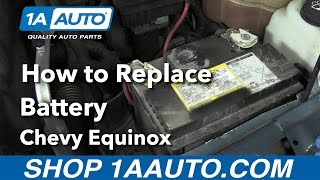

We Have This Part in Stock
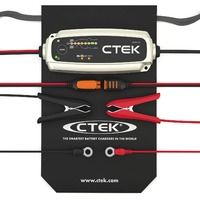

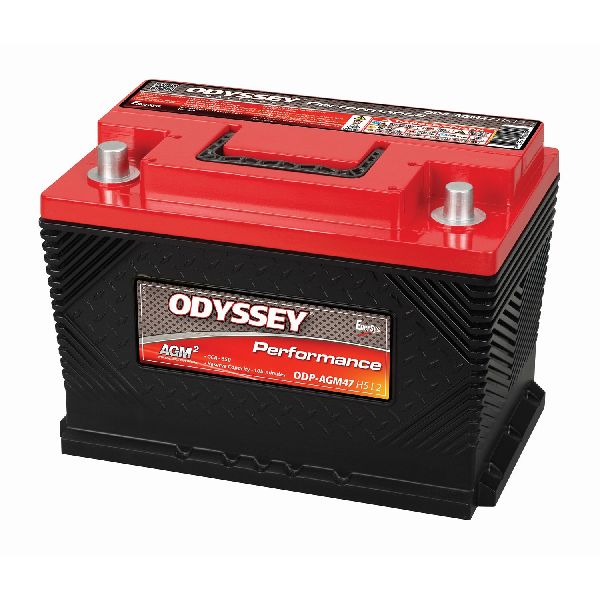

The information in this article is provided for general reference and educational purposes only. Vehicle specifications, procedures, and part compatibility can vary by production date, trim level, and region. Always consult your vehicle's factory service manual and verify part numbers before purchasing or performing repairs. Safety-critical components such as airbags, seat belts, and braking systems should be installed by a qualified professional.
- Chevrolet EQUINOX:
- 🧭 Diagnostic Flowchart
- 🎬 Helpful Videos
- 🛍️ Shop This Part
- What's Unique About the 2007-2014 Chevrolet EQUINOX
- Symptoms You May Notice
- Most Likely Causes
- Rare But Worth Checking
- Diagnosis Steps
- Parts You'll Likely Need
- Related Codes That Often Appear With This One
- Technical Service Bulletins (TSBs) & Recalls
- Platform-Specific Known Issues
- Mechanic-Grade Diagnostic Values
- Scan Tool Commands That Help
- Wiring & Ground Locations
- Real Owner Repair Stories
- OEM Part Supersession History
- Model Year Variations Within This Range
- 🎟️ Get 5% Off