

P0603 on 2007-2011 Chevrolet HHR: Keep Alive Memory (KAM) Error Causes and Fixes
On a 2007-2011 Chevy HHR, code P0603 almost always means there's been an interruption in power to the engine's computer, most often from a weak or old battery, or loose/corroded terminals. A key detail for the HHR is that the battery is located in the rear cargo area, under the spare tire, making it less obvious to inspect. Before suspecting the computer itself, test the battery and clean all connections, including the main engine and chassis grounds.
- P0603 on a Chevy HHR is overwhelmingly likely to be caused by a power supply interruption, not a failed ECM.
- Always diagnose the battery first. Its location in the rear cargo area means it's often neglected.
- Check and clean all battery terminals and major ground straps before considering more complex repairs.
- The code is normal after a battery replacement or jump-start; clear it and drive the vehicle to allow it to relearn.
- Do not replace the ECM for a P0603 code alone.
What's Unique About the 2007-2011 Chevrolet HHR
For the Chevy HHR, like many GM vehicles of this era, the electrical system can be sensitive to voltage drops. A P0603 code is very frequently a side effect of a weak battery, a recent battery replacement, or a jump-start, rather than a true component failure. A unique feature of the HHR is its battery location in the rear cargo area, which keeps it away from engine heat but can lead to owners forgetting to inspect it. The provided NHTSA TSB #05-06-04-060A confirms that GM is aware of this and other related codes (P0601, P0602, etc.) being set across multiple modules, suggesting it's often a systemic electrical issue, not a faulty computer.
Diagnostic Flowchart
Tap your situation to follow the diagnostic path that matches what you're seeing on this vehicle.
Symptoms You May Notice
- Check Engine Light is on
- Rough or erratic idle
- Harsh or poorly-timed transmission shifts
- Hesitation during acceleration
- Reduced fuel economy
- Difficulty starting the engine or 🎬 Watch this video to troubleshoot a no-start condition. a no-start condition.
- Illuminated ABS or traction control lights.
- Failing a state emissions test due to readiness monitors being reset.
- Replacing the Engine Control Module (ECM) without first testing the battery and checking all power/ground connections. A P0603 code alone is rarely a sign of a bad ECM.
Most Likely Causes
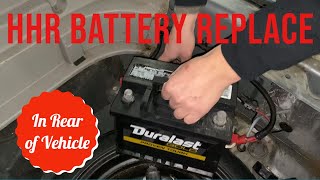
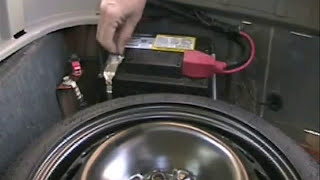
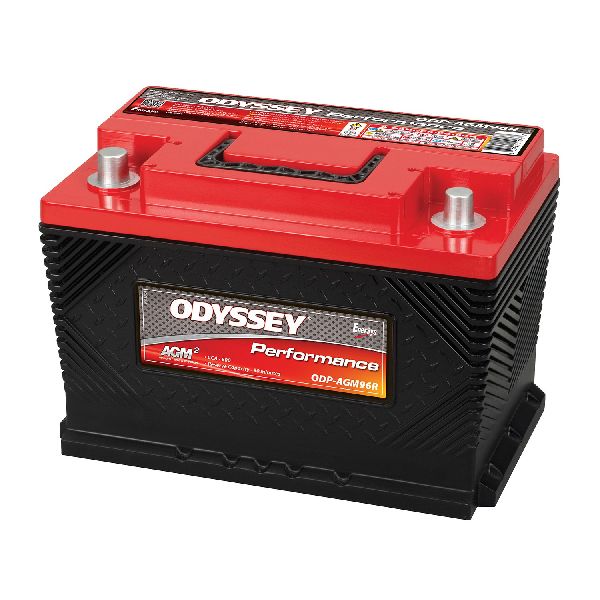
- Weak or Failing Battery 🔴 High Probability → Shop Vehicle Battery The ECM's Keep Alive Memory requires a constant, stable voltage. An aging battery that drops below the required voltage (especially below 9.6V during cranking) is the most frequent trigger. The HHR's battery is located in the rear cargo area, under the spare tire, which 🎬 Watch this step-by-step guide to replacing the HHR battery. can lead to it being overlooked during routine checks.
How to confirm: Use a multimeter to test the battery voltage with the engine off; it should be at least 12.4V. Have the battery load-tested at an auto parts store, as a battery can show good voltage but fail under load.
Typical fix: Replace the vehicle's battery. Ensure the new battery's vent tube is properly connected, as it is in an enclosed space.
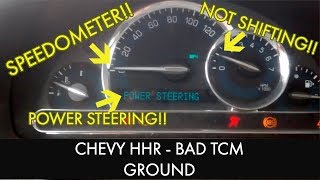
Est. part cost: $150-$250 - Loose or Corroded Battery Terminals/Grounds 🔴 High Probability → Shop Vehicle Battery Corrosion or loose connections at the battery terminals or main chassis/engine ground straps can interrupt the power supply to the ECM, causing it to lose its memory. Key ground points (G103, G104) 🎬 See how to fix common ground issues on this platform. are located on the engine and can become corroded.
How to confirm: Visually inspect the battery terminals in the rear for corrosion. Wiggle the cables to check for tightness. Inspect the main ground strap from the engine to the chassis for corrosion or looseness. A voltage drop test across the ground cables can confirm high resistance.
Typical fix: Disconnect the battery (negative terminal first), clean the terminals and cable ends with a wire brush, and re-secure them tightly. Clean engine and chassis ground points with a wire brush and ensure they are secure.
Est. part cost: $5-$20 for cleaning tools - Recent Battery Disconnection or Jump-Start 🟡 Medium Probability → Shop Vehicle Battery Any event that disconnects power from the ECM will cause it to lose its Keep Alive Memory and set this code. This is often considered a normal occurrence after servicing the battery or if the battery dies.
How to confirm: If the code appeared immediately after the battery was replaced, disconnected, or jump-started, this is the likely cause.
Typical fix: Clear the code with an OBD-II scanner. The code should not return if the electrical system is healthy. The vehicle will need to complete several drive cycles to relearn its parameters and for emissions monitors to become ready.
Est. part cost: $0 - Faulty Charging System (Alternator) ⚪ Low Probability A failing alternator can provide inconsistent or low voltage (below 13.5V when running), which fails to properly charge the battery, leading to a low voltage state that triggers P0603.
How to confirm: With the engine running, use a multimeter to check the voltage at the battery terminals. It should be steady, between approximately 13.5V and 14.7V. If it's lower or fluctuating wildly, the alternator is suspect.
Typical fix: Replace the alternator.
Est. part cost: $200-$400
Rare But Worth Checking
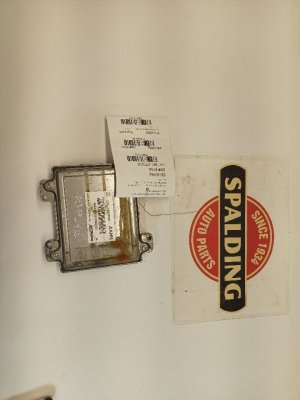
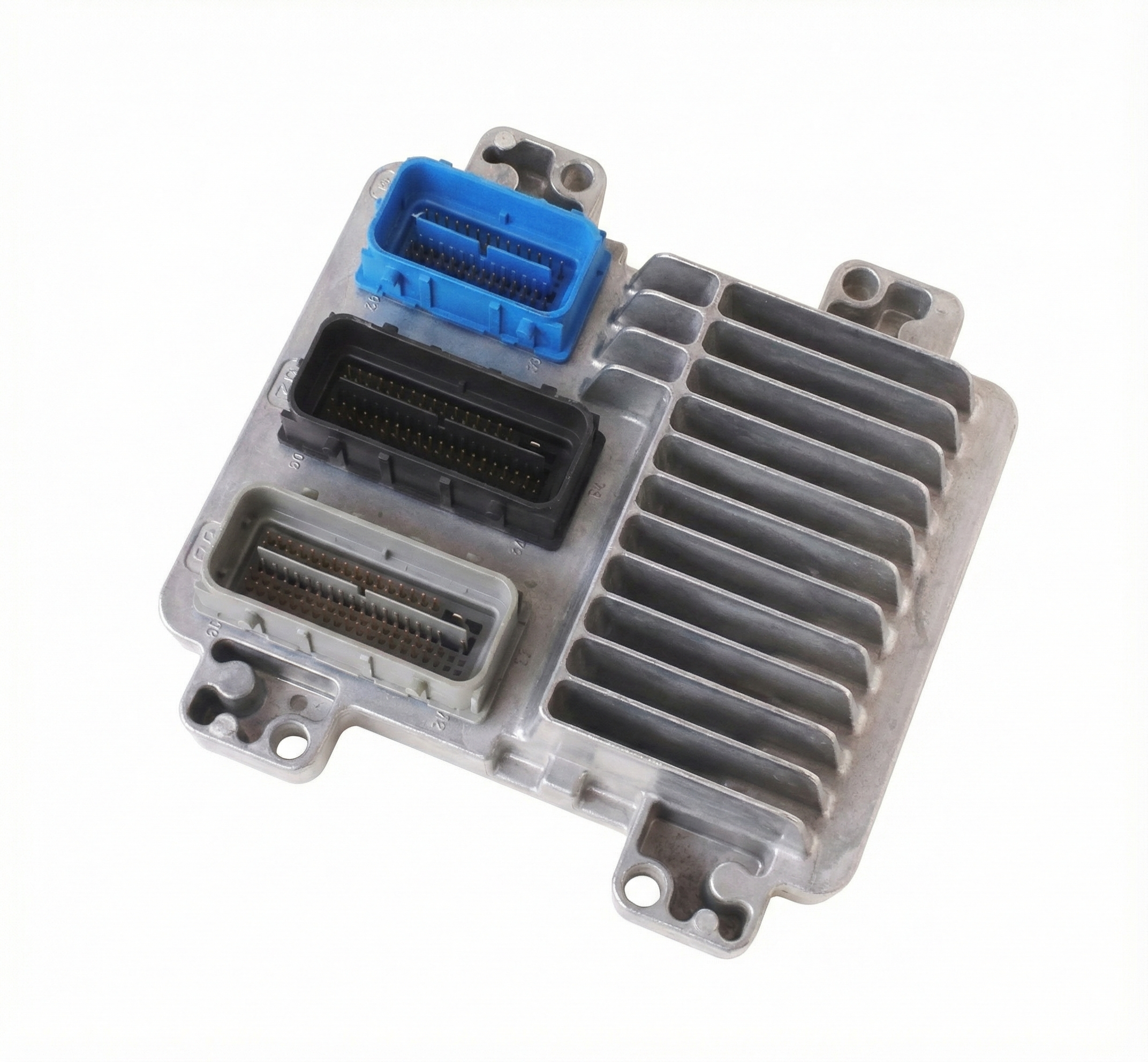
- Faulty Engine Control Module (ECM): → Shop Engine Control Module (ECM) This should be the last consideration after all power and ground issues have been exhaustively ruled out. The ECM may have an internal failure preventing it from retaining memory even with a good power supply.
- Parasitic Electrical Draw: A component that stays on after the car is shut off can drain the battery overnight, causing a low voltage condition on startup that triggers P0603. Owners on chevyhhr.net have reported draws from the BCM or aftermarket accessories. A normal draw after the car is asleep should be very low (e.g., under 50mA).
- Blown Fuse or Faulty ECM Power Relay: A blown fuse in the ECM's power circuit or a failing power relay can cut off the Keep Alive voltage. On the HHR, check fuse #25 in the interior fuse box (passenger side of center console) and fuses related to the ECM in the under-hood fuse box.
- Incorrect Fuse Installation: A GM PI (Preliminary Information) document mentions that on some HHRs, a fuse may be incorrectly installed from the factory in position #11 of the under-hood fuse box, causing the liftgate release relay to stay powered, creating a parasitic draw.
Diagnosis Steps
- Check for other DTCs. P0603 can sometimes be triggered by other electrical faults.
- Ask if the battery was recently disconnected or replaced. If so, clear the code and advise a drive cycle.
- Inspect the battery, located in the rear cargo area under the floor. Check its age, look for physical signs of swelling or leaking, and clean any corrosion from the terminals.
- Test the battery voltage with a multimeter. It should be ~12.6V with the engine off and 13.5-14.7V with the engine running.
- Perform a battery load test. Most auto parts stores offer this for free.
- Verify all battery cable connections are clean and tight. Follow the negative cable to its chassis ground point and ensure it is clean and secure.
- Inspect the main engine ground straps for corrosion or damage. A diagram of ground locations can be found on owner forums.
- Check fuses related to the ECM/PCM. Specifically, check fuse #25 (ECM/TCM) in the interior fuse panel on the passenger side of the center console.
- If the battery drains overnight, perform a parasitic draw test with a multimeter to isolate the faulty circuit.
- If all power and ground circuits are confirmed to be good and the code returns after being cleared, the ECM itself may be faulty.
Parts You'll Likely Need
- Car Battery
(OEM #ACDelco Gold 90/T5 (Group Size 90, T5))— A weak or failing battery is the most common cause of the voltage drop that triggers a P0603 code. The HHR requires a vented battery or a sealed AGM type due to its location inside the cabin.
Trusted brands: ACDelco, DieHard, Duralast, Super Start
OEM price range: $200-$280
Aftermarket price range: $170-$250 - Engine Control Module (ECM)
(OEM #ACDelco 12597125 (This is a common service number for the E37 ECM used in these years; verify with VIN as many numbers supersede it).)— This is the least likely cause. It is only replaced after all other possibilities (battery, cables, grounds, alternator) have been eliminated. A replacement ECM will require programming to the vehicle's VIN.
Trusted brands: ACDelco (OEM/Remanufactured), Remanufactured units from various suppliers
OEM price range: $600-$700
Aftermarket price range: $200-$400 (Remanufactured)
Technical Service Bulletins (TSBs) & Recalls
- 05-06-04-060A: An informational bulletin for technicians about various control module diagnostic trouble codes, including P0603, which can be shared acr
Platform-Specific Known Issues
- GM issued Technical Service Bulletin #05-06-04-060A, which is an informational bulletin for technicians regarding a group of control module DTCs including P0603. This indicates that the manufacturer is aware these codes can be set, sometimes without a hard fault, and advises careful diagnosis.
- The battery is located in the trunk floor, under the spare tire. This makes access more difficult and requires removal of the cargo floor and trays. It also necessitates the use of a vented battery and ensuring the vent tube is reconnected.
- Some owners on chevyhhr.net have chased parasitic draws that cause the battery to die and set P0603. In one documented case, a PI from GM suggested checking for a fuse incorrectly placed in the under-hood fuse box (position #11) which could cause a constant draw.
Mechanic-Grade Diagnostic Values
- CAN Bus High/Low Voltage to Ground at DLC — expected: 2.5V (Key On, Engine Off). Failure: Voltage significantly different from 2.5V indicates a bus problem.
- CAN Bus Terminating Resistance at DLC — expected: 60 Ohms. Failure: A reading of 120 Ohms indicates an open circuit on the bus, meaning one of the two terminating resistors (one in the ECM, one elsewhere) is not being seen.
- ECM Keep Alive Power at Connector — expected: Battery Voltage (approx. 12.6V). Failure: Less than battery voltage indicates a wiring or fuse issue between the battery and the ECM.
- ECM Ground Resistance — expected: Less than 0.5 Ohms. Failure: High resistance indicates a poor ground connection, a primary cause of P0603.
Scan Tool Commands That Help
- Tech2 / GDS2 (Dealer Tool): New Module Setup / Programming — Required when installing a brand-new, unprogrammed E37 ECM. Aftermarket tools cannot flash the secondary processor that controls the electronic throttle, which is necessary on a new module.
- Professional Scan Tool: Crankshaft Position Variation Learn — This procedure may be required after replacing the ECM. Failure to perform it can result in a P0315 trouble code and the Check Engine Light remaining on.
Wiring & Ground Locations
- G103 — On the front of the passenger side cylinder head. It is part of the main negative battery cable harness.. This is a primary engine ground. Corrosion or looseness here can directly cause intermittent power loss to the ECM and other critical engine sensors.
- G104 — On the left (driver's side) rear corner of the engine, where a ground strap connects the cylinder head to the firewall.. This ground strap ensures the engine block is well-grounded to the vehicle's chassis. A poor connection here can cause a host of electrical issues, including module communication problems.
- G107 — On the front left corner of the transmission, often on a stud just to the right of the oil filter housing.. This is a key ground point for the transmission and related components, including potentially the TCM, which works in concert with the ECM.
- ECM Connector X1 — The main connectors at the Engine Control Module, located near the underhood fuse box.. Pin 20 is the main battery feed for Keep Alive Memory, and Pin 73 is a primary ground. Testing for voltage and ground integrity directly at these pins can quickly determine if the ECM itself is receiving the power it needs to retain memory.
Real Owner Repair Stories
- YouTube video '2009 Chevy hhr CAN bus testing No crank No start no communication' (2009 Chevrolet HHR (flood vehicle)) — No crank, no start, no communication with PCM, TCM, or EBCM.
❌ Tried (didn't work) Checked all fuses., Verified power and grounds at the DLC (pins 16, 4, 5).
✅ What actually fixed it A CAN bus test showed 120 ohms instead of the correct 60 ohms, indicating an open circuit. The fault was traced to the Vehicle Communication Interface Module (VCIM / OnStar module), which was under water. Replacing and programming the VCIM restored the CAN bus integrity and fixed the issue. - Chevy HHR Network thread 'Need to know main ground locations' (Chevrolet HHR (year not specified)) — Intermittent no-start. Battery voltage would show 7 volts when connected but a healthy 12 volts when the negative terminal was disconnected.
❌ Tried (didn't work) Replacing the battery with a new one did not solve the intermittent issue.
✅ What actually fixed it The symptoms strongly pointed to a high-resistance ground connection. The voltage drop only appeared when the circuit was under load (connected). The fix is to locate, remove, clean, and re-secure the main engine and chassis ground connections, particularly the strap from the engine block to the chassis.
OEM Part Supersession History
12597125 (Common for 2007)→12612397, among others.— Revisions to address hardware or software issues and consolidate parts.
Heads up: The ECM for a 2007 HHR with the 2.4L engine is unique and uses a 3-connector design. Later models and 2.2L models use a 2-connector ECM. They are not interchangeable. Flashing an OS from a different model year can corrupt the ECM due to changes in the internal EEPROM layout, even if the part number is a service replacement.
Model Year Variations Within This Range
- 2007 (2.4L Engine Only): The ECM for the 2007 2.4L HHR uses a 3-port connector design. ECMs for 2.2L models and all engines from 2008-2011 use a 2-port connector design. They are physically and electrically incompatible.
- 2007-2011: The internal software (Operating System and EEPROM layout) of the E37 ECM changed throughout the years. Flashing a complete OS from a different year, even with a compatible service replacement ECM, can permanently damage the module unless performed by a dealer tool (TIS2WEB) that can correctly configure the entire module.
Helpful Videos
Used OEM Parts in Stock
New Aftermarket Parts Available



The information in this article is provided for general reference and educational purposes only. Vehicle specifications, procedures, and part compatibility can vary by production date, trim level, and region. Always consult your vehicle's factory service manual and verify part numbers before purchasing or performing repairs. Safety-critical components such as airbags, seat belts, and braking systems should be installed by a qualified professional.
- Chevrolet HHR:
- 🧭 Diagnostic Flowchart
- 🎬 Helpful Videos
- 🛍️ Shop This Part
- What's Unique About the 2007-2011 Chevrolet HHR
- Symptoms You May Notice
- Most Likely Causes
- Rare But Worth Checking
- Diagnosis Steps
- Parts You'll Likely Need
- Technical Service Bulletins (TSBs) & Recalls
- Platform-Specific Known Issues
- Mechanic-Grade Diagnostic Values
- Scan Tool Commands That Help
- Wiring & Ground Locations
- Real Owner Repair Stories
- OEM Part Supersession History
- Model Year Variations Within This Range
- 🎟️ Get 5% Off