

P0603 on 2007-2014 Chevrolet Silverado 1500: Causes and Fixes for a KAM Error
P0603 on a Silverado usually means a control module lost its 'Keep Alive Memory' due to a power interruption. This is most often caused by a weak battery, recent battery replacement, or corroded terminals. Check the battery and charging system before suspecting a faulty computer.
- P0603 is most often a minor issue caused by power loss to a control module.
- Always check the battery, terminals, and charging system first. This will solve the problem in the majority of cases.
- Do not replace the PCM or TCM unless all power and ground circuits have been professionally tested and confirmed to be good.
- Clearing the code after a battery replacement is normal; it should not return if the charging system is healthy.
What's Unique About the 2007-2014 Chevrolet Silverado 1500
On the 2007-2014 Silverado, P0603 is frequently a 'ghost' code that appears after a battery has been disconnected, replaced, or jump-started. GM has issued technical service bulletins (TSBs) acknowledging that this code, along with others, can be stored in various modules like the Transmission Control Module (TCM) and is often informational. [Bulletin #PIP4653E, Bulletin #05-06-04-060A] Before assuming a major component has failed, it's critical to rule out simple power supply issues, as these trucks are sensitive to battery voltage fluctuations and have several key ground points that are known to corrode.
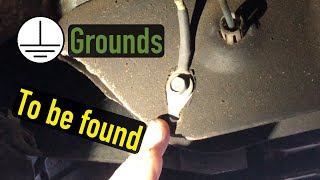
🎬 Watch: How to find and identify every ground point.Diagnostic Flowchart
Tap your situation to follow the diagnostic path that matches what you're seeing on this vehicle.
Generation note: This range covers two Silverado generations: the GMT900 (2007-2013) and the start of the K2XX (2014). The electrical systems are different, but the primary causes for P0603 (battery, charging system, connections) are common to both. Key ground locations differ slightly but serve the same function. The 2014 K2XX models feature a battery current sensor on the negative terminal that should not be bypassed when checking or adding grounds.
Symptoms You May Notice
- Check Engine Light is on.
- No noticeable symptoms other than the light.
- Engine may be hard to start or cranks longer than usual.
- Slightly rough idle or intermittent hesitation/stumble.
- Transmission may have harsh or unusual shift patterns (if the TCM is affected).
- ABS or Traction Control light may also illuminate.
- Reduced fuel economy as the PCM operates on default, less efficient parameters.
- Replacing the PCM or TCM when the root cause is a weak battery or a bad connection. This is an expensive mistake that happens when basic power supply checks are skipped.
Most Likely Causes
- Weak, failing, or recently disconnected battery 🔴 High Probability → Shop Vehicle Battery This is the most common trigger. Control modules will log a KAM error code any time they lose constant power, which happens during a battery change or if the battery's voltage drops too low. These trucks are particularly sensitive to low voltage conditions.
How to confirm: Test the battery voltage with a multimeter. It should be ~12.6V with the engine off and 13.7V-14.7V when running. A simple voltage test may not be enough; a load test at an auto parts store is recommended to confirm battery health.
Typical fix: Charge or replace the battery. Clear the code after replacement. The code often will not return.
Est. part cost: $150-$300 - Loose or corroded battery terminals/cables 🟡 Medium Probability → Shop Vehicle Battery Corrosion on the battery terminals or at the main power distribution block can cause intermittent power loss to the vehicle's modules, even if the battery itself is good. The factory terminals can also stretch or wear, leading to a poor connection.
How to confirm: Visually inspect the battery terminals, posts, and main ground connections for corrosion (white or greenish powder) and ensure they are tight. Attempt to wiggle the terminals by hand; there should be no movement.
Typical fix: Clean the terminals and posts with a wire brush and battery cleaner. Apply dielectric grease to prevent future corrosion. Replace terminals if they cannot be tightened securely.
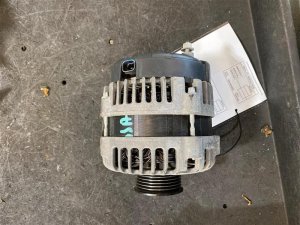
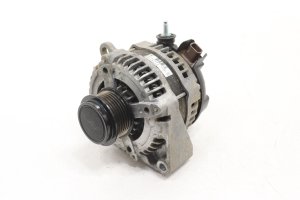
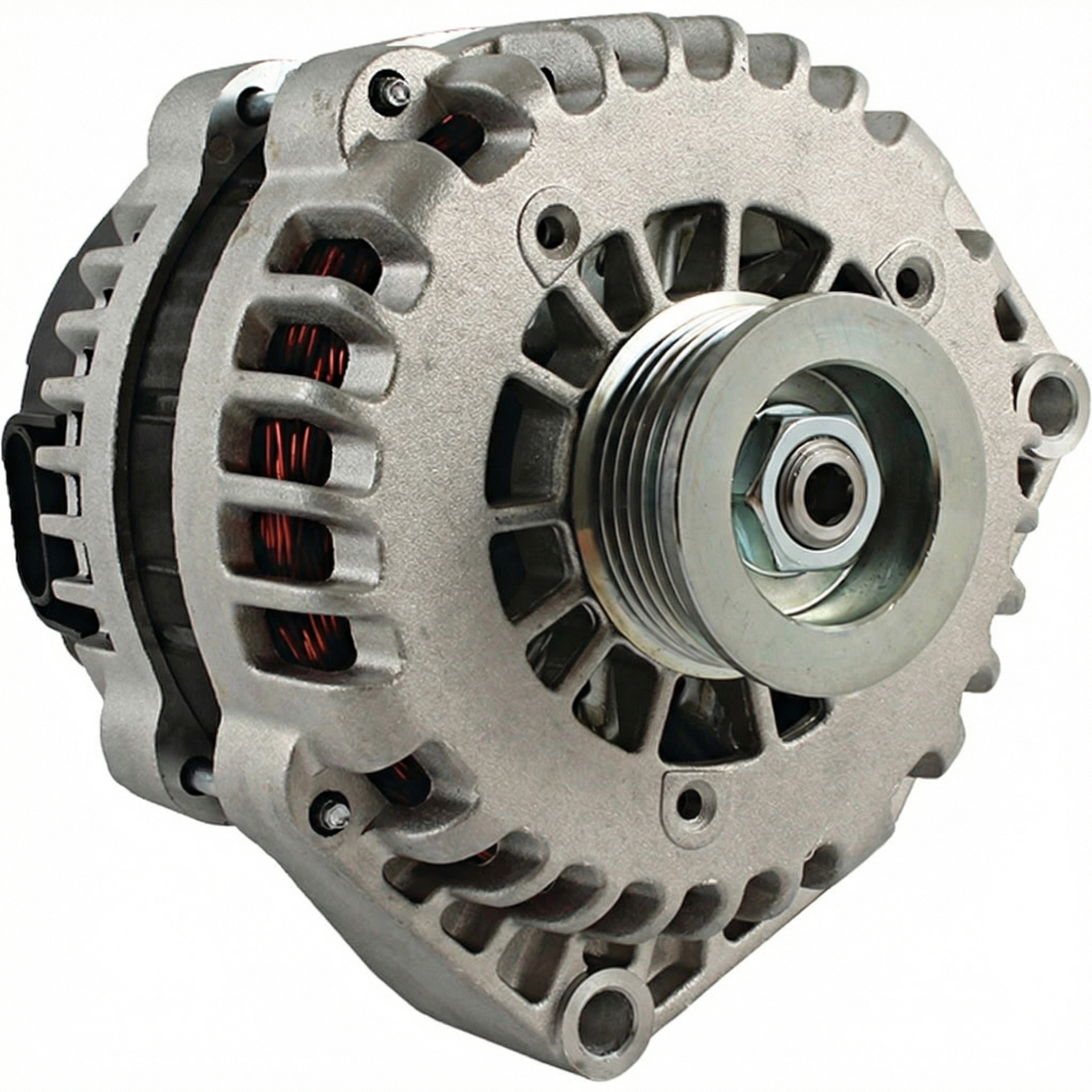
Est. part cost: $5-$25 - Failing alternator 🟡 Medium Probability → Shop Alternator An alternator that isn't charging properly can lead to low system voltage, causing modules to lose memory and setting a P0603 code.
How to confirm: With the engine running, check the battery voltage. If it's below 13.5V or fluctuating wildly, the alternator is likely not charging sufficiently.
Typical fix: Replace the alternator.
Est. part cost: $200-$450 - Faulty ground connection ⚪ Low Probability These trucks have several key ground straps that are exposed to the elements and can corrode or break. A bad ground can cause a host of floating electrical issues, including KAM errors. Key locations to check are the main battery ground to the frame/engine block, the firewall ground straps, and the PCM ground on the engine block.
How to confirm: Inspect the main ground straps for tightness and corrosion. A voltage drop test across the ground circuit (from the battery negative post to the component's chassis) can confirm a bad connection; the reading should be less than 0.1V.
Typical fix: Remove, clean, and securely reattach the ground strap. If the strap is frayed or corroded, replace it.
Est. part cost: $15-$50
Rare But Worth Checking
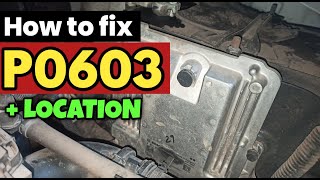
- Faulty Powertrain Control Module (PCM) or Transmission Control Module (TCM): → Shop Engine Control Module (ECM) This is rare and should only be considered after all power and ground issues have been completely ruled out. The TSBs mention that other codes like P0601 often accompany a true internal module failure. [Bulletin #PIP4653E, Bulletin #05-06-04-060A] A visual inspection of the PCM might reveal burnt spots or a burnt smell if it has failed.
- Aftermarket performance tuners: Some aftermarket engine or transmission tunes can interfere with the module's self-check processes and inadvertently set this code. Sometimes, simply returning the vehicle to the stock tune and then reloading the performance tune can resolve the issue.
- Blown Fuse: A blown fuse in the circuit that provides constant power to the PCM or TCM will cause a P0603. This can sometimes happen due to a short in another component on the same circuit. A user on Reddit noted a blown 120A main fuse caused this code and a no-start condition.
Diagnosis Steps
- Read the code with an OBD-II scanner and note which module set the code (ECM/PCM or TCM). Note any other codes present.
- Clear the code. If the code was set after a recent battery change or jump-start, it may not return.
- Visually inspect the battery, its terminals, and main cables for looseness or corrosion. Clean and tighten as necessary.
- Start the engine. Drive the vehicle to see if the code reappears. If it does not, the issue was likely a temporary power loss.
- If the code returns, perform a comprehensive battery and charging system test. Check static voltage (~12.6V), perform a load test, and check alternator output with the engine running (13.7V-14.7V).
- Inspect critical ground locations. On these trucks, pay special attention to the main battery-to-frame ground near the radiator support (G100/G101), the ground straps from the firewall to the engine, and the main PCM ground on the engine block itself (G103/G104).
- If an aftermarket tuner is installed, try flashing the vehicle back to the stock tune, clearing the codes, and driving to see if P0603 returns.
- If all wiring, power, and grounds are confirmed to be good and the code persists, the issue may be an internal fault in the control module itself. This is the last and least likely step.
Parts You'll Likely Need
- Battery
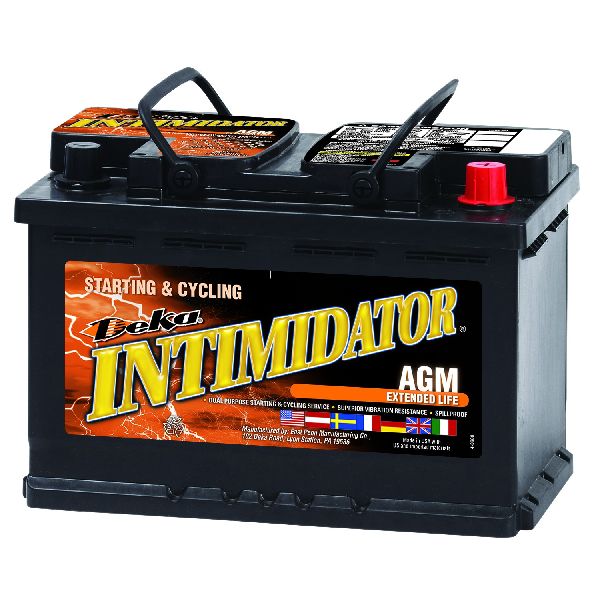
(OEM #ACDelco Gold 94RAGM / 88866098 (BCI Group 94R, common for these models))— A weak or dead battery is the number one cause of a P0603 code.
Trusted brands: ACDelco, DieHard, Interstate
OEM price range: $200-$350
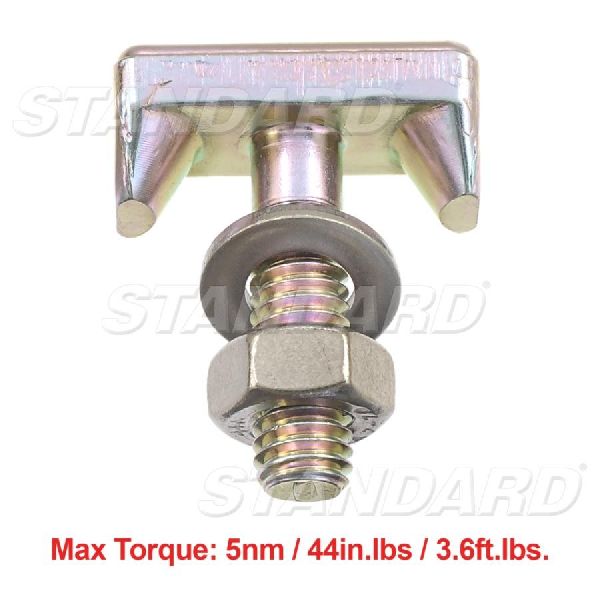
Aftermarket price range: $150-$250 - Battery Terminals — Corroded or damaged terminals prevent a solid electrical connection, causing intermittent power loss.
Trusted brands: ACDelco, Dorman
OEM price range: $20-$40
Aftermarket price range: $10-$25 - Alternator — A failing alternator causes low system voltage, which can trigger a KAM error.
Trusted brands: ACDelco, Bosch, Denso
OEM price range: $350-$500
Aftermarket price range: $200-$400
Related Codes That Often Appear With This One
- P0601 — Indicates an internal memory checksum error in the control module. This is a more serious code pointing towards a faulty module.
- P0604 — Indicates an internal RAM error in the control module. Like P0601, this points to a potential module failure.
- P062F — Indicates an internal EEPROM error. All these codes (P0601, P0604, P062F) are often grouped with P0603 in GM service bulletins as signs of module issues. [Bulletin #PIP4653E, Bulletin #05-06-04-060A]
Technical Service Bulletins (TSBs) & Recalls
- PIP4653E: Mentions P0603 can be stored in the TCM and advises careful diagnosis to identify the correct module.
- 05-06-04-060A: Informs technicians that P0603 is one of several codes that can be found in multiple different control modules, emphasizing the need to identify the source module.
Platform-Specific Known Issues
- TCM as the Source Module: GM Technical Service Bulletin #PIP4653E notes that DTCs P0601, P0603, P0604, P062F, or P1621 can be stored in the Transmission Control Module (TCM). This is critical because it means symptoms like harsh shifting could be the primary complaint, and diagnosis should focus on the TCM's power and ground, not just the main engine computer.
- Informational Code Sharing: GM Technical Service Bulletin #05-06-04-060A is an informational bulletin that communicates that several control module DTCs, including P0603, can be set in multiple different modules simultaneously. This reinforces the need for a scanner that can tell you *which* module logged the code.
- Potential for Software Updates: In some cases on GM vehicles, strange electrical behavior and spurious codes can be resolved with a PCM software update from a dealership. If all physical causes are ruled out, it's worth checking if any software updates are available for your vehicle's VIN.
Mechanic-Grade Diagnostic Values
- Battery Voltage (Engine Off) — expected: ~12.6 Volts. Failure: Voltage below 12.4V indicates a discharged or failing battery.
- Charging System Voltage (Engine Running) — expected: 13.7 - 14.7 Volts. Failure: Voltage below 13.5V or fluctuating wildly suggests a failing alternator.
- TCM/Module Ground Circuit Voltage Drop — expected: < 0.1 Volts. Failure: A reading higher than 0.1V between the module's ground pin and the negative battery terminal indicates high resistance in the ground circuit.
- TCM/Module Ground Circuit Resistance — expected: < 0.5 Ω. Failure: Resistance higher than 0.5 Ω between the module's ground pin and a known good chassis ground indicates a poor ground connection.
Scan Tool Commands That Help
- GDS2/Tech2 or Professional Scan Tool: Clear All DTCs — This is the standard first step after a battery replacement or jump-start. Since P0603 is often set by this temporary power loss, clearing the code and performing a drive cycle is the primary method to see if a persistent fault exists.
- GDS2/SPS2: Module Reprogramming/Reflash — This is a dealer-level procedure used as a last resort if all power, ground, and wiring checks are confirmed good, and a software glitch is suspected. It is also required when replacing a PCM or TCM.
Wiring & Ground Locations
- G100 / G101 — Located on the lower left (G100) and lower right (G101) of the radiator core support, under the front of the truck.. These are primary chassis grounds connected directly from the battery. Corrosion here can disrupt power stability for the entire vehicle, including the control modules.
- G103 / G104 — Located on the cylinder heads. G103 is often on the front of the passenger side head; G104 is on the rear of the driver's side head.. These are critical engine block grounds that provide the ground path for the ECM/PCM and many sensors. A poor connection here is a common cause of various engine codes and electrical issues.
- G218 — Under the driver's side of the dashboard, behind the A-pillar trim panel.. This is a primary body ground for many interior modules. While less directly tied to the PCM's KAM power, a bad ground here can cause widespread electrical issues that can sometimes manifest in unexpected ways. On 2014 models, sound deadening material was sometimes trapped under this ground from the factory.
- TCM Connector (External) — Varies by transmission, but for many 6-speeds, it's a large connector on the driver's side of the transmission case.. If the P0603 is stored in the TCM, this is the primary connection to check. Pin 10 is often the main battery positive voltage feed, and Pin 9 is a primary ground. Verifying constant power and good ground at these pins is essential.
- Underhood Bussed Electrical Center (UBEC) — The main fuse box in the engine compartment.. The main power for the PCM/TCM runs through fuses and relays in this box. Corrosion on the main power studs (often fed by a 'Mega Fuse') or on the pins for the specific PCM/TCM fuses can cause intermittent power loss and trigger a P0603.
Real Owner Repair Stories
- Reddit user (Vehicle unspecified, but process is relevant) — No-start, just cranks, smells of fuel, P0603 code present.
❌ Tried (didn't work) Jumping the blown fuse temporarily worked, but then failed.
✅ What actually fixed it The issue started after the user accidentally shorted the starter positive wire while replacing the alternator, blowing the 120A main battery fuse. This cut constant power to the ECM, triggering P0603. The root cause was the blown main fuse providing power to the ECM's keep-alive circuit. - SilveradoSierra.com forum user report (2007.5-2013 GMT900 Truck) — P0603 code along with other random electrical issues.
❌ Tried (didn't work) Replacing the battery, Cleaning battery terminals, Checking main ground straps
✅ What actually fixed it The final fix was cleaning corrosion from within the Underhood Fuse Box (Bussed Electrical Center). Moisture had entered the box, causing corrosion on the main power feeds and fuse terminals, which led to intermittent power for the PCM.
Model Year Variations Within This Range
- 2014+: The K2XX platform (2014+) introduced a battery current sensor on the negative battery terminal. When upgrading or servicing grounds, it is critical to ensure any new ground paths are connected in a way that current still flows through this sensor. Bypassing it can cause issues with the vehicle's charging system and battery management, potentially leading to voltage irregularities that could trigger a P0603.
- 2007-2013: The ground locations on the GMT900 platform are well-documented but may differ from the later K2XX trucks. Key grounds include straps from the firewall to the back of the engine block, which are notorious for fraying or breaking over time.
Helpful Videos





Used OEM Parts in Stock
New Aftermarket Parts Available



The information in this article is provided for general reference and educational purposes only. Vehicle specifications, procedures, and part compatibility can vary by production date, trim level, and region. Always consult your vehicle's factory service manual and verify part numbers before purchasing or performing repairs. Safety-critical components such as airbags, seat belts, and braking systems should be installed by a qualified professional.
- Chevrolet SILVERADO 1500:
- 🧭 Diagnostic Flowchart
- 🎬 Helpful Videos
- 🛍️ Shop This Part
- What's Unique About the 2007-2014 Chevrolet Silverado 1500
- Symptoms You May Notice
- Most Likely Causes
- Rare But Worth Checking
- Diagnosis Steps
- Parts You'll Likely Need
- Related Codes That Often Appear With This One
- Technical Service Bulletins (TSBs) & Recalls
- Platform-Specific Known Issues
- Mechanic-Grade Diagnostic Values
- Scan Tool Commands That Help
- Wiring & Ground Locations
- Real Owner Repair Stories
- Model Year Variations Within This Range
- 🎟️ Get 5% Off