

P0603 on 2007-2014 Chevrolet Tahoe: Causes and Fixes for a KAM Error
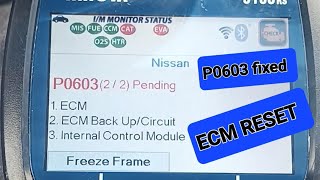
P0603 on a Chevy Tahoe almost always points to a power supply issue. Before suspecting the computer, check for a weak battery, loose or corroded terminals, and bad grounds. This code often appears after disconnecting the battery and may clear on its own after a few drive cycles.
- P0603 is a power-related memory code, not usually a 'hard part' failure.
- Always start diagnosis with the simplest things: battery health, terminal cleanliness, and tight connections.
- The code is expected if the battery has been disconnected. Clear it and drive the vehicle before attempting repairs.
- Do not replace the PCM or any other control module unless all power and ground issues have been definitively ruled out.
- If you use an aftermarket tuner, be aware that it can be a potential cause for this code.
What's Unique About the 2007-2014 Chevrolet TAHOE
On the 2007-2014 (GMT900) Tahoe, P0603 is frequently a 'ghost' code that doesn't indicate a true component failure. It's often triggered by temporary power interruptions, such as disconnecting the battery for service, a weak battery struggling to crank the engine, or even using an aftermarket programmer. GM issued informational bulletins (like #05-06-04-060A) acknowledging that this code can be set across multiple modules without a hard fault present, advising technicians to understand the context before replacing parts. The GMT900's electrical system is sensitive, and even a momentary voltage drop during startup can be enough to trigger this code in the PCM or, as noted in TSB PIP4653E, the Transmission Control Module (TCM).
Diagnostic Flowchart
Tap your situation to follow the diagnostic path that matches what you're seeing on this vehicle.
Symptoms You May Notice
- Check Engine Light is on
- No noticeable symptoms in many cases
- Rough or unstable idle
- Hesitation during acceleration
- Erratic or harsh transmission shifting (e.g., hard 1-2 shift, delayed engagement)
- Reduced fuel economy
- Difficulty starting the engine or intermittent stalling.
- Other warning lights, like for the ABS or traction control, may illuminate.
- Replacing the PCM when the actual problem is a weak battery, corroded terminal, or a poor ground connection.
Most Likely Causes
- Weak or Failing Battery 🔴 High Probability → Shop Vehicle Battery Large engines require significant cranking amps, and a battery that drops below the required voltage during startup can cause modules to lose their keep-alive memory. This is the most common trigger for a P0603.
How to confirm: Test the battery with a multimeter or a load tester. A healthy battery should read above 12.4 volts with the engine off and maintain voltage above 9.6 volts during cranking.
Typical fix: Replace the battery.
Est. part cost: $150-$250 - Loose or Corroded Battery Terminals/Cables 🔴 High Probability → Shop Vehicle Battery Standard wear and tear. Battery corrosion is common and creates resistance, interrupting the constant power supply needed for KAM. A loose negative terminal is a frequently cited cause in owner forums.
How to confirm: Visually inspect the battery terminals, cable ends, and main ground connections for corrosion, dirt, or looseness. Wiggle the terminals by hand to check for any movement.
Typical fix: Clean the terminals and cable ends with a wire brush and a baking soda/water solution. Ensure all connections are tight. Replace terminal ends if they cannot be properly tightened.
Est. part cost: $5-$25 - Recent Battery Disconnection 🔴 High Probability → Shop Vehicle Battery This is a designed function. Disconnecting the power source intentionally erases the Keep Alive Memory.
How to confirm: Ask if the battery was recently replaced, disconnected for service, or if the vehicle was jump-started.
Typical fix: Clear the code with a scanner. The code will often clear itself after a few complete drive cycles (typically 50-100 miles) as the modules relearn.
Est. part cost: $0 - Aftermarket Programmer or Tune 🟡 Medium Probability Modifying the factory software on the PCM or TCM with devices from brands like DiabloSport or Superchips can sometimes cause conflicts with the module's internal self-checks, triggering a P0603.
How to confirm: Check for any aftermarket tuning devices plugged into the OBD-II port or ask the owner if the vehicle has been tuned.
Typical fix: Return the vehicle to the stock tune and see if the code disappears. This often resolves the issue immediately.
Est. part cost: $0 - Faulty Alternator ⚪ Low Probability → Shop Alternator A failing alternator can produce unstable voltage (spikes or drops), which can disrupt the PCM's memory and prevent the battery from charging properly.
How to confirm: With the engine running, check the voltage at the battery terminals. It should be stable, between 13.5 and 14.5 volts. Fluctuations outside this range indicate a problem.
Typical fix: Replace the alternator.
Est. part cost: $200-$400
Rare But Worth Checking
- Poor Ground Connections: Beyond the main battery ground, GMT900 trucks have several key chassis and engine ground points. A corroded or loose ground strap (e.g., from the engine block to the frame) can cause intermittent electrical issues, including P0603.
- Faulty Powertrain Control Module (PCM): → Shop Engine Control Module (ECM) This is the last thing to suspect. All other power and ground-related issues should be ruled out first, as misdiagnosing a PCM is a costly mistake. A PCM failure is rare and usually accompanied by other, more severe codes and symptoms.
Diagnosis Steps
- Check if the battery has been recently disconnected or replaced. If so, clear the code and perform several drive cycles to see if it returns.
- Visually inspect the battery terminals, posts, and cable ends for any signs of corrosion or looseness. Clean and tighten as necessary. Pay special attention to the negative terminal clamp.
- Test the battery's state of charge and health. Use a multimeter to check for voltage above 12.4V with the engine off. Perform a load test to check its cranking ability; voltage should not drop below 9.6V during a crank.
- With the engine running, test the alternator output. Voltage should be stable in the 13.5V-14.5V range.
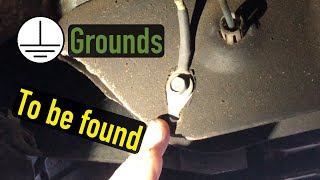
- Inspect the main engine and chassis ground straps. On a Tahoe, check the primary ground from the battery to the chassis, and the strap from the engine block to the firewall or frame. Ensure they are clean, tight, and free of corrosion.
- Check for any aftermarket performance tuners or devices connected to the OBD-II port. If present, remove them, restore the stock tune if possible, and re-test.
- If the code was found in the TCM (per TSB PIP4653E), a dealer or qualified shop may need to reprogram the TCM with the latest software calibration.
- If all the above steps check out, the issue may be a wiring problem in the Keep Alive Power (KAPWR) circuit to the PCM or a fault within the PCM itself, which requires professional diagnosis.
Parts You'll Likely Need
- Battery
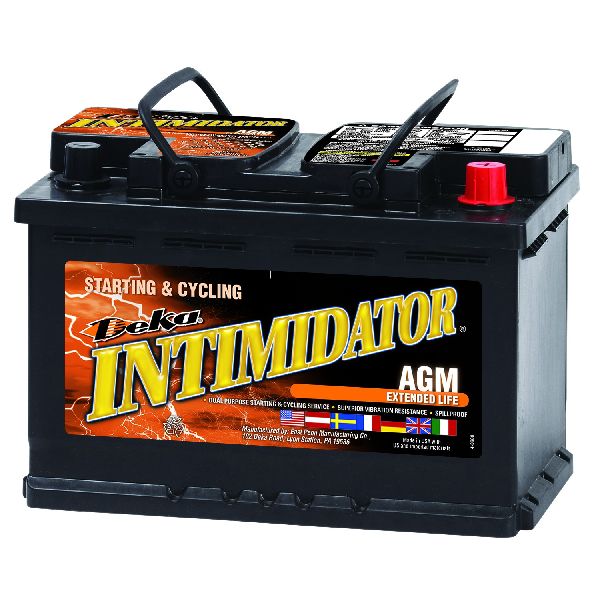
(OEM #ACDelco Gold 94RAGM (Group Size 94R/H7, AGM is a common upgrade))— A weak or failing battery is the most frequent cause of voltage drops that trigger a P0603 code.
Trusted brands: ACDelco, DieHard, Interstate
OEM price range: $200-$300
Aftermarket price range: $150-$250 - Battery Terminal Cleaner — Corroded terminals are a high-probability cause for interrupted power to the control modules.
Trusted brands: CRC, Permatex, NOCO
OEM price range: $5-$15
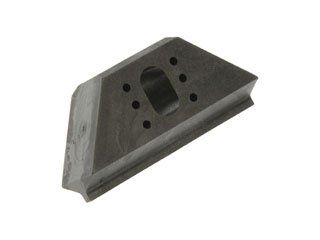
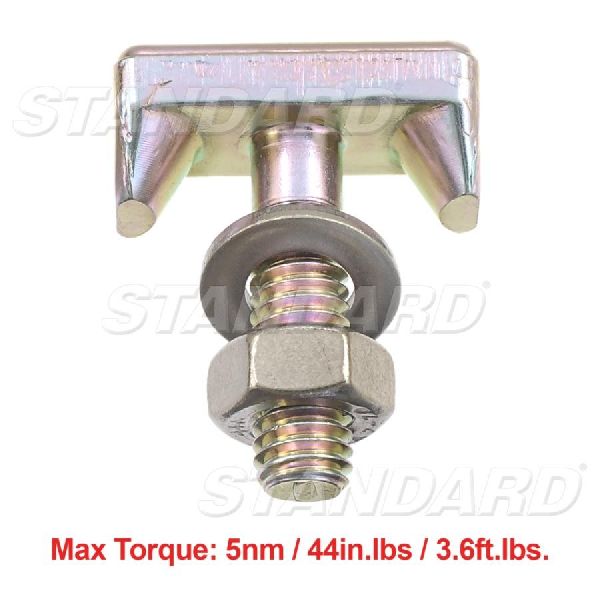
Aftermarket price range: $5-$15 - Battery Cable/Terminal End — If the original terminal clamps are stretched or damaged and cannot be tightened securely, they must be replaced to ensure a solid connection.
Trusted brands: Dorman, ACDelco GM Original Equipment
OEM price range: $20-$50
Aftermarket price range: $10-$30
Related Codes That Often Appear With This One
- P0601 — Internal Control Module Memory Check Sum Error. Both are related to internal module self-checks.
- P0604 — Internal Control Module Random Access Memory (RAM) Error. Both are related to module memory functions.
- P062F — Internal Control Module EEPROM Error. Another code related to module memory integrity.
- P1621 — Control Module Long Term Memory Performance. This is a GM-specific code directly related to memory retention. Both TSBs PIP4653E and 05-06-04-060A group this code with P0603.
Technical Service Bulletins (TSBs) & Recalls
- PIP4653E: Discusses P0603 in relation to the Transmission Control Module (TCM) and recommends a reprogram if the code is isolated there.
- 05-06-04-060A: An informational bulletin about control module DTCs including P0603 that can be shared in multiple modules, advising caution before replacing parts.
Platform-Specific Known Issues
- Per TSB #05-06-04-060A, this code is informational and can be shared across multiple modules. Technicians are advised to understand which module set the code before proceeding with diagnosis, implying it's not always a sign of failure.
- TSB #PIP4653E specifically notes that P0603 can be stored in the Transmission Control Module (TCM), which could lead to shifting issues if the adaptive memory is lost. The recommended fix in this case, if no other cause is found, is to reprogram the TCM.
Mechanic-Grade Diagnostic Values
- Battery Voltage (Engine Off) — expected: >12.4 Volts. Failure: Below 12.4V indicates a discharged or failing battery.
- Battery Voltage (During Crank) — expected: >9.6 Volts. Failure: Voltage dropping below 9.6V during cranking indicates a weak battery unable to supply sufficient power, a common P0603 trigger.
- Alternator Output Voltage (Engine Running at Idle) — expected: 13.5 - 14.5 Volts. Failure: Voltage below 13.5V or fluctuating wildly indicates a failing alternator.
- PCM/TCM Keep Alive Power (KAPWR) Circuit Voltage — expected: Should be equal to battery voltage at all times (Key On or Off).. Failure: Any voltage drop or loss of voltage indicates a problem in the wiring or fuse block between the battery and the module.
- PCM/TCM Ground Circuit Resistance — expected: < 0.5 Ohms. Failure: Resistance higher than 0.5 Ohms between the module's ground pin and the negative battery terminal indicates a poor ground connection.
Scan Tool Commands That Help
- GDS2 (GM Global Diagnostic System 2): Clear DTCs — Used after a repair (like tightening a battery terminal) to clear the P0603 code. If the code was set by a temporary power loss, it may not return.
- GDS2 / Techline Connect (SPS2): Module Reprogramming (e.g., for TCM) — As recommended by TSB PIP4653E, if P0603 is isolated to the Transmission Control Module and no other power/ground faults are found, reprogramming the module with the latest calibration may be required.
Wiring & Ground Locations
- G103 — Located at the left rear of the engine compartment on the cowl, above the brake booster.. This is a major body ground point that serves the BCM, Instrument Panel Cluster (IPC), and the Data Link Connector (DLC). A poor connection here can cause communication issues with scan tools and various other electrical faults. A service bulletin specifically advises checking G103 for tightness and cleanliness when dealing with certain transmission DTCs.
- G101 / G106 — Located on the front center of the frame cross rail, under the crank pulley.. This is a primary grounding point for the Engine Control Module (ECM) and Transmission Control Module (TCM). A compromised connection here directly affects the modules that set the P0603 code.
- Main PCM Ground — A ground wire running from the main wiring harness to a bolt on the top or side of the engine block.. This is the most critical ground for the PCM itself. If this wire is loose, corroded, or broken, it can cause countless sensor errors and control module codes, including P0603.
- Under-Radiator Frame Grounds — Two ground points on the frame, located just below the radiator support on either side, behind the front bumper.. These are main chassis grounds. A forum member with flickering lights (a symptom of the voltage instability that causes P0603) was advised to check these specific locations.
- Underhood Bussed Electrical Center (UBEC) — The main fuse box in the engine compartment.. The Keep Alive Power for the PCM/TCM runs through a fuse in this block. Corrosion on the internal layers of the fuse block, a known GMT900 issue, can interrupt this constant power supply and trigger a P0603.
Real Owner Repair Stories
- Tahoe Yukon Forum user (GMT900 Truck (Tahoe/Yukon/Silverado)) — Poor fuel economy, incorrect Air/Fuel Ratio (AFR) readings from a wideband sensor that changed when a data logger was plugged in.
❌ Tried (didn't work) Initially assumed the issue was with the auxiliary power circuit used for the wideband sensor.
✅ What actually fixed it The owner suspected the PCM ground was 'floating high' (had excessive resistance), causing the PCM's reference voltage to be off. This skewed the readings from the factory narrow-band O2 sensors, making the engine run rich. The fix was to locate and clean the primary PCM-related chassis grounds to ensure a solid connection.
Model Year Variations Within This Range
- 2009-2014: For the 2009 model year, the Tahoe was updated with the 6-speed 6L80 automatic transmission, replacing the 4-speed 4L60-E used in 2007-2008 models. The 6L80 uses an internal Transmission Electro-Hydraulic Control Module (TEHCM). This is significant because TSB PIP4653E specifically mentions P0603 setting in the TCM. The TEHCM in the 6L80 is a common failure point, and issues can also arise from its large round harness connector not being fully seated, which can cause communication errors and codes.
Helpful Videos



We Have This Part in Stock




The information in this article is provided for general reference and educational purposes only. Vehicle specifications, procedures, and part compatibility can vary by production date, trim level, and region. Always consult your vehicle's factory service manual and verify part numbers before purchasing or performing repairs. Safety-critical components such as airbags, seat belts, and braking systems should be installed by a qualified professional.
- Chevrolet TAHOE:
- 🧭 Diagnostic Flowchart
- 🎬 Helpful Videos
- 🛍️ Shop This Part
- What's Unique About the 2007-2014 Chevrolet TAHOE
- Symptoms You May Notice
- Most Likely Causes
- Rare But Worth Checking
- Diagnosis Steps
- Parts You'll Likely Need
- Related Codes That Often Appear With This One
- Technical Service Bulletins (TSBs) & Recalls
- Platform-Specific Known Issues
- Mechanic-Grade Diagnostic Values
- Scan Tool Commands That Help
- Wiring & Ground Locations
- Real Owner Repair Stories
- Model Year Variations Within This Range
- 🎟️ Get 5% Off