

P0603 on 2015-2017 Dodge Challenger: Keep Alive Memory (KAM) Error Causes and Fixes
On a 2015-2017 Dodge Challenger, code P0603 is almost always caused by a weak or failing battery, or loose/corroded battery terminals. Before replacing any other parts, fully test the battery and clean the terminals. A new battery costs approximately $150-$300. This code often appears after jump-starting the vehicle or disconnecting the battery, and may clear on its own after a few drive cycles.
- P0603 on a Challenger is a power supply problem 99% of the time, not a computer problem.
- Always start your diagnosis by load-testing the battery and thoroughly cleaning the battery terminals located in the trunk.
- A healthy battery should have ~12.6 volts at rest and the alternator should charge it at 13.5-14.5 volts when the engine is running.
- Do not replace the expensive PCM unless you have completely ruled out the battery, terminals, cables, and alternator.
What's Unique About the 2015-2017 Dodge Challenger

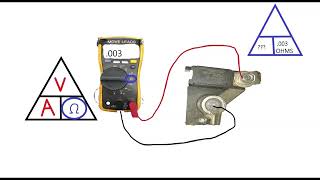
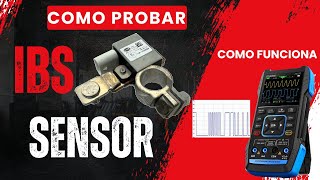
On the 2015-2017 Challenger, the battery is located in the trunk, which keeps it away from engine heat but can sometimes lead to owners overlooking its condition. These cars are packed with electronics that are very sensitive to voltage. A weak battery is known to cause a cascade of seemingly unrelated electrical issues and codes, with P0603 being a common early indicator of a power supply problem. The charging system also uses an Intelligent Battery Sensor (IBS) on the negative terminal, which monitors the battery's state of charge, health, and temperature. If this sensor is faulty or not calibrated after a battery replacement, it can lead to improper charging and trigger this code.
Symptoms You May Notice

- Check Engine Light is on
- Slow or difficult engine starting
- Rough or unstable idle
- Hesitation during acceleration
- Noticeable decrease in fuel economy
- Erratic or harsh transmission shifting
- Radio or navigation screen is slow to turn on after starting the car
- Other random warning lights (ABS, Traction Control) may appear
- Engine may stall unexpectedly
- Replacing the PCM when the actual problem is a weak battery or a bad connection.
- Replacing other sensors or modules that throw codes as a result of the low voltage condition, without first addressing the root power supply issue.
- Replacing the Intelligent Battery Sensor (IBS) when it simply needed a reset or time to recalibrate after a new battery installation.
Most Likely Causes

- Weak or Failing Battery 🔴 High Probability → Shop Vehicle Battery The Challenger's numerous electronic modules are sensitive to low voltage. A battery that can't maintain at least 12.4 volts at rest or drops significantly during cranking will trigger this code. This is the most common cause by a wide margin.
How to confirm: Test the battery with a multimeter or an electronic battery tester. A healthy battery should read ~12.6V with the engine off. Have it load tested at an auto parts store to confirm its health under load. Any reading below 12.4V suggests a problem.
Typical fix: Replace the vehicle's battery. Ensure the replacement is the correct type (AGM is common for these models) and size. After replacement, the car may need several drive cycles over 2-4 days for the IBS to recalibrate.
Est. part cost: $150-$350 - Loose or Corroded Battery Terminals 🟡 Medium Probability → Shop Vehicle Battery The battery is in the trunk, where connections can be forgotten. Even minor corrosion or a slightly loose terminal can cause a momentary power interruption during cranking, sufficient to erase the KAM.
How to confirm: Visually inspect the battery terminals in the trunk. Look for white, blue, or green crusty buildup. Wiggle the cable clamps to check for any movement; there should be none.
Typical fix: Disconnect the battery (negative terminal first). Thoroughly clean the terminals and cable clamps with a wire brush and a baking soda/water solution. Reconnect securely (positive terminal first). Apply a terminal protector spray.
Est. part cost: $1-$10 - Failing Alternator or Charging System ⚪ Low Probability → Shop Alternator If the alternator isn't recharging the battery properly, the battery will eventually become too weak to maintain KAM power. A bad diode in the alternator can also create a parasitic drain. A failing alternator was a noted issue on some Challenger models.
How to confirm: With the engine running, test the voltage at the battery terminals. A healthy alternator should provide between 13.5 and 14.5 volts. If the voltage is low, high, or fluctuates wildly, the alternator is suspect.
Typical fix: Replace the alternator.
Est. part cost: $250-$600 - Faulty Intelligent Battery Sensor (IBS) ⚪ Low Probability → Shop Vehicle Battery The IBS, located on the negative battery terminal, monitors the battery's state of charge and communicates with the PCM. If it fails, it can provide incorrect data, leading to improper charging and causing battery drain. It may not require replacement after a new battery install, but it does need time to recalibrate.
How to confirm: This is difficult to confirm without a dealer-level scan tool to read IBS-specific data. A common symptom is a battery that repeatedly dies for no apparent reason despite testing good. Check for corrosion on the sensor and its small connector. A specific DTC, U113E, may be present if the BCM loses communication with the IBS.
Typical fix: First, try resetting the IBS by disconnecting its 2-way connector for a moment. If issues persist, replace the Intelligent Battery Sensor. A new sensor requires 3-5 drive cycles with 8-hour key-off periods to fully calibrate.
Est. part cost: $70-$150
Rare But Worth Checking
- Faulty Powertrain Control Module (PCM): → Shop Engine Control Module (ECM) This is the least likely cause. The PCM itself can fail, but all power and ground supply issues must be exhaustively ruled out first before condemning the computer.
- Wiring Issue in PCM Power/Ground Circuit: A damaged wire or a poor ground connection for the PCM can interrupt the Keep Alive power. This requires tracing wires and checking for continuity with a multimeter.
- Aftermarket Tuner: If the vehicle has an aftermarket performance tune, it can sometimes interfere with the PCM's self-test procedures. Removing the tune and returning to the stock calibration can resolve the code.
Diagnosis Steps

- Read the code with an OBD-II scanner to confirm P0603 is present.
- If the battery was recently disconnected, jumped, or replaced, this code is normal. Clear the code. It may take several key cycles and up to 4 days of normal driving for the IBS to relearn and the code to stay away.
- Visually inspect the battery terminals in the trunk for corrosion or looseness. Clean and tighten as needed. Ensure the IBS connector is secure on the negative terminal.
- Test the battery voltage with the engine off. It should be approximately 12.6 volts. A reading below 12.4V indicates a weak battery.
- Have the battery load-tested at an auto parts store. This is a crucial step as a battery can show good voltage but fail under load.
- Start the engine and test the charging system voltage at the battery terminals. It should be stable, between 13.5 and 14.5 volts.
- If the battery and alternator test good, inspect the main power and ground wires to the PCM for any damage or corrosion.
- Check fuses related to the PCM and engine controls. On related platforms, the IBS may have its own fuse (e.g., F52 on a Ram or F179 on a Journey), check the owner's manual for a similar fuse.
- If an aftermarket tuner is installed, flash the PCM back to the stock tune and see if the code returns.
- If all else fails, the issue may be with the PCM itself, which requires professional diagnosis.
Parts You'll Likely Need

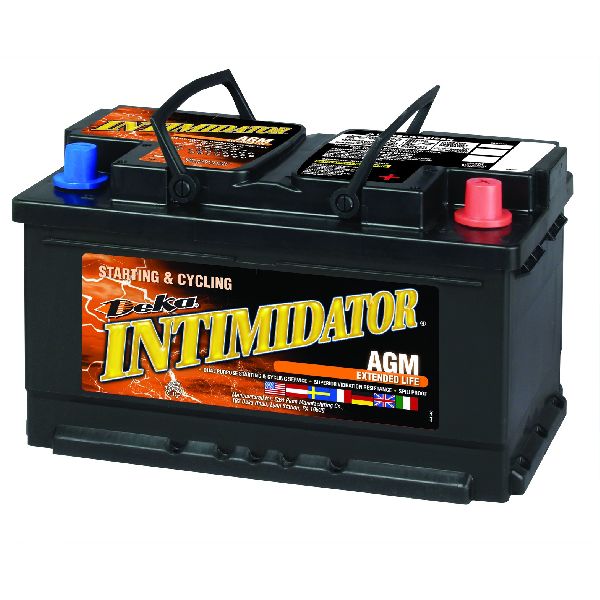
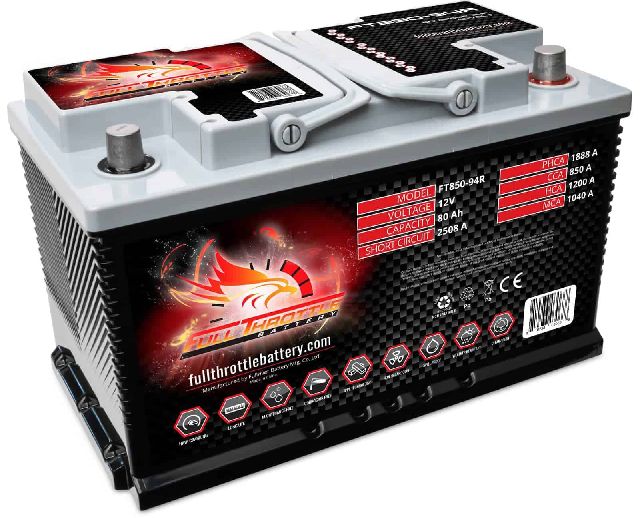
- Automotive Battery (AGM Type, H7 or H8 Group Size)
(OEM #BBH7F001AA, BLH7F001AA, BBH8A001AA)— This is the most frequent cause of code P0603. The original battery may be at the end of its service life and unable to hold a sufficient charge to maintain the PCM's memory.
Trusted brands: Mopar, DieHard, Duralast, Odyssey
OEM price range: $250-$400
Aftermarket price range: $150-$350 - Intelligent Battery Sensor (IBS)
(OEM #4692269AI, 56029777AC)— If the battery and alternator are good but charging problems or repeat dead batteries persist, the IBS may be faulty. It is attached to the negative battery terminal.
Trusted brands: Mopar, Standard Motor Products
OEM price range: $70-$200
Aftermarket price range: $75-$150 - Battery Terminal Cleaner and Protector Kit — Often, the problem is not the battery itself but a poor connection. Cleaning the terminals is a cheap and essential diagnostic step.
Trusted brands: CRC, NOCO
OEM price range: $5-$15
Aftermarket price range: $5-$15
Technical Service Bulletins (TSBs) & Recalls
- S1408000384 Rev. C: While not a TSB for this specific code, this FCA communication provides critical details on how the Intelligent Battery Sensor (IBS) works, noting that it often does not need replacement after a battery change but requires a recalibration period of 2-4 hours of quiescent (sleep) time and several drive cycles. It also details reset procedures.
Platform-Specific Known Issues
- Owner Experience: Code Disappeared After New Battery and Driving: → Shop Vehicle Battery A user on a Challenger forum reported getting P0603 after their battery died. After installing a new AGM battery, the code was still present. However, after clearing the code and driving the car for a couple of days, the code did not return, illustrating the need for the system to recalibrate.
- Owner Experience: Loose Terminal Was the Culprit: On a related platform (Dodge Charger), an owner chased a P0603 code, assuming it was a complex electrical issue. The final fix was simply discovering and tightening a loose negative battery terminal in the trunk, which was causing intermittent power loss during engine cranking.
Mechanic-Grade Diagnostic Values
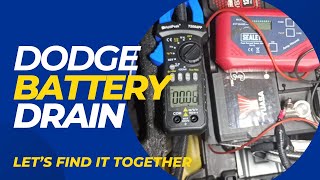
- Parasitic Current Draw — expected: 20-50 Milliamps (mA) after all modules have entered sleep mode (approx. 30-45 minutes).. Failure: A consistent reading above 50-100 mA indicates a parasitic drain that will deplete the battery and can trigger P0603.
- Intelligent Battery Sensor (IBS) LIN Bus Voltage — expected: The LIN bus is a single-wire communication circuit. With the key on, you should see a fluctuating digital signal between 8 and 12 volts when probing the signal wire with an oscilloscope. A static voltage may indicate a communication failure.. Failure: No voltage, or a static battery voltage with no fluctuation, points to a wiring issue or a failed IBS/BCM.
- Intelligent Battery Sensor (IBS) Power Supply Voltage — expected: The IBS has a dedicated power feed wire. This wire should have battery voltage (approx. 12.6V with engine off) at all times.. Failure: Voltage below 11.8V or no voltage indicates a blown fuse or a break in the power supply wire to the sensor.
Hidden / Shadow Codes Worth Checking
- U113E: Lost Communication With Intelligent Battery Sensor. This code is set by the Body Control Module (BCM) when it can no longer receive data from the IBS over the LIN bus. (see via A professional scan tool like Mopar's wiTECH is typically required to see BCM-specific codes.)
- B2193: Battery Sensor Plausibility. This code can indicate an internal software or hardware fault within the IBS itself. (see via Visible with a professional scan tool like wiTECH. A common diagnostic step is to reset the IBS by unplugging it to see if this code clears.)
Scan Tool Commands That Help
- wiTECH (Mopar Dealer Tool): IBS Reset / Recalibration — This is not a direct command, but a procedural reset. After installing a new battery or IBS, the sensor needs to recalibrate. This involves clearing codes, then allowing the vehicle to sit undisturbed (in 'sleep' mode) for 2-4 hours. Some TSBs mention a 'Proxi Configuration Alignment' may also be needed to force modules to reboot. The process is completed over 3-5 drive cycles with 8-hour key-off periods in between.
- wiTECH (Mopar Dealer Tool): View Battery State Of Charge (SOC) — When diagnosing charging system warnings or P0603, a technician can use wiTECH to view the SOC percentage as calculated by the IBS. If the SOC reads 100% immediately after a battery change, it indicates the IBS has not yet calibrated. This data helps differentiate between a truly bad battery and a calibration issue.
Wiring & Ground Locations
- G305 — Located in the right rear of the luggage compartment (trunk).. This is a major ground point in the trunk area, near the battery and other electronic modules. A loose or corroded G305 ground can cause a host of electrical issues, including intermittent power loss to modules that would trigger a P0603 code.
- PCM C1 Connector — The Powertrain Control Module (PCM) is typically located in the engine bay. The C1 connector is one of the main electrical plugs going into it.. The KAM power feed is supplied through this connector. A wiring diagram is needed to identify the specific pin for the Fused B(+) circuit to test for constant battery voltage, ensuring the PCM has the power it needs to maintain its memory.
Real Owner Repair Stories
- YouTube video from 'Automobile' channel (Dodge Challenger (year not specified, but similar platform)) — Battery draining overnight (parasitic draw).
❌ Tried (didn't work) Initial checks did not immediately identify the source of the draw.
✅ What actually fixed it The parasitic draw was traced to the radio/infotainment system. After pulling the fuse for the radio, the current draw dropped to a normal level. Disconnecting the radio confirmed it was the faulty component causing the battery drain, which would lead to a P0603 on startup. - 2CarPros forum post (2014 Dodge Challenger) — Battery drains after sitting for several days, triggering a P0603 code.
❌ Tried (didn't work) The owner was unsure how to proceed after identifying the circuit.
✅ What actually fixed it The owner performed a parasitic draw test and isolated the excessive current draw to the fuse for the 'AC Heater/Cluster/Security Module' (Fuse #14 in the rear fuse box). The final repair would involve diagnosing which of these components on that circuit was staying active, but identifying the specific fused circuit was the critical step.
OEM Part Supersession History
4692269AD, 4692269AE, 4692269AF, 4692269AG, 4692269AH→4692269AI— Part has been revised and updated by the manufacturer over time to improve reliability or make small design changes.
Heads up: The latest part number (4692269AI) is the correct service replacement for all previous versions on applicable vehicles.
Diagnostic Flowchart
Other Known Issues on This Vehicle
Issues unrelated to this code that are worth knowing about as an owner of this generation:
- Uconnect 8.4-inch Screen Delamination 🟠 Medium — Commonly occurs 1-3 years into vehicle ownership. The screen develops bubbles and the adhesive may leak, causing 'ghost touches' and making the radio, climate, and navigation controls unusable. (Ref: No recall has been issued, but STAR Case S2108000057 (mentioned in forums) acknowledges the issue. Repair involves replacing the screen/digitizer, not the whole unit.)
- 5.7L/6.4L HEMI Lifter/Camshaft Failure 🔴 High — A well-documented issue, particularly on cylinders with the Multi-Displacement System (MDS). Failure often begins with a distinct ticking sound at idle after the engine is warm. If not addressed, it leads to a misfire (P030x codes) and catastrophic engine damage. (Ref: No specific recall, but numerous TSBs exist for related symptoms like oil consumption. The root cause is often attributed to oil starvation of the lifter's roller bearing.)
- Active Exhaust Valve Rattle/Squeak 🟡 Low — Very common on models equipped with active exhaust (R/T, Scat Pack, Hellcat). The butterfly valves in the exhaust develop a rattle or a loud squeak, especially on startup. (Ref: No recall. The common fix is to either lubricate the valve springs (temporary), pull a fuse to keep the valves open (e.g., F36), or install aftermarket bypass kits/simulators to eliminate the valves entirely without triggering a Check Engine Light.)
- Harsh Automatic Transmission Downshifts 🟠 Medium → Shop Transmission Assembly — Reported on multiple model years including 2015-2016, often at low mileage (avg ~35,000 miles). The most common complaint is a harsh 4th-to-3rd gear downshift. (Ref: Software updates for the Transmission Control Module (TCM) can sometimes resolve this, but in other cases, it may indicate an internal transmission issue.)
Used vs. New Parts: Buying Guide for This Vehicle
When a used part is the smart pick: For this code, a used Alternator or Intelligent Battery Sensor (IBS) from a low-mileage, accident-free donor vehicle can be a cost-effective option. These parts are generally reliable. A used PCM is also possible but requires professional reprogramming to your vehicle's VIN and security information.
Donor-vehicle mileage cap: roughly under 60000 miles for the part to have meaningful remaining life.
What to inspect on the donor part:
- For an alternator, check for smooth bearing rotation with no noise or roughness. Ensure the pulley is not damaged.
- For an IBS, inspect the sensor and its connector for any signs of corrosion, physical damage, or frayed wiring.
- Obtain the VIN of the donor car to verify its year and mileage.
- Avoid parts from flood-damaged or high-impact collision vehicles.
OEM-only on this vehicle (don't cheap out):
- Powertrain Control Module (PCM): While remanufactured units from reputable suppliers are acceptable, avoid no-name used units. The PCM must be correctly programmed to the vehicle's VIN and options to function.
- Automotive Battery: Never buy a used battery. Its history and remaining life are unknown, and it is the most common failure point for this code.
Aftermarket brands forum-validated for this vehicle:
- Battery: Odyssey, Interstate, Duralast Platinum (AGM), DieHard Platinum (AGM), and X2Power are frequently recommended by owners on forums for their reliability and warranty.
- Alternator: Denso (often the OEM supplier), Bosch, or a quality remanufactured unit from Mopar.
Brands owners have reported issues with on this vehicle:
- Avoid generic, unbranded electronic sensors or modules from online marketplaces, as their quality control and compatibility can be highly questionable.
Real Owner Stories
Aggregated from forums and TSBs cited above. Mileages and costs reflect what owners reported in those sources.
2015-2017 Dodge Challenger
Symptoms: The code appeared immediately after the battery died. Even after installing a new AGM battery, the P0603 code remained present.
What fixed it: Clearing the code and driving the car for a couple of days allowed the system to recalibrate, and the code did not return.
Source hint: vehicle_specific_issues: Owner Experience: Code Disappeared After New Battery and Driving
2015-2017 Dodge Charger
Symptoms: The owner was chasing a P0603 code, assuming it was a complex electrical issue involving the PCM or charging system.
What fixed it: Discovering and tightening a loose negative battery terminal in the trunk that was causing power loss during cranking.
Source hint: vehicle_specific_issues: Owner Experience: Loose Terminal Was the Culprit
2015-2017 Dodge Challenger
Symptoms: Pending P0603 code and a loose negative terminal.
What fixed it: Replacing the terminal clamp to ensure a secure connection.
Source hint: Reddit r/AskMechanics (Code P0603)
Related OBD-II Codes
Frequently Asked Questions
Does FCA communication S1408000384 Rev. C mean I have to replace my Intelligent Battery Sensor (IBS) when I get a new battery for my Challenger?
My 2015 Challenger's battery tested at 12.2V; could this be causing the P0603 code?
I just replaced my battery with an AGM unit and the P0603 code is still there. What should I do?
Where is the battery located on the 2015-2017 Challenger, and why does it matter for P0603?
Can an aftermarket tuner cause P0603 on my Challenger?
Is there a specific fuse I should check for the battery sensor issues?
Helpful Videos

We Have This Part in Stock



The information in this article is provided for general reference and educational purposes only. Vehicle specifications, procedures, and part compatibility can vary by production date, trim level, and region. Always consult your vehicle's factory service manual and verify part numbers before purchasing or performing repairs. Safety-critical components such as airbags, seat belts, and braking systems should be installed by a qualified professional.
- Dodge Challenger:
- 🧭 Diagnostic Flowchart
- 🎬 Helpful Videos
- 🛍️ Shop This Part
- What's Unique About the 2015-2017 Dodge Challenger
- Symptoms You May Notice
- Most Likely Causes
- Rare But Worth Checking
- Diagnosis Steps
- Parts You'll Likely Need
- Technical Service Bulletins (TSBs) & Recalls
- Platform-Specific Known Issues
- Mechanic-Grade Diagnostic Values
- Hidden / Shadow Codes Worth Checking
- Scan Tool Commands That Help
- Wiring & Ground Locations
- Real Owner Repair Stories
- OEM Part Supersession History
- Other Known Issues on This Vehicle
- Used vs. New Parts: Buying Guide for This Vehicle
- Real Owner Stories
- 2015-2017 Dodge Challenger
- 2015-2017 Dodge Charger
- 2015-2017 Dodge Challenger
- Related OBD-II Codes
- Frequently Asked Questions
- 🎟️ Get 5% Off