

P0603 on 2008-2011 Ford Focus: KAM Error Causes and Fixes
On a 2008-2011 Ford Focus, P0603 almost always points to a weak battery, bad connection, or a recent battery disconnect. Before suspecting the main computer (PCM), check and clean your battery terminals and test the battery's health. This is usually a simple and inexpensive fix.
- P0603 on a Ford Focus is a memory loss code for the main computer, not usually a computer failure.
- The most likely cause is a weak battery, a recent battery change, or corroded/loose battery terminals.
- Always start diagnosis by testing the battery and charging system. This is a simple DIY check.
- Do not replace the PCM unless all other power and ground-related possibilities have been exhausted.
- Driving with this code is possible, but performance and fuel economy will suffer until the adaptive memory can be restored and maintained.
What's Unique About the 2008-2011 Ford Focus
For the 2008-2011 Ford Focus, the P0603 code is not typically indicative of a complex or unique platform-specific failure. Instead, it's most often triggered by simple electrical issues, especially related to the battery. Many owner experiences confirm that the code frequently appears after changing the battery, jump-starting the vehicle, or if the current battery is old and weak. The electrical system on this generation of Focus is sensitive to voltage drops, making a thorough battery and charging system check the first and most crucial diagnostic step. The code itself is often benign and may resolve after a few drive cycles allow the PCM to relearn.
Symptoms You May Notice
- Check Engine Light is on
- Rough or unstable idle
- Hesitation when accelerating
- Harsh or erratic transmission shifting
- Decreased fuel economy
- Difficulty starting the engine
- ABS or Traction Control light may illuminate
- Replacing the PCM without first testing the battery, alternator, and checking all related fuses and ground wires. This is an expensive mistake, as the issue is almost always a simple power supply problem.
Most Likely Causes
- Weak or Failing Battery 🔴 High Probability → Shop Vehicle Battery The Keep Alive Memory requires a constant, stable voltage. An aging battery, one that has been deeply discharged, or one subjected to cold weather will cause a voltage drop sufficient to erase the KAM and trigger the code.
How to confirm: Test the battery voltage with a multimeter. It should be ~12.6V with the engine off and 13.5-14.5V with the engine running. A reading below 12.4V with the engine off indicates a discharged battery. A load test showing voltage dropping below 9.6V during cranking is a definitive sign of a bad battery. Most auto parts stores offer free battery load testing.
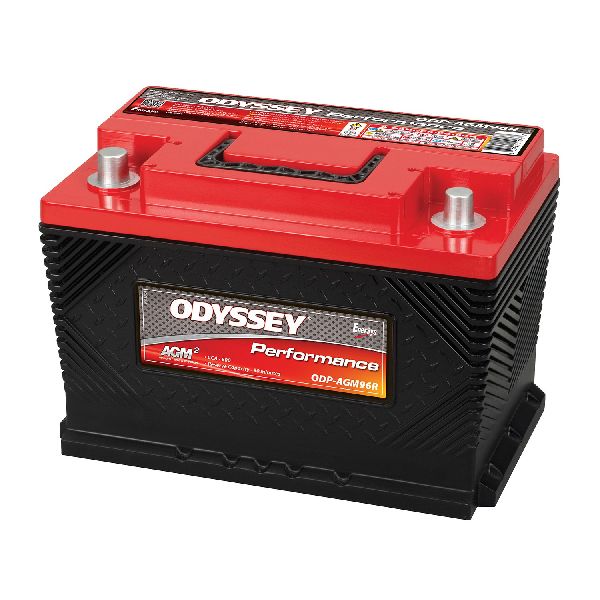
Typical fix: Replace the battery if it fails a load test. The common battery group size for this Focus is 96R.
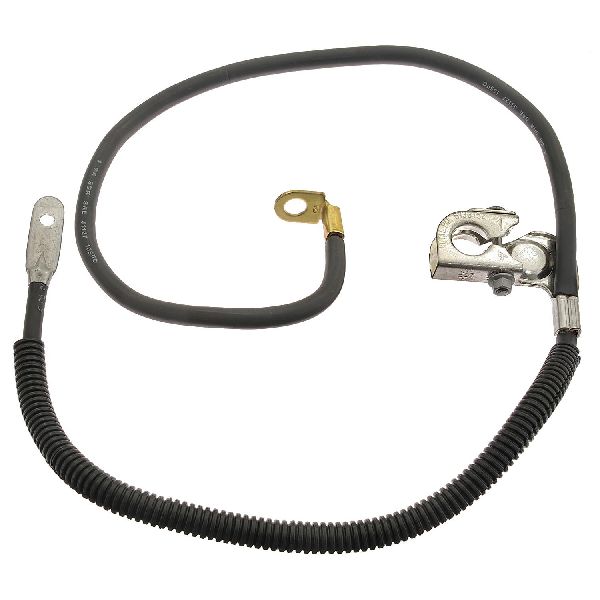
Est. part cost: $120-$250 - Loose or Corroded Battery Terminals/Cables 🟡 Medium Probability → Shop Vehicle Battery Corrosion or looseness at the terminals interrupts the power supply to the vehicle's electronics, including the PCM's KAM power. Forum users frequently report that even slightly loose terminals can trigger this code.
How to confirm: Visually inspect the battery terminals for white or greenish buildup (corrosion). Physically check if the terminal clamps can be twisted or moved by hand. A loose terminal is a very common cause. A voltage drop of just 0.2V across a corroded connection can be enough to trigger a KAM error.
Typical fix: Disconnect the battery (negative first), clean the terminals and clamps with a wire brush and a baking soda/water solution, and reconnect securely (positive first). Replace terminals if they are stretched and cannot be tightened.
Est. part cost: $5-$25 - Failing Alternator or Charging System Issue ⚪ Low Probability → Shop Alternator An alternator that is not charging correctly can lead to an undercharged battery, causing the voltage to drop below the threshold needed for the KAM.
How to confirm: With the engine running, check the battery voltage. If it's below 13.2V or above 14.8V, the charging system is likely faulty. A healthy alternator should output between 13.7V and 14.7V. Many auto parts stores can test the alternator's output.
Typical fix: Replace the alternator.
Est. part cost: $150-$350 - Blown Fuse for PCM ⚪ Low Probability The KAM has a dedicated fuse for its constant power feed (KAPWR). If this fuse blows, the memory is lost every time the car is turned off. This can sometimes be caused by a short in a cigarette lighter or other accessory circuit.
How to confirm: Check fuse F11 (10A) in the Central Junction Box (passenger compartment fuse panel). Also check fuse F5 (10A) in the engine compartment fuse box, labeled 'Powertrain control module (PCM) KAPWR / Canister Vent'. Consult the owner's manual to verify the location for your specific model year.
Typical fix: Replace the blown fuse. If it blows again, a short circuit exists that needs to be diagnosed.
Est. part cost: $1-$5 - Poor Ground Connection ⚪ Low Probability Ford vehicles of this era are known to have issues with grounding points. A corroded or loose ground strap can cause intermittent electrical issues, including KAM loss.
How to confirm: Inspect the main ground points. Key locations on the Focus include a ground under the airbox, a point near the PCM itself, and the main battery-to-chassis ground. Check for tightness and corrosion. A video guide shows the main battery ground is located on the fender, accessible after removing the air filter box. 🎬 Watch: How to clean the battery ground connection on a Focus
Typical fix: Remove, clean, and securely re-attach the ground wires. It's recommended to clean the metal contact point on the chassis to bare metal.
Est. part cost: $0-$10
Rare But Worth Checking
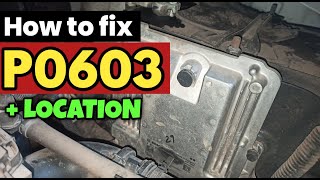
- Faulty Powertrain Control Module (PCM): → Shop Engine Control Module (ECM) This is extremely rare. The PCM should only be considered after all power, ground, and wiring issues have been completely ruled out. An internal failure in the PCM's memory circuit 🎬 Watch: Understanding the P0603 internal control module error can cause this code.
- Aftermarket Performance Tuner: If the vehicle has an aftermarket performance chip or tuner installed, it can sometimes interfere with the PCM's self-tests and trigger a P0603 code. Removing the tune will often resolve the issue.
Diagnosis Steps
- Check for other DTCs. If other codes are present, address them first.
- Ask the driver if the battery was recently replaced, disconnected, or if the vehicle required a jump-start. This is a very common cause and may not indicate a fault. The code is expected in these situations.
- Clear the code and drive the vehicle through a few key cycles. If the code does not return, it was likely a one-time event and no repair is needed.
- If the code returns, perform a full battery and charging system test. Use a multimeter to check battery voltage with the engine off (should be ~12.6V) and running (should be 13.5-14.5V).
- Inspect battery terminals for corrosion and tightness. Clean and tighten as necessary. Ensure the clamps are not stretched or bottomed out.
- Inspect the main engine and chassis ground straps for corrosion and security. A key ground point on the Focus is located under the air filter box/battery tray area. 🎬 See how to replace a bad main ground wire Ensure it is clean and tight.
- Check the fuses. Using the owner's manual, locate the fuse for the PCM's Keep Alive Memory power (labeled KAPWR). This is likely fuse F5 (10A) in the engine bay fuse box and potentially F11 in the passenger compartment fuse panel. Verify they are not blown.
- If all the above steps check out, inspect the wiring to the PCM for any signs of damage or corrosion. If no issues are found, the PCM itself may be faulty, but this is highly unlikely.
Parts You'll Likely Need
- Vehicle Battery
(OEM #Motorcraft BXT-96R-590)— An old or weak battery is the most frequent cause of the voltage drop that triggers a P0603 code.
Trusted brands: Motorcraft, Interstate, DieHard
OEM price range: $180-$250
Aftermarket price range: $120-$200 - Battery Terminal Cleaner — Corroded terminals are a common cause of power interruption. Cleaning them is a primary diagnostic and repair step.
Trusted brands: CRC, Permatex, NOCO
Aftermarket price range: $5-$10
Related Codes That Often Appear With This One
- P0562 — This code means 'System Voltage Low' and directly points to a failing battery or alternator, which is the root cause of the P0603 KAM error.
- P0171 — System Too Lean (Bank 1). This can sometimes appear with P0603 because the PCM has lost its learned fuel trim adjustments and reverted to default settings, which may not be optimal for the engine's current condition.
Technical Service Bulletins (TSBs) & Recalls
- No specific TSBs directly address P0603 as a primary fault on this platform, as it's typically considered a consequence of a power interruption rather than a standalone issue.
- Manufacturer service bulletins for other Ford vehicles, such as TSB Bulletin #TSB 21-2248, TSB Bulletin #TSB 20-2336, and TSB Bulletin #TSB 21-2055, note that P0603 may be stored in the PCM alongside various other codes, sometimes accompanied by an illuminated malfunction indicator lamp or a forced idle condition.
Platform-Specific Known Issues
- A common real-world scenario for this code is its appearance immediately after a battery has been disconnected for any reason (e.g., other service work). In this case, it is not a fault and can be cleared, or will clear on its own after several drive cycles.
- The factory battery ground cable and terminal can become corroded internally or fail at the chassis connection point under the battery tray, leading to intermittent electrical problems including P0603.
Mechanic-Grade Diagnostic Values
- Battery Voltage (Engine Off) — expected: 12.4V to 12.6V. Failure: Below 12.4V indicates a discharged or failing battery.
- Battery Voltage (During Cranking) — expected: Above 9.6V. Failure: Voltage dropping below 9.6V during engine cranking indicates a weak battery unable to maintain KAM power.
- Alternator Output Voltage (Engine Running) — expected: 13.7V to 14.7V. Failure: Below 13.5V or fluctuating wildly suggests a faulty alternator or voltage regulator.
- Parasitic Draw (Key Off, All Modules Asleep) — expected: Below 50mA (0.05A). Failure: A reading above 50mA indicates a component is not shutting down, draining the battery overnight and causing KAM loss.
- PCM Keep Alive Power (KAPWR) Voltage — expected: Constant Battery Voltage (~12.6V) at all times (key on or off). Failure: 0V or fluctuating voltage indicates a blown fuse, broken wire, or poor connection between the fuse box and the PCM.
- PCM Ground Circuit Voltage Drop — expected: Less than 0.1V. Failure: Voltage greater than 0.1V between the PCM ground pin and the negative battery terminal indicates high resistance in the ground circuit.
Scan Tool Commands That Help
- Ford IDS / FORScan: Reset KAM / Clear Transmission Adaptive Tables — This function should be used after a repair that caused a power loss or after replacing a component that affects adaptive learning (like a transmission or engine sensor). It forces the PCM to start a fresh relearning process. Note that simply disconnecting the battery for 5+ minutes is the alternative manual method.
- Ford IDS / FORScan: PCM Self-Test — This command initiates an on-demand self-test of the PCM and its related systems. It can help confirm if the P0603 code is a hard fault or an intermittent one after initial checks and repairs have been performed.
Wiring & Ground Locations
- KAPWR (Keep Alive Power) Fuse — Fuse F5 (10A) in the engine compartment fuse box. It is labeled 'Powertrain control module (PCM) KAPWR / Canister Vent'.. This fuse provides the constant power required to maintain the Keep Alive Memory. If it's blown, the PCM will lose memory every time the ignition is turned off.
- KAPWR (Keep Alive Power) Pin at PCM — Pin 55 (Yellow/Orange wire) on PCM connector C175B.. This is the specific pin on the main PCM connector where the constant voltage from the KAPWR fuse should be present. Technicians can test for battery voltage here to confirm the integrity of the wiring from the fuse box to the PCM.
- Main Battery Ground Point — On the chassis/fender wall, located under the air filter box. Requires removing the airbox for access.. This is the primary ground connection for the battery. Corrosion or looseness here creates high resistance for the entire vehicle's electrical system, causing voltage drops that trigger P0603.
- PCM Ground Pins — Pins 51, 76, and 77 (Black/Yellow wires) on PCM connector C175B.. These are the direct ground paths for the PCM. A poor connection at these specific pins can cause the PCM to malfunction and lose memory, even if other grounds on the vehicle seem okay.
- G104 (Ground) — On the left-hand front of the engine compartment, near the battery tray area.. This is a major chassis ground point that multiple components share. Corrosion here is a common source of intermittent electrical faults on this platform.
Real Owner Repair Stories
- Reddit user r/FordFocus (2017 Ford Focus EcoBoost (similar grounding principles apply)) — Car won't start after transmission work.
❌ Tried (didn't work) Retracing steps from previous repair.
✅ What actually fixed it A forgotten ground wire that bolts from the chassis (under the airbox) to a threaded hole on the transmission bell housing was not reconnected. After cleaning the contact surfaces and bolting it down, the car started and ran correctly. - Ford Focus Club forum (2006 Ford Focus Mk2) — Erratic idling and flickering lights.
❌ Tried (didn't work) Initial diagnosis pointed to a bad earth, but the user was unsure where to look.
✅ What actually fixed it A forum veteran explained that flickering lights on this model are a known issue caused by high resistance in the alternator's B+ wire. Ford issued a TSB and sells an upgraded wiring harness that runs from the battery positive to the alternator to resolve the pulsing voltage that causes the flicker and can contribute to electrical instability.
Documented NHTSA Reports
- In NHTSA ODI #10222074, an owner reported that the vehicle would die while driving and then exhibit a P0603 code, even after installing new batteries.
- NHTSA ODI #10349131 describes a situation where a system scan showed codes P0603 and P2285; the issue was eventually corrected by replacing a shorted sensor and its connector.
Diagnostic Flowchart
Other Known Issues on This Vehicle
Issues unrelated to this code that are worth knowing about as an owner of this generation:
- Failed Passenger-Side Engine Mount 🔴 High — Extremely common. The hydraulic mount collapses, causing severe vibration at idle and in gear. Often fails before 100,000 miles.
- Automatic Transmission (4F27E) Shifting Issues 🟠 Medium → Shop Transmission Assembly — Moderately common. Issues include harsh shifting, hesitation, or failure to shift into 3rd/4th gear. Can be caused by failing shift solenoids or internal wear. (Ref: TSB 08-4-17 (for early 2008 models with no 3rd/4th gear))
- Worn Front Suspension Components 🟠 Medium — Common as the vehicle ages. Worn ball joints and tie rod ends can cause clunking noises over bumps and poor alignment.
- Frozen/Sticking Door Latches 🟡 Low — Common in colder climates. Moisture can enter the latch mechanism and freeze, preventing the door from opening or closing properly.
- Rust on Front Subframe 🟠 Medium — Common in regions with road salt. The front subframe/crossmember is prone to significant rust, which can become a structural safety concern over time. (Ref: A recall (11S16) was issued for earlier models (2005-2007) in Canada for a similar issue, but not for this specific generation in the US.)
Used vs. New Parts: Buying Guide for This Vehicle
When a used part is the smart pick: For this code, the most common fix is a new battery, where a used part is never recommended. However, in the extremely rare case that the PCM is faulty, a used PCM from a junkyard is a viable and cost-effective option, provided it is from the exact same year, model, and engine and is reprogrammed to the vehicle.
Donor-vehicle mileage cap: roughly under 120000 miles for the part to have meaningful remaining life.
What to inspect on the donor part:
- Ensure the part number on the used PCM exactly matches the original.
- Inspect the donor vehicle for signs of flood or fire damage.
- Check the connectors on the used PCM for any bent, corroded, or pushed-out pins.
- Ask the salvage yard if they offer a short-term warranty or return policy.
OEM-only on this vehicle (don't cheap out):
- Powertrain Control Module (PCM): While a used OEM unit can work, it requires professional programming (PATS key relearn, VIN flashing). New aftermarket PCMs often have software issues. Sticking with a new or properly programmed used OEM unit is highly recommended.
Aftermarket brands forum-validated for this vehicle:
- Batteries: Interstate, DieHard, Deka
- Alternators: Denso (often the OEM supplier), Bosch
Brands owners have reported issues with on this vehicle:
- Ultra-cheap, no-name electronics from online marketplaces, especially for critical components like the alternator or a remanufactured PCM.
Real Owner Stories
Aggregated from forums and TSBs cited above. Mileages and costs reflect what owners reported in those sources.
2008-2011 Ford Focus
Symptoms: Code P0603 appeared immediately after the battery was unhooked.
What fixed it: The code was determined to be normal behavior after a power interruption and would clear on its own.
Source hint: P0603 unhooking battery? - Ford Truck Enthusiasts Forums
2008-2011 Ford Focus
Symptoms: The vehicle had a P0603 code and a loose negative battery terminal.
What fixed it: Replacing the loose battery terminal.
Source hint: r/AskMechanics - Code P0603
Related OBD-II Codes
Frequently Asked Questions
I just disconnected my battery to work on my 2010 Focus and now P0603 is showing. Is my PCM failing?
Which specific fuses should I check on my Focus for a P0603 Keep Alive Memory error?
Where is the main ground point located on the 2008-2011 Focus that might cause this code?
My Focus has a rough idle and the ABS light is on along with P0603. Are these related?
What is the correct battery size for my 2008-2011 Ford Focus to prevent voltage-related KAM errors?
Can a loose battery terminal really trigger a P0603 code on this car?
Helpful Videos

We Have This Part in Stock

The information in this article is provided for general reference and educational purposes only. Vehicle specifications, procedures, and part compatibility can vary by production date, trim level, and region. Always consult your vehicle's factory service manual and verify part numbers before purchasing or performing repairs. Safety-critical components such as airbags, seat belts, and braking systems should be installed by a qualified professional.
- Ford Focus:
- 🧭 Diagnostic Flowchart
- 🎬 Helpful Videos
- 🛍️ Shop This Part
- What's Unique About the 2008-2011 Ford Focus
- Symptoms You May Notice
- Most Likely Causes
- Rare But Worth Checking
- Diagnosis Steps
- Parts You'll Likely Need
- Related Codes That Often Appear With This One
- Technical Service Bulletins (TSBs) & Recalls
- Platform-Specific Known Issues
- Mechanic-Grade Diagnostic Values
- Scan Tool Commands That Help
- Wiring & Ground Locations
- Real Owner Repair Stories
- Documented NHTSA Reports
- Other Known Issues on This Vehicle
- Used vs. New Parts: Buying Guide for This Vehicle
- Real Owner Stories
- 2008-2011 Ford Focus
- 2008-2011 Ford Focus
- Related OBD-II Codes
- Frequently Asked Questions
- 🎟️ Get 5% Off