

P0603 on 1999-2004 Ford Mustang: Keep Alive Memory (KAM) Error Causes and Fixes
On a 1999-2004 Mustang, P0603 almost always means the battery was recently disconnected or is failing. First, check that your battery terminals are clean and tight. If the battery is over 4 years old, have it tested. The code will often clear itself after a few days of normal driving and is generally not a cause for major concern.
- Don't panic. P0603 is very common on this Mustang after the battery has been disconnected.
- Your first step should always be to check the battery. Ensure it's healthy and the connections are clean and tight.
- The code will often resolve itself after a few days of normal driving as the PCM re-learns.
- If the code appears without any recent battery service, it points to a real electrical issue with the battery, charging system, or wiring that needs to be diagnosed.
- Replacing the PCM should be your absolute last resort after all power and ground-related issues have been ruled out.
What's Unique About the 1999-2004 Ford Mustang
On the 'New Edge' SN95 Mustang (1999-2004), the P0603 code is very common and often benign. It frequently appears after any service that involves disconnecting the battery, such as replacing it or installing an aftermarket part. While it can indicate a more serious electrical issue, owners should not be immediately alarmed if they have recently interrupted power to the vehicle. The key is to determine if the code appeared on its own or as a direct result of a power disconnect. On many Ford vehicles of this era, the code is intentionally logged to inform a technician that adaptive memory has been cleared.
Symptoms You May Notice
- Check Engine Light is on
- Rough or unstable idle, especially after starting the engine
- Engine hesitation or stumbling during acceleration
- Slight decrease in fuel economy
- Hard starting or intermittent stalling
- Erratic automatic transmission shifting (if applicable)
- Illuminated ABS or traction control light in some cases
- Immediately replacing the PCM. The PCM is rarely the actual point of failure; the problem is almost always with the power supplied to it.
Most Likely Causes
- Recent Battery Disconnection or Replacement 🔴 High Probability → Shop Vehicle Battery The KAM requires constant voltage to retain its memory. Any interruption in power, even for a short time, will erase the memory and set this code as an informational flag. This is a documented and expected behavior.
How to confirm: Ask yourself if the battery has been disconnected or replaced in the last week. If so, this is almost certainly the cause.
Typical fix: Clear the code with a scanner. If you don't have one, the code will typically clear itself from the memory after several complete drive cycles (a few days of normal driving).
Est. part cost: $0 - Weak or Failing Battery 🔴 High Probability → Shop Vehicle Battery An old or weak battery may not maintain a stable voltage when the car is off, causing the KAM to lose power and reset intermittently. This can happen during cold starts when the battery voltage drops significantly.
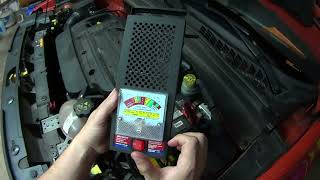
How to confirm: Test the battery voltage with a multimeter. A healthy battery should read about 12.6 volts with the engine off. Anything below 12.2V suggests a weak battery. Most auto parts stores will test your battery for free. 🎬 Watch: How to test your battery and alternator the correct way.
Typical fix: Replace the battery.
Est. part cost: $150-$250 - Loose or Corroded Battery Terminals/Grounds 🟡 Medium Probability → Shop Vehicle Battery Corrosion or loose connections create high resistance, which can cause intermittent voltage drops to the PCM, even with a healthy battery. The main engine-to-chassis ground strap is a key point to inspect.
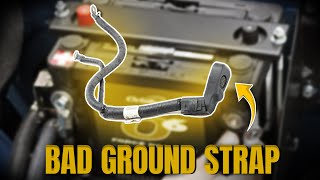
How to confirm: Visually inspect the battery terminals for white or greenish corrosion. Wiggle the terminals to ensure they are tight. Follow the main negative cable to the chassis and engine block to ensure the ground connections are clean and secure. 🎬 See how to test for bad engine ground strap symptoms.
Typical fix: Clean the battery terminals and cable ends with a wire brush. Ensure all connections are tight.
Est. part cost: $5-$15 for a terminal cleaning kit - Faulty Alternator or Charging System ⚪ Low Probability → Shop Alternator An alternator that is failing may produce unstable voltage (too high or too low), which can disrupt the PCM and cause the KAM to reset.
How to confirm: With the engine running, test the voltage at the battery terminals. It should be between 13.5 and 14.5 volts. If it's outside this range or fluctuating wildly, the alternator is likely at fault.
Typical fix: Replace the alternator.
Est. part cost: $150-$300
Rare But Worth Checking
- Blown Fuse: A fuse on a circuit shared with the PCM's power supply could be blown. On some Fords, a blown fuse for an unrelated component like the cigarette lighter or O2 sensor heaters can cause related power issues and KAM codes.
- Aftermarket Performance Tuner: Some aftermarket tunes or handheld tuners (like those from SCT or DiabloSport) can interfere with the PCM's memory functions or cause this code to appear after flashing a new tune. Even when returning to the stock tune, the dealer may be able to see a flash counter has been incremented.
- Water Damage to PCM: Water intrusion into the area where the PCM is located (typically in the passenger-side cowl or kick panel area) can cause corrosion on the connectors or internal damage to the module itself, leading to memory errors.
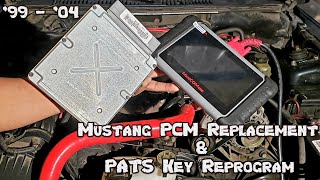
- Faulty Powertrain Control Module (PCM): → Shop Engine Control Module (ECM) This is the least likely cause. The PCM itself can fail, but all other possibilities should be exhausted before condemning the computer. 🎬 Watch this 99-04 Mustang PCM replacement and key reprogramming guide. An internal short or failed memory chip within the PCM can trigger P0603.
Technical Service Bulletins (TSBs) & Recalls
While specific bulletins for the Mustang are limited, Ford has issued several TSBs for other models of the same era and newer that highlight P0603 as a common diagnostic trouble code stored in the PCM. For example, TSB Bulletin #TSB 21-2248 and TSB Bulletin #TSB 21-2055 note that vehicles may exhibit an illuminated MIL with P0603 stored. Similarly, TSB Bulletin #TSB 20-2336 describes instances where P0603 is stored alongside other codes, sometimes resulting in a forced idle condition.
Diagnosis Steps
- Check for recent service: Have you disconnected the battery recently? If yes, clear the code and drive the vehicle for a few days. If the code does not return, the issue is resolved.
- Inspect Battery and Terminals: If the battery wasn't disconnected, visually inspect the battery terminals for corrosion and ensure they are tight. Clean as needed.
- Test Battery Health: Use a multimeter to check battery voltage. It should be ~12.6V with the engine off. A reading below 12.2V is a strong indicator of a bad battery. Have it load-tested at an auto parts store.
- Test Charging System: Start the engine. The voltage at the battery should rise to between 13.5V and 14.5V. If not, the alternator is suspect.
- Check Fuses: Inspect fuses related to the PCM and engine controls in the vehicle's fuse box. A forum post for a '99 Mustang noted that a blowing fuse for the O2 heaters caused a similar KAM code.
- Check Grounds: Inspect the main battery ground cable connection to the chassis and any smaller ground straps from the engine to the chassis. Ensure they are clean, tight, and free of corrosion.
- Consider Aftermarket Devices: If you have an aftermarket tuner (e.g., SCT, DiabloSport), try returning the vehicle to its stock tune and see if the problem persists after several drive cycles.
- Inspect PCM for Water Damage: Visually inspect the PCM and its connectors for any signs of corrosion or water staining.
- Suspect PCM: If all the above steps check out and the code keeps returning without any power interruptions, the PCM itself might be the issue, but this is rare.
Parts You'll Likely Need
- Car Battery
(OEM #Motorcraft BXT-96R-590 (590 CCA, standard) or BXT-48 (AGM, 760 CCA, upgrade))— A weak or old battery is a primary cause of the P0603 code by failing to provide stable voltage to the PCM's Keep Alive Memory.
Trusted brands: Motorcraft, Interstate, DieHard
OEM price range: $180-$250
Aftermarket price range: $150-$220 - Battery Terminal Cleaner — Used to remove corrosion from battery posts and terminals, which is a common cause of voltage drops that trigger the P0603 code.
Trusted brands: CRC, NOCO, Schumacher
Aftermarket price range: $5-$15
Related Codes That Often Appear With This One
- P0601: Internal Control Module Memory Check Sum Error
- P0604: Internal Control Module Random Access Memory (RAM) Error
- P0605: Internal Control Module Read Only Memory (ROM) Error
Mechanic-Grade Diagnostic Values
- Keep Alive Memory (KAM) Power at PCM Connector — expected: Battery voltage (~12.6V) at all times, even with key off.. Failure: Voltage below 12.0V or no voltage indicates an open/short in the KAM power circuit or a blown fuse.
- Switched Power at PCM Connector — expected: Battery voltage (~12.6V) only when the ignition key is in the RUN position.. Failure: No voltage with key ON indicates a problem with the ignition switch or PCM power relay.
- PCM Signal Ground Circuit Resistance — expected: Less than 2.0 ohms.. Failure: Resistance higher than 2.0 ohms indicates a poor ground connection, corrosion, or a break in the wire.
- Alternator AC Ripple Voltage — expected: Less than 0.5 Volts AC (500mV AC) with engine running.. Failure: AC voltage higher than 500mV indicates failing alternator diodes, which can create electrical noise that disrupts the PCM.
Hidden / Shadow Codes Worth Checking
- P1260: Theft Detected, Vehicle Immobilized. This is a Passive Anti-Theft System (PATS) code, not a standard engine code. (see via This code will appear when trying to start the car after installing a non-programmed PCM. It will prevent the engine from starting and is visible with most mid-level scan tools that can read immobilizer system codes.)
Scan Tool Commands That Help
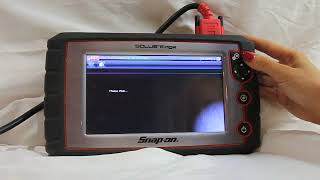
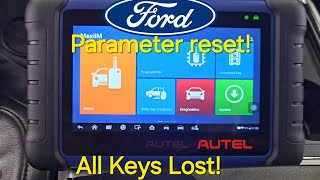
- Ford IDS, FORScan, Autel MK808 (or similar): Parameter Reset — This function is required after installing a replacement PCM (new or used). It forces the existing PATS module and the new PCM to communicate and synchronize.
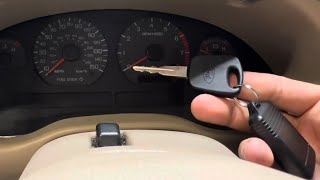
- Ford IDS, FORScan, Autel MK808 (or similar): Ignition Key Code Erase / Program Keys — After a Parameter Reset, all existing keys must be erased from the system and then reprogrammed to the newly paired PCM/PATS modules. This requires having at least two physical keys. The process often involves a mandatory 10-minute security lockout period.
- Ford IDS (or equivalent): KAM Reset — After performing repairs that affect adaptive learning (like replacing a sensor or fixing a vacuum leak), this command can be used to wipe the learned values stored in the Keep Alive Memory, forcing the PCM to start its learning process from a clean slate. This is also recommended after a Parameter Reset.
Wiring & Ground Locations
- PCM — Behind the passenger side kick panel, in the footwell area.. This is the module that stores the Keep Alive Memory and sets the P0603 code. Its connections and grounds are the primary focus of diagnosis.
- KAM Power Pin — Pin 55 on the 104-pin PCM connector.. This specific pin supplies the constant power required to maintain the Keep Alive Memory. A voltage test at this pin is the most direct way to confirm if the KAM circuit is receiving power.
- G104 — On the left (driver's side) front fender apron, located behind the battery.. This is a primary ground point for the PCM. A loose or corroded connection here can cause intermittent power loss to the PCM and trigger a P0603.
- G201 — On the passenger side kick panel, near or directly below the PCM.. This is the other main ground for the PCM. Its proximity to the module makes it a critical point to check for tightness and corrosion.
- Engine-to-Chassis Ground — On 4.6L V8 (GT) models, this is a thin ribbon-style cable on the driver's side, connecting the motor mount area to the frame.. This is the main ground return path for the entire engine electrical system, including the alternator. High resistance here can cause system-wide voltage instability.
Real Owner Repair Stories
- S197Forum.com user post (adapted from similar Ford platform) (Ford Mustang with P1633 (KAM Voltage Too Low)) — Check Engine Light that would not clear, code P1633.
❌ Tried (didn't work) Testing voltage at PCM pins, Checking all known fuses visually, Wiggle testing wires
✅ What actually fixed it The owner found a diagram of the fuse box and realized a fuse was completely missing from the slot designated for the KAM circuit. After installing the correct fuse, the code was resolved. - StangNet.com user post (Ford Mustang with P1633 (KAM Voltage Too Low)) — Check Engine Light, code P1633, and a fuse for the O2 sensor heaters kept blowing.
❌ Tried (didn't work) Replacing the blown fuse (it would blow again), Checking PCM wiring and grounds
✅ What actually fixed it The issue was a short circuit in one of the O2 sensor heater circuits. This circuit shared a fuse with the KAM power supply. The diagnostic path was to disconnect O2 sensors one by one until the fuse stopped blowing, identifying the faulty sensor/circuit. - NHTSA ODI #10222074 — An owner reported that after replacing batteries and a camshaft sensor, the P0603 code recurred every few weeks, requiring multiple restart attempts.
- NHTSA ODI #10349131 — A report describes a situation where a scan showed codes P0603 and P2285; the problem was corrected by replacing the ICP sensor and connector which had shorted.
OEM Part Supersession History
Varies (e.g., 'DBZ2')→Varies— Hardware and software revisions throughout the model years.
Heads up: It is critical to replace a PCM with one that has an identical hardware part number. While a PCM from a different engine or year might physically connect, it can be missing necessary drivers for specific functions (e.g., a V6 PCM in a GT). Using a non-matching PCM will likely lead to a no-start condition due to the PATS anti-theft system or other malfunctions.
Model Year Variations Within This Range
- 1999-2004: The main engine-to-chassis ground strap on 4.6L V8 (GT) models is a thin ribbon-style cable on the driver's side, while earlier 5.0L platforms often used a braided strap on the passenger side. The location and style of this critical ground point can vary.
- 1999-2004: Multiple PCM hardware part numbers were used across this generation for different engines (V6, GT, Cobra) and model years. They are not universally interchangeable. The specific PCM code must be identified from the sticker on the original unit before ordering a replacement.
Diagnostic Flowchart
Used vs. New Parts: Buying Guide for This Vehicle
When a used part is the smart pick: A used PCM from a salvage yard is a very common and cost-effective repair if the original PCM is confirmed faulty. However, it is NOT a plug-and-play part.
Donor-vehicle mileage cap: roughly under 200000 miles for the part to have meaningful remaining life.
What to inspect on the donor part:
- Ensure the part number on the used PCM's sticker EXACTLY matches your original unit.
- Inspect the large 104-pin connector and the housing for any signs of water intrusion, corrosion, or physical damage.
- If possible, get the VIN of the donor car to aid in potential reprogramming.
OEM-only on this vehicle (don't cheap out):
- Powertrain Control Module (PCM): While a used OEM part is fine, avoid generic aftermarket 'rebuilt' PCMs from unknown brands, as they often have programming and compatibility issues. The safest options are new OEM, used OEM, or a repair service for your original module.
Brands owners have reported issues with on this vehicle:
- Unbranded or 'white-box' rebuilt PCMs from online marketplaces without a strong warranty and clear return policy.
Real Owner Stories
Aggregated from forums and TSBs cited above. Mileages and costs reflect what owners reported in those sources.
1999 Ford Mustang
Symptoms: Owner experienced a Keep Alive Memory (KAM) related code (P1633) that was linked to a repeatedly blowing fuse for the O2 sensor heaters.
What fixed it: Resolving the underlying electrical short that was causing the O2 sensor heater fuse to blow.
Source hint: StangNet Mustang Forums (stangnet.com) - case study on a '99 Mustang
1994-1997 Ford F-Series (7.3L Power Stroke Diesel)
Symptoms: The P0603 code appeared every single time the batteries were disconnected for service.
What fixed it: No repair was needed. The owner recognized this as a normal, informational code indicating the adaptive memory had been cleared, which would resolve on its own after driving.
Source hint: Ford Truck Enthusiasts Forums (ford-trucks.com) - Thread: 'P0603 unhooking battery?'
Related OBD-II Codes
Frequently Asked Questions
I just replaced the battery in my Mustang and now I have a P0603 code. Is this a serious problem?
My Check Engine Light is on for P0603, but I haven't touched the battery. What's the most likely cause on my 1999-2004 Mustang?
Could my aftermarket tuner be causing the P0603 code on my Mustang?
I've confirmed my battery and alternator are good. What else could cause a persistent P0603?
If I need to replace the PCM in my Mustang, can I just get one from a junkyard?
Is the P0603 code just a Mustang issue, or do other Fords from this era have it?
Helpful Videos

We Have This Part in Stock

The information in this article is provided for general reference and educational purposes only. Vehicle specifications, procedures, and part compatibility can vary by production date, trim level, and region. Always consult your vehicle's factory service manual and verify part numbers before purchasing or performing repairs. Safety-critical components such as airbags, seat belts, and braking systems should be installed by a qualified professional.
- Ford Mustang:
- 🧭 Diagnostic Flowchart
- 🎬 Helpful Videos
- 🛍️ Shop This Part
- What's Unique About the 1999-2004 Ford Mustang
- Symptoms You May Notice
- Most Likely Causes
- Rare But Worth Checking
- Technical Service Bulletins (TSBs) & Recalls
- Diagnosis Steps
- Parts You'll Likely Need
- Related Codes That Often Appear With This One
- Mechanic-Grade Diagnostic Values
- Hidden / Shadow Codes Worth Checking
- Scan Tool Commands That Help
- Wiring & Ground Locations
- Real Owner Repair Stories
- OEM Part Supersession History
- Model Year Variations Within This Range
- Used vs. New Parts: Buying Guide for This Vehicle
- Real Owner Stories
- 1999 Ford Mustang
- 1994-1997 Ford F-Series (7.3L Power Stroke Diesel)
- Related OBD-II Codes
- Frequently Asked Questions
- 🎟️ Get 5% Off