

P0603 on 2007-2014 GMC Yukon: Keep Alive Memory (KAM) Error Causes and Fixes
P0603 on a GMC Yukon almost always points to a power supply issue. Before suspecting the main computer, check for a weak battery, corroded terminals, or loose ground connections. A recent battery change or jump-start is a very common trigger for this code, which often requires only clearing the code to fix.
- P0603 is a memory loss code, not necessarily a 'failed part' code.
- Always check the battery, its connections, and the charging system first. This is the fix over 90% of the time.
- If you recently disconnected the battery, the code is normal. Clear it and see if it comes back.
- Do not replace the expensive PCM or TCM unless all power and ground issues have been professionally ruled out.
What's Unique About the 2007-2014 Gmc YUKON
On the GMT900 platform, which includes the 2007-2014 Yukon, the electronics are particularly sensitive to battery voltage. This code frequently appears after a battery has been disconnected or is starting to fail. While the code can point to a module fault as noted in GM Technical Service Bulletins, the most common real-world cause for Yukon owners is a simple power interruption, not a failed computer. Forum discussions consistently show that the first step is always to suspect a battery or connection issue before considering PCM replacement.
Diagnostic Flowchart
Tap your situation to follow the diagnostic path that matches what you're seeing on this vehicle.
Symptoms You May Notice
- Check Engine Light is on.
- No noticeable symptoms at all (very common).
- Slightly rough idle.
- Hesitation during acceleration.
- Minor changes in transmission shift quality.
- Difficulty starting the engine.
- Illuminated ABS or traction control light.
- Replacing the PCM immediately. This is an an expensive part and is rarely the actual cause. The problem is almost always in the power supply to the PCM, such as the battery, terminals, or grounds.
Most Likely Causes
- Weak or Failing Battery 🔴 High Probability → Shop Vehicle Battery The complex electronics in the Yukon require a stable voltage. An aging battery that drops below 12 volts when the engine is off can cause the PCM to lose its Keep Alive Memory. This is the most cited cause in owner forums.
How to confirm: Use a multimeter to test the battery. A healthy battery should read above 12.4 volts with the engine off and 13.7-14.7 volts when running. Most auto parts stores offer free battery testing.
Typical fix: Replace the vehicle's battery.
Est. part cost: $150-$300 - Recent Battery Disconnection 🔴 High Probability → Shop Vehicle Battery Anytime the battery is disconnected for service or replacement, the KAM is erased. The P0603 code will often set on the first or second drive cycle after reconnection. This is a normal occurrence for these vehicles.
How to confirm: If the battery was recently disconnected, this is the likely cause. Clear the code with a scanner.
Typical fix: Clear the code. If it does not return after a few drive cycles, no further action is needed. This is a common experience shared by many owners.
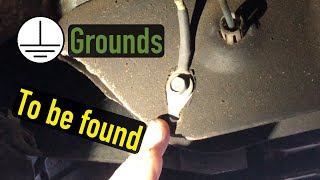
Est. part cost: $0 - Loose or Corroded Battery Terminals/Grounds 🟡 Medium Probability → Shop Vehicle Battery Vibration and time can lead to loose connections. Corrosion on the battery terminals or main body/engine grounds can create enough resistance to interrupt power to the PCM. Key ground points on GMT900 trucks are on the firewall and on the frame behind both front wheels, which are exposed to road spray.
How to confirm: Visually inspect the battery terminals for white or blueish powder (corrosion). Physically check that the terminal clamps are tight. Follow the negative cable to its chassis ground point and inspect it. Also, check the main ground strap from the engine to the firewall.
Typical fix: Clean the battery terminals and cable ends with a wire brush. Disassemble, clean, and tighten all main ground connections. Applying dielectric grease can prevent future corrosion.
Est. part cost: $5-$15 - Failing Alternator ⚪ Low Probability → Shop Alternator If the alternator is not providing a consistent voltage while the engine is running, it can cause electrical issues and fail to properly charge the battery, leading to KAM errors.
How to confirm: With the engine running, use a multimeter to check the voltage at the battery terminals. A reading outside the 13.5-14.5 volt range suggests a charging system problem.
Typical fix: Replace the alternator.
Est. part cost: $200-$450
Rare But Worth Checking
- Aftermarket Engine Tuner/Programmer: Performance tunes that modify the PCM's software can sometimes cause conflicts with the KAM self-test, triggering a P0603 code. If you have a tuner installed, this could be the cause.
- Damaged Wiring Harness: In some cases, a wiring harness can become damaged, causing a short or open in the power supply to a control module. One owner on a forum discovered the transmission wiring harness had melted against the exhaust heat shield, causing multiple electrical faults and codes, which could include a P0603.
- Faulty Powertrain Control Module (PCM) or Transmission Control Module (TCM): → Shop Engine Control Module (ECM) While this is what the code technically points to, it is the least likely cause. Before replacing a module, all power and ground issues must be completely ruled out. GM TSBs #PIP4653E and #05-06-04-060A acknowledge that this code can be set in various modules and require careful diagnosis before module replacement.
Diagnosis Steps
- Read the code with an OBD-II scanner and note any other codes present.
- Ask yourself: Was the battery recently disconnected or replaced? If yes, clear the code and drive the vehicle for a few cycles to see if it returns. If it doesn't, the issue is resolved.
- Visually inspect the battery terminals, cable ends, and main chassis ground straps for corrosion or looseness. Clean and tighten as needed.
- Key ground locations to check on a GMT900 include the firewall, the engine block (often a braided strap to the firewall), and on the frame behind each front wheel.
- With the engine off, use a multimeter to check battery voltage. It should be at least 12.4V.
- Start the engine and check the voltage again. It should be between 13.5V and 14.7V, indicating a healthy alternator.
- If an aftermarket tuner is installed, remove it and return the PCM to the stock program to see if the code disappears.
- If all other steps fail and the code returns immediately after being cleared, the PCM may be faulty, but this should be confirmed by a professional technician before replacement.
Parts You'll Likely Need
- Battery
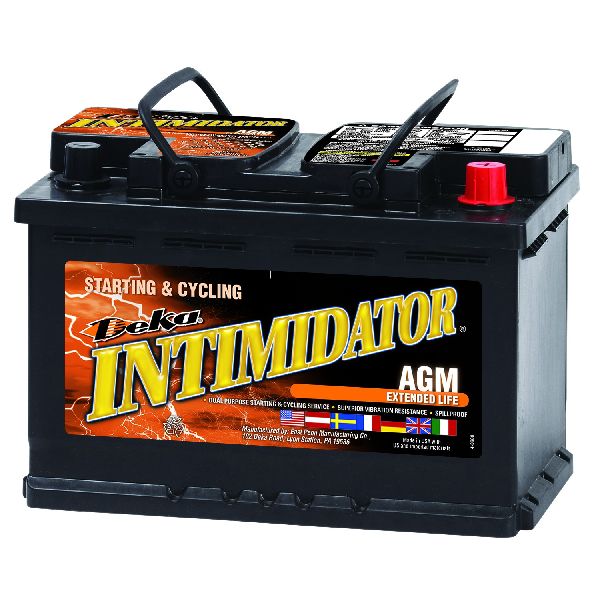
(OEM #ACDelco Gold 48AGM (88864541) or 94RAGM (88864542) are common AGM options. Standard flooded options like ACDelco Silver 48S are also available.)— This code is most often caused by a weak or failing battery that cannot maintain the Keep Alive Memory when the vehicle is off.
Trusted brands: ACDelco, DieHard, Interstate, Optima
OEM price range: $200-$300
Aftermarket price range: $150-$250 - Battery Terminals
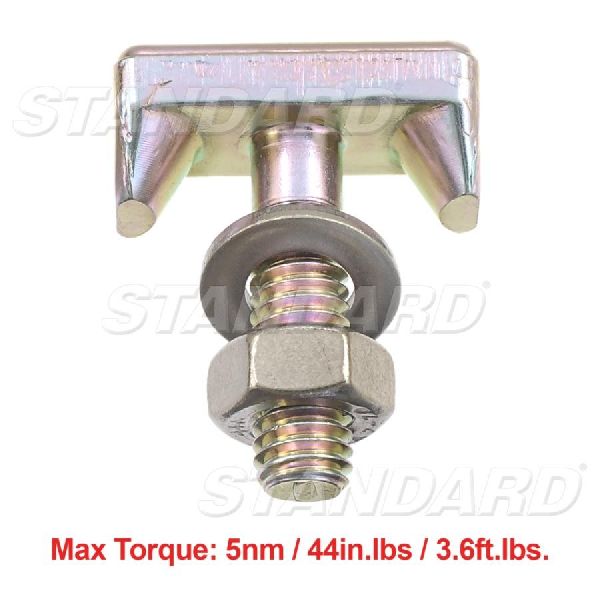
(OEM #While OEM terminals often require cable replacement, Dorman offers OE FIX terminals like 926-882 (positive, may require fitment verification) as a cost-effective repair.)— Corroded or damaged terminals can cause a poor connection, interrupting power to the vehicle's modules and triggering a KAM error.
Trusted brands: Dorman, Standard Motor Products
OEM price range: $20-$40
Aftermarket price range: $10-$25
Related Codes That Often Appear With This One
- P0601, P0602, P0604, P0606 — These are all internal control module error codes. Seeing them together strengthens the possibility of a PCM power supply issue or an actual internal fault in the module, as mentioned in GM TSB #05-06-04-060A.
- P0700 — This is a general Transmission Control System Malfunction code. It can appear alongside P0603 if the power interruption also affected the Transmission Control Module (TCM), which is a known issue on this platform per TSB #PIP4653E. A user on TahoeYukonForum.com reported this combination when a wiring harness was damaged.
Technical Service Bulletins (TSBs) & Recalls
- PIP4653E: Mentions DTC P0603 may be stored in the Transmission Control Module.
- 05-06-04-060A: Groups P0603 with other control module DTCs for diagnostic purposes.
Platform-Specific Known Issues
- GM Technical Service Bulletin #PIP4653E notes that P0603 can be found stored in the Transmission Control Module (TCM), indicating the issue is not always isolated to the main engine computer.
- GM Technical Service Bulletin #05-06-04-060A is an informational bulletin that groups P0603 with other internal module codes, suggesting they often share common diagnostic paths related to module power, grounds, or internal faults.
- Owners on forums like TahoeYukonForum.com frequently report strange electrical behavior after a simple battery replacement, which can sometimes damage sensitive modules if not done carefully. However, P0603 appearing after a battery swap is most often benign and just needs to be cleared.
Mechanic-Grade Diagnostic Values
- CAN Bus Resistance — expected: ~60 Ohms. Failure: A reading of ~120 Ohms indicates an open circuit or a missing terminating resistor in a module. A reading of 0 Ohms indicates a short between CAN High and CAN Low wires.
Scan Tool Commands That Help
- Tech2 / GDS2: CASE Relearn (Crankshaft Position System Variation Learn) — This is required after replacing the PCM/ECM. If not performed, the engine may run, but a P0315 code may be set, and misfire detection can be inaccurate. This is a critical final step after an ECM replacement that resolves a P0603.
- Tech2 / GDS2: Security Relearn (Immobilizer) — Required any time a non-original PCM/ECM is installed. The vehicle will not start without performing this procedure, which pairs the replacement module to the vehicle's BCM and key.
Wiring & Ground Locations
- G102 — On the rear of the left (driver's side) cylinder head.. This is a primary ground for the ignition coils. While not a direct PCM ground, poor grounding here can introduce electrical noise and voltage issues that affect overall system stability.
- G103 — On the front of the right (passenger's side) cylinder head.. This is a critical ground point. Schematics show this as a ground for the Engine Control Module (ECM) and Transmission Control Module (TCM). A poor connection here is a direct cause for KAM loss codes like P0603.
- G104 — On the rear of the right (passenger's side) cylinder head, often sharing a stud with other grounds.. This ground serves the Vehicle Control Module (VCM), fuel pump relay trigger, and other critical functions. Its proximity to the main ECM/TCM ground (G103) makes this entire area critical to inspect for corrosion and tightness.
- G108 — Braided ground strap from the rear of the engine (typically passenger side head) to the firewall.. This strap ensures the engine block and body have the same ground potential. If this strap is broken or corroded, the starter and other components may try to find a ground path through sensitive electronics, causing voltage drops and module damage.
- 175A Mega Fuse — On the battery positive terminal junction block or in a small box very close to it.. This is the main fuse between the alternator/battery and the Underhood Fuse Block (UBEC), which powers the PCM/ECM. A hairline crack inside this fuse can cause intermittent, complete power loss that triggers P0603 but can be very hard to diagnose as it may test good for continuity when not under load.
Real Owner Repair Stories
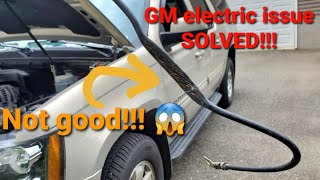
- YouTube user 'GM Electrical Issue SOLVED' (2007-2014 GM Truck (GMT900 Platform)) — Intermittent no-start, weird electrical issues like door locks cycling and lights flashing, sometimes complete power loss as if the battery was disconnected.
❌ Tried (didn't work) Replacing the battery, Replacing the 175A Mega Fuse
✅ What actually fixed it The Underhood Fuse Block (UBEC) was internally corroded. The main power wire from the battery feeds a stud on the back of the fuse block. This connection and the internal bus bars of the fuse block itself had developed corrosion, causing an intermittent open circuit to the rest of the vehicle, including the PCM. Replacing the entire fuse block resolved all issues.
OEM Part Supersession History
12597121, 12612384→12633238— Hardware and software revisions by GM over the production run.
Heads up: The module is a GM E38 ECM. While many service numbers exist and look identical, they are not always directly interchangeable. A module from a car (like a Corvette) cannot be easily used in a truck (Yukon) without a full rewrite of the OS and calibration using advanced tuning software. When replacing, it is critical to match the service number or use a specialist who can program the replacement with the correct truck operating system. A security relearn and CASE relearn are always required after replacement.
Model Year Variations Within This Range
- 2009-2014: Some 2009+ models received a different throttle body, which required a different calibration in the 'write-only' portion of the E38 ECM. This makes swapping ECMs between model years more complex, as the underlying hardware expectation within the programming can differ.
- 2007 vs 2014: While the core electrical architecture is the same, later models (2012-2014) had minor interior changes, such as different radio/display units and the potential for factory Bluetooth not present on early models. These changes do not directly affect the P0603 code but are relevant when diagnosing the entire electrical system.
Helpful Videos
We Have This Part in Stock




The information in this article is provided for general reference and educational purposes only. Vehicle specifications, procedures, and part compatibility can vary by production date, trim level, and region. Always consult your vehicle's factory service manual and verify part numbers before purchasing or performing repairs. Safety-critical components such as airbags, seat belts, and braking systems should be installed by a qualified professional.
- Gmc YUKON:
- 🧭 Diagnostic Flowchart
- 🎬 Helpful Videos
- 🛍️ Shop This Part
- What's Unique About the 2007-2014 Gmc YUKON
- Symptoms You May Notice
- Most Likely Causes
- Rare But Worth Checking
- Diagnosis Steps
- Parts You'll Likely Need
- Related Codes That Often Appear With This One
- Technical Service Bulletins (TSBs) & Recalls
- Platform-Specific Known Issues
- Mechanic-Grade Diagnostic Values
- Scan Tool Commands That Help
- Wiring & Ground Locations
- Real Owner Repair Stories
- OEM Part Supersession History
- Model Year Variations Within This Range
- 🎟️ Get 5% Off